The latest data has shown that coronavirus (COVID-19) infection rates in Greater Manchester are 65% lower than when the region was first placed under Tier 3 restrictions.
Rates have fallen fastest in Salford, where they have gone down by 76% in the last six weeks.
Across the Greater Manchester region, the number of cases has fallen far quicker than in the rest of the country, with a 30% in England as a whole, and it means that the infection rate in the region is now only slightly above the national average.
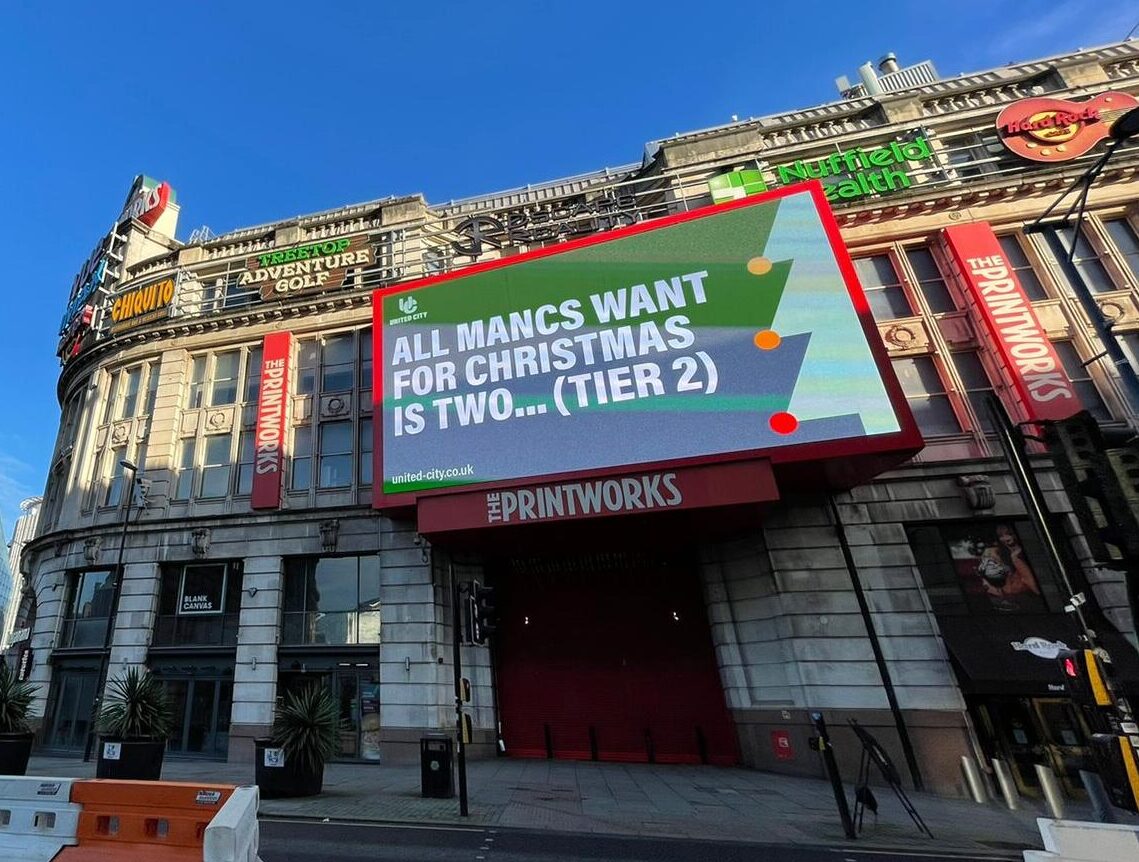
These new statistics arrive as England’s second national lockdown has come to an end, and a return to the government’s new “tougher” three tiered regional system has commenced.
Greater Manchester entered into Tier 3 restrictions as of Wednesday 2nd December.
At the time of entering into the first round of Tier 3 restrictions, the rate for the region as a whole was 547.5 cases per 100,000 people and was still going up, but that rise began to slow down in the following days and by the time the national lockdown was introduced on 5th November, the region’s rates were beginning to show a downward trend.
ADVERTISEMENT
This trend accelerated rapidly in the last four weeks.
As we move into the tiering system, we should all keep trying to suppress the spread of #COVID19.
Every action counts when it comes to protecting ourselves and our loves ones from coronavirus.
— Department of Health and Social Care (@DHSCgovuk) December 2, 2020
The number of cases has dropped by three quarters in Salford, falling from 643.6 to below the England average at 157 cases per 100,000 people, with Trafford seeing the second largest drop of 72% over the same time period and is also now below the national average.
Rochdale – which currently has the highest infection rate in Greater Manchester – has had the slowest fall in cases, but has still seen a drop by 55% since original Tier 3 restrictions first came into effect.
ADVERTISEMENT
Most areas in Greater Manchester reached peak levels around the end of October and first week of November.
Manchester recorded the highest infection rate of any area in the region – 812.2 per 100,000 – which came a few weeks earlier on 3rd October when there was a large number of cases detected among the student population, and Oldham is the only other area to post a weekly infection rate above 800, which was on 4th November.
Mark WaughMark Waugh
In England as a whole, rates have fallen by just 30% since 23rd October, but rates were much lower in the rest of the country at that point.
This new data follows the news that the UK has become the first country in the world to approve the Pfizer/BioNTech COVID-19 vaccine for use, with the Department of Health and Social Care confirming it has been given the go-ahead by the health regulator MHRA for the vaccine to become administered from next week.
Pfizer and BioNTech reported final trial results on 18th November, showing its vaccine was 95% effective in preventing coronavirus (COVID-19), with no major safety concerns.
ADVERTISEMENT
Studies have shown the jab works in all age groups.
Greater Manchester leaders believe the fall in cases mean the region should be placed in Tier 2 when the current tiers are first reviewed on 16th December.
For the latest information, guidance and support during the coronavirus (COVID-19) pandemic in the UK, please do refer to official sources at gov.uk/coronavirus.
#HandsFaceSpace
News
Iconic Salford music venue The White Hotel to reopen under new ownership from 2027
Clementine Hall
After announcing plans to close at the end of the year, famed Manchester club The White Hotel is changing hands.
Just a couple of months ago back in May, it was announced that one of Greater Manchester’s most cutting-edge and best-loved nightlife venues would be closing its doors for good.
Despite ‘continuing to draw full houses’, co-founder Ben Ward told The Guardian that the venue had found itself in a flood-risk zone, saying: “Basically, it’s a swamp.”
He added that it was better ‘to go out on our own terms, long before we became a museum’.
But it seems the swamp may live on…and although it is the end for the cult favourite nightclub as we know it, the former garage in Salford will be reopening in new ownership from 2027.
From January onwards, the disused Dickinson Street space will be known as BASTION according to a social media post shared to Instagram yesterday.
It will be run by the team who operate neighbouring venue The Bag Factory and will be supported by the Strange Art Collective CIC.
Images: The Manc
The Bag Factory shared a black and white illustration of the iconic White Hotel’s exterior, along with coordinates to the venue, stating: “The underground has a new stronghold”.
Rather cryptic we must say, and although we hope The White Hotel that we know and love could stick around forever – we hope the new owners will keep some of its magic alive.
‘Own a landmark, create a legacy’ – Historic chimney goes on sale for £300k in Bolton
Emily Sergeant
How would you like to live in a big chimney?
I know that might sound like an odd question, and in some respects, it is… but we’re being 100% genuine, as over in Bolton there is currently a historic local landmark on the market with planning permission to make it into your new home, and it’ll only set you back £300,000.
‘Only’ is a bit of a stretch, but when you consider the magnitude of this property, it’s surprising that you’re able to get your hands on it for such a reasonable price.
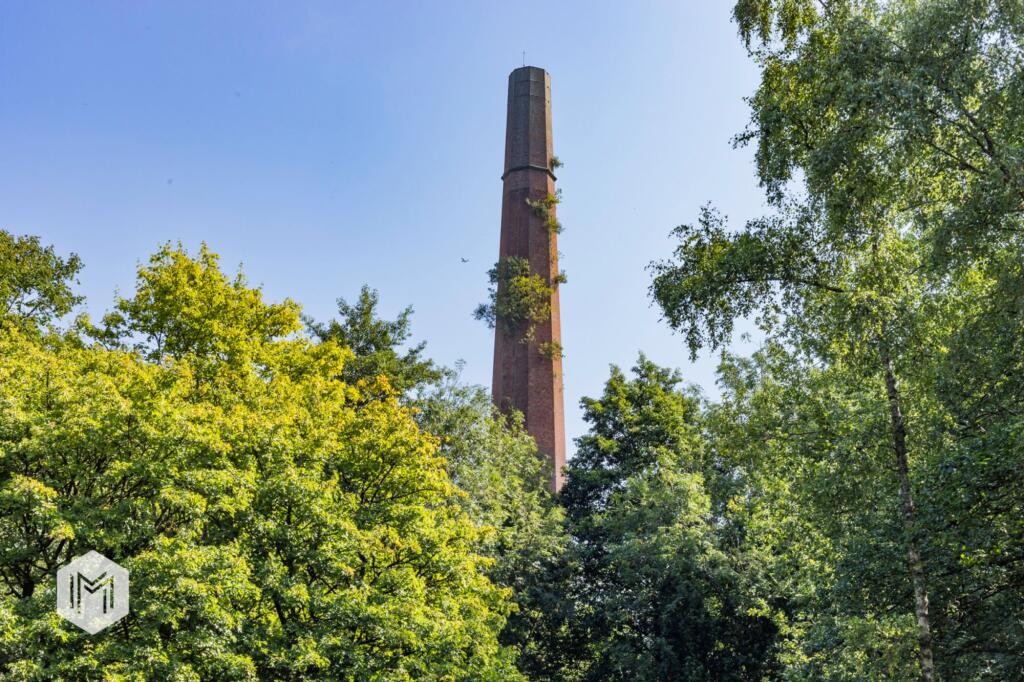
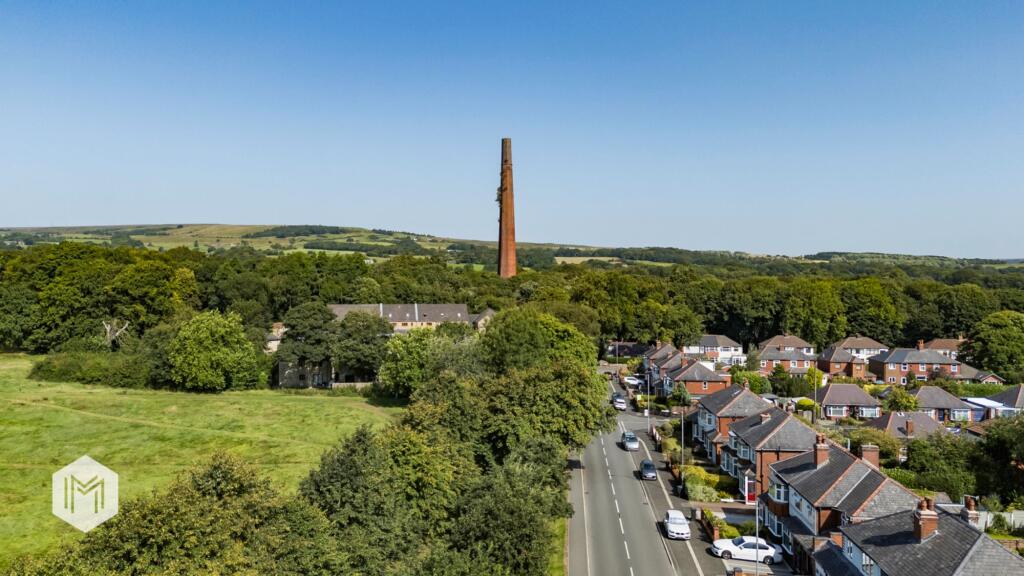
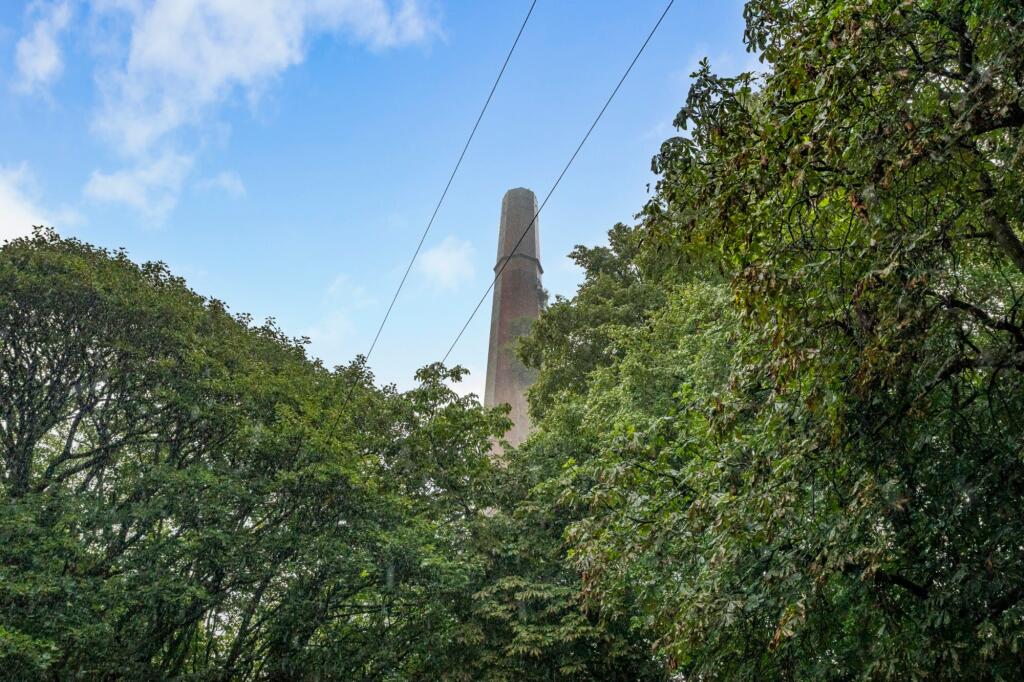
This is Barrow Bridge Chimney.
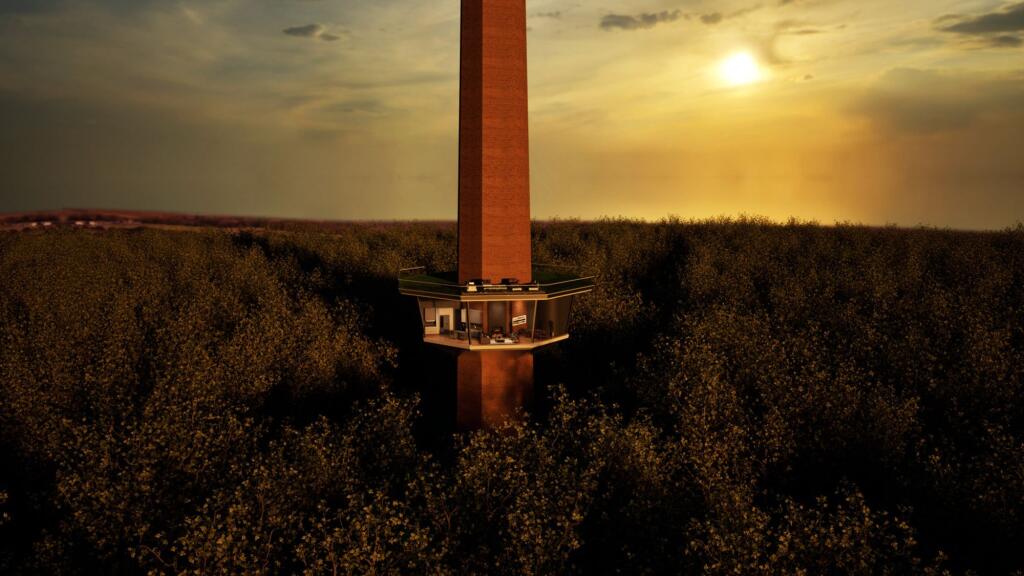
Rising above the tranquil stone cottages and wooded valley of the stunning model village that is Barrow Bridge, this striking Victorian chimney stands as a lone sentinel of Bolton’s proud industrial past – and now, with full planning permission secured, estate agents say it offers an ‘extraordinary opportunity’ to reimagine history as a truly one-of-a-kind home.
A historic chimney has gone on sale for £300k in Bolton / Credit: Miller Metcalfe
Originally built in the early 19th century as part of the ‘ambitious’ Dean Mills complex, the chimney once crowned a thriving cotton-spinning hub founded by Thomas Bazley, who was one of the Industrial Revolution’s great innovators.
Long after the mills fell silent though, the chimney endured and remained a local landmark in Smithills visible for miles, and today this relic of the steam age is ready for its next chapter.
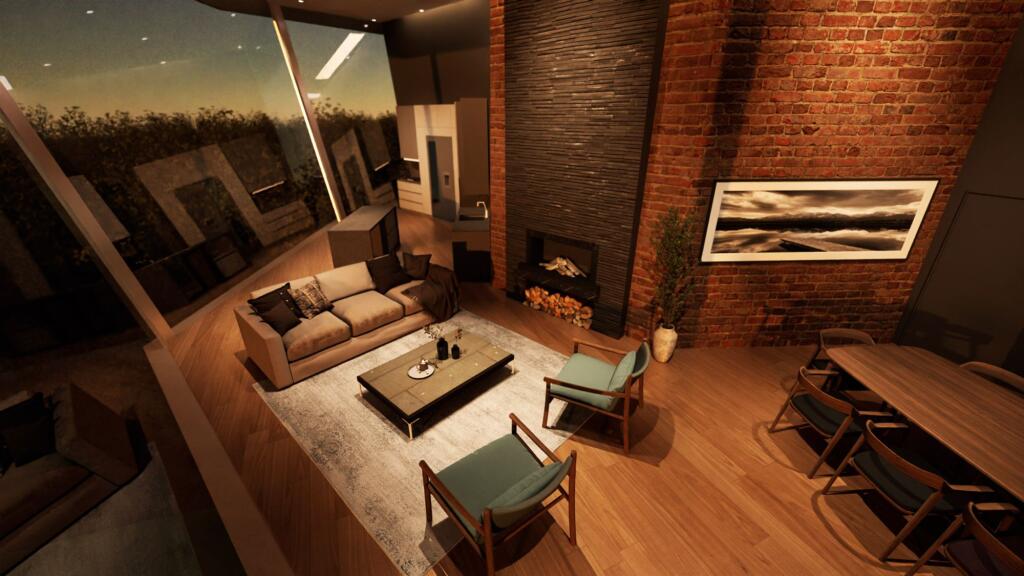
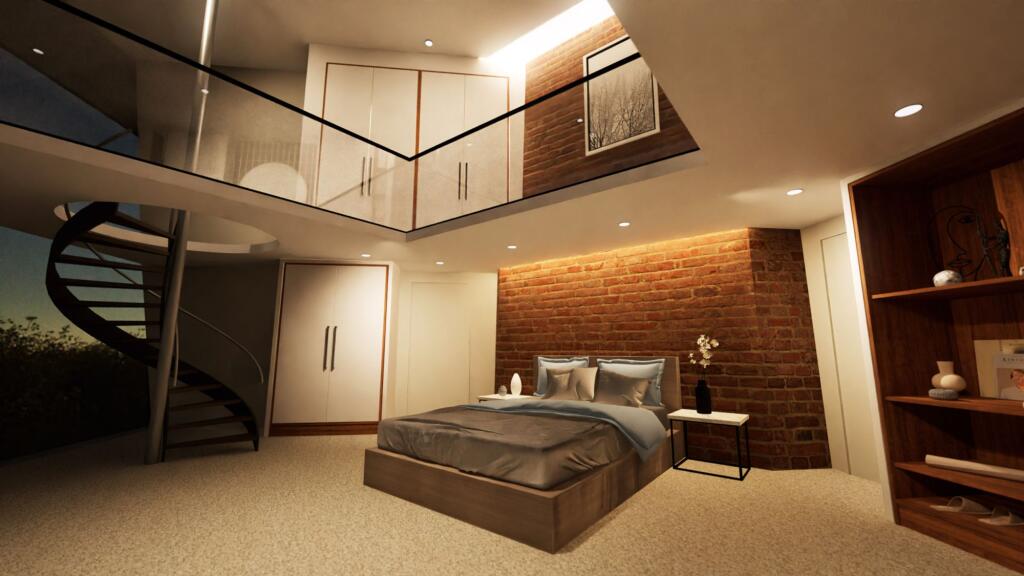
Approved plans for the chimney are described as being a ‘bold’ residential conversion that will honour its industrial heritage, while still creating a dramatic modern dwelling like no other in the town.
The planning permission is in place for a two-storey residence of approximately 3,939 sq ft, with a striking contemporary design blended seamlessly with practical living.
The planning permission is in place for a ‘striking’ two-storey residence / Credit: Miller Metcalfe
The approved plans include three spacious bedrooms (two with en-suites), a family bathroom, a downstairs cloakroom, and a study that can easily adapted to a four-bedroom, four-bathroom layout to suit modern family life.
What makes this an even more attractive prospect for future buyers is that the chimney is well-connected to both amenities and nature – with both independent businesses, good local schools, and convenient transport links on the doorstep, as well as parks and tree-lined walks.
“This is your chance to own more than bricks and mortar,” estate agents Miller Metcalfe said.
“It’s a chance to live inside a landmark, to shape its story for future generations, and to call a piece of Bolton’s proud industrial heritage your own. Enquire now to discover how you can transform this iconic chimney into a legacy home that will stand for generations to come.”
Fancy it then? Take a look at the property on Rightmove here.

 The Manc -
3rd December 2020
The Manc -
3rd December 2020