Greater Manchester Police have issued a lengthy statement addressing the ‘uncertainty and worry’ felt by many following scenes of unrest at the weekend, with rumours swirling of more disorder today.
GMP has stressed that ‘there is no place for hate in Greater Manchester’.
Police across the UK are monitoring intelligence to respond to any incidents swiftly and effectively.
The force also said that ‘those involved in this disgraceful behaviour’ will be ‘dealt with robustly’.
As for what residents and communities should do this evening, GMP said: “Our advice to communities is to remain calm and to try to go about your every-day life,” adding that the police service is ‘heavily resourced’.
ADVERTISEMENT
The statement also urged people to ‘remain vigilant’ and to report anything that doesn’t seem right to police.
Greater Manchester Police’s statement says: “We understand the uncertainty and worry that people are feeling about current tension, much of which is being fuelled by the widespread sharing of misinformation online which is sometimes being created with the purpose of creating fear and inciting intolerable hate.
ADVERTISEMENT
“Our advice to communities is to remain calm and to try to go about your every-day life. GMP continues to monitor the intelligence to ensure we can respond effectively to any incidents of disorder. And, if we believe there needs to be specific information about anything emerging we will tell people and offer advice.
“We are heavily resourced, and we have specialist officers and staff who are working around the clock to tackle these issues and ensure our communities are supported. We are speaking to community leaders and elected representatives regularly to make sure they are appraised of all planned protests known to GMP. People living safely and peacefully, do not deserve to be frightened: we are here to protect you, and we will use all resources and capabilities to do so.
“Our message is clear: there is no place for hate in Greater Manchester. If you come here to willingly participate in disorder and crime, we will be at your door, ensuring you answer for your crimes. We will police without fear or favour and use all resources and powers available to ensure those involved in this disgraceful behaviour are dealt with robustly.
ADVERTISEMENT
“This has been demonstrated with our relentless pursuit of offenders, many of whom have been arrested not only in Greater Manchester, but with the support of police colleagues across the UK and we have made crucial arrests in West Yorkshire and Lancashire.
“To date, we have made 26 arrests for a variety of offences including assault, violent disorder, possession of weapons, and 20 have been charged. There is work to be done, and we will not relent until we have systematically located and dealt with all those responsible.
“We ask that you remain vigilant. If you see something, or hear something, that does not feel right, report it to us so we can act.
“All information and reports will be handled with the utmost severity and sensitivity. If you would prefer to remain anonymous, information can be shared anonymously with the independent charity Crimestoppers by calling 0800 555 111. We don’t need to know who you are; we just need your information and concerns.
“These are challenging times, but we are immensely proud to see the majority of our residents standing together and condemning this unacceptable disorder. Your unwavering support has not gone unnoticed.”
Victim named and murder investigation launched after young woman is killed in Newton Heath stabbing
Emily Sergeant
The victim of a street stabbing in Newton Heath this week has been named for the first time as a murder investigation continues.
It comes after officers from Greater Manchester Police (GMP) responded to reports of a disturbance at around 2am yesterday (Thursday 15 October) on Dorking Avenue, in the Newton Heath area of Manchester, and when they arrived on the scene, they found a woman in her 20s with serious injuries that were ‘consistent with a stabbing’.
Despite best efforts of all emergency services involved, the young woman was sadly pronounced dead at the scene.
As the murder investigation progresses, the woman has now been publicly named and a photo of her has been released for the first time.
She has been named as 26-year-old Alisha Samuels.
At this time, one man, aged 25, has been arrested on suspicion of murder, and a man and woman, aged 61 and 38, have been arrested on suspicion of assisting an offender, and they all remain in custody – with officers continuing their enquiries to establish the full circumstances of this incident.
Alisha’s family have asked for privacy whilst they deal with the devastating loss of their loved one, GMP has stated.
“We are continuing to urge people who may have information in relation to this incident to please come forward to support our investigation and bring justice for Alisha,” the police force said in a public appeal.
Anyone who may have witnessed the incident, or has mobile phone, CCTV, or doorbell footage, is urged to call GMP on 0161 856 5464, or contact them via the Major Incident Public Portal here.
Alternatively, you can contact Crimestoppers on 0800 555 111
Featured Image – GMP (Family Handout)
News
Former supply teacher jailed for multiple upskirting and AI sex offences across Greater Manchester
Emily Sergeant
A former supply teacher has been jailed for multiple upskirting and AI sex offences in schools across Greater Manchester.
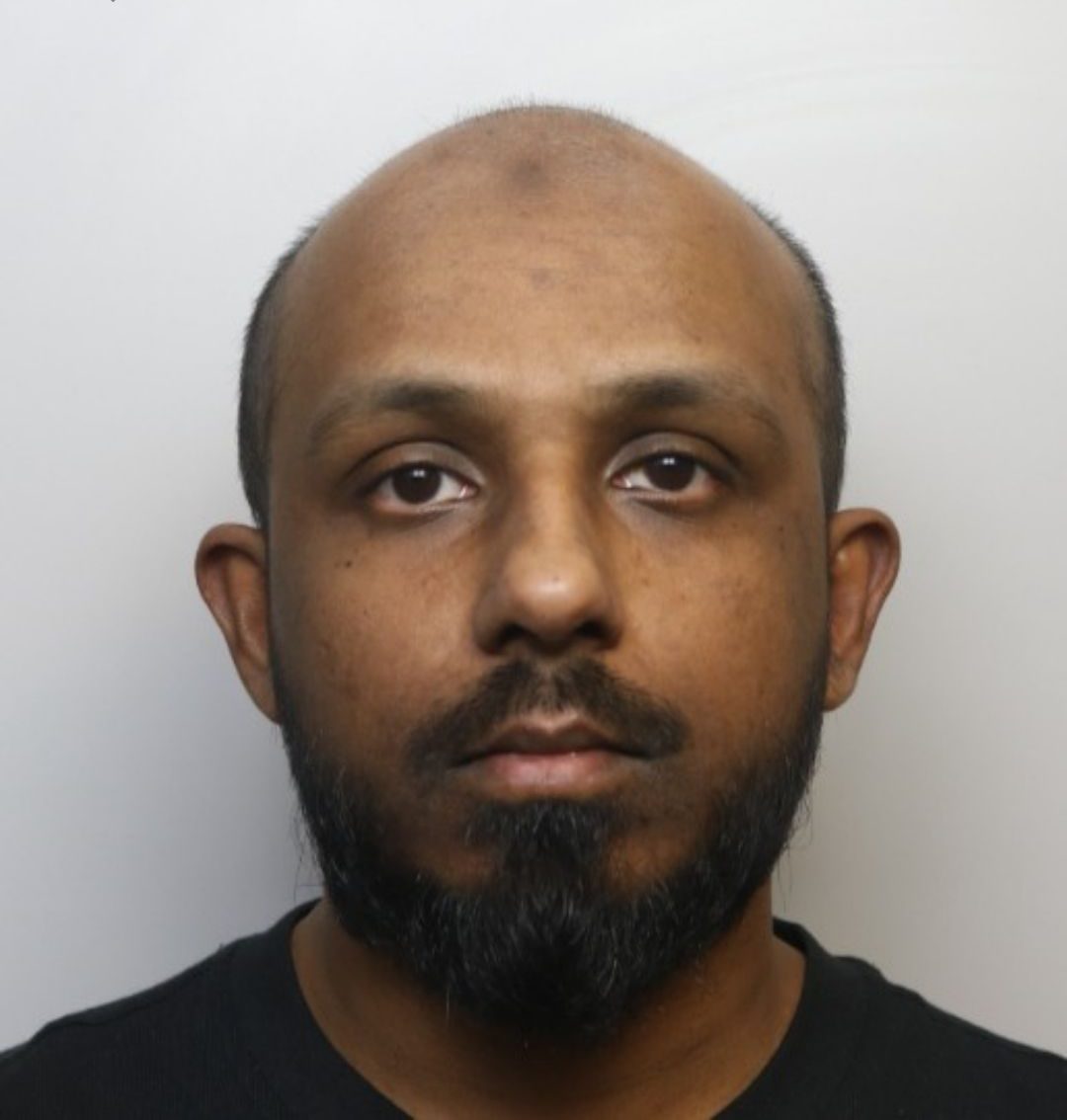
Abusali Rahman – a British national of Bangladeshi ethnicity from Salford – appeared in Bolton Crown Court this week for his sentencing after first being charged with, and then pleading guilty to, several offences.
The offences are including, but not limited to, 12 counts of taking an indecent photograph/pseudo-photograph of a child (images obtained by upskirting), three counts of making indecent photograph / pseudo-photograph of a child (making AI-generated images), and one count of attempting to meet girl under 16 following sexual grooming.
The offences are alleged to have taken place between December 2023 and June 2025, according to Greater Manchester Police (GMP).
Twelve girls have been identified in relation to the upskirting offences – aged between 13 and 16 at the time of the alleged offending – at seven high schools in three Greater Manchester boroughs (Bury, Bolton, and Salford).
GMP says it has remained in close contact with the schools, local authorities, and other partners throughout the investigation to ensure all appropriate support is in place for those who need it.
Additionally, the court also heard how Rahman amassed a collection of images of young girls, using AI and other methods to sexualise them.
The images numbered more than 300 in total, ranging from Category A to Category C classifications, and Rahman would post these on social media, often alongside humiliating and disgusting captions.
Rahman was sentenced to six years in prison, and will also be subject to a 20-year Sexual Harm Protection Order.
A former supply teacher has been jailed for child sex offences in schools across Greater Manchester / Credit: GMP
Detective Constable Lisa McGaffin, from GMP’s Bolton Child Protection Team, described Rahman’s crimes as ‘absolutely abhorrent’.
“My thoughts throughout this process have always been with the young girls who have been subject to such indignity,” DC McGaffin said following the sentencing this week. “Their welfare and support will always be a priority for us.
“While working as a teacher – someone who young children should trust and be safe with – Rahman repeatedly took secret photos for his own sick gratification, before posting images online which showed his total disregard for the girls’ respect and dignity.

 Daisy Jackson -
7th August 2024
Daisy Jackson -
7th August 2024