Over a million new trees will be planted in the North West following a £15 million funding boost into The Northern Forest project.
The North of England is home to around 13 million people, but this beautiful part of the country that us Mancunians call home has just 7.6% of woodland cover, which is significantly lower than the England average – and this is why The Woodland Trust launched the ambitious project back in 2018 to transform the landscape of the area for years to come.
The Woodland Trust is working together with City of Trees Manchester, The Mersey Forest, White Rose Forest, HEYwoods, and the Community Forest Trust to drive forward this government-backed initiative.
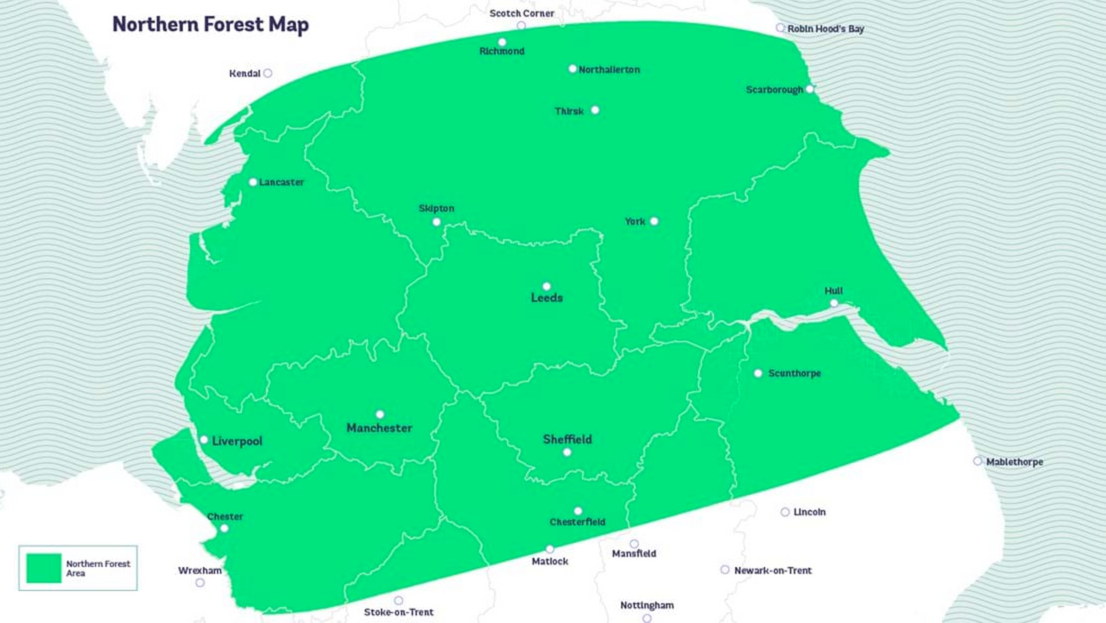
Stretching from Liverpool across to Hull, with the M62 as its spine, The Northern Forest will comprise of 50 million trees planted over 25 years.
More than a million of those trees will be in the North West.
Simon Mageean – Programme Director for the Northern Forest at The Woodland Trust – said: “This new funding is massively significant for this project and enables us to push on with this new phase.
“Not only do these new trees have the power to transform people’s lives through all the green space they bring in areas of traditionally low tree cover, they are also set to bring a big boost to our fight against climate change and encourage nature recovery.”
ADVERTISEMENT
Spanning over 120 miles across the cities of Bradford, Salford, Hull, Leeds, Manchester and Liverpool, The Northern Forest will help provide natural flood management, boost wildlife habitat for woodland birds and bats, and protect ancient woodland areas and iconic species – such as the red squirrel.
It will also improve health and wellbeing by providing a tranquil space for millions of people living in the area, and will generate more than £2 billion for the country’s economy.
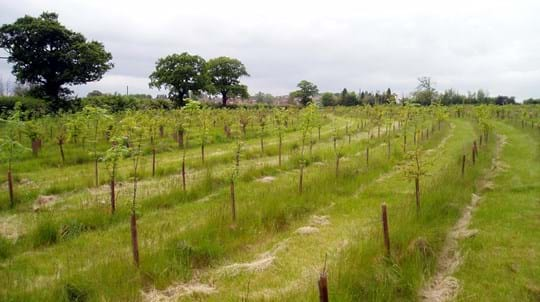
The Northern Forest will comprise of 50 million trees planted over 25 years / Credit: The Woodland Trust
The Northern Forest will both “accelerate the creation of new woodland” and “support sustainable management” of the existing woods right across the area.
ADVERTISEMENT
According to the Woodland Trust, more trees, woods and forests will deliver a better environment for all by “improving air quality in our towns and cities, mitigating flood risk in key catchments, supporting the rural economy though tourism, recreation and timber production, connecting people with nature, and helping to deliver improvements to health and wellbeing through welcoming and accessible local green spaces”.
City of Trees is one of the ‘Community Forests’, and is the Greater Manchester part of The Northern Forest.
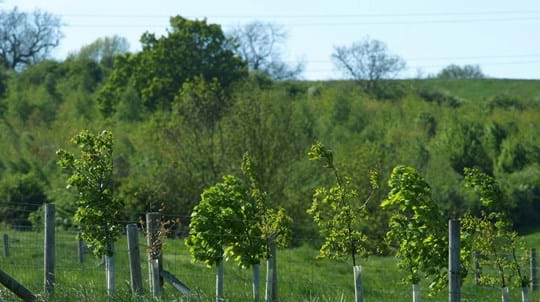
The Northern Forest will both “accelerate the creation of new woodland” and “support sustainable management” of the existing woods / Credit: The Woodland Trust
Speaking on the new £15 million funding boost, Jessica Thompson – Director at City of Trees – said: “This investment must not only provide the means to ensure our landscape is resilient to our changing climate, but also have a positive impact on people’s lives in the North.
“City of Trees is committed to ensuring that the investment in trees and woodlands open up opportunities for training and green jobs.
“We’ve seen the impacts of COVID-19 and lockdown and people relying on quality greenspace for their mental health and wellbeing [and] we want to encourage people to get directly involved in planting trees and looking after trees for years to come.”
ADVERTISEMENT
You can find out more information about The Northern Foresthere.
Featured Image – The Woodland Trust
News
Opening date finally confirmed for new Uniqlo store at the Trafford Centre
Emily Sergeant
Uniqlo is preparing to open its second store in Greater Manchester, and the official launch date has finally been confirmed.
The popular Japanese high street fashion retailer currently operates 24 stores in the UK, with its first British store having opened its doors all the way back in 2001, and its first European flagship store opening on Oxford Street in London in 2007 – but it was revealed earlier this year in April that Manchester was set to get a second helping.
Uniqlo announced that it would be opening its second Greater Manchester inside the Trafford Centre this autumn, following the huge success of its city centre store opening on Market Street in 2019.
The Trafford Centre store is set to make Manchester the first location outside of London to have two Uniqlo stores.
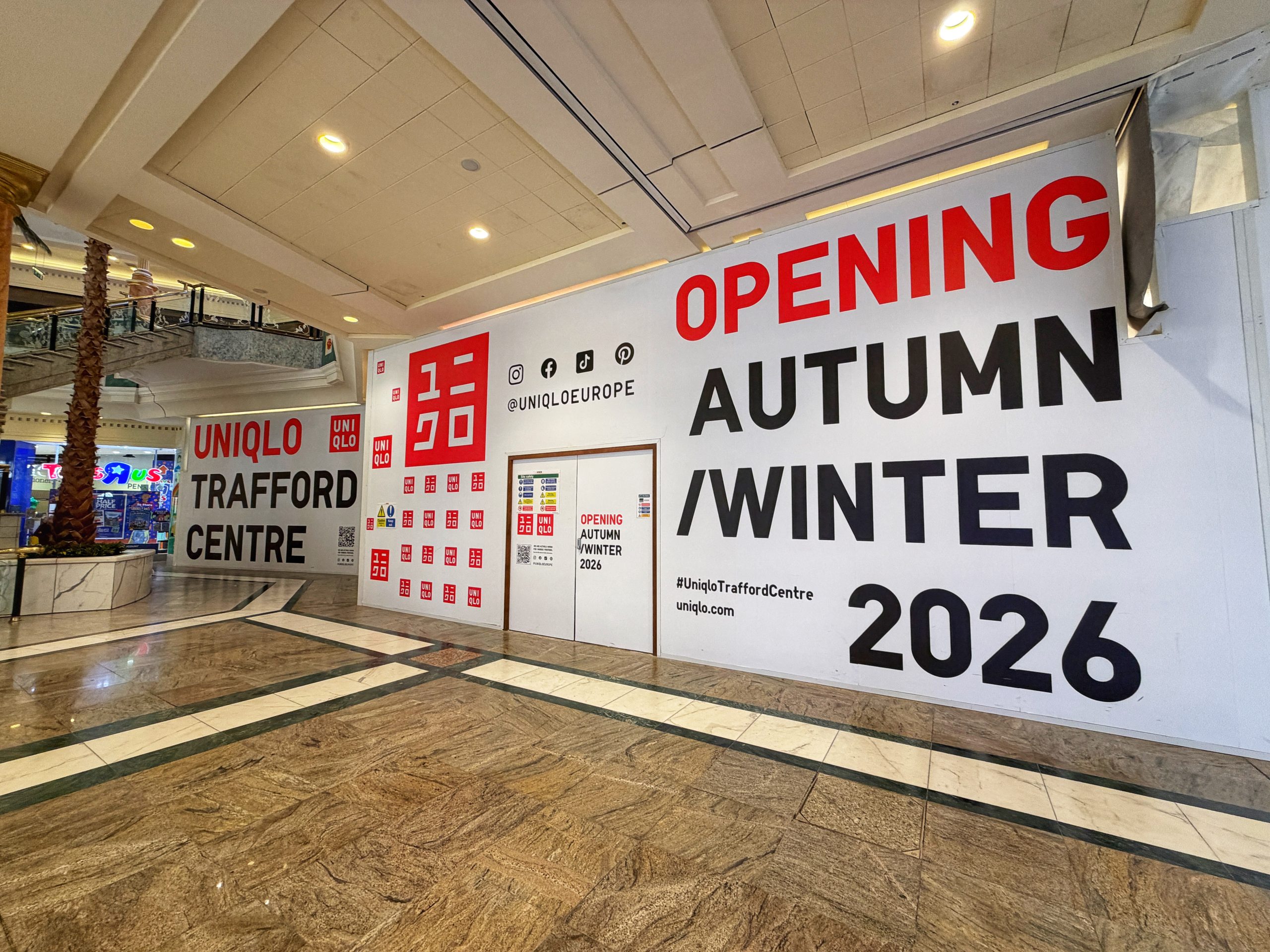
When news broke that the hoardings had officially gone up inside the shopping centre, elated shoppers raced to the comments to say things like: “No way! I’ve been waiting years for this.”
Uniqlo is preparing to open second its Manchester store inside the Trafford Centre next month / Credit: | The Manc Group
“Uniqlo in Trafford Centre would be a dream come true,” another person said on Instagram, while a third added: “I will never have to step foot on Market Street again,” and plenty others chimed in with comments like ‘finally’ and ‘can’t wait’.
And now, we officially have an opening date to share with you.
Uniqlo will open in the Trafford Centre for the first time on Thursday 15 October, with plenty of events happening across its extended opening weekend.
Traditional Japanese Taiko drumming performances will be happening throughout the day on Thursday 15 and Saturday 17 October, while the first 300 customers to spend over £69.90 in store on the Thursday (15 October) will get a special Uniqlo Manchester goody bag.
Uniqlo’s arrival at the Trafford Centre follows the opening of several other high-profile stores in recent months, like Urban Outfitters, White Company, Stradivarius, and many more.
Featured Image – The Manc Group
News
‘Do not let Britain’s independent businesses disappear on your watch’ – Manchester bakery makes heartbreaking plea to Andy Burnham
Clementine Hall
A beloved Manchester bakery has issued an open letter to Andy Burnham ahead of the Budget begging him for help.
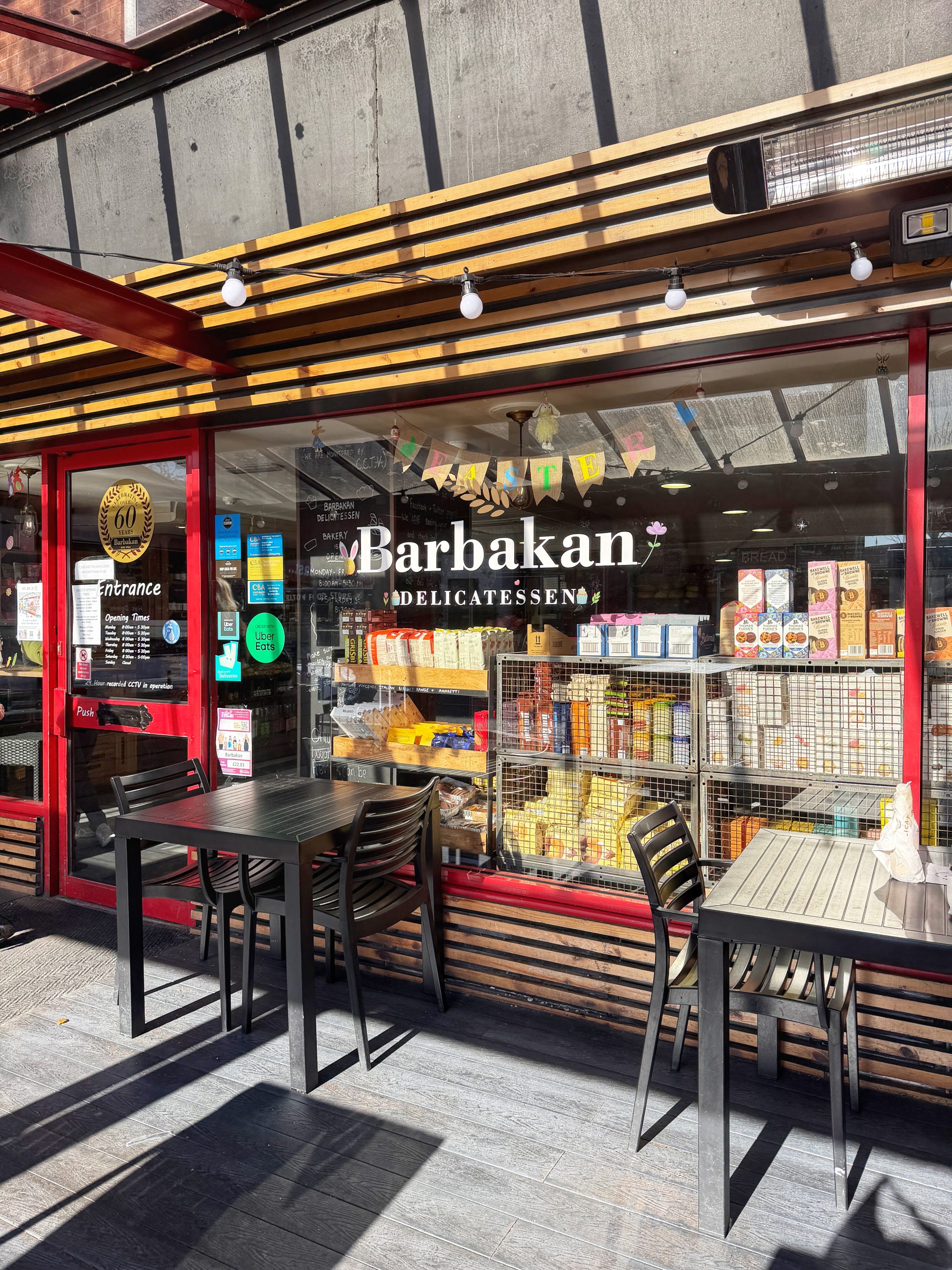
Barbakan Deli in Chorlton is basically an institution at this point.
The legendary bakery and delicatessen has been serving the community for 62 years, famed for its freshly-baked loaves of bread, its handmade sandwiches, and its pastries and cakes inspired by bakes from across Europe.
Posting on Instagram last night on Thursday 18 September, Frankie Dyer the director of Barbakan, issued an open letter addressed to Prime Minister Andy Burnham.
Images: The Manc Group
It read: “Dear Mr Burnham, As an independent business owner in the hospitality sector, I am begging you to please read this.
“Really read it. And seriously consider what businesses like mine are telling you before the upcoming Budget.”
It continued: “In just the last two years, we have self-funded new bakery machinery, new catering kitchens, essential repairs and renovations and opened a second retail site, creating another six local jobs. We have won more than ten national awards for the quality of what we do.
“We have invested. We have grown. We have employed more people. We have worked harder than ever. In short, Prime Minister, we are doing everything you keep asking British businesses to do.
“And our bank balance is finished. That is the reality.”
The letter finished by Dyer inviting Andy Burnham to come visit the bakery and pleading for a ‘fighting chance’ to save the business: “We need action. We need meaningful reductions in the tax burden placed on employers.
“We need Employer National Insurance looked at urgently. We need a business-rates system which allows independent high-street businesses to survive. We need VAT reform for hospitality. We need Corporation Tax to reward businesses which reinvest, employ and grow.
“And we need proper grants and incentives that help established independent businesses invest and expand — not schemes with endless criteria which most ordinary businesses can never access. We need you to do something.
“And we need more than one token gesture in the Budget. A band-aid for a bullet wound. So I am asking you, Prime Minister, to come back to Manchester and see it for yourself. Pop an apron on and stand behind our counter.
Images: The Manc Group
“Come into our bakery in the middle of the night and meet the people making Manchester’s bread while most of the city is asleep. Look at our payroll, our energy bills, our rates, our supplier increases.
“Look at what leaves our bank account every single week simply for the privilege of keeping 50 people employed and our doors open. You said you wanted a government that understood the regions. You now have an opportunity to prove it.
“Independent businesses across this country are not asking for a handout. We are asking for a fighting chance. I sincerely hope your next Budget gives us one”.

 Emily Sergeant -
27th September 2021
Emily Sergeant -
27th September 2021