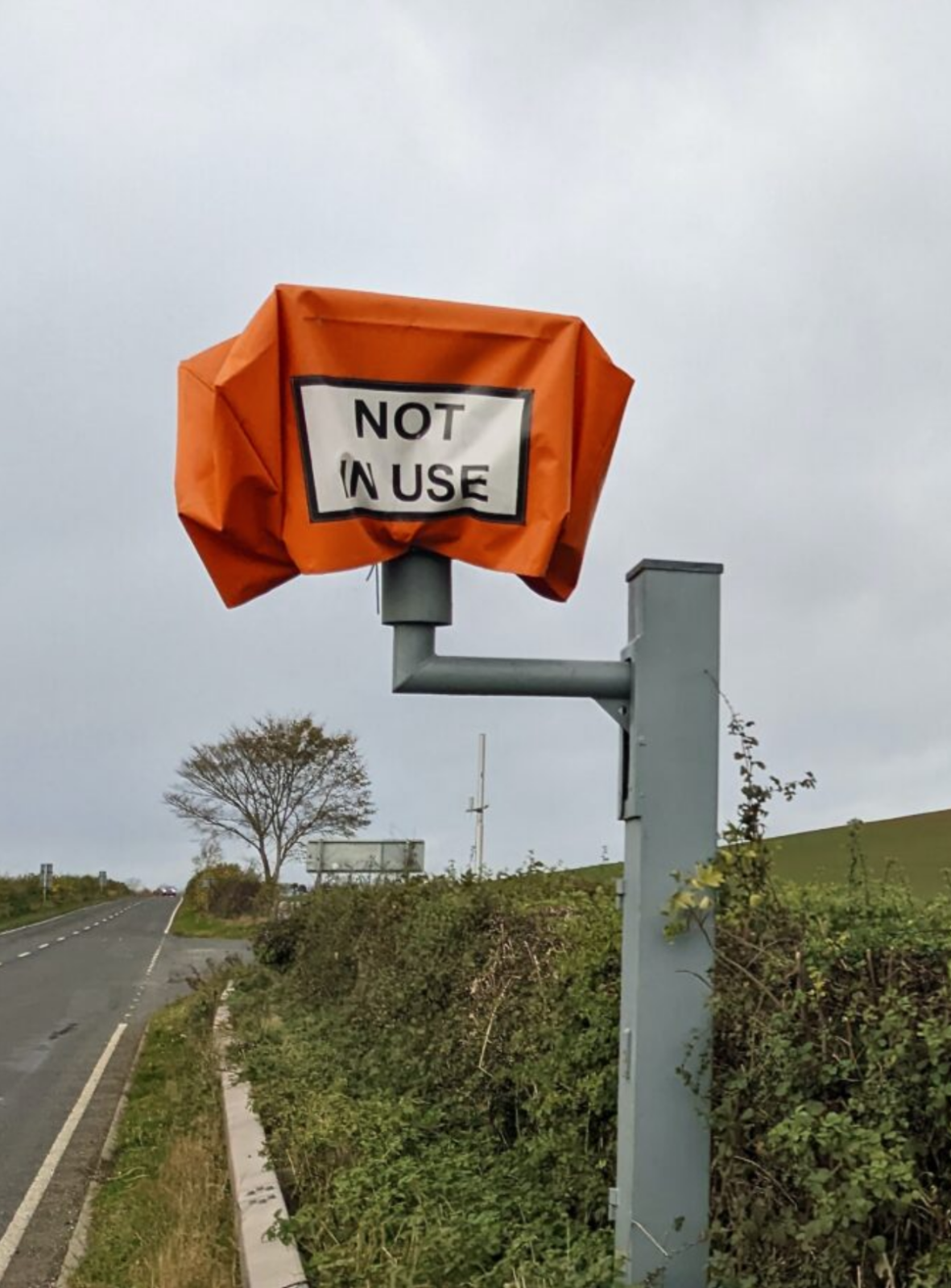
A shocking new research study has found that 46% of speed cameras in England may not even be operational.
This equates to almost half of all the speed cameras currently on England’s roads.
The research – which comes from dash camera manufacturer, Road Angel, and is all according to freedom of information requests (FOI) answered by 25 out of 44 UK police forces – found that, despite the fact most motorists will immediately adjust and lower their speed the second we see a bright yellow speed camera, we probably don’t need to do so as there’s nearly a 50% chance the camera’s not even working anyway.
When it comes to the areas of England where the least speed cameras are in operation, Northamptonshire has come out on top, as the research found that all eight fixed speed cameras in the region were inactive.
Derbyshire has more fixed speed cameras out of action than any other region (93), with only 20 of the 113 across the county capable of catching speeding motorists.
ADVERTISEMENT
New study finds almost half of all speed cameras in England are inactive / Credit: The AA | Josh Turpie (via Unsplash)
Along with Derbyshire, Essex (110), and Devon and Cornwall (110), are the regions with the highest number of fixed speed cameras – however, each region currently has at least 40% incapable of catching speeding drivers.
Staggeringly, only two police forces that responded to the FOI request had all speed cameras working.
ADVERTISEMENT
At the other end of the spectrum, all speed cameras in Suffolk are operational, with the next best region being the West Midlands – which currently has only 5% of its speed cameras standing inactive, meaning that 62 out of 65 devices are currently operational.
“If a camera is inactive and remains so for many months or even years at a time then it begs the question, why is it there?,” Road Angel founder, Gary Digva, commented on the findings from the new research study.
“Yes, it may still play a part in encouraging traffic to slow down, but it could also act to distract drivers and potentially cause an accident.
ADVERTISEMENT
It’s all according to freedom of information requests (FOI) answered by 25 out of 44 UK police forces / Credit: Jenoptik & TfGM
“Our view is that if cameras are present then drivers should be able to feel assured that they are working. If they are non-operational then they should be removed, and that is why we are calling on police forces and local authorities across the country to carry out an audit of cameras and remove any non-operational devices as quickly as possible.”
Speeding drivers were warned they’re more likely get caught, as although these new ‘spot speed’ VECTOR-SR cameras – which are developed by Jenoptik, and have been funded through the Mayor’s Challenge Fund (MCF) – are are also painted an eye-catching bright yellow and will be in operation 24/7 like the speed cameras were all familiar with, they do work slightly differently.
Unlike older-style cameras, these new ‘ultra’ speed cameras don’t require painted lines on the road, and also use infra-red low-light technology – which means they no longer ‘flash’ at speeding drivers.
Featured Image – Andrew Pym (via Flickr)
News
Victim named and murder investigation launched after young woman is killed in Newton Heath stabbing
Emily Sergeant
The victim of a street stabbing in Newton Heath this week has been named for the first time as a murder investigation continues.
It comes after officers from Greater Manchester Police (GMP) responded to reports of a disturbance at around 2am yesterday (Thursday 15 October) on Dorking Avenue, in the Newton Heath area of Manchester, and when they arrived on the scene, they found a woman in her 20s with serious injuries that were ‘consistent with a stabbing’.
Despite best efforts of all emergency services involved, the young woman was sadly pronounced dead at the scene.
As the murder investigation progresses, the woman has now been publicly named and a photo of her has been released for the first time.
She has been named as 26-year-old Alisha Samuels.
At this time, one man, aged 25, has been arrested on suspicion of murder, and a man and woman, aged 61 and 38, have been arrested on suspicion of assisting an offender, and they all remain in custody – with officers continuing their enquiries to establish the full circumstances of this incident.
Alisha’s family have asked for privacy whilst they deal with the devastating loss of their loved one, GMP has stated.
“We are continuing to urge people who may have information in relation to this incident to please come forward to support our investigation and bring justice for Alisha,” the police force said in a public appeal.
Anyone who may have witnessed the incident, or has mobile phone, CCTV, or doorbell footage, is urged to call GMP on 0161 856 5464, or contact them via the Major Incident Public Portal here.
Alternatively, you can contact Crimestoppers on 0800 555 111
Featured Image – GMP (Family Handout)
News
Former supply teacher jailed for multiple upskirting and AI sex offences across Greater Manchester
Emily Sergeant
A former supply teacher has been jailed for multiple upskirting and AI sex offences in schools across Greater Manchester.
Abusali Rahman – a British national of Bangladeshi ethnicity from Salford – appeared in Bolton Crown Court this week for his sentencing after first being charged with, and then pleading guilty to, several offences.
The offences are including, but not limited to, 12 counts of taking an indecent photograph/pseudo-photograph of a child (images obtained by upskirting), three counts of making indecent photograph / pseudo-photograph of a child (making AI-generated images), and one count of attempting to meet girl under 16 following sexual grooming.
The offences are alleged to have taken place between December 2023 and June 2025, according to Greater Manchester Police (GMP).
Twelve girls have been identified in relation to the upskirting offences – aged between 13 and 16 at the time of the alleged offending – at seven high schools in three Greater Manchester boroughs (Bury, Bolton, and Salford).
GMP says it has remained in close contact with the schools, local authorities, and other partners throughout the investigation to ensure all appropriate support is in place for those who need it.
Additionally, the court also heard how Rahman amassed a collection of images of young girls, using AI and other methods to sexualise them.
The images numbered more than 300 in total, ranging from Category A to Category C classifications, and Rahman would post these on social media, often alongside humiliating and disgusting captions.
Rahman was sentenced to six years in prison, and will also be subject to a 20-year Sexual Harm Protection Order.
A former supply teacher has been jailed for child sex offences in schools across Greater Manchester / Credit: GMP
Detective Constable Lisa McGaffin, from GMP’s Bolton Child Protection Team, described Rahman’s crimes as ‘absolutely abhorrent’.
“My thoughts throughout this process have always been with the young girls who have been subject to such indignity,” DC McGaffin said following the sentencing this week. “Their welfare and support will always be a priority for us.
“While working as a teacher – someone who young children should trust and be safe with – Rahman repeatedly took secret photos for his own sick gratification, before posting images online which showed his total disregard for the girls’ respect and dignity.

 Emily Sergeant -
19th December 2023
Emily Sergeant -
19th December 2023