The billionaire owner of Patagonia has given the company away to environmental causes in a bid to help fight the climate crisis.
Standing by the morals the sportswear and outdoors fashion brand has always aligned with, and in a move that is no doubt setting the standard when it comes to environmental corporate leadership, Patagonia founder Yvon Chouinard and his family are giving away the entire company valued at $3 billion to a uniquely-structured trust and non-profit.
The move is designed to put all of the company’s profits into saving the planet.
Previously, Patagonia had given away 1% of its sales each year, and 2018, it said it was in “business to save our home planet” – but now, reluctant billionaire Mr Chouinard has said he feels this is “not enough”.
“I never wanted to be a businessman,” Mr Chouinard explained.
ADVERTISEMENT
“I started as a craftsman, making climbing gear for my friends and myself, then got into apparel [but] as we began to witness the extent of global warming and ecological destruction, and our own contribution to it, Patagonia is committed to using our company to change the way business was done.
“If we could do the right thing while making enough to pay the bills, we could influence customers and other businesses, and maybe change the system along the way.”
ADVERTISEMENT
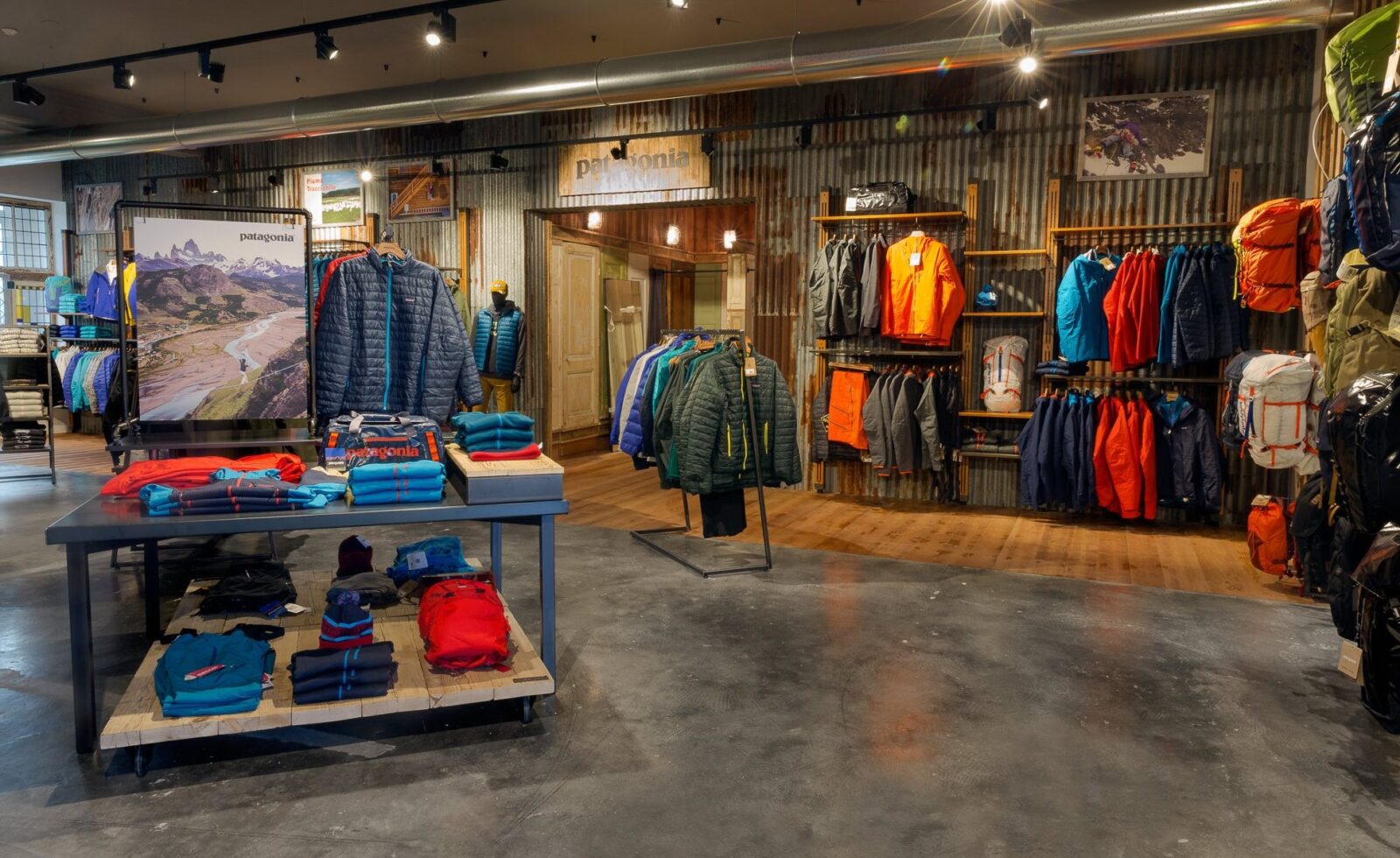
Patagonia founder gives away $3 billion company to environmental causes fighting climate crisis / Credit: Patagonia
Kicking off the next 50 years, Patagonia says it’s “going purpose” instead of “going public”.
All ownership has been transferred to two new entities – Patagonia Purpose Trust and the Holdfast Collective.
Most significantly, every dollar that is not reinvested back into Patagonia will be distributed as dividends to protect the planet.
ADVERTISEMENT
The Patagonia Purpose Trust now owns all the voting stock of the company, and exists to create a more permanent legal structure to “enshrine Patagonia’s purpose and values”, and will help ensure that there is never deviation from the intent of the founder.
It will facilitate what the company says it continues to do best – “demonstrate as a for-profit business that capitalism can work for the planet.”
Instead of “going public,” you could say we’re “going purpose.” Instead of extracting value from nature and transforming it into wealth for investors, we’ll use the wealth Patagonia creates to protect the source of all wealth.
The Holdfast Collective now owns all the non-voting stock, and will use every dollar received from Patagonia to “protect nature and biodiversity”, support thriving communities, and ultimately, work on tackling and preventing climate change.
Each year, profits that are not reinvested back into the business, will be distributed by Patagonia as a dividend to help fight the climate crisis.
Announcing the transfer of the company, Mr Chouinard: “It’s been a half-century since we began our experiment in responsible business, but if we have any hope of a thriving planet 50 years from now, it demands all of us doing all we can with the resources we have.
“As the business leader I never wanted to be, I am doing my part.
“Instead of extracting value from nature and transforming it into wealth, we are using the wealth Patagonia creates to protect the source.
“We’re making Earth our only shareholder – I am dead serious about saving this planet.”
Featured Image – Patagonia
News
GMP officer sentenced after hitting pedestrian during police chase in Rochdale
Emily Sergeant
A police officer has been sentenced this week after he struck and ‘seriously injured’ a pedestrian following a pursuit of a suspected drink driver in Rochdale.
35-year-old Greater Manchester Police (GMP) officer PC Sam Lockley pleaded guilty back in January 2026 following an Independent Office for Police Conduct (IOPC) investigation.
The IOPC investigation established that, in the early hours of the morning on 19 November 2023, PC Lockley was driving a marked police vehicle with the lights and sirens activated, and attempted to stop a suspected drunk driver on Drake Street in Rochdale.
A short pursuit that commenced but stopped merely a minute later after the police vehicle collided with a pedestrian on the footpath of Rochdale Road at approximately 3:30am.
The evidence gathered indicated that PC Lockley failed to slow down as he approached and drove through the red traffic lights at the Kingsway junction, and was travelling at a speed of 96mph in a 30mph zone.
The pedestrian suffered ‘serious injuries’ as a result of the collision, and received extensive medical treatment following.
At a hearing back in February of this year, PC Lockley received a two-year suspended sentence and was ordered to carry out 15 days community service, while also receiving two-year driving disqualification.
Also following the investigation, the IOPC decided that Lockley should face a gross misconduct hearing to face allegations that his manner of driving breached the police standards of professional behaviour.
“We continue to liaise with the force about disciplinary proceedings,” the IOPC concluded.
IOPC Director Amanda Rowe added: “My sympathies remain with the man, who sustained serious injuries, and all those affected by the incident.
“This was a complex investigation which relied on extensive amounts of data and expert analysis and the evidence showed PC Lockley drove at excessive speeds at night-time and although he was responding to a report of a suspected drink driver, it does not excuse his manner of driving.
“PC Lockley admitted he drove in a dangerous manner when he didn’t address hazards or warnings during the pursuit and ultimately by the time he saw the pedestrian, he was travelling too fast to avoid a collision.
“His actions that day have had long-lasting consequences and he has now been held accountable.”
Featured Image – Rawpixel
News
Manchester Town Hall is FINALLY taking wedding and events bookings for the first time since 2018
Emily Sergeant
A new era is on the horizon, as Manchester Town Hall has announced that it’ll be finally taking bookings for weddings and events once again.
That’s right… for the first time since it closed its doors to the public for what is the UK’s biggest restoration project to date back in 2018, one of Manchester’s most iconic landmarks is soon set to welcome its first weddings and events in a decade – with bookings for the city’s most romantic address now open once again.
Manchester Town Hall has stood at the centre of civic life in the city since 1877, and for generations, couples have exchanged their vows within its walls.
Now, as it enters the home stretch of its restoration, the Grade I-listed building is gearing up to kickstart weddings and corporate events from January 2028.
Set reopen to the public next year, first up will be a series of celebratory reopening events – which are yet to be announced – before a phased approach will then allow the building and teams to be fully prepared to host commercial events again from 2028.
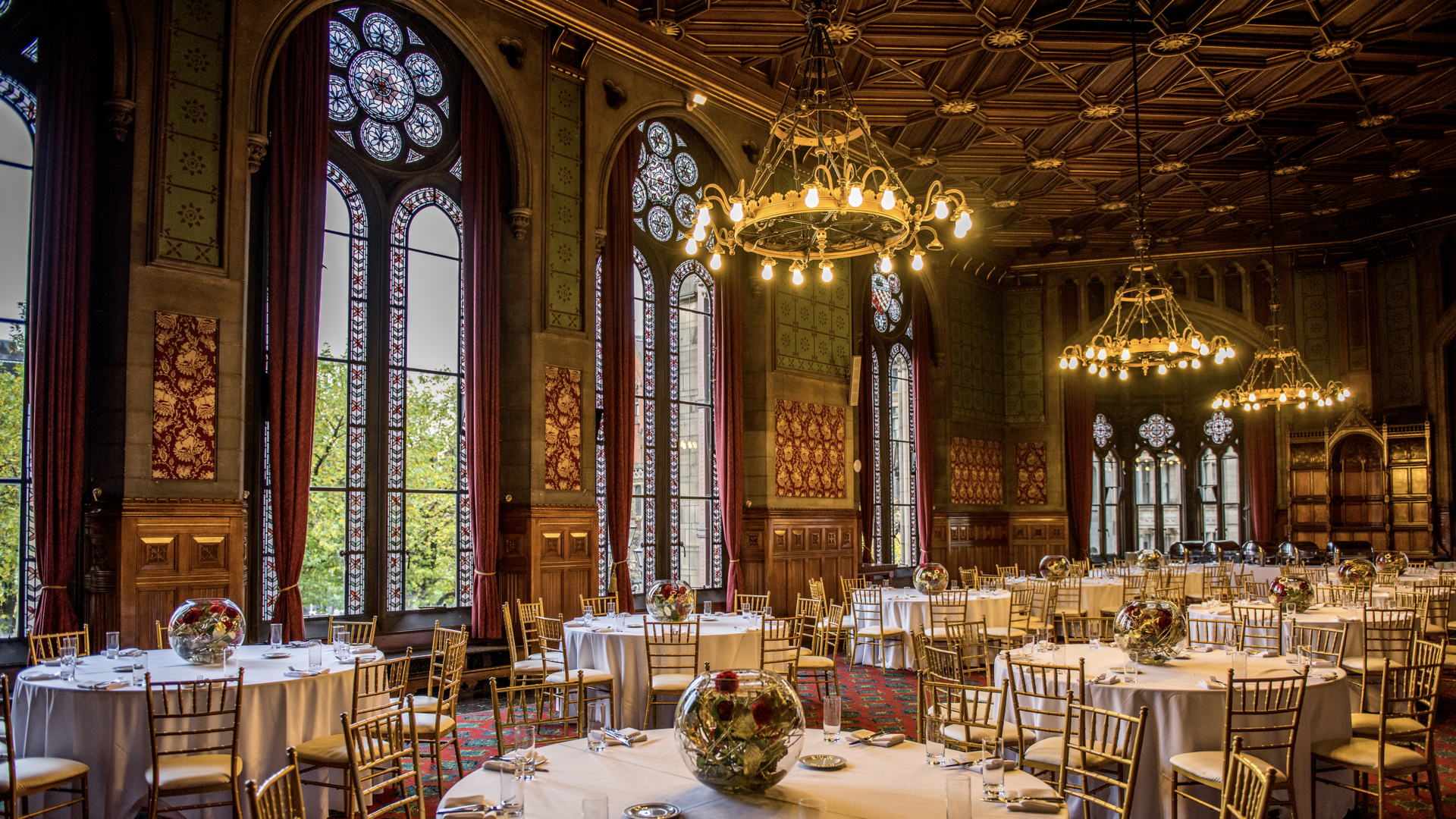
Manchester Town Hall has announced that it’s finally taking wedding and events bookings for the first time since 2018 / Credit: Supplied
From its grand architecture and soaring stained glass windows, to sweeping staircases that offer the perfect ‘just married’ photo opportunities, this one-of-a-kind venue gives couples the opportunity to combine the romance and grandeur of a historic setting with the energy of a city centre celebration.
Inside the restored building, you’ll find The Great Hall, which is a magnificent setting with striking architectural character, as well as The Conference Hall, The Banqueting Hall, and The Reception Room, all of which offer equally characterful spaces that are perfect for private dinners, ceremonies, or corporate events.
The Lord Mayor’s Parlour is one of many settings overlooking the newly reopened Albert Square, while various elegant reception areas provide the perfect location for drinks and arrival moments.
“Our Town Hall is a real Victorian masterpiece and we’re looking forward to sharing it with the public once again,” explained Cllr Garry Bridges, who is Leader of Manchester City Council, as bookings finally open up this week.
“It’s a special building which belongs to the people and it’s great that they will be able to celebrate important landmarks in their lives, such as marriage, in its spectacular setting.
“The Town Hall is full of history. Here’s to many more stories being written within its walls.”
Want to be one of the first people who gets married or hosts an event at Manchester Town Hall once it reopens in 2028? You can enquire about booking here.

 Emily Sergeant -
15th September 2022
Emily Sergeant -
15th September 2022