Industry leaders are warning that pubs and breweries across the UK are on the brink of closure as some energy bills are feared to rise by up 300%.
With the energy price cap set to increase once again in October, and the rising cost of living crisis continuing to make its impact felt nationwide, bosses of six of the UK’s biggest pub and brewing companies have penned and signed an open letter to the government urging it to act in order to avoid “real and serious irreversible” damage to the sector.
The bosses of Greene King, JW Lees, Carlsberg Marston’s, Admiral Taverns, Drake & Morgan, and St Austell Brewery have all signed the letter.
They all sit on the board of British Beer and Pub Association (BBPA).
The letter has been penned because, while domestic customers are facing an 80% increase in average bills in October, businesses operate without a regulated price cap, and this is said to be leaving pub owners struggling to find suppliers willing to power their venues when contracts come up for renewal.
One regional pub had seen their energy bill jump £33,000 for the year, according to Nick Mackenzie, chief executive officer of the Greene King Group – which has more than 2,700 pubs across the country.
ADVERTISEMENT
“While the government has introduced measures to help households cope with this spike in prices, businesses are having to face this alone, and it is only going to get worse come the autumn,” Mr Mackenzie explained.
Pubs and breweries warn of closure over 300% rise in energy bills / Credit: Fred Moon (via Unsplash)
“Without immediate government intervention to support the sector, we could face the prospect of pubs being unable to pay their bills, jobs being lost and beloved locals across the country forced to close their doors, meaning all the good work done to keep pubs open during the pandemic could be wasted.”
The six pub and brewery group bosses have demanded the government implement an urgent support package that would be similar to capping the price of energy for businesses.
ADVERTISEMENT
“We have publicans who are experiencing 300% + increases in energy costs and some energy companies are refusing to even quote for supply,” added William Lees Jones – Managing Director of JW Lees .
“In some instances, tenants are giving us notice since their businesses do not stack up with energy at these costs. These are not just pubs but people’s homes and the hearts of the communities that they sit in.
“Government needs to extend the energy cap to business as well as households.”
— British Beer & Pub Association (@beerandpub) August 30, 2022
In response to the open letter, a government spokesperson said: “No government can control the global factors pushing up the price of energy and other business costs, but we will continue to support the hospitality sector in navigating the months ahead.
“That includes providing a 50% business rates relief for businesses across the UK, freezing alcohol duty rates on beer, cider, wine and spirits and reducing employer national insurance.
ADVERTISEMENT
“This is in addition to the billions in grants and loans offered throughout the pandemic.”
Charli XCX announces massive Manchester arena gig as part of long-awaited UK and European tour
Emily Sergeant
Charli XCX has finally given UK fans the news they’ve been waiting for.
After the genre-bending popstar announced back in June a series of US gigs this autumn to support and celebrate the release of her eighth studio albumMusic, Fashion, Film – which was met with critical acclaim following its release in late July – fans in her home country were wondering when she would announce UK dates to accompany these.
The 34-year-old been had hinting at a UK and European leg of the Music, Fashion, Film Tour on social media over the past couple of months, but nothing was set in stone as of yet.
Then last night, Charli took to Twitter to announce that she ‘finally’ had some information coming today (11 September), and then followed it up with a teaser video – sending fans into a frenzy.
And now, it has been announced this morning that Charli XCX will be taking to the Co-op Live stage early next year.
Support on the UK and European leg of the Music, Fashion, Film Tour will come from US popstar Audrey Hobert.
Hobert has been having somewhat of a star-making year herself in 2026 following the release of her own critically acclaimed debut album, Who’s The Clown?, last year – with her streams racking up daily and drawing in massive crowds on the festival circuit this summer.
Charli XCX – Music, Fashion, Film Tour UK & EU Dates 2027
13 February – 3Arena, Dublin
15 February – OVO Hydro, Glasgow
17 February – Co-op Live, Manchester
19 February – The O2, London
22 February – Ziggo Dome, Amsterdam
24 February – Accor Arena, Paris
Upon release back in July, Music, Fashion, Film the album received acclaim from music critics, who praised its lyrical honesty and experimental production, as Charli took a sonic journey away from the undeniable mega hit that was her 2024 album BRAT, and into ‘Rock Music’ territory.
Music, Fashion, Film topped the charts in the UK and Australia, as well as in Belgium, Hungary, and New Zealand, while reaching the top 10 in countless other countries – including the US.
Charli XCX will be bringing the Music, Fashion, Film Tour to Manchester‘s Co-op Live on Wednesday 17 February 2027, and tickets will go on sale next week.
Featured Image – Henry Redcliffe (Publicity Picture)
News
Manchester Christmas Markets 2026 opening date announced – including new spots
Emily Sergeant
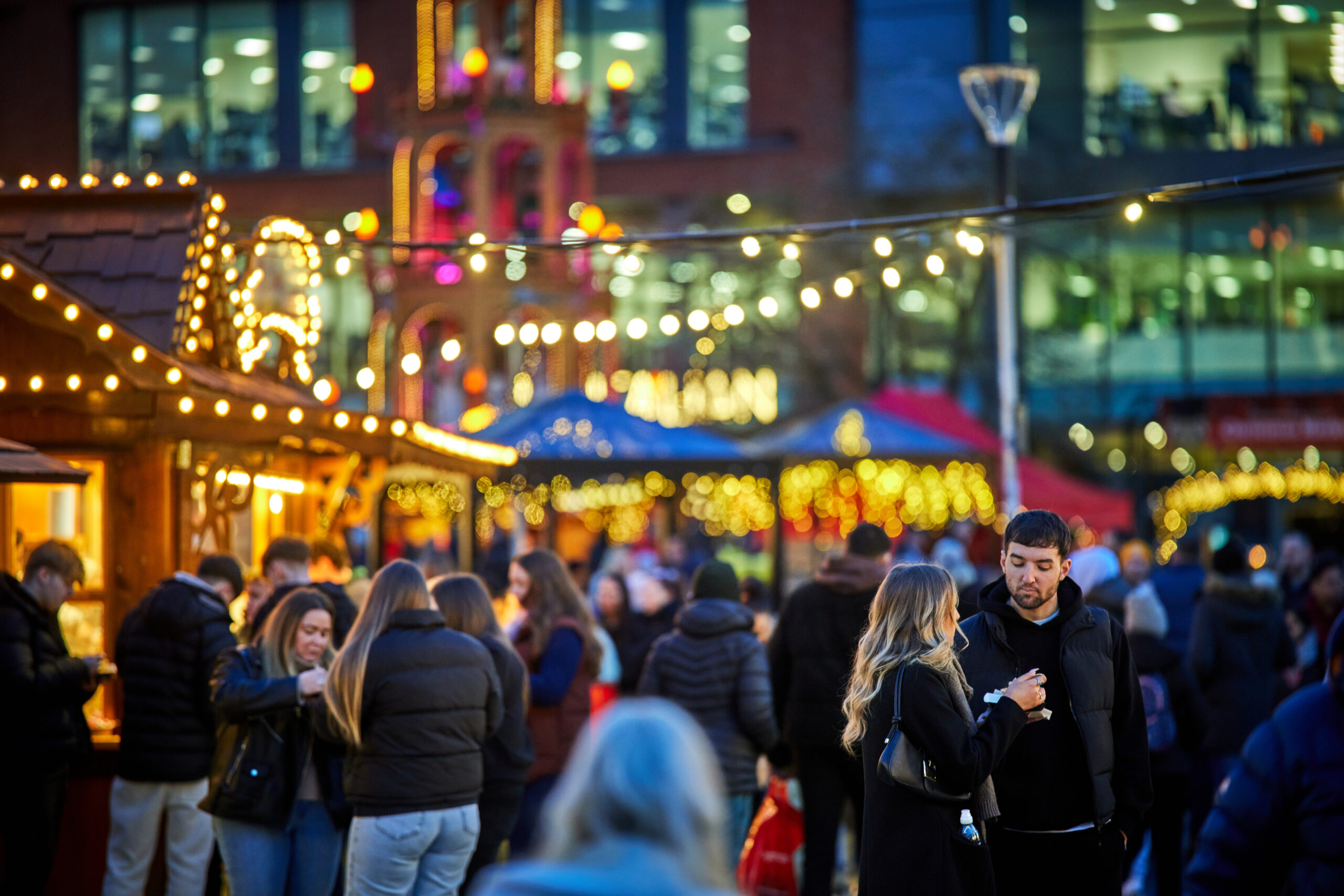
Manchester Christmas Markets are merely months away, and the opening date and important details for 2026’s return have been announced.
It’s official… holidays are coming, and the countdown is on.
Just as we do every year, the Greater Manchester public has been eagerly awaiting news of when the city’s iconic Christmas Markets would be making a comeback for the 2026 festive season. And now, Manchester City Council has announced – initially via the MEN – that the famous wooden huts will be lining the city’s streets once again from the first week in November.
Now in their 27th year, Manchester Christmas Markets are known and loved for bring thousands of people into the city centre each year to fill up on the fantastic festive treats and to soak up all the Christmas atmosphere.
This year will see a bigger return of Albert Square, after the headline-grabbing partial return at last year’s event, with the big wheel also set to make a comeback.
The Manchester Christmas Markets 2026 return date has officially been confirmed / Credit: The Manc Group | Flickr
And there’s also set to be some new locations too for 2026, with Lincoln Square joining in on the action this year.
There will also be big changes to St Ann’s Square this year, according to the Council, with what is being described as a ‘brand new layout’ bringing in a bigger number of market stalls.
There will be a total of 210 stalls spread out across the city centre.
There’s officially eight weeks to go until the iconic wooden huts line the streets / Credit: Manchester City Council
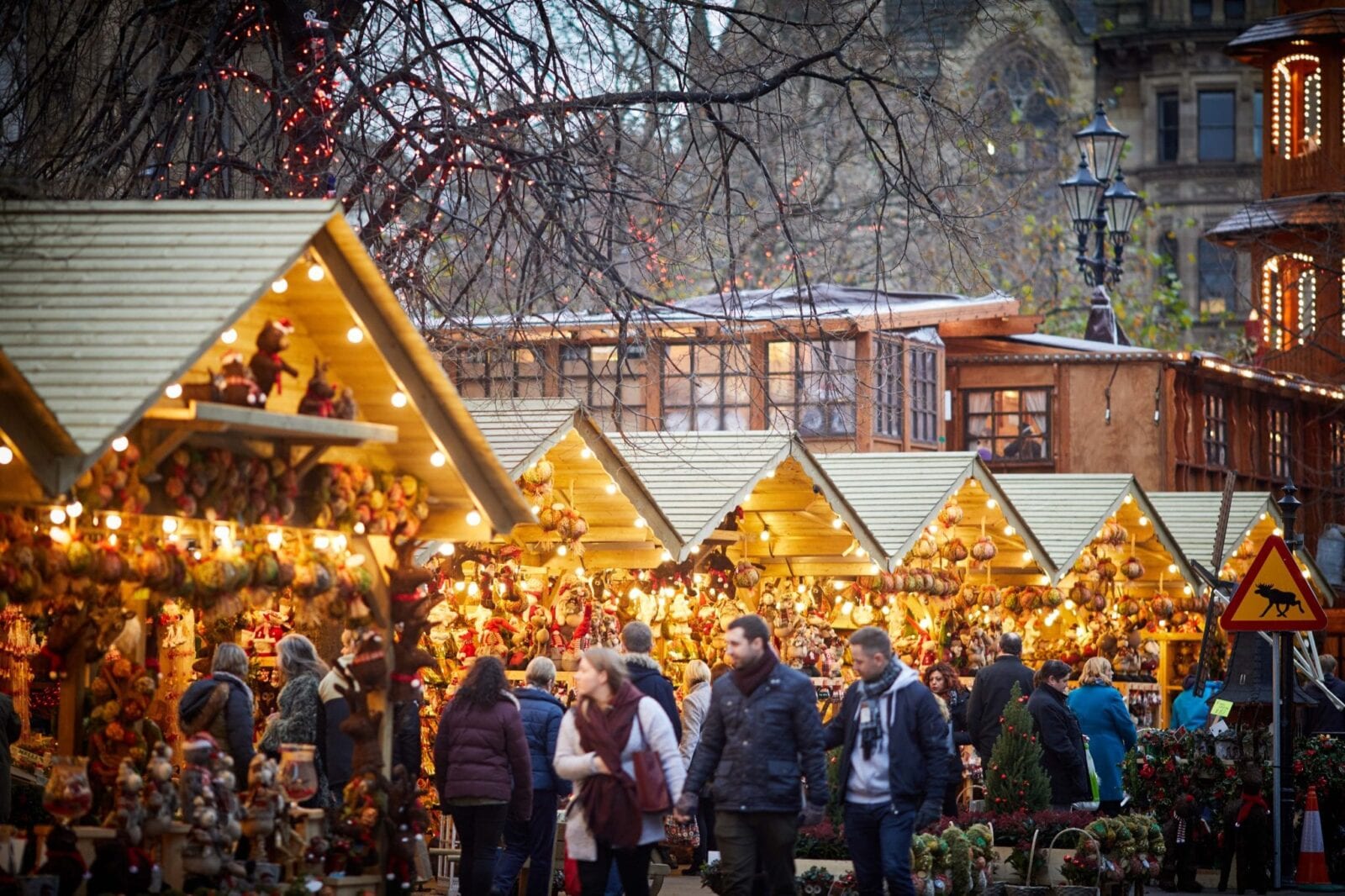
Promising to be plenty on offer for seasonal shoppers of all ages, it has been confirmed that 2026 will see the iconic wooden ski chalet market stalls take over Albert Square, Lincoln Square, King Street, St Ann’s Square, Exchange Street, New Cathedral Street, Exchange Square, Corn Exchange, Cathedral Gardens, and Market Street.
Of course, everyone’s favourite big red legend, Zippy Santa, will also be back this year, although his location has not been set in stone just yet, so stay tuned.
“There’s nowhere that does Christmas quite like Manchester,” commented Councillor Pat Karney, who is the Christmas spokesperson for Manchester City Council.
“The return of Christmas festivities last year to Albert Square was a triumph and we’re looking to build on this success with a fantastic festive offer there again this year that is sure to be a hit with everyone who visits.
“Our legendary Christmas markets draw thousands upon thousands of visitors every year from right around the world and this year’s markets look set to be the very best yet, with a brand-new location in Lincoln Square just around the corner from Albert Square, and a brand-new look and even more stalls in St Ann’s Square.”
He concluded: “Christmas in Manchester will be absolutely magical this year and we can’t wait to welcome everyone and celebrate the festive season with them.”
Manchester Christmas Markets 2026 will officially open across the city on Friday 6 November and close on Tuesday 22 December – with the exception of Albert Square and Cathedral Gardens, which will remain open right through until Sunday 3 January.

 Emily Sergeant -
30th August 2022
Emily Sergeant -
30th August 2022