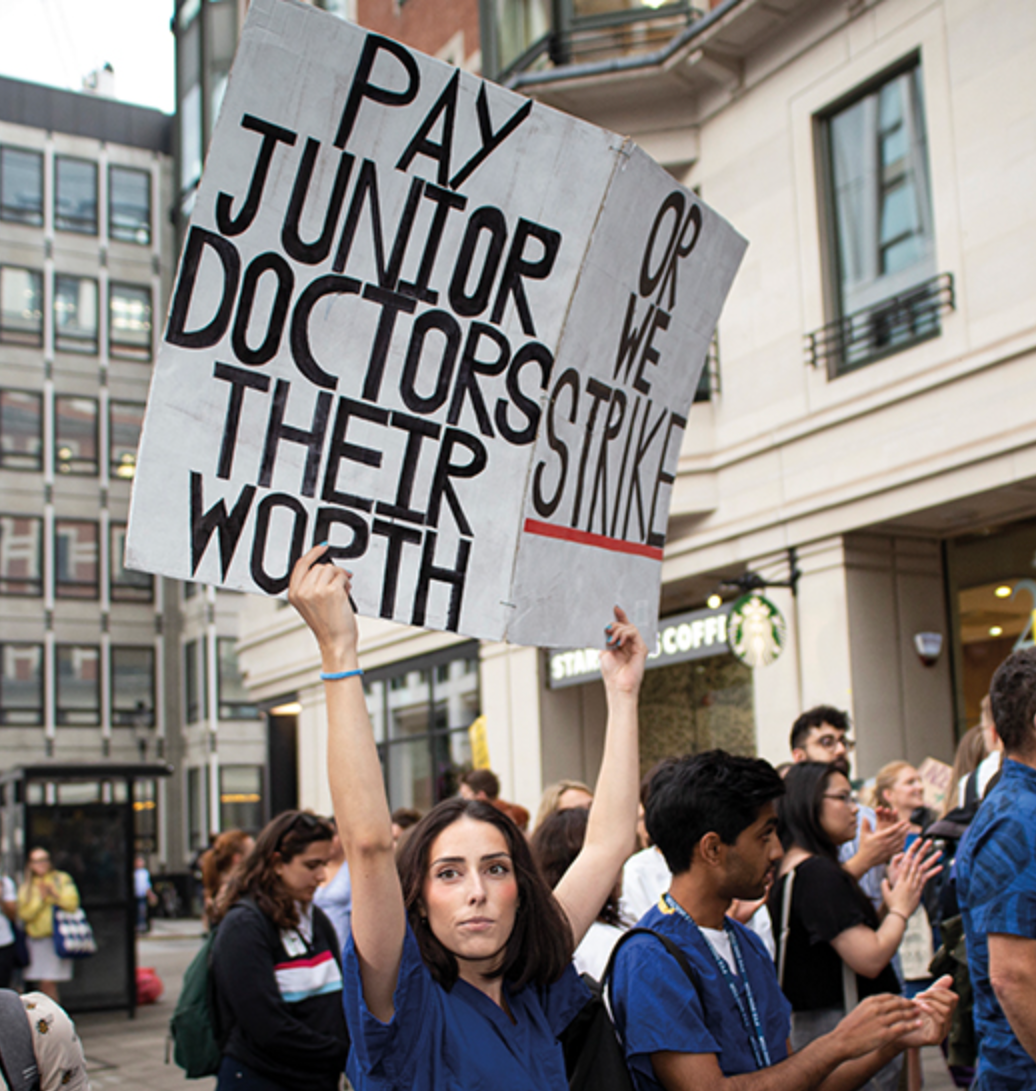
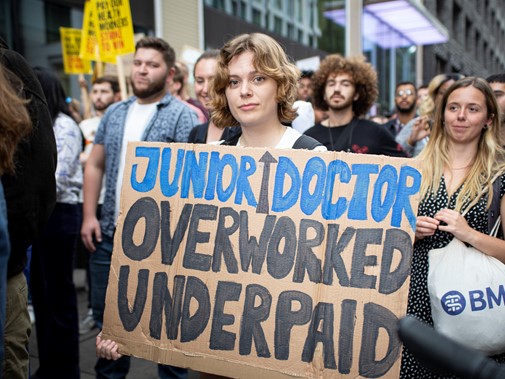
Tens of thousands of junior doctors in England are to walk out today on the first of three days of strike action planned over pay.
Ahead of what is predicted to be one of the single biggest days of industrial action in a significant period of time, with civil servants, teachers, university staff, BBC journalists, and more who are members of several trade unions, all walk out on Budget Day this Wednesday (15 March), tens of thousands of junior doctors are staging three days of strikes over pay – with the first being today.
Following a huge vote in favour of their longest-ever period of industrial action, junior doctors – who are members of the British Medical Association (BMA) in England – will form picket lines outside hospitals across the country.
The BMA said newly-qualified medics make just £14.09 an hour, and added that junior doctors in England will have suffered a 26% real-terms pay cut since 2008/09.
The union also claimed they earn less than a barista in a coffee shop.
ADVERTISEMENT
Thanks to this Government, junior doctors can now make more money serving coffee than saving patients.
It comes after popular chain Pret a Manger announced that it would be giving staff their third pay rise in 12 months amid the rising cost of living crisis – meaning they are able to earn up to £14.10 an hour, based on location and experience.
“Thanks to this government you can make more serving coffee than saving patients,” the BMA said in its campaign launching the industrial action.
ADVERTISEMENT
“This week, junior doctors will take strike action so they are paid what they are worth.”
Tens of thousands of junior doctors in England begin three-day strike over pay / Credit: BMA
As junior doctors nationwide report struggling with their finances more than ever before, Dr Robert Laurenson and Dr Vivek Trivedi, co-chairmen of the BMA junior doctors committee, explained why the union members are striking.
“Is £14.09 an hour really all junior doctors are worth?,” they asked.
ADVERTISEMENT
“These are people who can be providing life-saving care, having trained intensively at medical school, and racking up around £100,000 worth of debt in the process. We are fully supportive of any worker getting an inflation-matching pay rise, and it is worth thinking on the fact that the government has cut junior doctors’ pay by so much that they could earn more serving coffee.
“Is it any surprise that junior doctors are looking for jobs abroad or in other fields when the government is telling them they are worth more than a quarter less than they were in 2008?
“Losing such valuable clinicians to other countries and professions when waiting lists are at record highs means patients will suffer even more than they are already.
“This is why doctors are going on strike.”
Junior doctors have voted YES to strike action in England.
“We are fighting to restore our value. We are fighting to restore our workforce to make the NHS an effective healthcare system again.”
Health and Social Care Secretary Steve Barclay said the strike action being staged by junior doctors this week is “incredibly disappointing”, and claims the the BMA had declined his offer to “enter formal pay negotiations on the condition strikes are paused”.
He also warned of disruption over the coming days.
“We have been working closely with NHS England on contingency plans to help protect patient safety during strikes, prioritising emergency, urgent and critical care – but there will inevitably be some disruption for patients,” Mr Barclay concluded.
Prime Minister Rishi Sunak also urged junior doctors to “accept the government’s offer to come in and have talks, the other unions have done that and we are making progress.”
Featured Image – BMA
News
Manchester man jailed after sexually assaulting and masturbating in front of woman on train
Emily Sergeant
A man has been jailed after sexually assaulting and masturbating in front of a woman on board a train to Manchester.
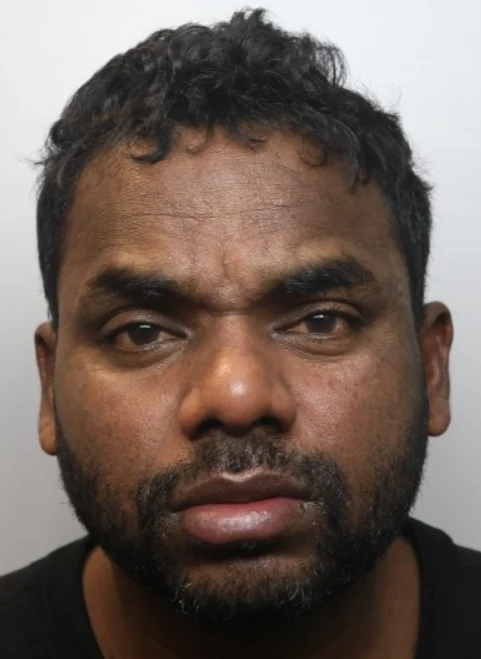
Following an extensive British Transport Police (BTP) investigation, Nisan Fernando Kurukulasuriya, of Troutbeck Road in Altrincham, was sentenced at Manchester Crown Court last month.
At the trail last month, the court heard how, on Monday 20 April 2026, 39-year-old Kurukulasuriya was on a train from Stoke to Manchester and sat next to a woman he didn’t know, who was on the phone.
He then sexually assaulted her repeatedly, doing so again even after being pushed away by the woman.
The woman then noticed that Kurukulasuriya had exposed himself and was masturbating in front of her. She shouted at him, and in response, he stood up and ran away to leave the train – but the woman immediately got up to report the incident to staff.
When the train arrived at Manchester Piccadilly, the woman alerted a member of staff while Kurukulasuriya was stood only a few meters away, and BTP were subsequently called straight away.
Police quickly attended and arrested Kurukulasuriya.
When police interviewed him, Kurukulasuriya showed no remorse for his actions and refused to answer any questions put to him.
After pleading guilty to Sexual Assault and Outraging Public Decency at a previous court hearing, Kurukulasuriya was sentenced to eight months’ imprisonment, and was also handed a 10-year Sexual Harm Prevention Order (SHPO) which will bar him from sitting next to any woman he doesn’t know on public transport, as well as being put on thensex offenders register for 10 years.
BTP Detective Sergeant, Mark Haviland, called Kurukulasuriya a ‘despicable man’ who targeted a woman travelling alone ‘for his own sick sexual gratification’.
Featured Image – BTP
News
GMP officer sentenced after hitting pedestrian during police chase in Rochdale
Emily Sergeant
A police officer has been sentenced this week after he struck and ‘seriously injured’ a pedestrian following a pursuit of a suspected drink driver in Rochdale.
35-year-old Greater Manchester Police (GMP) officer PC Sam Lockley pleaded guilty back in January 2026 following an Independent Office for Police Conduct (IOPC) investigation.
The IOPC investigation established that, in the early hours of the morning on 19 November 2023, PC Lockley was driving a marked police vehicle with the lights and sirens activated, and attempted to stop a suspected drunk driver on Drake Street in Rochdale.
A short pursuit that commenced but stopped merely a minute later after the police vehicle collided with a pedestrian on the footpath of Rochdale Road at approximately 3:30am.
The evidence gathered indicated that PC Lockley failed to slow down as he approached and drove through the red traffic lights at the Kingsway junction, and was travelling at a speed of 96mph in a 30mph zone.
The pedestrian suffered ‘serious injuries’ as a result of the collision, and received extensive medical treatment following.
At a hearing back in February of this year, PC Lockley received a two-year suspended sentence and was ordered to carry out 15 days community service, while also receiving two-year driving disqualification.
Also following the investigation, the IOPC decided that Lockley should face a gross misconduct hearing to face allegations that his manner of driving breached the police standards of professional behaviour.
“We continue to liaise with the force about disciplinary proceedings,” the IOPC concluded.
IOPC Director Amanda Rowe added: “My sympathies remain with the man, who sustained serious injuries, and all those affected by the incident.
“This was a complex investigation which relied on extensive amounts of data and expert analysis and the evidence showed PC Lockley drove at excessive speeds at night-time and although he was responding to a report of a suspected drink driver, it does not excuse his manner of driving.
“PC Lockley admitted he drove in a dangerous manner when he didn’t address hazards or warnings during the pursuit and ultimately by the time he saw the pedestrian, he was travelling too fast to avoid a collision.
“His actions that day have had long-lasting consequences and he has now been held accountable.”

 Emily Sergeant -
13th March 2023
Emily Sergeant -
13th March 2023