England prepares to take its biggest step out of coronavirus restrictions on Monday 17 May as the country moves to the third stage of the government’s lockdown exit roadmap.
Rules on hugging, meeting indoors, and gathering in bigger groups are all changing from this date – returning many freedoms which have been banned for over six months in some parts of the country.
The current national lockdown has been lifted gradually since March 8 – proceeding smoothly with a steady decline in national cases accompanied by a mass vaccination campaign.
April 12 saw the return of non-essential retail, outdoor hospitality, gyms, personal care premises, outdoor attractions and self-contained accommodation.
But mounting concern over the spread of a more infectious strain of COVID-19 had begun to cast doubt as to whether more restrictions could be lifted as intended on May 17.
ADVERTISEMENT
Testing and vaccinations have been ramped up in towns where cases are spiking such as Bolton, and local lockdowns are not yet being ruled out – with infection rates set to be closely monitored in the coming weeks to determine if different action is required in future.
But crucially, ministers have agreed to “cautiously” proceed with the roadmap as planned – with May 17 marking a memorable day on the 2021 calendar for everyone in England.
ADVERTISEMENT
Here’s what’s set to change.
Social contact
Some restrictions on social contact are being removed from May 17 / Image: Priscilla Du Preez via Unsplash
Restrictions on social contact are being removed from May 17.
Six people or two households can meet indoors from this date, whilst overnight stays are also allowed.
ADVERTISEMENT
Care home residents can also have up to five named visitors.
Gatherings of up to 30 people are now allowed outdoors.
Attendance numbers allowed at funerals are determined by the size of the venue.
Pubs, restaurants and cafes
Indoor hospitality is reopening from May 17 / Image: cottonbro via Pexels
Bars, restaurants, pubs and cafes right across the country are welcoming back customers this month.
ADVERTISEMENT
The hospitality sector is allowed to serve indoors from May 17 – having been operating on an outdoor-only basis since April 12.
Night Time Economy Adviser for Greater Manchester Sacha Lord embarked on a campaign to see the rules lifted earlier, and despite some initial success in helping convince judges to drop the substantial meal rule in pubs, his latest efforts to get indoor hospitality reopened sooner than May 17 were shut down in court.
Indoor service can resume from May 17 – although customers still have to order, eat and drink while seated.
Holidays can resume
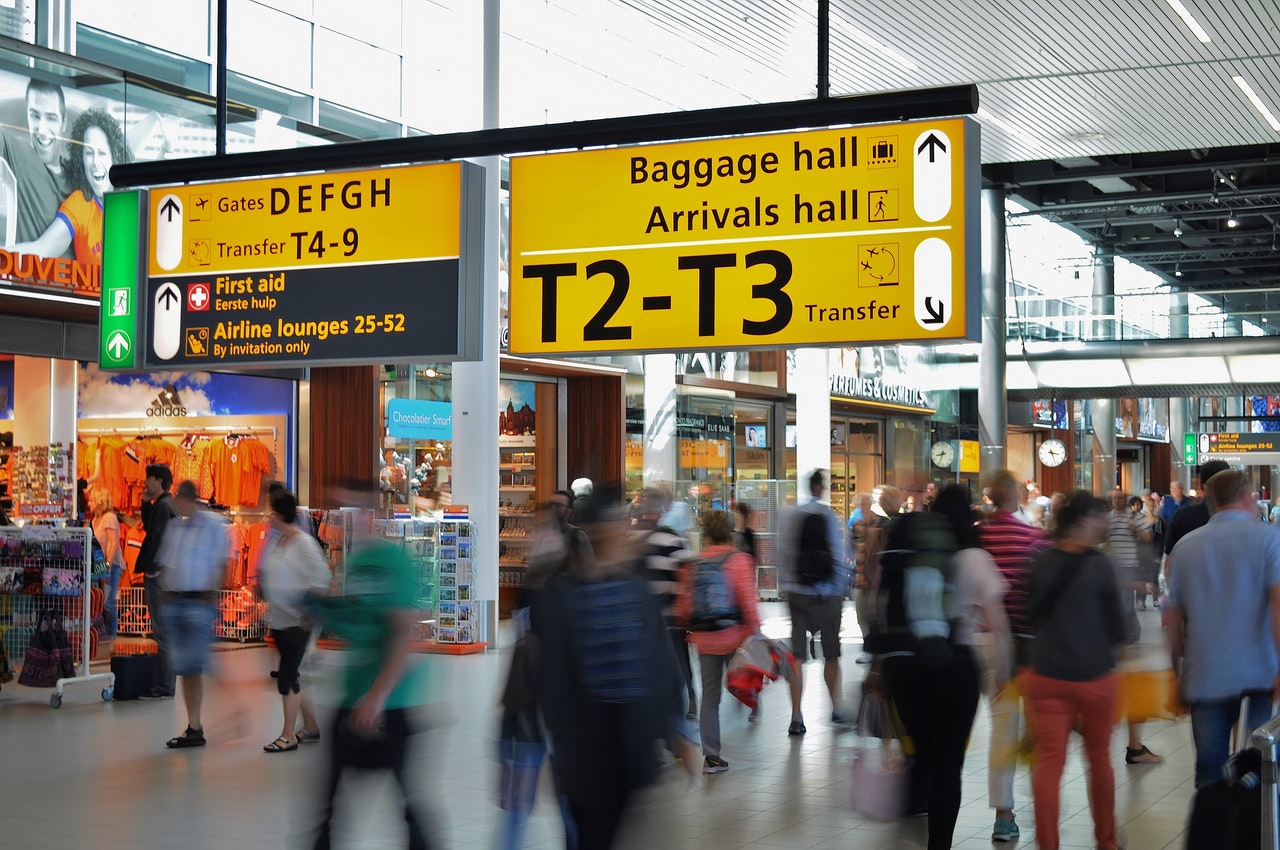
Overseas travel and holidays will be permitted from May 17 / Image: Pexels
The door has reopened from domestic and international travel from May 17.
Hotels, hostels and B&Bs in England can take bookings for leisure purposes.
ADVERTISEMENT
Overseas holidays are also allowed again, but with restrictions. The government has introduced a travel system that categorises nations as ‘red’, ‘amber’ or ‘green’ depending on a number of risk factors – such as infection rates and the presence of variants.
The traffic light system is as follows:
Green: Arrivals will not need to quarantine when they arrive in England.
Amber: Arrivals must quarantine for 10 days when they arrive in England.
Red: Arrivals in England must stay for 10 days in a managed quarantine hotel.
Currently, a handful of countries have been added to the ‘green list’ – including Australia, New Zealand, Gibraltar, Iceland and Portugal.
Indoor culture and entertainment venues such as museums, theatres and cinemas all reopen from May 17 – with a big campaign launched in Manchester to welcome people back after 200 days of closures.
ADVERTISEMENT
Indoor adult group sports and exercise classes are allowed to recommence – with steam rooms and saunas also permitted to reopen.
Larger performances and sporting events with a reduced number of spectators will take place following a number of trial events this month.
From May 17, indoor venues can welcome up to 1,000 people or operate half-full (whichever is a lower number).
Outdoor venues can hold up to 4,000 people or operate at 50% capacity (whichever is a lower number).
In the largest outdoor seated venues, where crowds can be spread out, up to 10,000 people will be able to attend (or a quarter-full, whichever is lower).
ADVERTISEMENT
The roadmap to exiting lockdown can be found in full on the government website.
Featured image: WelcomeBackManchester
News
Victim named and murder investigation launched after young woman is killed in Newton Heath stabbing
Emily Sergeant
The victim of a street stabbing in Newton Heath this week has been named for the first time as a murder investigation continues.
It comes after officers from Greater Manchester Police (GMP) responded to reports of a disturbance at around 2am yesterday (Thursday 15 October) on Dorking Avenue, in the Newton Heath area of Manchester, and when they arrived on the scene, they found a woman in her 20s with serious injuries that were ‘consistent with a stabbing’.
Despite best efforts of all emergency services involved, the young woman was sadly pronounced dead at the scene.
As the murder investigation progresses, the woman has now been publicly named and a photo of her has been released for the first time.
She has been named as 26-year-old Alisha Samuels.
At this time, one man, aged 25, has been arrested on suspicion of murder, and a man and woman, aged 61 and 38, have been arrested on suspicion of assisting an offender, and they all remain in custody – with officers continuing their enquiries to establish the full circumstances of this incident.
Alisha’s family have asked for privacy whilst they deal with the devastating loss of their loved one, GMP has stated.
“We are continuing to urge people who may have information in relation to this incident to please come forward to support our investigation and bring justice for Alisha,” the police force said in a public appeal.
Anyone who may have witnessed the incident, or has mobile phone, CCTV, or doorbell footage, is urged to call GMP on 0161 856 5464, or contact them via the Major Incident Public Portal here.
Alternatively, you can contact Crimestoppers on 0800 555 111
Featured Image – GMP (Family Handout)
News
Former supply teacher jailed for multiple upskirting and AI sex offences across Greater Manchester
Emily Sergeant
A former supply teacher has been jailed for multiple upskirting and AI sex offences in schools across Greater Manchester.
Abusali Rahman – a British national of Bangladeshi ethnicity from Salford – appeared in Bolton Crown Court this week for his sentencing after first being charged with, and then pleading guilty to, several offences.
The offences are including, but not limited to, 12 counts of taking an indecent photograph/pseudo-photograph of a child (images obtained by upskirting), three counts of making indecent photograph / pseudo-photograph of a child (making AI-generated images), and one count of attempting to meet girl under 16 following sexual grooming.
The offences are alleged to have taken place between December 2023 and June 2025, according to Greater Manchester Police (GMP).
Twelve girls have been identified in relation to the upskirting offences – aged between 13 and 16 at the time of the alleged offending – at seven high schools in three Greater Manchester boroughs (Bury, Bolton, and Salford).
GMP says it has remained in close contact with the schools, local authorities, and other partners throughout the investigation to ensure all appropriate support is in place for those who need it.
Additionally, the court also heard how Rahman amassed a collection of images of young girls, using AI and other methods to sexualise them.
The images numbered more than 300 in total, ranging from Category A to Category C classifications, and Rahman would post these on social media, often alongside humiliating and disgusting captions.
Rahman was sentenced to six years in prison, and will also be subject to a 20-year Sexual Harm Protection Order.
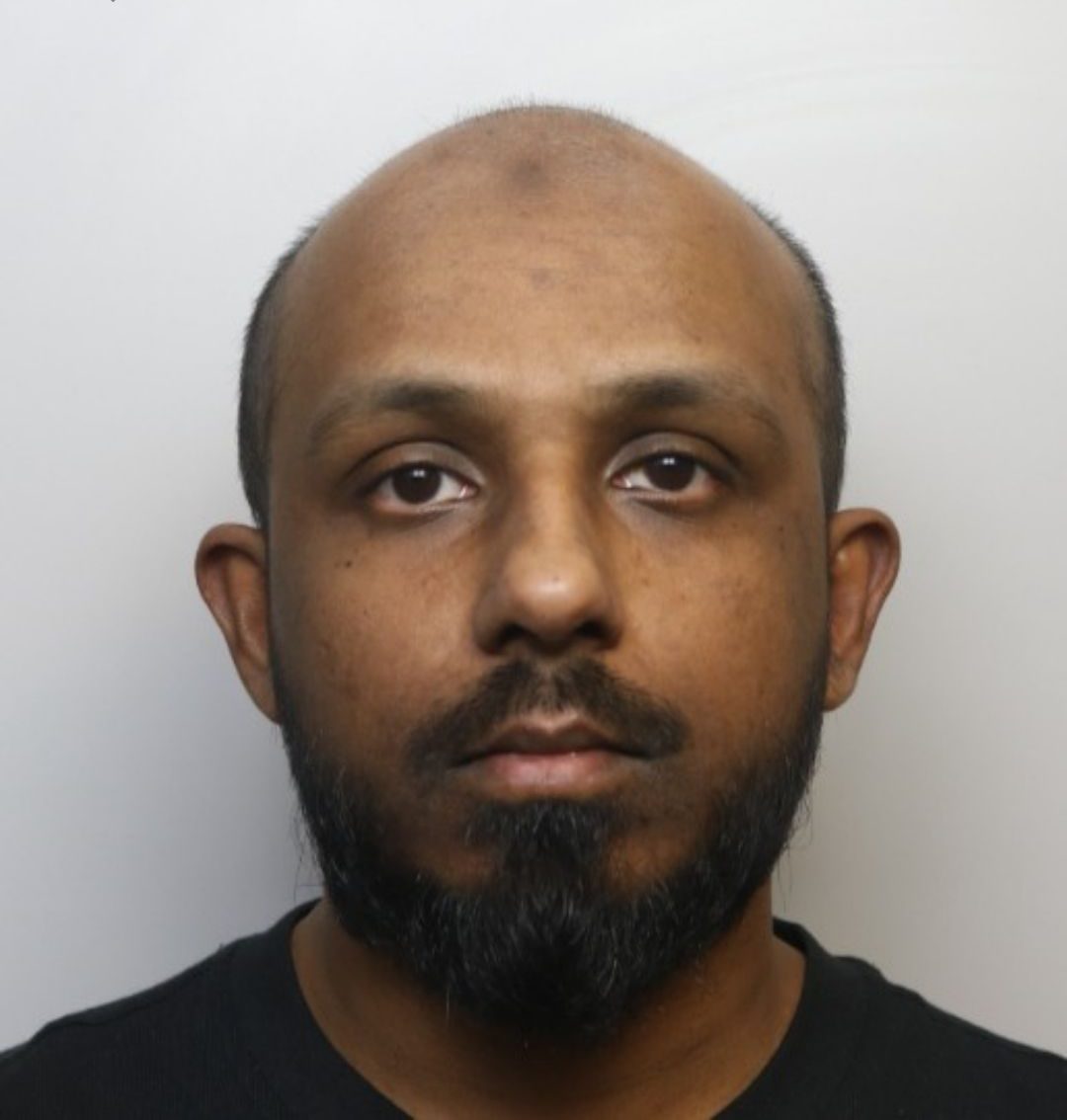
A former supply teacher has been jailed for child sex offences in schools across Greater Manchester / Credit: GMP
Detective Constable Lisa McGaffin, from GMP’s Bolton Child Protection Team, described Rahman’s crimes as ‘absolutely abhorrent’.
“My thoughts throughout this process have always been with the young girls who have been subject to such indignity,” DC McGaffin said following the sentencing this week. “Their welfare and support will always be a priority for us.
“While working as a teacher – someone who young children should trust and be safe with – Rahman repeatedly took secret photos for his own sick gratification, before posting images online which showed his total disregard for the girls’ respect and dignity.

 The Manc -
17th May 2021
The Manc -
17th May 2021