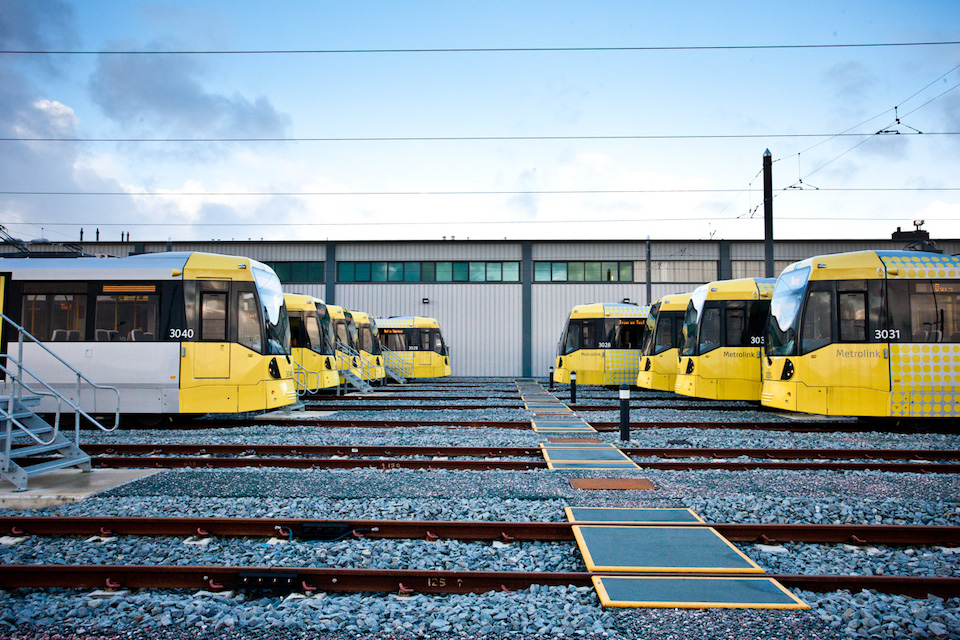
Some bikes are now allowed on trams in Greater Manchester from this week, as a ‘supervised trail’ has now been launched.
Passengers who regularly use the Metrolink will know that folded bikes in bags have been permitted on trams in the region under the current rules for quite some time now, but standard cycle bikes and non-standard bikes are not allowed.
Officially launching last Thursday (29 February), and being supervised by the tram operator, Keolis Amey Metrolink (KAM) under test conditions, the ‘guided pilot’ is taking place with volunteers selected by TfGM.
ADVERTISEMENT
The pilot will run for the next four to six weeks on off-peak services on different lines, routes, and stops across the Metrolink network, and at different times of the day and days of the week.
However, it is very important to note that, during the ‘guided pilot’, there has been no change to TfGM and Metrolink’s ‘Conditions of Carriage’ policy – which means that bikes and non-standard cycles are not allowed to be taken onto trams by members of the public, and only invited participants under supervision by KAM staff will be able to take their bikes on the Metrolink network.
ADVERTISEMENT
Greater Manchester Mayor Andy Burnham committed to carrying out the pilot study as part of his mayoral manifesto.
It was also recommended by the region’s Active Travel Commissioner, Dame Sarah Storey.
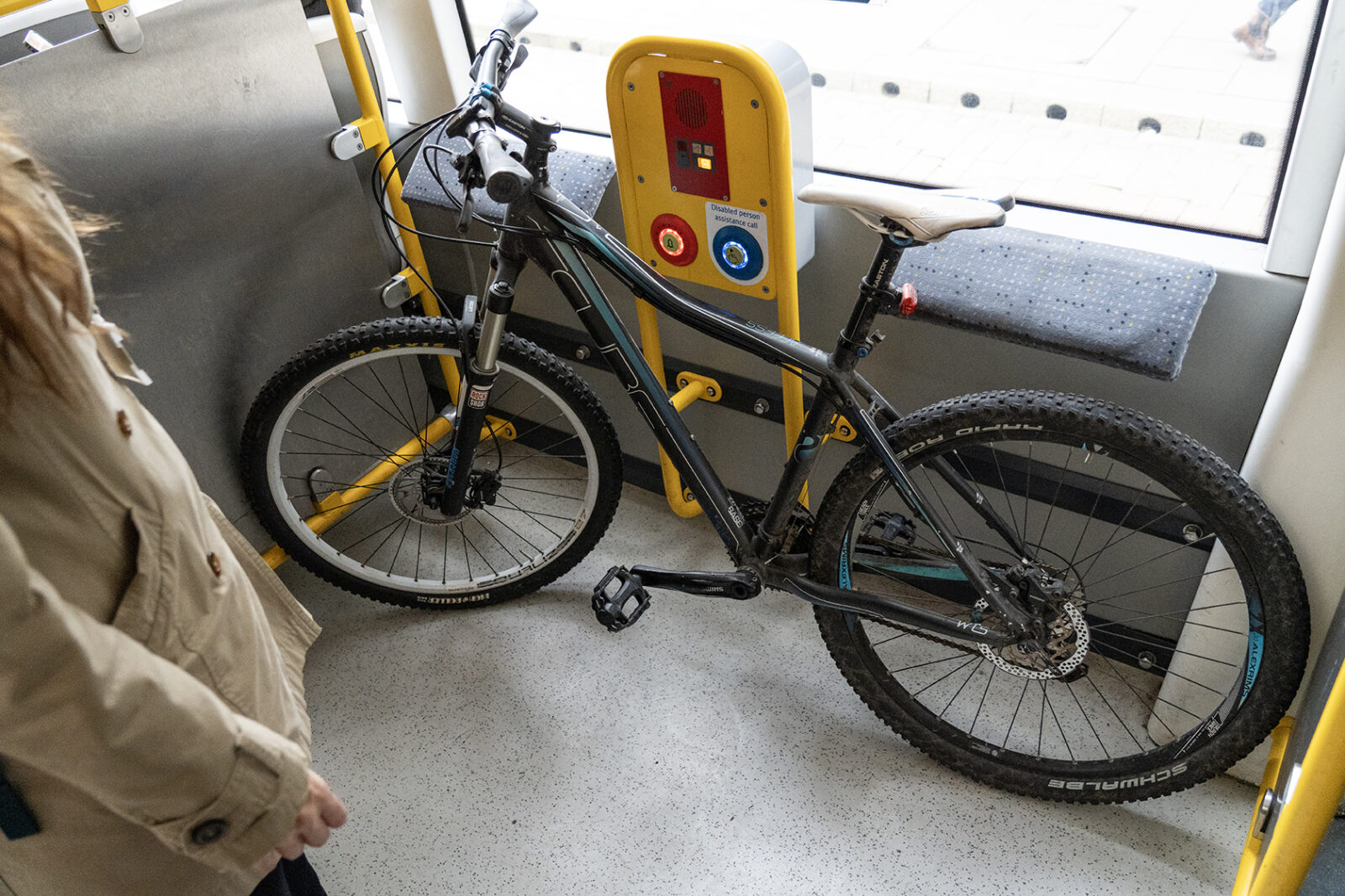
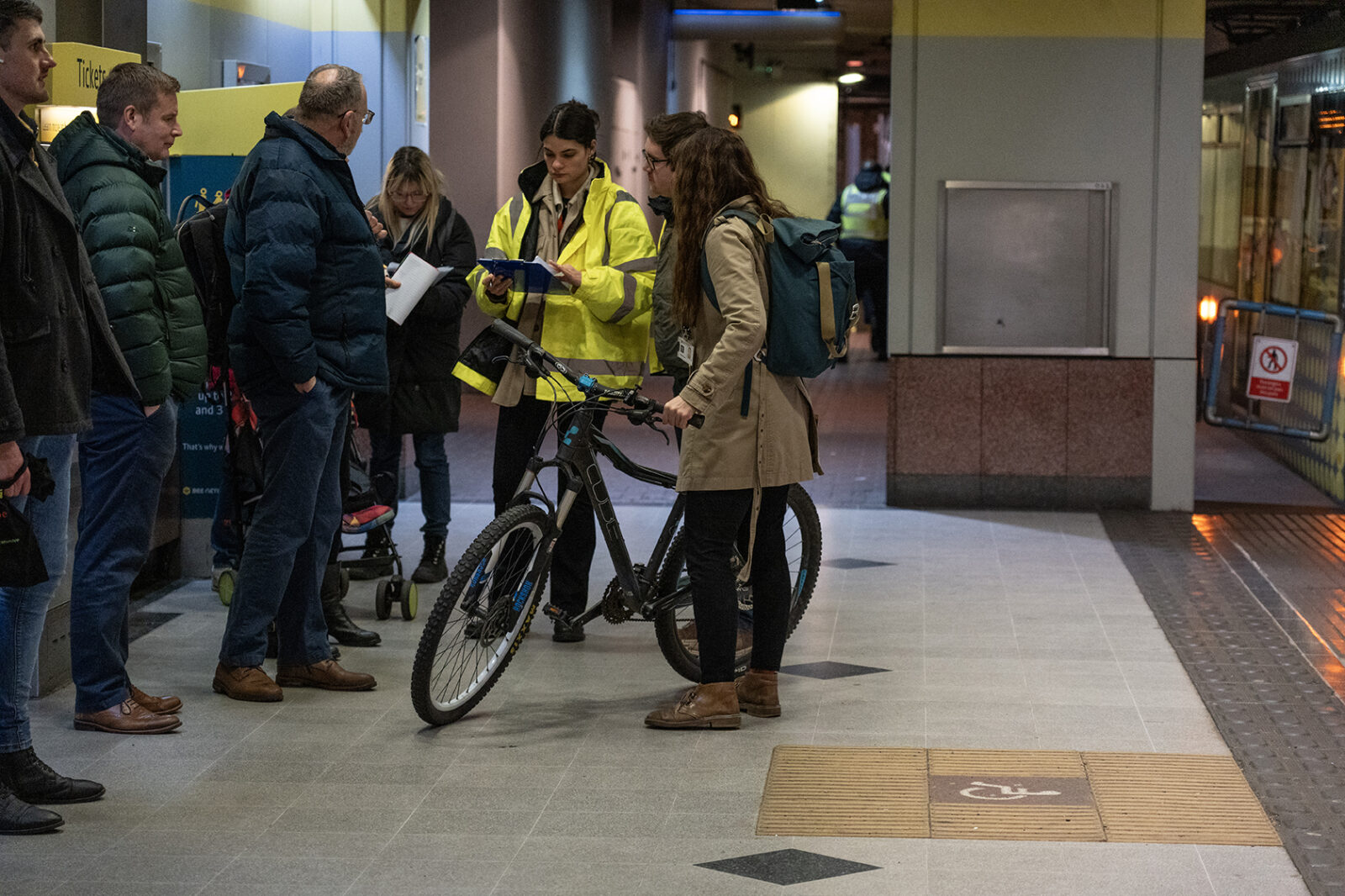
Bikes are now allowed on Greater Manchester trams as ‘supervised trial’ begins / Credit: TfGM
TfGM says the pilot has been developed to ensure “all passenger groups are represented” – which includes people with disabilities, and those travelling with pushchairs.
ADVERTISEMENT
Researchers’ aim of the pilot is to observe different scenarios involving bikes on trams in a controlled way, and record the experiences of everyone using trams.
The space required to transport bikes alongside passengers, as well as the existing challenges of accommodating bikes, both on trams and the wider network – including stops and transport interchanges – are to be the main points of consideration.
Not only that, but TfGM has also said it will be using the pilot to look at the carriage of adapted bikes used as mobility aids, scooters, and a broader range of mobility scooters that are not currently permitted too.
Only bikes approved by TfGM for the pilot are permitted on trams across the region / Credit: TfGM
Feedback from other passengers will also be recorded as a part of the pilot, along with feedback from the volunteers taking part and any other participants involved, and then, a follow-up report will be taken to the Bee Network Committee later this year with recommendations about bikes on the Metrolink network in the future.
“I’m pleased the pilot to test the carriage of bikes and non-standard cycles on trams is now underway,” commented Danny Vaughan, who is the Head of Metrolink at TfGM, “and I look forward to reviewing its findings.
ADVERTISEMENT
“I would like to remind Metrolink customers and cyclists that only invited volunteers can take part in the pilot, and that the current conditions of carriage still stand.
You can read the current rules around taking bikes on trams on the TfGM website here.
Featured Image – TfGM
Travel & Tourism
The surprisingly luxurious caravan park that’s the perfect place for a Peak District getaway
Daisy Jackson
We probably all have fond memories of caravan holidays as a child, frolicking around the British countryside before tucking up on a squeaky single bed – and as fond as those memories may be, they don’t exactly scream *luxury*.
But the times are a-changing, and so are UK holiday parks, with many caravans and static homes now kitted out just as beautifully as any premium lodge or Airbnb.
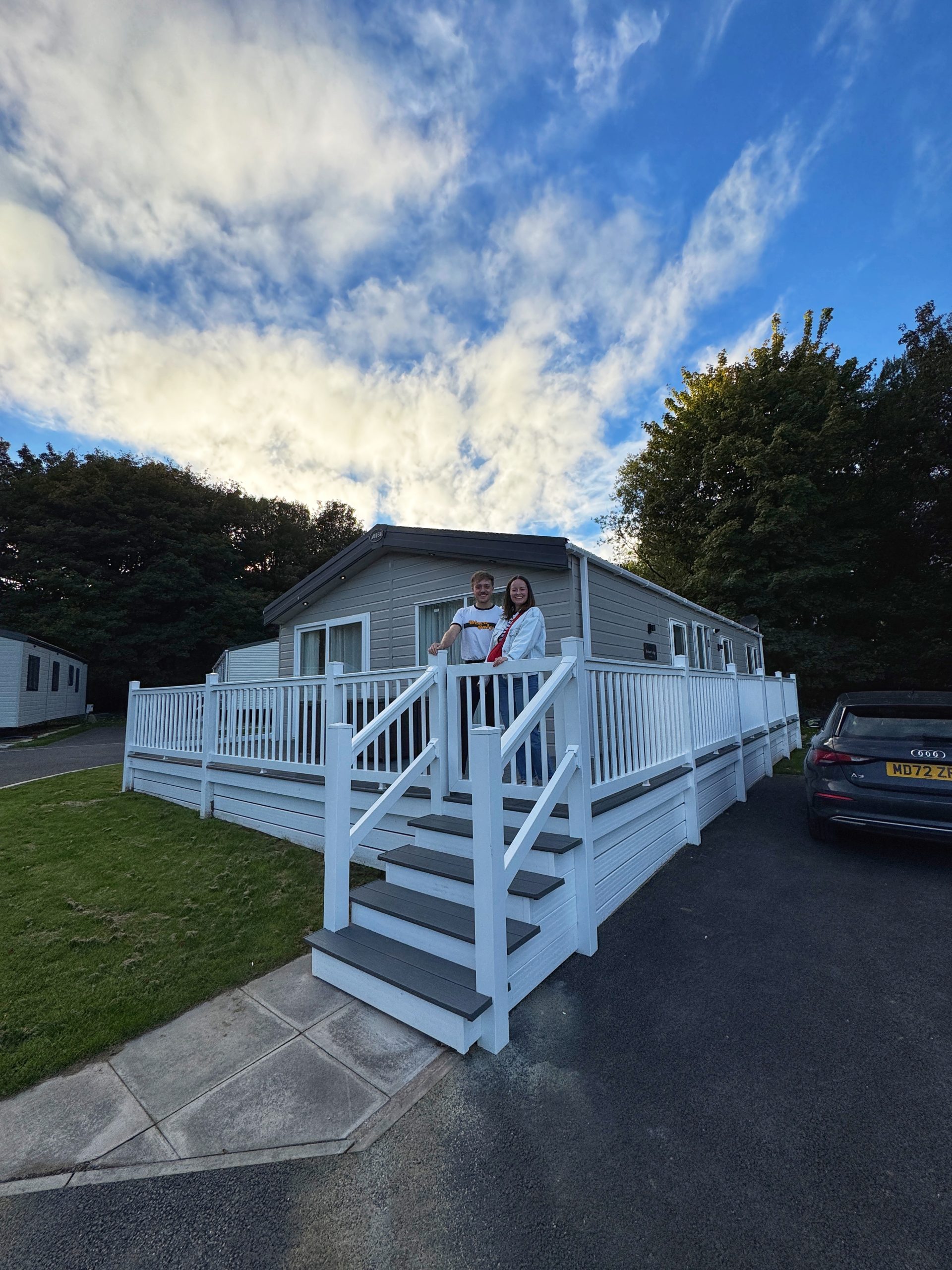
You’ll find some such caravans at Newhaven Holiday Park, which sits right at the heart of the Peak District and is perfectly placed for exploring some of the area’s best attractions.
The platinum lodges here feature sizeable living spaces – a lounge, fully-equipped kitchen, and dining room (again, unlike your childhood holidays where you’d just fold away the table) – alongside three bedrooms, two of which have en suite bathrooms.
The design details are premium, like matte black bathroom fittings, pale wood details, and plush carpets.
The huge living space and kitchenNewhaven Holiday ParkAn en suite bedroom in the platinum lodge
But really, the best thing about staying at Newhaven Holiday Park is that it lands you right on the doorstep of some of the Peak District’s best bits.
Within seconds, you’ll find yourself surrounded by rolling hills dotted with sheep and pheasants, and within a short drive you’ll be strolling around the beautiful grounds of Chatsworth Estate, currently ablaze with autumn colours.
If you’re feeling peckish after your walk, head a short distance along into the charming village of Baslow, and to Charlotte’s of Baslow, a lovely cafe serving treats like soup in a bread bowl, apple crumble oats, and açai bowls.
Pastries at Charlotte’s of Baslow
You’re also not far from the village of Bakewell, home of the Bakewell Pudding (visit the higgledy-piggledy The Old Original Bakewell Pudding Shop for a potted history of the pudding and its sibling, the Bakewell tart).
The village is also packed with local independent bakeries, delis, cafes, shops, and more.
On your way back to Newhaven Holiday Park, swing by Tagg Lane Dairy, an ice cream farm making its own award-winning gelato, with flavours like apple pie, and pineapple chilli cheesecake.
Tagg Lane DairyBakewell villageThe Old Original Bakewell Pudding Shop
If you’re looking for a great base in the Peak District, without blowing the budget, definitely don’t overlook a caravan stay.
You can see more and book your stay at Newhaven Holiday Park HERE.
No trams to run on THREE major Greater Manchester lines for two weeks this month
Emily Sergeant
Widespread disruption is expected, as no trams will be running on three major Greater Manchester lines for two full weeks.
As the next phase of the ongoing £150m investment into Greater Manchester’s tram network gets under way later this month, it has been announced that essential improvement work is set to be be carried out on three major Metrolink lines across the region in a bid to make the network ‘safer’ and ‘more resilient and reliable’ for years to come.
From Monday 19 October to Sunday 1 November, tram improvement works will take place at Deansgate-Castlefield, and Trafford Bar.
Additional works will also take place in the city centre during this time, allowing Transport for Greater Manchester (TfGM) to keep closures of the tram network to a minimum.
During the dates above, no trams will run on the Altrincham, Trafford Centre, and Eccles lines.
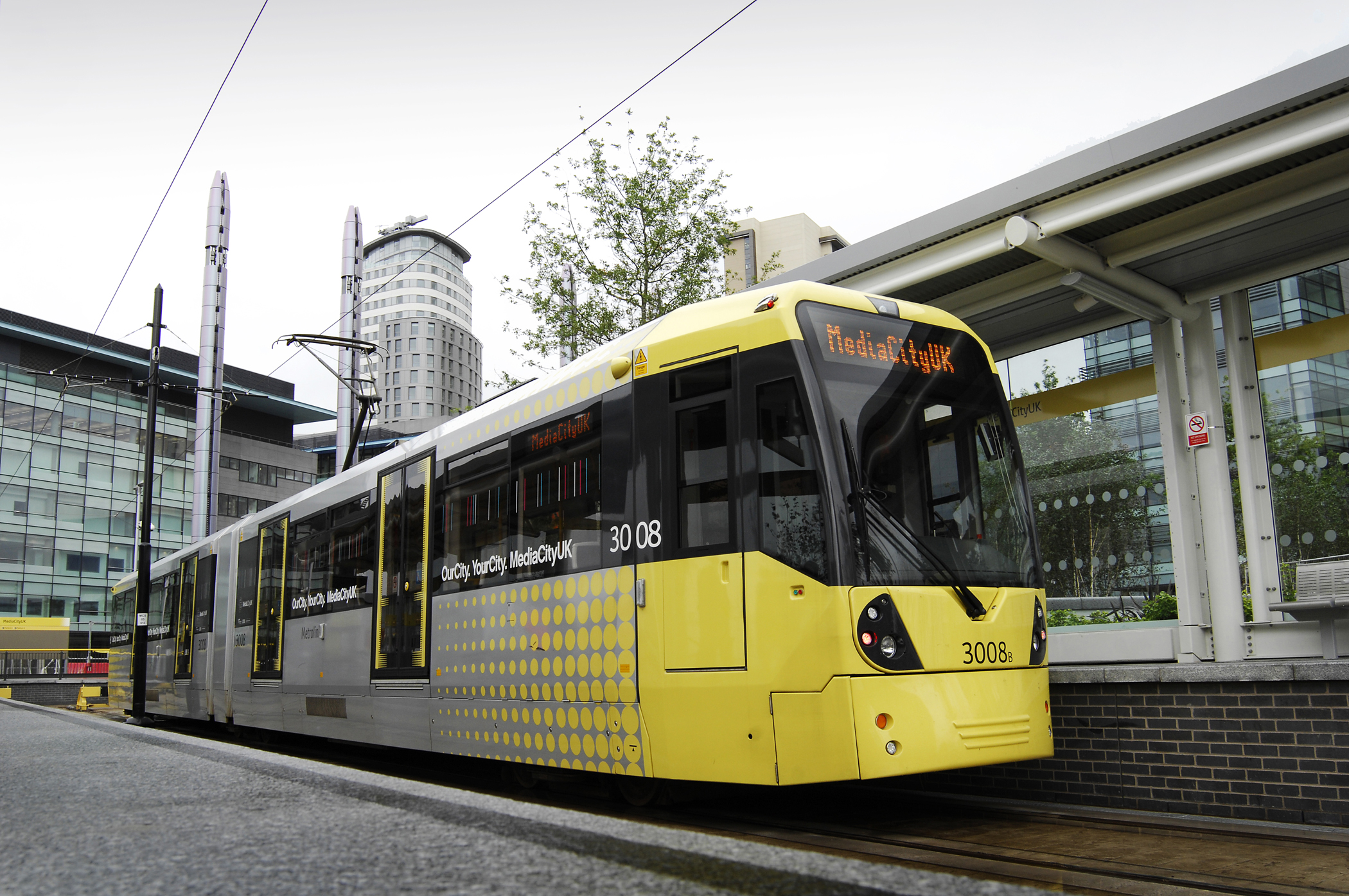
No trams will be running on three major Greater Manchester line for two weeks this month / Credit: TfGM
A number of shuttle bus services will the running over the course of the two-week closure – with services arriving every 10 or 15 minutes, depending which line it’s on, and you can find a full list of these here.
Services operating on the East Didsbury and Manchester Airport lines will terminate at Firswood, and from Firswood, passengers will then need to board a replacement bus service to continue their journey into the city centre.
Services operating on the Rochdale line will terminate at Exchange Square, it has also been announced.
Services will resume on these lines from start of service on Monday 2 November.
However there will be some minor route changes through the city centre in place from Monday 2 to Wednesday 4 November, so it’s important to check your journey before you travel.

 Emily Sergeant -
6th March 2024
Emily Sergeant -
6th March 2024