There’s no denying that the coronavirus (COVID-19) pandemic has flipped life on its head.
The first national lockdown introduced towards the end of March 2020 saw the world grind to a halt, with several industries ordered to temporarily close their doors, numerous events cancelled, all non-essential workers told to work from home, necessary social distancing measures put in place, and the public encouraged to do everything they can to “protect the NHS [and] save lives”.
But for some of us, working from home looked a little different to the rest.
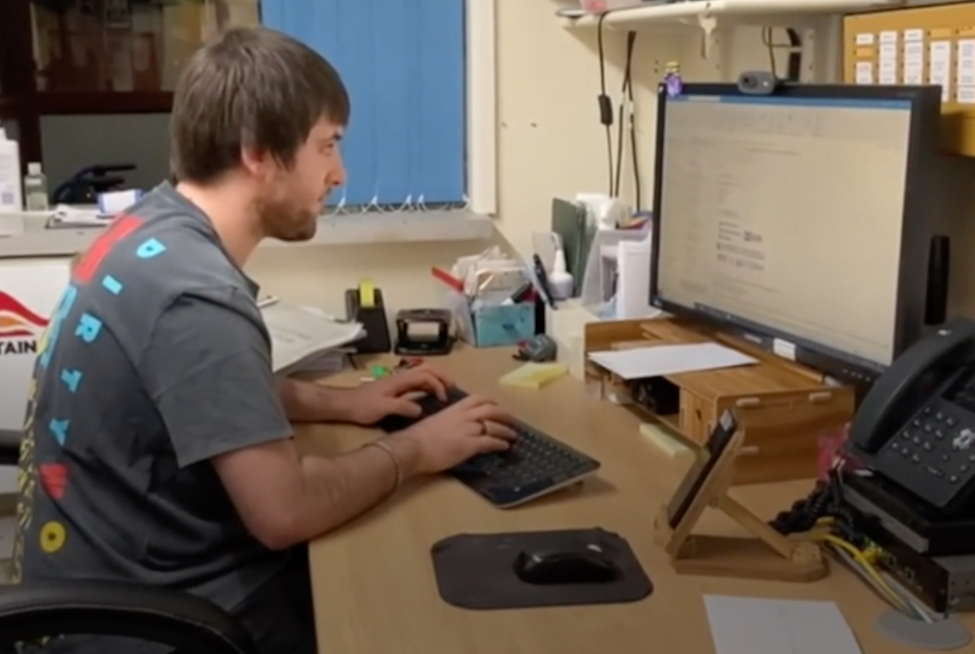
For Dylan Rixon – a 24-year-old carer from Flintshire in Wales – working from home meant calling a new place home instead, as he left his hometown and country to cross the border and move into the Cheshire care facility where he works full-time.
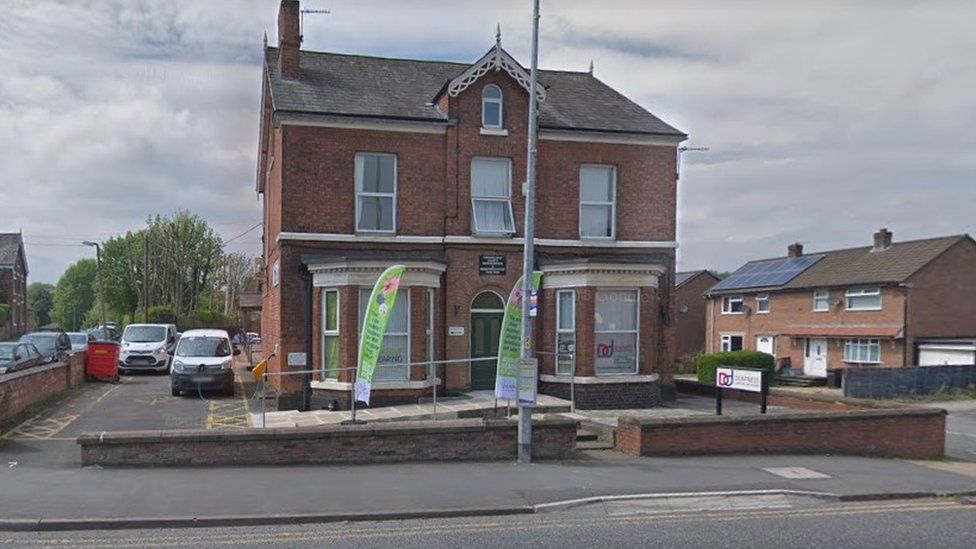
Dylan works for the Deafness Support Network, which runs four homes caring for deaf people and those with learning disabilities 24 hours a day, and moved into Stepping Stones in Northwich, Cheshire, in March last year when coronavirus began to take hold of the UK.
ADVERTISEMENT
The move has meant that Dylan has spent all but three weeks living in the care home since the pandemic began and admittedly spent his 24th birthday “just staring at four walls”, but he said his sacrifice has been the best way to keep himself and the vulnerable tenants safe.
He also said he had better insight into the lives of the home’s 22 residents as a result.
The idea to move into the care facility full-time was suggested to him by his father, as Dylan has a weak immune system as a result of contracting meningitis as a toddler, and also had a mild heart attack two years ago too.
As well as as being in the name of safety, moving into the home also had its conveniences too, as it meant Dylan could avoid the 30-mile commute on public transport each day.
Dylan said: “I remember my dad saying ‘you need to be a bit wiser about your decisions, because further down the line its going to affect everyone and be much worse than you think’
ADVERTISEMENT
“And he was right.
“So we made the decision it was best for me, best for the family and work as well because I was reliable and always here.
“I used to get up around five-ish, get on the train for six o’clock and get here for half-past eight. Then I’d finish at nine at night and get home at one in the morning, get a few hours sleep and then come back again, so it has been a bit of a change from doing that, to now sleeping here”.
He continued: “When everyone’s going at seven at night I’m still here,
“I find myself in the kitchen cleaning or doing a bit of laundry and thinking ‘I wish I was going’, but I’m not [so] I usually watch movies or have game of Jenga”.
ADVERTISEMENT
Google Maps
But despite the monotony that may go along with his adjusted lifestyle, Dylan believes he has gained a better insight into the lives of those he cares for now that he’s living under the same roof as them, adding: “I was seeing the tenants three [days’] on/three off, and now I see them every day and I’ve got to know the way they approach life, how they go about things”.
And he has no plans to leave any time soon either.
He often even finds himself joking about staying on and paying rent in rent at the home, but admits that he does miss home and hopes that it won’t be too long before he is able to see his loved ones again.
“I miss my family and friends but I’ve just been getting on with work,” said Dylan.
“I keep in contact with everyone from home and I’m sure they’re missing me like I’m missing them.
ADVERTISEMENT
“I’ve still got Christmas presents to open and they’ve got presents coming their way when I see them again [so it’d be nice to get back to Wales one day.
“I do miss home.”
Trending
Both Manchester United and Manchester City named as teams with the least amount of local fans
Emily Sergeant
Both Manchester United and Manchester City have been identified as being teams with the least amount of local fans, according to a new survey.
We all know that supporting a local team can be seen as a mark of credibility among a certain kind of football fan, while on the flip side of that, not following a local team is often associated with being a ‘glory hunter’. But which Premier League clubs have the highest – and lowest – proportion of supporters living close to home?
Well, YouGov decided to use its profiles data to analyse the fanbases of all 20 Premier League clubs for the 2026-27 season to get the answer to this once and for all.
And it’s fair to say that it’s not looking the best for the Manchester teams.
The study found that, overall, Brighton & Hove Albion is the Premier League’s most local team – with 56% of fans based in the South East.
Sunderland (50%) and Nottingham Forest (49%) supporters are the next-most likely to live in the same region as their teams, followed by Aston Villa, Brentford, Ipswich, Leeds, Fulham, Hull, and Crystal Palace fans rounding out the top 10.
At the other end of the table, Manchester United has the second-lowest proportion of local supporters, with only a quarter based in the North West (23%), with one in six (17%) actually living in London instead.
And then as for Manchester City – who are widely considered to be the most successful team of the modern era – it has ranked fourth-bottom for local fans, as a quarter of the club’s supporters are based in the North West, with a fifth based in London (19%).
But although both United and City have found themselves towards the bottom end of the ranking, they are not the worst offenders.
That title, unfortunately, does belong to another North West team though – Liverpool.
Liverpool is the club with the lowest proportion of ‘local’ supporters, as just a fifth are based in the North West (21%) with the next highest concentration of fans can being found in London.
Featured Image – Johnny Gios (via Unsplash)
Trending
Data reveals Manchester hotel prices have ALREADY surged by 462% on rumoured Oasis tour dates
Emily Sergeant
Manchester hotel prices have apparently already surged by 462% on rumoured Oasis tour dates, some new data has revealed.
Of course, absolutely nothing is set in stone yet and we are still yet to receive any form of announcement.
But with rumours having been swirling for months now that Oasis will be touring again in 2027, and several videos shared on the band’s social media platforms this week also hinting at that, it’s been revealed that searches for ‘when are Oasis tickets going on sale?’ have soared by 5,000% in the last seven days alone.
After recent data has pointed towards soaring searches for tickets, the experts at SeatPick decided to analyse the average cost of accommodation in Manchester on the suspected concert nights in June 2027 to uncover if prices have surged along with the searches.
Data reveals that Manchester hotel prices have already surged by 462% on rumoured Oasis tour dates / Credit: The Manc Group | Simon Emmett (Press Picture)
And lo and behold, it appears that they have.
The ticketing platform has revealed that hotel prices have surged by up to 462% during Oasis’ rumoured concert nights in Manchester.
The rumoured weekend date of 19 and 20 June has experienced the most noticeable price surge – with a two-star hotel costing an average of £216 for just one overnight stay.
The data also reveals that the rumoured finale on the 27 June has just a £95 difference between two-star hotels (£200) and five-star hotels (£295).
“Our analysis uncovered an enormous markup for local accommodation on nights that Oasis is rumoured to perform in Manchester,” explained Gilad Zilberman, who is the CEO at ticket platform SeatPick.
“Being aware of these accommodation costs and additional expenses can help fans plan and avoid being caught off guard by inflated prices on concert nights.
“To find the best deals on hotels, concertgoers should scan budget chains in the city or look slightly outside of the centre in hotspots served by local bus routes or regional trains, such as Salford and Trafford.

 Emily Sergeant -
8th February 2021
Emily Sergeant -
8th February 2021