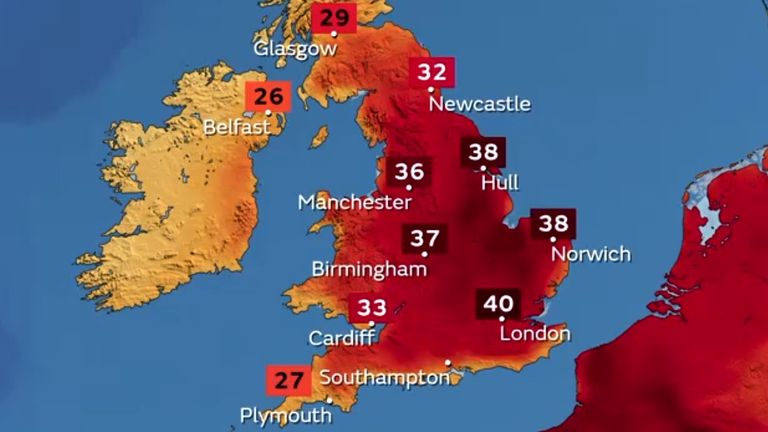
The Met Office has issued the first-ever Red warning for “exceptional heat” as temperatures of 40°C have been forecast in the UK.
The national weather service has forecasted that exceptional heat is expected to affect a large part of England early next week – with temperatures likely in to be in the high 30°Cs in some places, and the most extreme cases, it could potentially even reach 40°C.
The Red extreme heat national severe weather warning will cover parts of central, northern, eastern, and southeastern England on Monday 18 July and Tuesday 19 July.
This elevated weather warning comes after an an Amber Extreme heat warning, has been in place for much of England and Wales for Sunday, Monday and Tuesday (17-19July) since earlier this week – but as of today, the Met Office says the amber areas are also being extended to cover Cornwall, west Wales, and parts of southern Scotland too.
“Exceptional, perhaps record-breaking temperatures are likely early next week, quite widely across the red warning area on Monday, and focussed a little more east and north on Tuesday,” explained Paul Gundersen, Chief Meteorologist at the Met Office.
“Currently, there is a 50% chance we could see temperatures top 40°C, and 80% we will see a new maximum temperature reached.
ADVERTISEMENT
“Nights are also likely to be exceptionally warm, especially in urban areas.
“This is likely to lead to widespread impacts on people and infrastructure, and therefore, it is important people plan for the heat and consider changing their routines. This level of heat can have adverse health effects.”
Met Office issues the UK’s first ever Red warning for ‘extreme heat’ / Credit: Met Office
The step up in warning level to red is running parrell to an increase in the current Heat Health Warning to Level 4 for England by the UK Health Security Agency.
Level 4 is used when a heatwave is so severe and/or prolonged that its effects extend outside the health and social care system, and at this level, illness may occur among fit and healthy people – not just those in high-risk groups.
Will it really hit 40 C within the next week? ☀️🥵
Here's Alex with an explanation of whether or not we think it's likely to happen 👇 pic.twitter.com/KnsPkJ2qql
Speaking ahead of the arrival of the warm weather, Dr Agostinho Sousa – Head of Extreme Events and Health Protection at UKHSA – said: “Heat-health alerts have now been issued to the majority of the country, with temperatures set to remain consistently high throughout the duration of the weekend and the start of next week.
“It is important to keep yourself hydrated and to find shade where possible when UV rays are strongest, between 11am and 3pm.
“If you have vulnerable family, friends and neighbours, make sure they are aware of how they can keep themselves protected from the warm weather.”
Charli XCX announces massive Manchester arena gig as part of long-awaited UK and European tour
Emily Sergeant
Charli XCX has finally given UK fans the news they’ve been waiting for.
After the genre-bending popstar announced back in June a series of US gigs this autumn to support and celebrate the release of her eighth studio albumMusic, Fashion, Film – which was met with critical acclaim following its release in late July – fans in her home country were wondering when she would announce UK dates to accompany these.
The 34-year-old been had hinting at a UK and European leg of the Music, Fashion, Film Tour on social media over the past couple of months, but nothing was set in stone as of yet.
Then last night, Charli took to Twitter to announce that she ‘finally’ had some information coming today (11 September), and then followed it up with a teaser video – sending fans into a frenzy.
And now, it has been announced this morning that Charli XCX will be taking to the Co-op Live stage early next year.
Support on the UK and European leg of the Music, Fashion, Film Tour will come from US popstar Audrey Hobert.
Hobert has been having somewhat of a star-making year herself in 2026 following the release of her own critically acclaimed debut album, Who’s The Clown?, last year – with her streams racking up daily and drawing in massive crowds on the festival circuit this summer.
Charli XCX – Music, Fashion, Film Tour UK & EU Dates 2027
13 February – 3Arena, Dublin
15 February – OVO Hydro, Glasgow
17 February – Co-op Live, Manchester
19 February – The O2, London
22 February – Ziggo Dome, Amsterdam
24 February – Accor Arena, Paris
Upon release back in July, Music, Fashion, Film the album received acclaim from music critics, who praised its lyrical honesty and experimental production, as Charli took a sonic journey away from the undeniable mega hit that was her 2024 album BRAT, and into ‘Rock Music’ territory.
Music, Fashion, Film topped the charts in the UK and Australia, as well as in Belgium, Hungary, and New Zealand, while reaching the top 10 in countless other countries – including the US.
Charli XCX will be bringing the Music, Fashion, Film Tour to Manchester‘s Co-op Live on Wednesday 17 February 2027, and tickets will go on sale next week.
Featured Image – Henry Redcliffe (Publicity Picture)
News
Manchester Christmas Markets 2026 opening date announced – including new spots
Emily Sergeant
Manchester Christmas Markets are merely months away, and the opening date and important details for 2026’s return have been announced.
It’s official… holidays are coming, and the countdown is on.
Just as we do every year, the Greater Manchester public has been eagerly awaiting news of when the city’s iconic Christmas Markets would be making a comeback for the 2026 festive season. And now, Manchester City Council has announced – initially via the MEN – that the famous wooden huts will be lining the city’s streets once again from the first week in November.
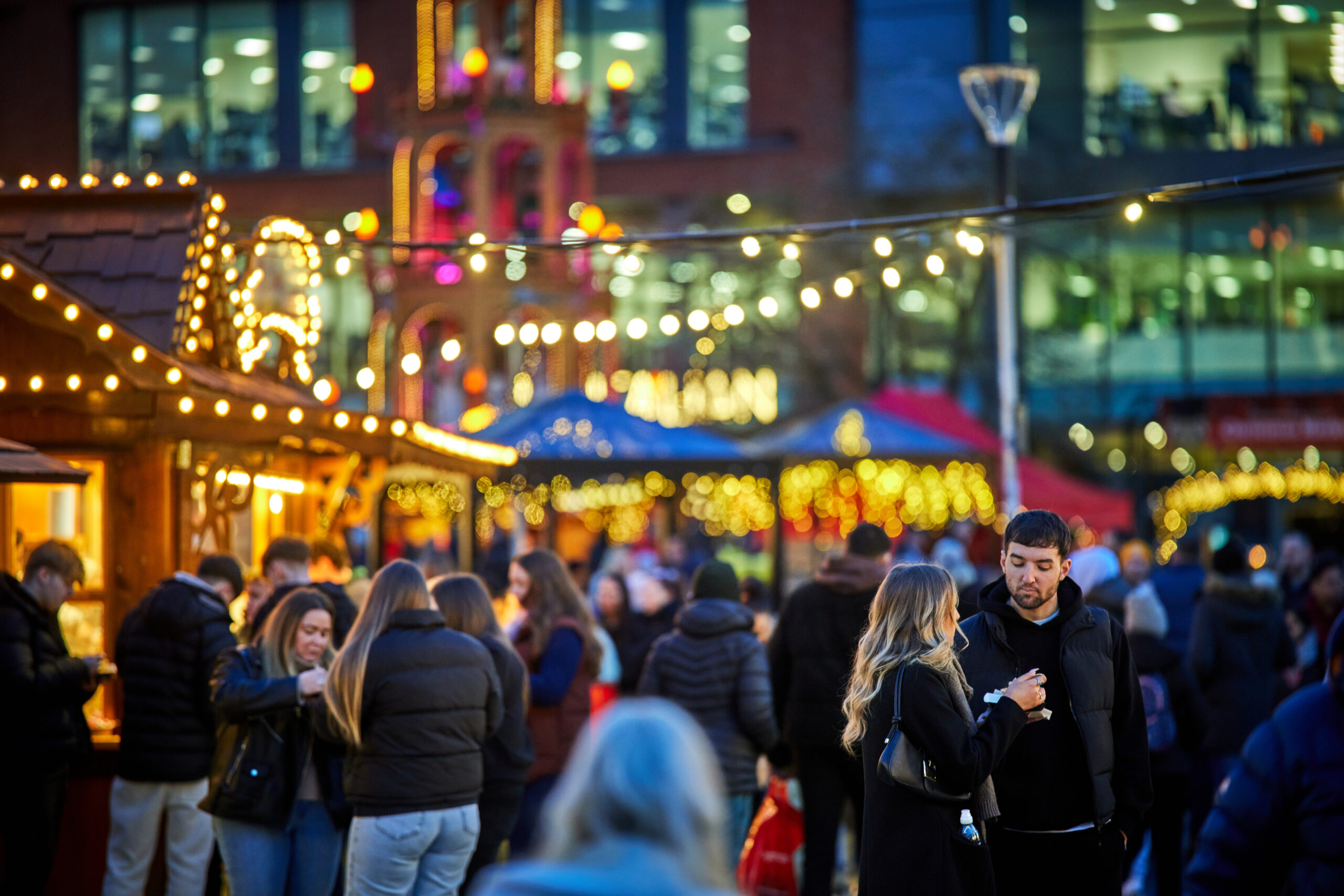
Now in their 27th year, Manchester Christmas Markets are known and loved for bring thousands of people into the city centre each year to fill up on the fantastic festive treats and to soak up all the Christmas atmosphere.
This year will see a bigger return of Albert Square, after the headline-grabbing partial return at last year’s event, with the big wheel also set to make a comeback.
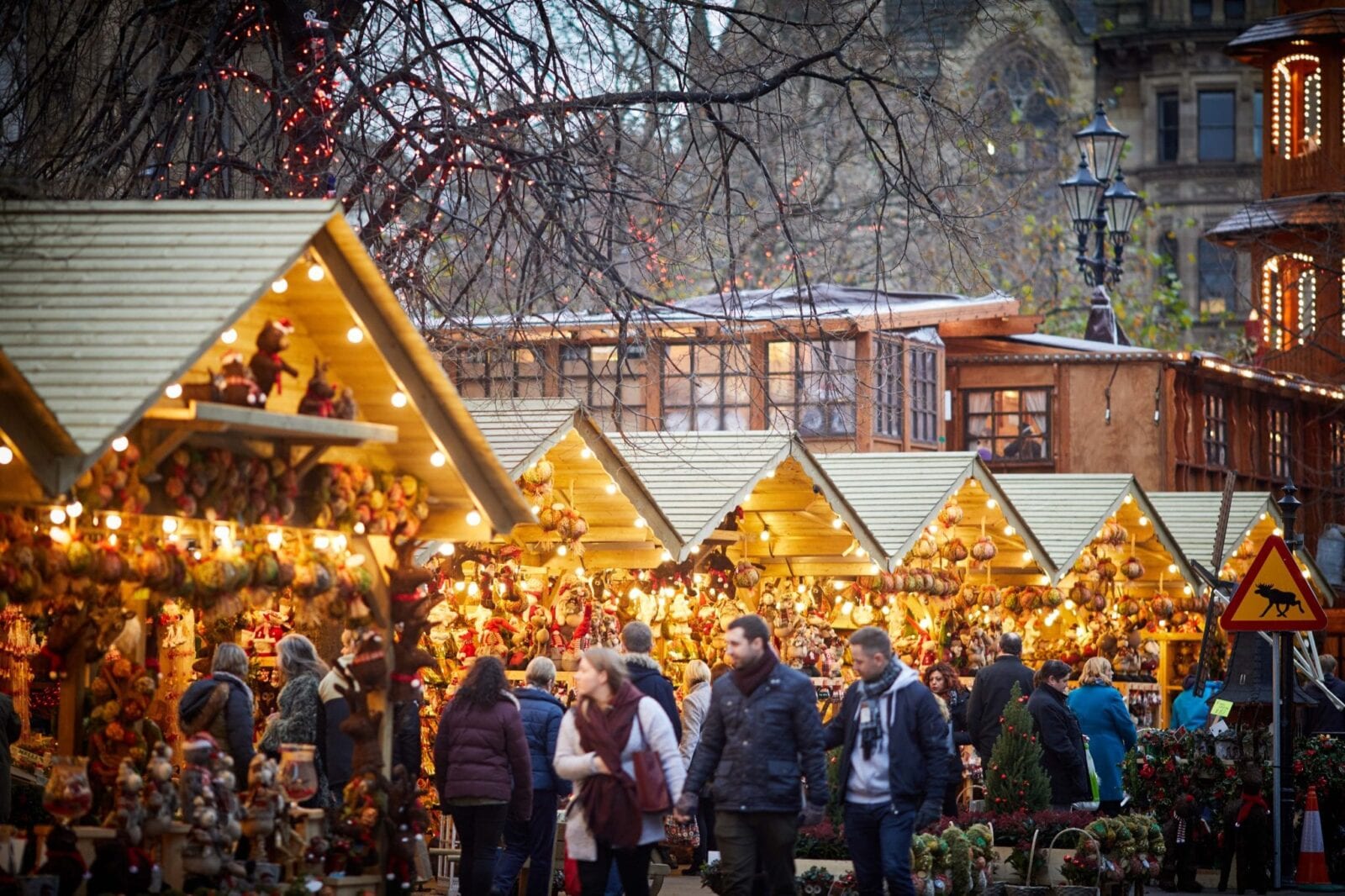
The Manchester Christmas Markets 2026 return date has officially been confirmed / Credit: The Manc Group | Flickr
And there’s also set to be some new locations too for 2026, with Lincoln Square joining in on the action this year.
There will also be big changes to St Ann’s Square this year, according to the Council, with what is being described as a ‘brand new layout’ bringing in a bigger number of market stalls.
There will be a total of 210 stalls spread out across the city centre.
There’s officially eight weeks to go until the iconic wooden huts line the streets / Credit: Manchester City Council
Promising to be plenty on offer for seasonal shoppers of all ages, it has been confirmed that 2026 will see the iconic wooden ski chalet market stalls take over Albert Square, Lincoln Square, King Street, St Ann’s Square, Exchange Street, New Cathedral Street, Exchange Square, Corn Exchange, Cathedral Gardens, and Market Street.
Of course, everyone’s favourite big red legend, Zippy Santa, will also be back this year, although his location has not been set in stone just yet, so stay tuned.
“There’s nowhere that does Christmas quite like Manchester,” commented Councillor Pat Karney, who is the Christmas spokesperson for Manchester City Council.
“The return of Christmas festivities last year to Albert Square was a triumph and we’re looking to build on this success with a fantastic festive offer there again this year that is sure to be a hit with everyone who visits.
“Our legendary Christmas markets draw thousands upon thousands of visitors every year from right around the world and this year’s markets look set to be the very best yet, with a brand-new location in Lincoln Square just around the corner from Albert Square, and a brand-new look and even more stalls in St Ann’s Square.”
He concluded: “Christmas in Manchester will be absolutely magical this year and we can’t wait to welcome everyone and celebrate the festive season with them.”
Manchester Christmas Markets 2026 will officially open across the city on Friday 6 November and close on Tuesday 22 December – with the exception of Albert Square and Cathedral Gardens, which will remain open right through until Sunday 3 January.

 Emily Sergeant -
15th July 2022
Emily Sergeant -
15th July 2022