With the new football season set to get underway from this weekend, fans are now being warned of a surge in ticket scams.
According to a recent study conducted by Lloyds Bank – which is based on the analysis of purchase scams reported by the bank’s customers – it’s suggested that cases of ticket scams relating to football increased by more than two-thirds, or 68%, between January and June this year – which is compared to July to December 2021.
Victims lost £410 on average from the reported scams, the bank said.
Premier League and top-level football is said to have been a “particularly fruitful avenue of revenue” for the scammers.
The bank says scammers generally take advantage of fans’ desperation to watch their teams, knowing many matches will likely be sold out, and added that scams happen when people are tricked into sending money from their bank account to fraudsters online.
ADVERTISEMENT
Once the money has been transferred, the scammer then disappears and the victim receives nothing.
“It’s easy to let our emotions get the better of us when following our favourite team,” admitted Liz Ziegler – Retail Fraud and Financial Crime Director at Lloyds Bank.
ADVERTISEMENT
Cases of ticket scams relating to football increased by 68% between January and June this year / Credit: Piqsels
“But, while that passion makes for a great atmosphere in grounds across the country, when it comes to buying tickets for a match, it’s important not to get carried away in the excitement [as] the vast majority of these scams start on social media, where it’s all too easy for fraudsters to use fake profiles and advertise items that simply don’t exist.
“These criminals are ready to disappear as soon as they have their hands on your money.”
She added that football fans should always look to buying tickets directly from the clubs or their official ticket partners, as this is “the only way to guarantee you’re paying for a real ticket.”
Molly-Mae Hague and adidas drop new collection inspired by matcha and iced lattes
Daisy Jackson
Today, adidas has finally released its hotly-anticipated parnership with Manchester-based influencer Molly-Mae Hague.
The social media superstar has collaborated with the sportswear giant for a limited-edition footwear collection inspired by matchas and iced lattes.
Molly-Mae and adidas Originals have just given fans a look at the shoes for the first time.
The star has curated a limited-edition collection of iconic Originals silhouettes – a Samba and a Superstar.
The first is the Samba Matcha shoes, a premium leather and suede shoe in a soft green colour, with double pink and white laces.
The other is a Superstar II Latte, which again features double laces in coffee-coloured hues, but in the iconic leather Superstar silhouette.
In behind-the-scenes footage of the design process on Molly-Mae’s Amazon Prime documentary series, Behind It All, she described them as ‘matcha cool girl in London’ shoes – and the vision has definitely come to life.
Molly-Mae said: “Seeing my creative vision come to life on two iconic adidas Originals silhouettes that have long been staples in my wardrobe is a true dream.
“Being so closely involved in the design process and creating products that feel fun, timeless, and an authentic extension of my own personal style has been the best experience.
“I am so excited to see how others style them in their own way.”
Steve Marks, VP Brand adidas UK commented: “At adidas, we partner with individuals who define style through authenticity and a deep-rooted connection to our brand.
“Molly-Mae’s relationship with adidas Originals has developed organically over time as a key advocate of the brand and this partnership represents a natural evolution – bringing her signature aesthetic to two of our most iconic silhouettes.”
The limited-edition adidas Originals x Molly-Mae collection drops in stores and online on 9 April, priced at £100 per pair.
Greater Manchester’s homicide rates have now dropped to a ‘historic’ low
Emily Sergeant
Homicide rates in Greater Manchester are now at the lowest they’ve been for 25 years, according to new figures.
Thanks to a major programme introduced by Greater Manchester Combined Authority (GMCA) to prevent violent crime and keep communities safe, known as the Violence Reduction Unit (VRU), it has been revealed that the region’s homicide rate has fallen by 32% in 2025 to what is its lowest level on record since 1990.
If you’re unfamiliar with what the VRU is, it brings together GMP, Greater Manchester Probation Service, health and education professionals, youth justice, local authorities, and the voluntary, community and faith sector to address the underlying causes of violent crime.
It’s this multi-agency approach that’s said to be delivering ‘tangible results’ and driving a reduction in violent crime in Greater Manchester.
As well as homicide rates, the VRU’s partnership work with Greater Manchester Police (GMP) is also said to be having ‘major impact’ across the region on issues like knife crime.
Thanks to operational activity helping to disrupt serious violence and remove more weapons from the region’s streets, the police have also recorded that knife crime in Greater Manchester has fallen by 15% in the last year too.
Following a steady decline since 2021, rates of personal robbery have fallen by 17% in the last year in Greater Manchester.
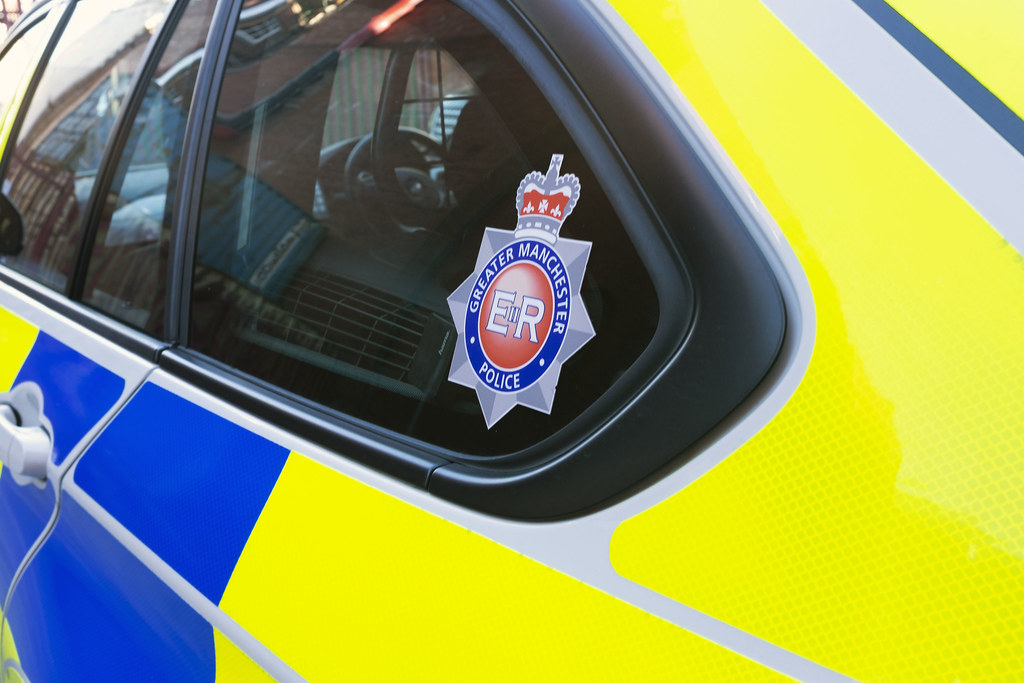
Greater Manchester’s homicide rates have now dropped to a ‘historic’ low / Credit: Wikimedia Commons
Additionally, A&E attendances due to assault decreased by 3% in the same time period, with a 9% reduction among young people aged 10–24, and ambulance callouts for assault also fell by 9% in relation to this.
GMCA says that the reductions in demand for emergency services, as revealed in the latest figures, prove just how much the VRU’s combined prevention and enforcement approach is working.
“These latest figures show the real progress being made in tackling violent crime and making our streets safer,” commented Mayor Andy Burnham.
“Reductions in knife crime and homicides don’t happen by chance – they come from early intervention, our strong partnership with the police and our work with communities to tackle the root causes of violence.”