Let’s be clear. The ‘second city’ is an informal title and the choice is clearly a subjective one. So, obviously, the victor has to be Manchester.
Over the years, people have struggled to make up their minds as to which area is the UK’s biggest (culturally speaking) besides London. In the early 19th century, it was Dublin, then later Glasgow and Liverpool battled it out for the honour, both being major industrial cities at the time.
In 2015, research conducted by YouGov proved more people think of Manchester as the second city more than any other after we beat Birmingham to the top spot with 30% of the vote. But how does the land lie now?
B’ham has a strong claim – given the city-region is the second-largest in England, particularly in terms of its urban economy. Manchester is only the fifth largest by population.
ADVERTISEMENT
Progress in Manchester, however, has put the city in the spotlight in recent years and now it seems primed to take the crown, after being ranked as the second city in numerous polls since the 2000’s.
St. Peter’s Square in full spring bloom / Image: Adam Pester
When you ask people why, it really seems to come down to culture.
ADVERTISEMENT
Perhaps this is unsurprising, given the famous cultural exports of Manchester ranging from the suffragette movement to the Hacienda and the world’s first professional football league.
The city is also home to the longest-running soap opera in the world and has spawned a staggering 25 Nobel prize winners to date, as well as famous authors like Elizabeth Gaskell and Anthony Burgess.
According to the Trinity Mirror Data Unit, Manchester ranks ninth out of 50 cities for culture, with more music venues per 100,000 people than anywhere else in the country. It is also second for most libraries and cinemas.
ADVERTISEMENT
Birmingham, on the other hand, ranks 47th. Still, it beats us on Michelin stars with four more than Manchester (if you count Where The Light Gets In’s green award).
A birds eye view over the city of Manchester / Image: Adam Pester
The Midlands has also made some cultural strides in recent years with big club nights like Bigger than Barry and Moho, alongside arthouse venues like Yard and Ikon gallery.
It’s also started to get more food and drink independents popping up, as the dining culture moves away from big chains to a more local focus. Credit where credit is due.
Culture aside, there are other important factors to take into account such as universities, which are the lifeblood of many UK cities.
The University of Manchester currently ranks sixth in the country, whilst Birmingham sits at 87th. No competition to speak of there, then.
ADVERTISEMENT
And what about sport? Well, in 2020 Manchester ranked the 8th best sports city in the world by BCW Sport. It also successfully hosted the Commonwealth Games in 2002, whilst Birmingham failed in its bid to host the 1992 Olympics.
However, Birmingham does host the international athletics meetings and will be the centre of the Commonwealth Games in 2022.
It also goes without saying that Manchester has two of the best football teams in the country, no matter if you’re red or blue. Yes, for a time Aston Villa were the best in England – winning their first division title five times before United or City – but since then Manchester has far out-stripped the Midlands teams in terms of titles.
Overall, it seems clear Manchester is the victor.
Even Birmingham’s own residents seem to agree, according to a study conducted in 2017 which discovered a massive 38 percent view the birthplace of Oasis, Corrie and The Stone Roses as the true second city. This figure increased to 44 percent when only 18 to 24-year-olds were asked.
ADVERTISEMENT
Even though Birmingham might be the most populous city outside of London and a bigger contributor to national GDP, most people believe Manchester is worthy of the second city title. After all, size isn’t the only thing that’s important.
Feature image / Adam Pester.
Art & Culture
How will the Government’s new digital ID alternative for alcohol sales work?
Emily Sergeant
All licensed venues across England and Wales now have the choice to introduce digital proof of age for alcohol sales alongside physical.
Instead of having to hand over physical ID that contains personal information, such as names and home addresses, customers now have the choice to simply provide confirmation that they are 18 or over on their phone – helping to better protect privacy and personal safety in the process.
This means that, no matter whether you’re buying a drink at your favourite pub, heading to a festival, or enjoying a night out at a concert, you won’t need to worry if you’ve left your ID at home.
According to the Government, this new change will benefit businesses greatly too, as certified digital services are able to check that an ID is genuine and belongs to the person presenting it much easier than the alternative can, which therefore helps to reduce the risk of any fake or borrowed IDs going undetected.
Well, according to the Government, it could be as simple as a customer showing a QR code for staff to scan, or tapping their phone against a compatible reader, where staff will then receive a clear confirmation on their device that the customer has passed the age check.
This change follows a 2024 Government consultation where it was reported that 72% of respondents supported the use of digital identities for age verification when buying alcohol.
Digital Government Minister Stephanie Peacock reiterated that ‘it will remain an individual or business’ choice whether to use or adopt [digital ID]’ and that physical ID will ‘still remain a valid way’ for customers to prove their age.
“This groundbreaking change in the law will mean you do not need to carry a physical ID, nor hand over sensitive personal information such as your name or address just to prove your age, allowing everyone to feel safer on a night out,” she concluded.
Featured Image – Robin Worrall (via Unsplash)
Art & Culture
The best things to do in Greater Manchester this week | 21 – 27 September 2026
Emily Sergeant
Autumn is officially here, the trees are changing colour, and there’s a chill in the air.
And, of course, there’s loads happening across Greater Manchester this week. If you’re finding it a bit tricky to pick what to do though, no worries, as we’ve chosen a few of the highlights for another edition of our ‘what’s on‘ guide.
Both free things and those that’ll set you back a few pennies are featured, so take a look.
___
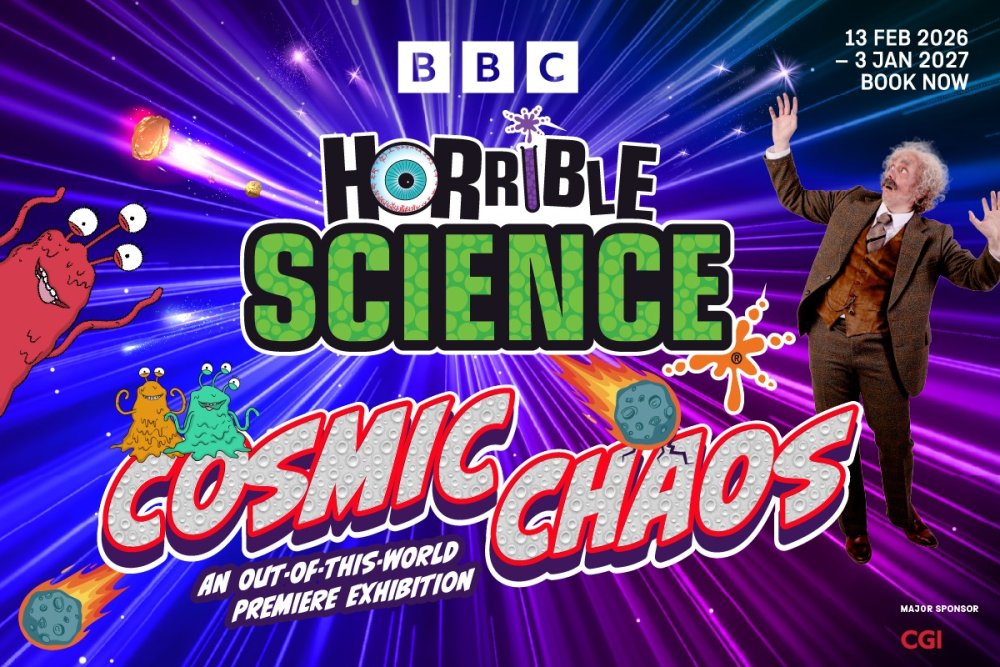
Horrible Science: Cosmic Chaos
Science and Industry Museum
Monday 21 September – onwards
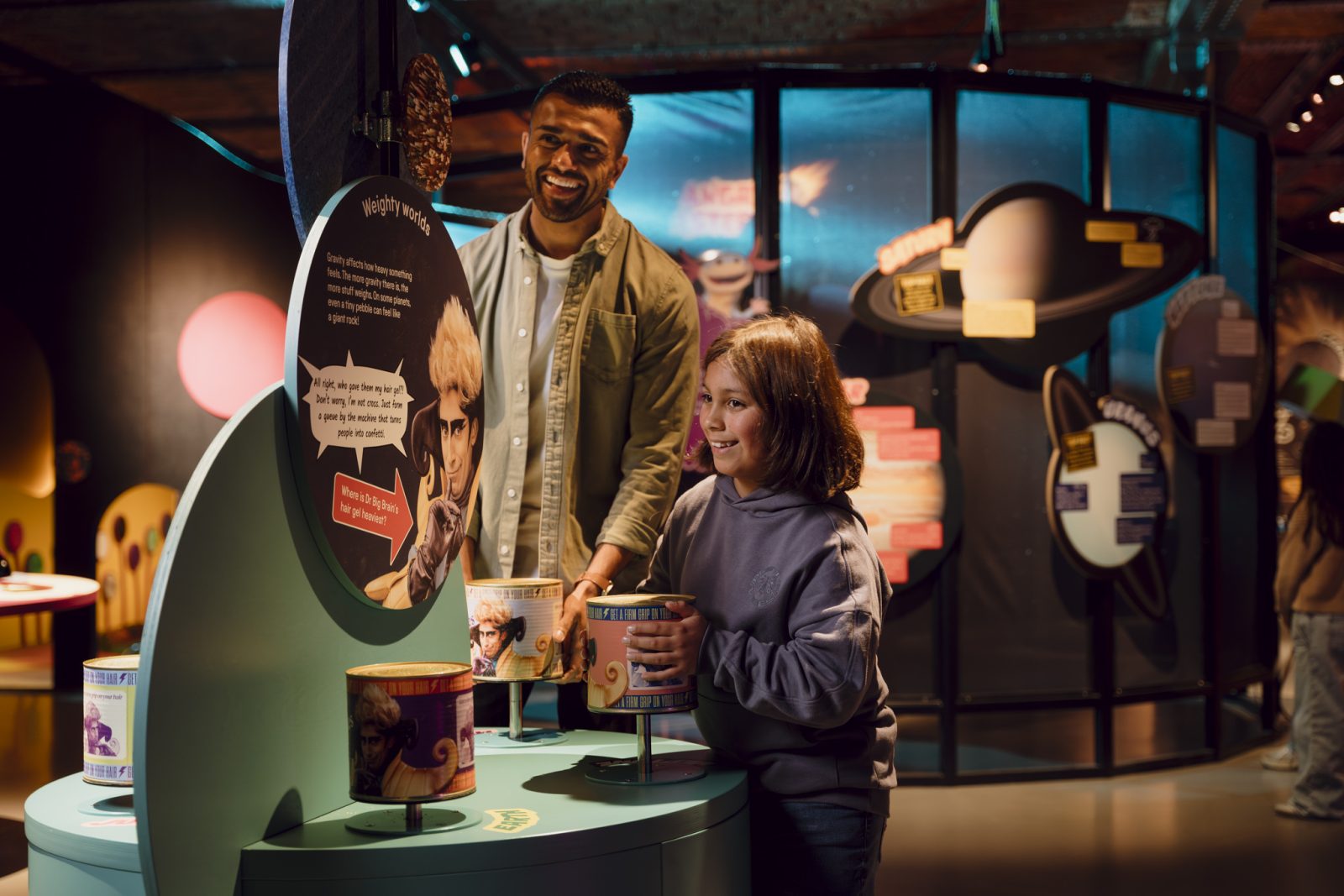
Horrible Science: Cosmic Chaos / Credit: BBC | Science Museum Group (Drew Forsyth)
Horrible Science: Cosmic Chaos has made its world premiere at the Science and Industry Museum, and is inviting visitors to explore our wondrous Solar System.
Fresh off-the-back of the new BBC Children’s and Education TV show, Horrible Science, the ‘thrilling’ new exhibition encouraging visitors to ‘do science the horrible way’, and join both scientists and supervillains to unveil the secrets of space.
The new exhibition propels families up into space where mystery, intrigue, and rocket-loads of silly and surprising science await. You’ll get to venture through a series of cosmic zones, walk in the shoes of astronauts, explore the life-giving energy of the sun, marvel at mysterious moons, and discover far-off weird worlds.
50% Off Kids Tickets at SEA LIFE / Credit: Supplied
Families looking for an affordable day out over the next couple of weeks can make the most of a new offer from a popular attraction, with 50% off child one-day tickets when purchased alongside a full-price adult ticket.
The offer gives families the chance to enjoy an underwater adventure for less at either SEA LIFE Manchester inside Trafford Palazzo, or even a tad further afield at SEA LIFE Blackpool.
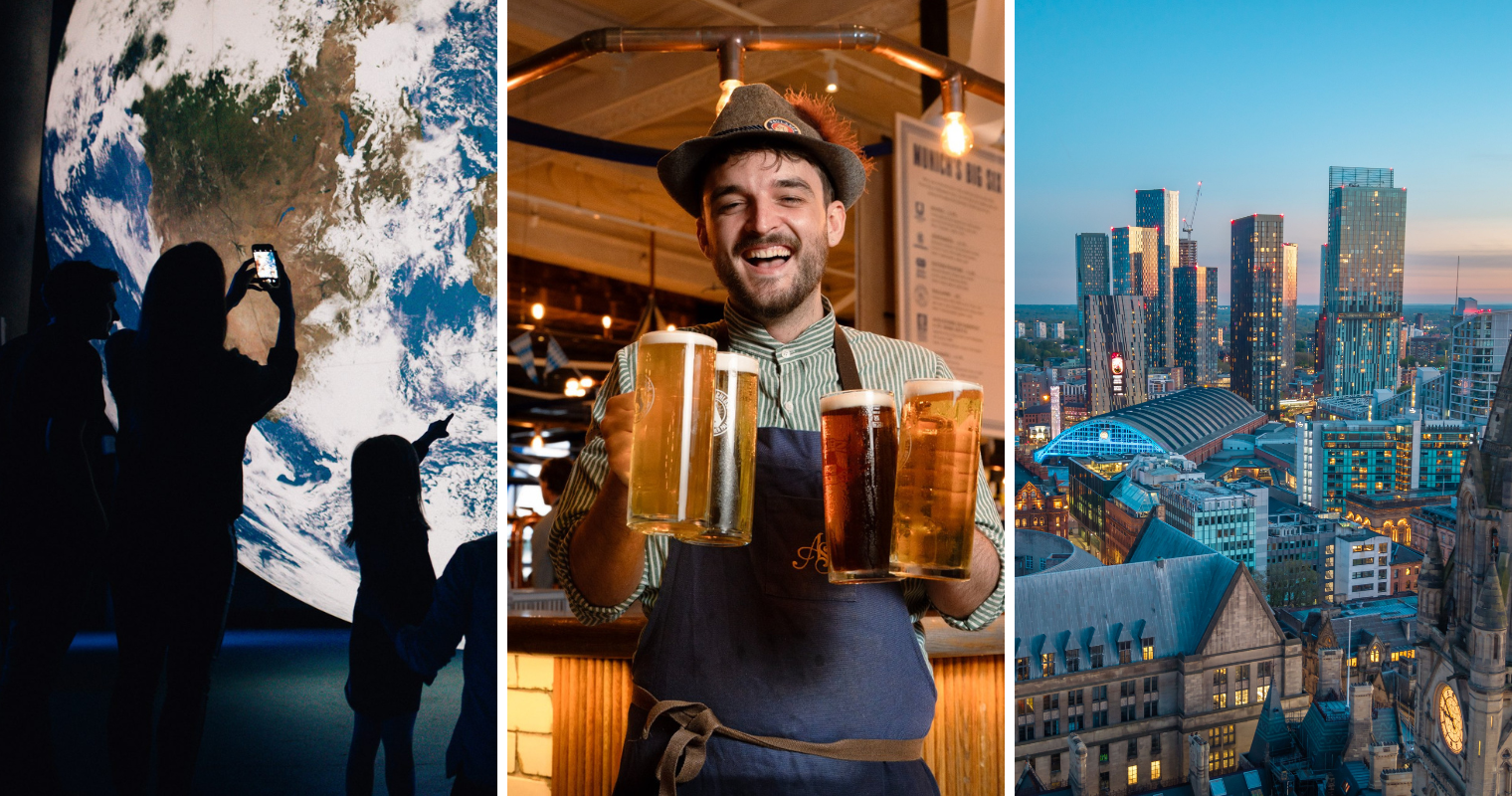
Trafford Palazzo is now home to a giant 23-foot Earth replica, and it’ll be enchanting visitors throughout autumn.
Created by artist Luke Jerram and known more formally as Gaia, this floating sculpture has been installed at Trafford Palazzo and will stay there until the beginning of October, with a whole host of events arriving alongside – like live music, wellness and fitness experiences, and even a free Space School.
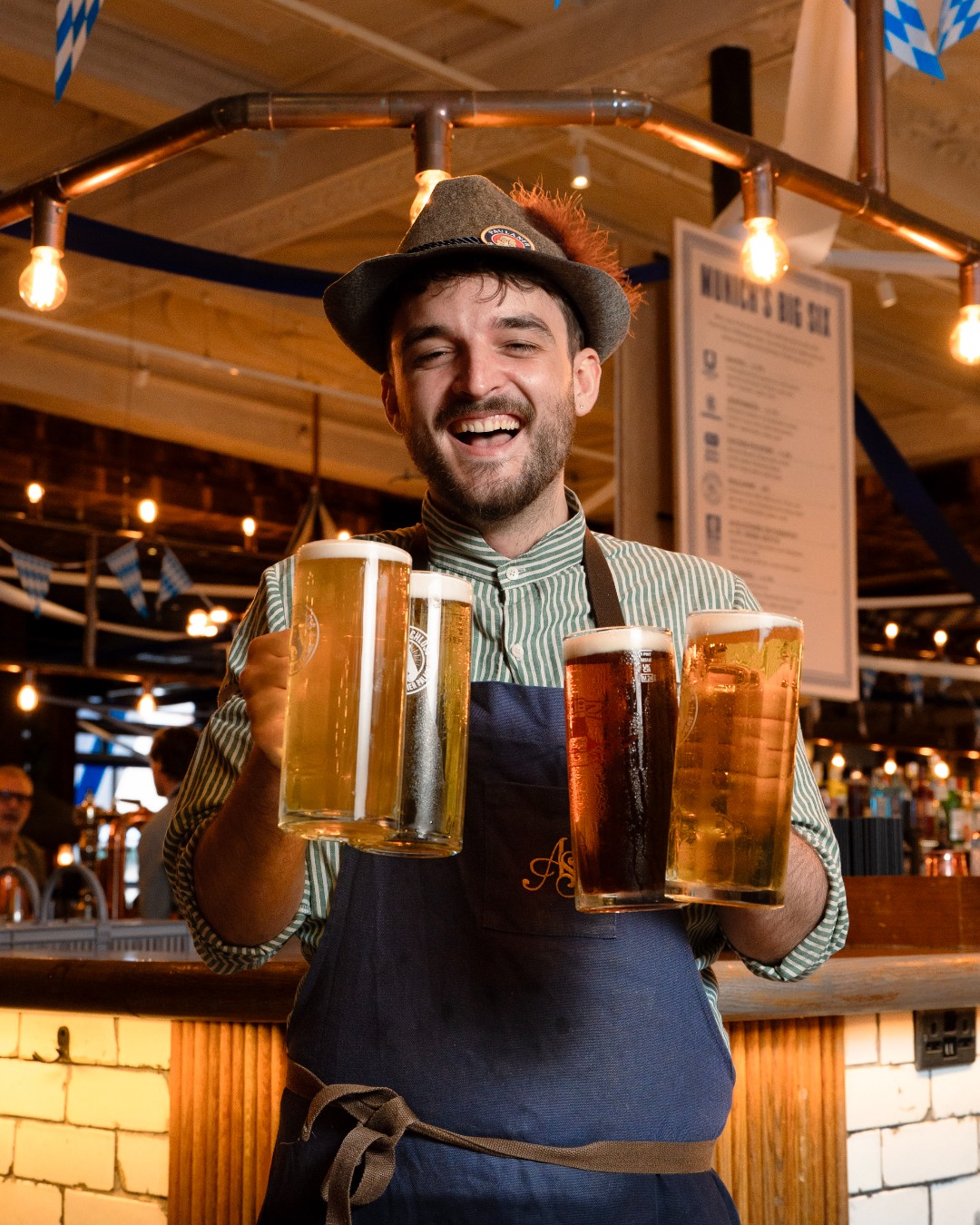
Oktoberfest 2026 / Credit: Freight Island | Albert’s Schloss
Looking for somewhere to spend Oktoberfest in Manchester this year?
As you might expect, our city’s own Bavarian Bier Palace, Albert’s Schloss, is going big on the festivities for the coming weeks. But there are plenty of other venues throwing open their doors, pouring steins, and getting the bratwursts going.
Dahlia has landed in the Northern Quarter, bringing Latin-inspired open-fire cooking, tequila and mezcal-led drinks, and a seriously impressive sound system under one roof.
This comes from the same team behind Ramona and The Firehouse, and like those popular venues, it’s got a few different concepts in the one space.
Expect everything from achiote chicken and 400g churrasco steak to fresh tortillas, smoky sides, and house-made cocktails, with DJs keeping the vibe going late into the night.
Manchester’s newest restaurant opening has windows that look right across the pitch at the Etihad Stadium. This is Zadie’s – a glamorous new Japanese-Italian sort of hybrid, where dishes include a cacio e pepe with white soy burro bianco, and a roast lobster with tomato ponzu.
The space is pretty striking, built around a beautiful central bar, and with windows that look towards the South Pennines in one direction and into Man City’s home ground in the other.
MCR Student Social / Credit: Manchester BID | The Manc Group
MCR Student Social is heading back to the city this week.
With big discounts, freebies, giveaways, and plenty of entertainment to keep you busy while you browse, this interactive shopping event encourages new and current students to wander round Manchester Arndale and the surrounding streets to snap up some seriously good deals.
Expect discounts of up to 50% off at 120 stores – including big high street retailers like Champion, Søstrene Grene, Selfridges, Sephora, and Berghaus.
Scare City will be back taking over the grounds of the abandoned Camelot Theme Park this spooky season.
ADVERTISEMENT
And this year, there’s eight new chilling horror zones to discover.
There is no single story to survive. Instead, guests will be thrown from one nightmare into another – from a Victorian barber with blood on his hands, to a demonic orphanage, a cannibal settlement, a cursed forest, and a military bunker where the deceased are no longer dead.
Find out more about this year’s Scare City experience and book tickets here.
___
Medieval Faire
Chetham’s Library
ADVERTISEMENT
Saturday 26 September
Medieval Faire / Credit: Supplied
Manchester is going back to the Middle Ages this month, as the city’s Medieval Faire returns to Chetham’s Library for a day of history, live entertainment, and family fun.
Visitors can expect plenty going on throughout the day, including walking tours of Manchester’s Medieval Quarter, birds of prey, specialist stalls, and live demonstrations showing what life was like during the medieval era.
Just like we do every month, we’ve rounded up some of the best things we got to eat in August, so if you’re on the hunt for somewhere new to eat in September, then we’ve absolutely got you covered as there’s plenty of places across the city region.
It’s been another jam-packed month of insanely delicious eats, and we’ve been lucky to have a bunch of new openings too.
Did you know that Go Ape now runs adult-only sessions?
We nipped over to Go Ape at Rivington as we heard you can now act like a big silly kid there without having to share anything with actual children.
ADVERTISEMENT
It’s one of the region’s top attractions for good reason, giving you a chance to clamber and fly through the treetops on a sky-high obstacle course, and now every Thursday and Friday evening, you can escape your work inbox and switch it out for a maze of ziplines, ladders, swings, and more.
Less than an hour from Manchester, you’ll find what is essentially a gigantic floating bouncy castle which makes for an incredibly silly afternoon out.
At Wild Shore Delamere you can take on slides, monkey bars, ninja jumps, tyre runs, and plenty of other opportunities to slip and spectacularly fall into the lake. And if you don’t fancy wiping out in front of a lake full of children, there’s also paddleboarding, wakeboarding, open-water swimming, and even a lakeside sauna.
How about that Manchester Museum is hosting its first-ever sleepover?
For the first time in Manchester Museum’s history, one lucky family will be given the chance to experience an incredible night at the museum.
This unique opportunity is being offered as part of a prize draw, allowing visitors to find out what happens once the sun goes down inside the Fossils and Dinosaurs gallery – in the company of Stan, the famous Tyrannosaurus rex, of course.
Not only will the lucky winning family enjoy an overnight stay in the gallery, but they’ll also be treated to a guided torchlight tour of the galleries after the Museum has closed, as well as other fun activities and a film screening too before bed.
Schools may be back, but unfortunately the rain has arrived, so if you’re running out of things to do, don’t worry as we’ve got you covered. To make life even easier, all the activities are accessible by the Bee Network AND they’re tried and tested by us, so we can guarantee you’ll love them.

 Georgina Pellant -
10th June 2021
Georgina Pellant -
10th June 2021