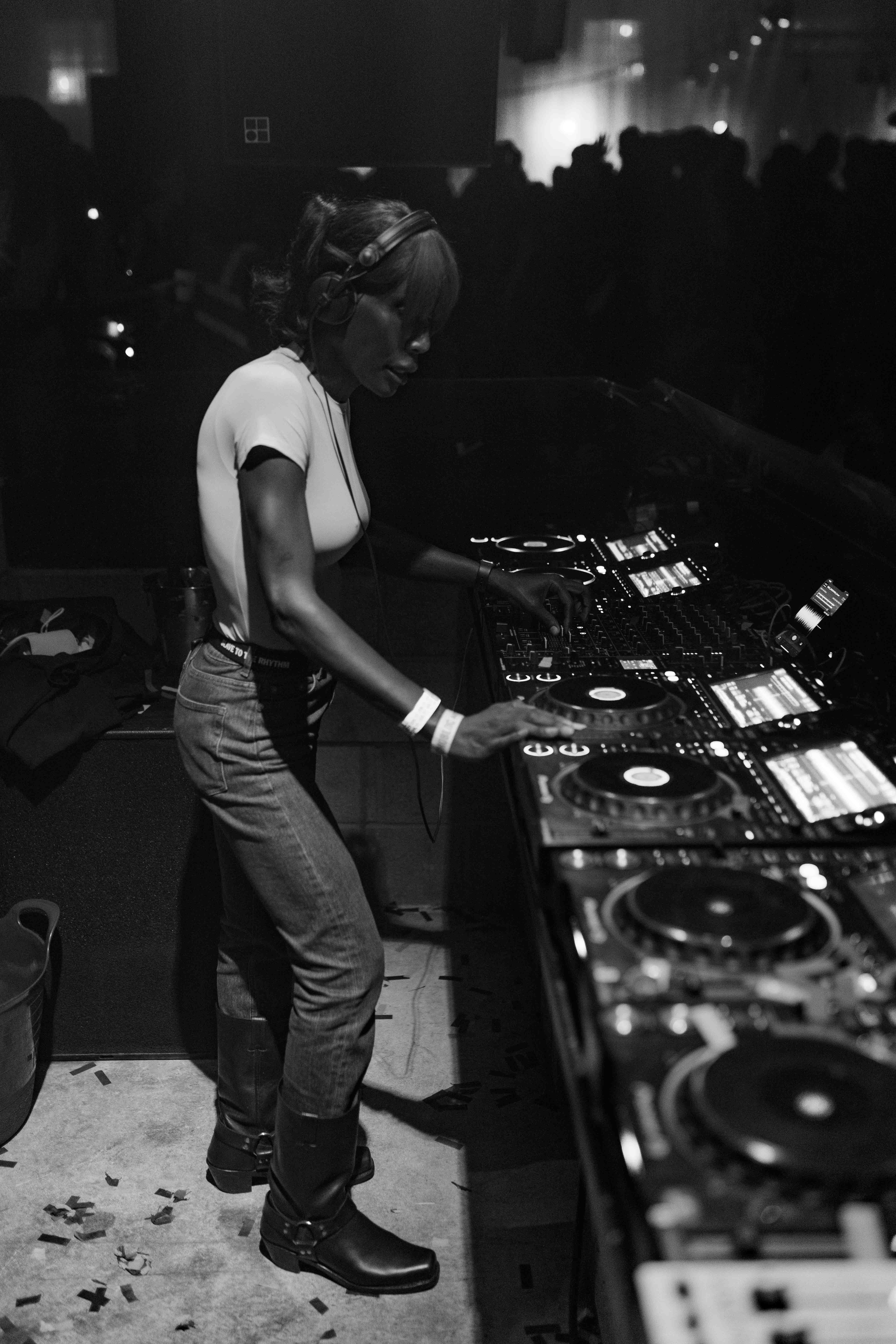
We sat down at Manchester’s iconic Star and Garter with the legendary Honey Dijon and Manchester’s own, Rebecca Swarray aka, Mix-Stress for an exclusive interview ahead of Homobloc 2025 to talk about all things queer culture, house music, and the future of clubbing.
From Chicago to Manchester, the pair reflected on the roots of the scene, finding joy in dark times, and why the dancefloor remains a sacred space.
Put simply, it was fascinating to see the pair dive deep into the culture.
Sharing a drink in the historic Manchester city centre pub, here’s how the chat between Mix-Stress and Honey went down…
Mix-Stress meets Honey Dijon – the interview
‘Every time I play Manchester, it’s just always a vibe’
Mix-Stress (MS): Welcome toThe Star and Garter. Manchester and Homobloc obviously holds a special place, and you’ve played here a few times. Can you tell me about any sets that stand out that are staying with you over the times you’ve visited here?
ADVERTISEMENT
Honey Dijon (HD): I always have a great time when I play Manchester. Every time I play Warehouse Project, it’s just always a vibe. The crowd is just so enthusiastic and so fun and just so up for it. And Manchester and Chicago have a long history with house music, so it’s always fun to come here and represent. It doesn’t matter where, when or how – all my sets here have been incredibly fun.
‘So much has changed over the years – it feels like a different century’
MS: This will be your fourth time playing Homobloc in December. You played in 2019 when it started, then two post-pandemic shows. What do you feel has evolved over the years, musically, spiritually or sonically?
ADVERTISEMENT
HD: So much has changed over the years. I mean, pre-pandemic, it was such a different world. It feels like it was a different century, actually, and we had no idea what we were going into.
At that time, we were just coming from the MeToo movement and the lack of diversity in dance music, so there was all this political awareness around club culture, which was really great – because so many voices that started this global movement have been queer people, people of colour, a lot of women.
The funny thing about diversity is about who’s having that conversation, because my friends and what I grew up with have always been diverse. So it was a different landscape.
ADVERTISEMENT
During lockdown, there was a shift. If you were like an 18-year-old kid, there were two or three years where you couldn’t experience anything except online. That’s when this major shift happened – things became much more corporate, much more sanitised, and more about metrics and numbers.
There was less focus on, in my opinion, the heart of it – and it became big business. What I try to do as an artist is remind people whose shoulders I stand on and where I learned my craft, and to bring people together from all walks of life. There’s a new generation coming through, but it always goes back to the house.
MS: We’ve seen dancefloors across the world put out safe spaces policies. What does a ‘safe space’ mean to you today, and how do you create that energy?
HD: I try to play music that uplifts and celebrates. I think, with just the artist that I am, I try to make everyone welcome. It’s about joy, celebration, and release. Dancefloors are sacred spaces in a lot of ways, and I think through the music vibrationally that I play and what I speak on, it attracts a certain crowd.
For me, safe spaces aren’t just about not being harassed – it’s about being able to show up as yourself without being judged.
ADVERTISEMENT
A safe space is where all feel welcome, where people can be free and not judged or harassed based on gender or sexuality. Dancefloors do what government and religion can’t – they bring people together from all walks of life to celebrate through music.
As the world moves further right, these spaces are becoming more important than ever. None of us are free until all of us are free – so I try to do that through my work, through the music and what I speak on.
‘Look into the darkness, but don’t stare at it.’
MS: The world is heavy right now – historically and currently. Where do you find joy, and how do you filter that into what you do?
Honey Dijon always gives an insightful interview.
HD: Where do I find joy? Turn off the internet. Be aware. I love this quote from RuPaul: “Look into the darkness, but don’t stare at it.” That really resonates with me.
ADVERTISEMENT
Music is powerful – that’s why far-right governments fear art and music, because there’s so much power in it. I find joy in love, in freedom of expression, and in self-autonomy. Those are the things I try to facilitate through my art and through my music.
‘If Homobloc was a fragrance…’
MS: IfHomobloc was a fragrance, what would be the concoction?
HD: Armpit, asshole, and lip gloss.
If that isn’t an advert for a memorable night at Depot Mayfield, then we don’t know what is.
You can see the full lineup for Homobloc 2025 and grab your tickets to see Honey Dijon in Manchester and plenty more rightHERE.
For all the latest news, events and goings on in Greater Manchester, subscribe to The Manc newsletter HERE.
Featured Images — Press shots/Jody Hartley Photography (supplied)/The Manc Group
Audio
Westlife at Co-op Live, Manchester – stage times, setlist, tickets and more
Daisy Jackson
Westlife are bringing their 25th anniversary tour to Manchester this October – and demand has been so great, they’re doing THREE nights at the Co-op Live.
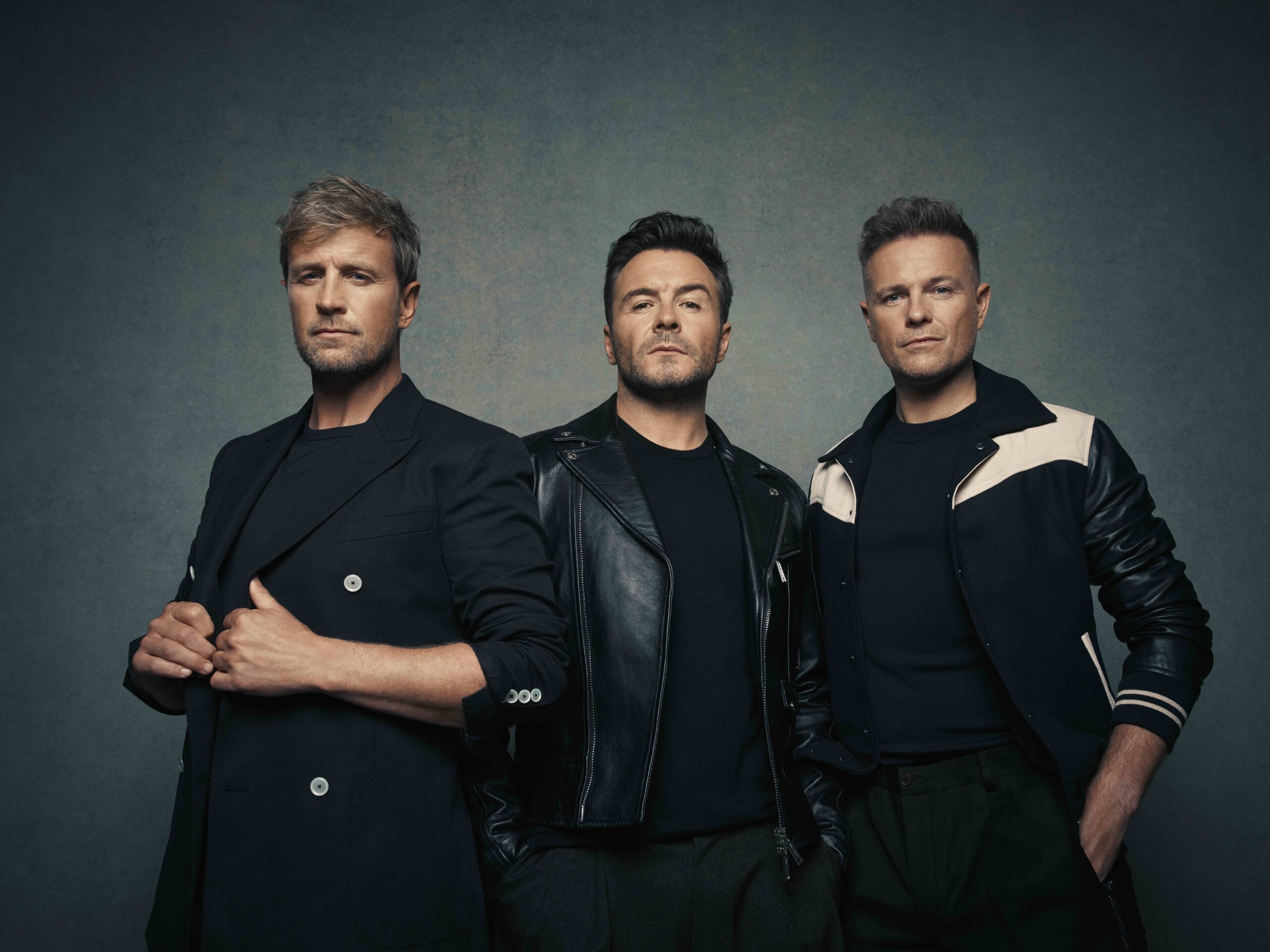
Fans of the Irish pop group can look forward to a night of nostalgic singalongs, soaring ballads and some of the biggest hits of their 25-year career when Westlife arrive in Manchester for their Westlife 25: The Anniversary World Tour.
The original Manchester announcement featured a single show, but a rush of demand saw additional dates added – Westlife are now set to spend three consecutive nights at Co-op Live.
Here’s everything you need to know about the Manchester concerts, including dates, tickets, support, setlist, and how to get to the arena.
When are Westlife playing Co-op Live in Manchester?
Westlife are scheduled to perform at Co-op Live on the following dates:
Friday 23 October
Saturday 24 October
Sunday 25 October
All three shows are part of the Westlife 25: The Anniversary World Tour, celebrating the group’s milestone anniversary with a set built around their best-loved songs.
The venue lists a 7pm show start, with general admission doors opening at 6.30pm. Earlier entry is available for certain premium and hospitality ticket holders. Check the timings on your own ticket before travelling.
There are still some tickets available for Westlife’s gigs at Co-op Live.
On Friday 23 October, tickets are priced between £61.20 and £123.75, with a few more options for resale – you can see the latest availability HERE.
Ticket prices for Saturday 24 October are the same as above, with the latest availability HERE.
And Sunday 25 October has the best availability of all, with tickets for £61.20, £101.20, £112.20, £123.75, £141.35, and £151.85 still on sale HERE.
Who is supporting Westlife?
Singer Ana Sky is listed as a support artist for the Manchester shows.
The Los Angeles born alt-pop singer-songwriter has gone from a career in biology to international stages, topping the charts with her song King of Hearts.
Her emotional anthem Sleeping Without You has also amassed nearly one million views on YouTube.
What songs can fans expect to hear?
Westlife’s anniversary tour celebrates the songs that made them one of Ireland’s most successful pop groups, from late-1990s favourites to more recent releases.
Based on the reported setlist from their Cardiff show on 19 October, Manchester fans can look forward to a strong selection of familiar hits.
World of Our Own
Uptown Girl
Bop Bop Baby
What About Now
When You’re Looking Like That
What Makes a Man
I Have a Dream
I Lay My Love on You
Starlight
Queen of My Heart
Chariot
Fool Again
If I Let You Go
My Love
Unbreakable
Mandy
Flying Without Wings
Hello My Love
Encore
You Raise Me Up
Swear It Again
How to get to Co-op Live
Tram
For those of you heading to Co-op Live, you’ll be glad to know it’s right next door to a rather famous big blue stadium and its integrated Metrolink stop.
Head along the light blue or orange lines directly to the Etihad Campus or Ashton-under-Lyne, and you can get off the tram literally spitting distance from the arena. You can find the full map HERE.
Trams run frequently on the Ashton-Eccles line to the Etihad stop, with services leaving every six minutes from the city centre and until 1am on Fridays and Saturdays.
Bus
You can find the full list of bus routes HERE, with the one in closest proximity to the venue being the 53 bus, which runs from Cheetham Hill through to Higher Crumpsall, Old Trafford and Pendleton, leaving just a two-minute walk to Co-op Live.
Getting there by car and parking
If you’re driving, there is limited parking available at the venue, but this must be pre-booked ahead of time, and there are designated drop-off areas.
The postcode is M11 3DU, and you can follow the signs towards the wider Etihad Campus as you get closer; directions to the adjacent drop-off points will also be signposted.
Keep in mind that congestion on the roads close to the stadium is expected to gather around two hours prior to any event, so if you are travelling on the road, these are the suggested times they provide on event day, though estimates will obviously vary:
Alan Turing Way (both directions): plan an additional 20 minutes into any journey by road.
Hyde Road (eastbound): expect an additional 15 minutes to be added to your journey.
Mancunian Way (westbound): plan for an extra 10 minutes of travel time.
There are also three park-and-ride facilities near Co-op Live, but be advised that the Velopark and Holt Town stops will be closed post-event to help safely manage crowds:
Ashton West (Ashton line) – 184 spaces and 11 disabled spaces
Ladywell (Ashton-Eccles line) – 332 spaces and 22 disabled spaces
Walk/cycle
Lastly, Co-op Live is only a half-hour stroll from Manchester Piccadilly, and you could even walk along the canal all the way to the front door if you fancy taking the scenic route.
Greater Manchester now also offers the option to hire bikes on the Beryl app, with riders able to locate, unlock, get to their destination and then safely lock up the bike all through an easy-to-use app. There are hire points just near the south-west corner of the Etihad Stadium on Ashton New Road.
ADVERTISEMENT
For more information on all travel options, you can check out the enhanced journey planner.
Sam Fender to play TWO massive Etihad Stadium gig in Manchester next year
Daisy Jackson
Sam Fender has announced two massive stadium gigs in Manchester for next summer as part of a new UK tour.
The Geordie singer-songwriter will be performing at the Etihad Stadium in July 2027, along with huge venues in Cardiff, London, Edinburgh, and Dublin.
He’ll also be performing two nights at St James’ Park in his home city of Newcastle.
Support on all of the UK stadium dates will come from the critically acclaimed British alt-rock band, Wunderhorse.
Sam Fender released his number one selling, critically acclaimed third album People Watching in 2025, which went on to earn him the 2025 Mercury Prize.
He debuted People Watching’s ‘Rein Me In’ alongside Olivia Dean at his London Stadium Show last summer, later releasing it and setting new records, with 23 non-consecutive weeks at number one.
Rein Me In featuring Olivia Dean became the longest running number one single in British history, and took the Brit Award for Song of the Year.
Sam Fender teased the announcement earlier this week on Instagram, with a video that showed him dressed as a Lord of the Rings character ‘lighting the beacons’ across the country.
Posters were also suddenly plastered all over Manchester, including taking over the biggest screen in the city at Victoria Warehouse.
The last time he performed here, it was a headline slot at the Live From Wythenshawe Park gig series, with support from Olivia Dean.
Sam Fender will perform at the Etihad Stadium in Manchester on 15 and 17 July – tickets will go on general sale from 9.30am on Friday 30 October HERE.
You can also pre-order his fourth album to access ticket presales.
Sam Fender UK and Ireland tour dates in full
3 June – St. James’ Park, Newcastle
5 June – St. James’ Park, Newcastle
10 June – Principality Stadium, Cardiff
18 June – Wembley Stadium, London
20 June – Wembley Stadium, London
1 July – Marlay Park, Dublin
8 July – Scottish Gas Murrayfield Stadium, Edinburgh

 Emily Johnson -
20th November 2025
Emily Johnson -
20th November 2025