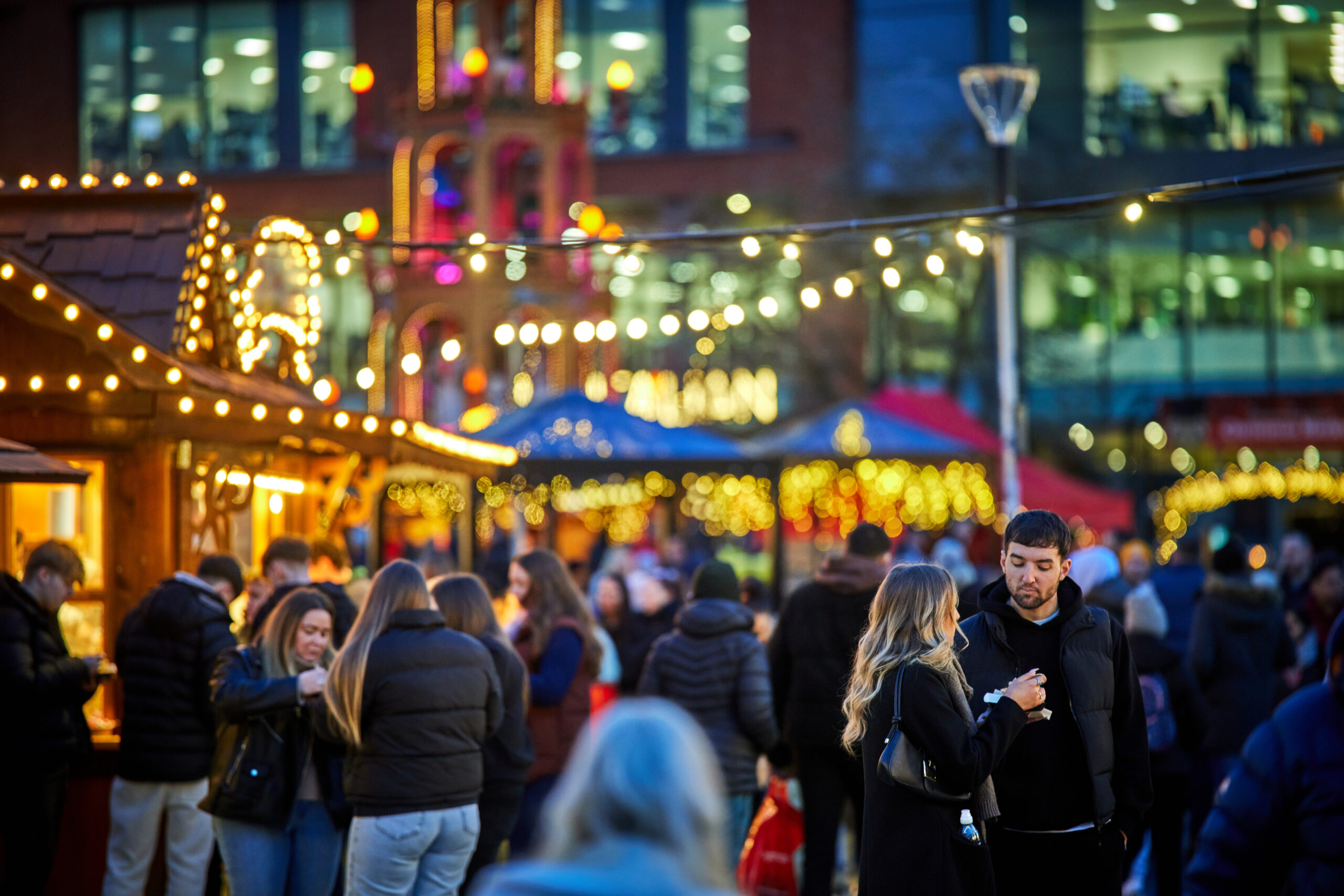
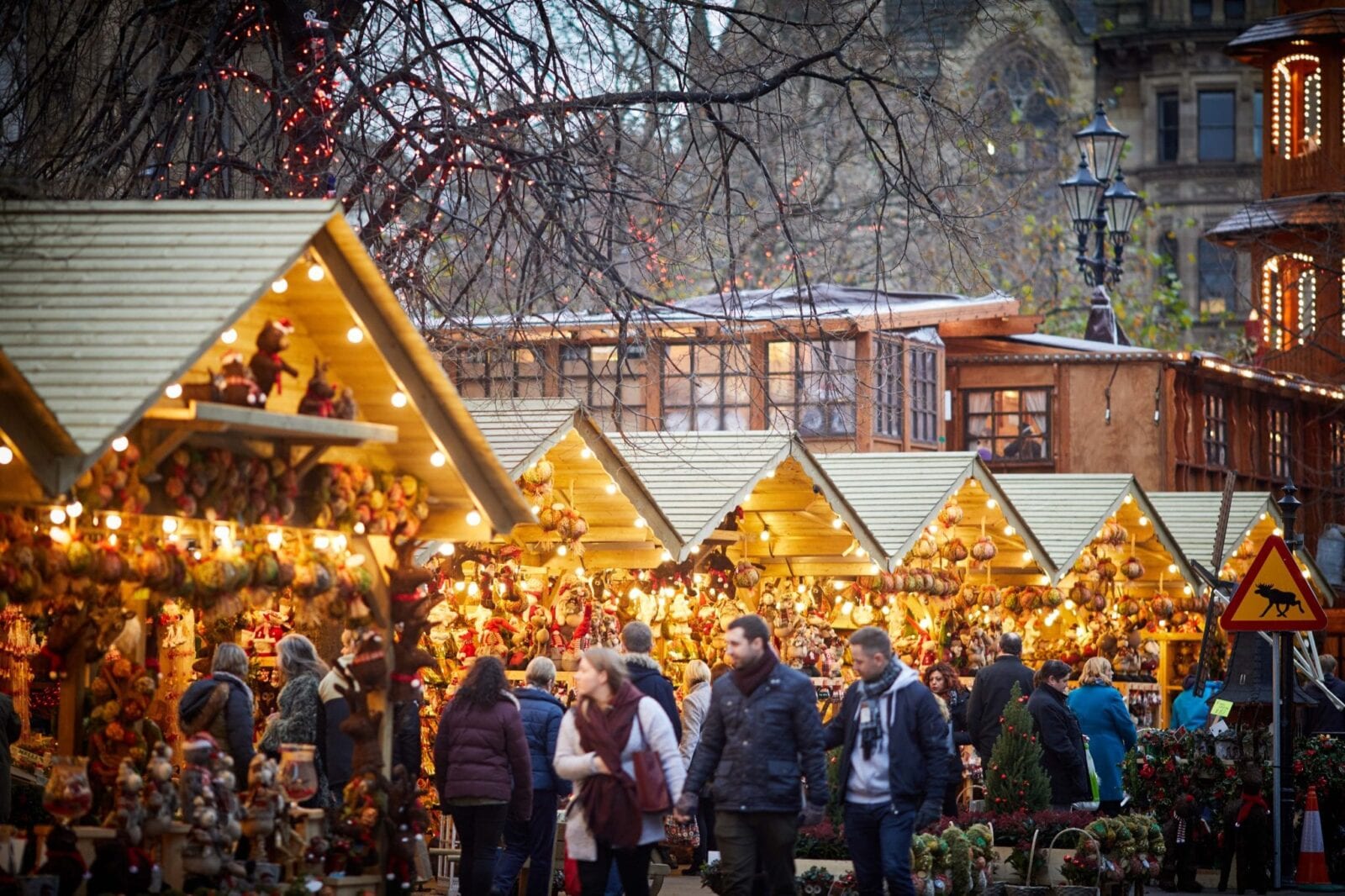
The sheds have taken over the city centre already, with the huge Christmas Markets officially opening on Friday 8 November.
A big character during the festive season in Manchester is, of course, our light-up Big Santa.
He’s taken on a few different forms over the years, from the huge inflatable character who used to scale the Manchester Town Hall to the piercing gaze of the city’s legendary ‘Zippy’.
The newest Big Santa is a large fella sitting on a big present, sporting a white handlebar moustache and holding a Manchester bee in his hand.
Over the years, this festive figure has been joined by several other glowing installations, like twinkling baubles you can walk through and huge stars.
ADVERTISEMENT
And when the markets were held at Albert Square, they normally opened with Big Santa proudly already in position.
But this year the arrival of the Manchester Christmas Markets doesn’t mean the start of the festive light trail, or the return of Big Santa – so don’t go looking for him on Friday.
ADVERTISEMENT
That’s because he won’t be installed on his perch at St Peter’s Square until after Remembrance Sunday, with a poignant service being held at the Cenotaph in the square next weekend.
Big Santa won’t be there when the Manchester Christmas Markets open on Friday. Credit: The Manc Group
Father Christmas will be installed at St Peter’s Square in the days after Remembrance Sunday.
Speaking of the Manchester Christmas Markets, councillor Pat Karney said: “Nowhere does Christmas quite like Manchester and with more than a quarter of a century of our world-famous legendary Christmas markets under our belts, we reckon we’ve got everyone’s Christmas wrapped.
ADVERTISEMENT
“The number of people who’ve visited our markets over the years must be well over the fifty million mark by now and twenty-six years on from our first-ever Christmas Market in 1998 we regularly attract visitors from around the globe.
“We can’t wait to welcome everyone back again to Santa’s favourite city to enjoy the markets and share in all the festive fun. Grab some tinsel, find a friend or round up the family, and come and join us!”
The Manchester Christmas Markets open on Friday 8 November and close on Sunday 22 December, with Big Santa arriving in mid-November.
Top 10 most disliked Christmas foods revealed – and sprouts aren’t number one
Emily Sergeant
If there’s one thing for certain, a lot of food gets consumed at Christmas.
Foodies look forward to the festive season all year long, and it’s not hard to see why, as for many people, Christmas is just as much about the food as it is anything else, especially as shops and supermarkets tend to go all out with the festive feasting specials – with treats stacked top to bottom on the shelves.
Think turkey, roast potatoes, chocolate, mince pies, and so much more everywhere you look.
But surprisingly, a few of those foods are actually among the most disliked by the younger generations once the festive season rolls around.
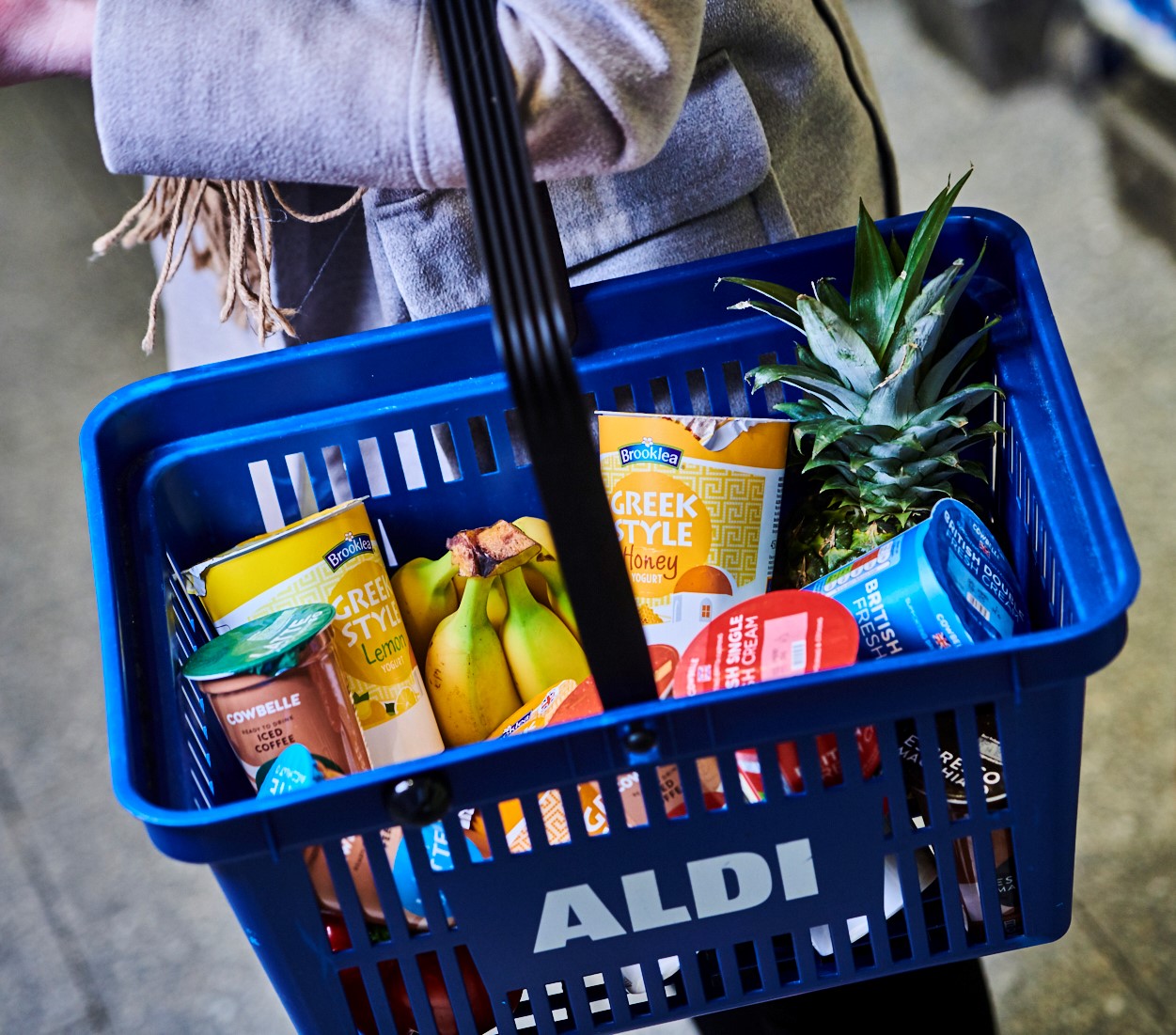
A new poll by of 2,000 adults who celebrate Christmas, carried out by Aldi, has found that those born in 1996 or later are apparently “turning their back on” traditional favourites in favour of festive dishes with some sort of “modern twist”.
The top 10 most disliked Christmas foods have been revealed / Credit: Mika Hermans (via Pexels) | GoodFon
Of the traditional favourites, Christmas pudding is one of the least-loved festive foods, along with Christmas cake and trifle – with more than half (56%) of respondents describing them as “dated”.
Despite what many would expect though, number one on the list is not the usual scapegoat of sprouts, as instead it’s mince pies that take the top spot, with the little green vegetables coming in fifth place just behind cranberry sauce at four, Christmas cake in third, and Christmas pudding at two.
Top 10 most disliked Christmas foods
Mince pies – 31%
Christmas pudding – 29%
Christmas cake – 25%
Cranberry sauce – 25%
Brussels sprouts – 24%
Bread sauce – 22%
Chestnuts – 21%
Brandy butter – 20%
Turkey – 20%
Trifle – 19%
So, what else would the youngsters like to see on the festive menu instead then?
According to the poll, he likes of loaded fries, crispy fried chicken, and even pizza are just a few of the things that Gen-Z would most like to be at the table for Christmas dinner this year, whilst cheesecake (33%), chocolate gateau (29%), and ice cream (25%) are among the preferred festive desserts in place of Christmas pudding and Christmas cake.
Additional research from the supermarket found that the main reasons Brits would like to change up Christmas dinner is to fit personal taste preferences better (34%), or to be more inclusive for dietary restrictions (27%).
26% said they want to switch things up just to be more exciting or adventurous in general.
Featured Image – Flickr
Christmas
10 Christmas foods that are toxic for pets and the warning signs to watch out for
Emily Sergeant
With Christmas only a few days away, and the festive feasting having firmly already begun for a lot of households, we need to keep an eye on those food vacuums.
And by food vacuums, we of course mean our four-legged friends.
We all know that a lot of food tends to get thrown away over the Christmas period, and because of this, you may be tempted to treat your pets to some of the leftovers – but did you know that some common festive foods can actually make our pets seriously ill?
This means it’s so important to know which ones should be avoided.
Animal health specialists at OurFitPets have put together a list of common Christmas foods that can cause serious health problems for cats and dogs, as well as given some advice on what you should do if your furry friend accidentally eats any of these foods.
Some of the warning signs that your pet has poisoning from the various foods on list list to look out for include vomiting, diarrhea, increased thirst, changes in urination frequency and habits, changes in appetite, and much more.
Here’s 10 festive foods that are toxic to pets.
Did you know that some common festive foods can actually make our pets seriously ill? / Credit: Rumman Amin (via Unsplash)
Christmas pudding and mince pies
These common Christmas treats are filled with dried fruits, such as raisins, sultanas and currents, all of which are particularly toxic for cats and dogs.
They can cause kidney failure if consumed.
Sage and onion stuffing and onion gravy
Any foods that contain vegetables of the allium variety should be off the menu for cats or dogs.
This includes fresh and powered forms of aromatics, such as onions, garlic, shallots, leeks and chives, which are frequently found in Christmas stuffing and gravy, as these vegetables all contain a compound called N-propyl disulfide – which is damaging to your pet’s red blood cells, and can cause them to develop anaemia.
Chocolate
This is one we’re all pretty familiar with, right?
Chocolate can be particularly toxic for cats and dogs as it contains a compound called theobromine, which animals can’t metabolise easily.
Dark chocolate and baking chocolate being the worst offenders, as they contain the highest levels of theobromine, while white chocolate is the least harmful as it contains only a small amount of the compound – although it’s obviously not recommended that you feed them any type of chocolate.
Consumption can cause overstimulation of pets’ muscles, including their heart.
Macadamia nuts
While it’s not fully understood why Macadamia nuts are unsafe for pets, we do know that consuming them can cause your cat or dog to appear weak or sleepy, and can cause painful or stiff joints that may make it difficult for them to walk.
This variety of nut can also induce vomiting, tremors, and raised body temperature for up to two days.
Blue cheese such as Roquefort contain a compound called roquefortine C, which is known to cause muscle tremors and seizures in cats and dogs for up to two days.
Like blue cheese, dairy that has gone past its use-by date, or different bread products that contain fungi can become mouldy and produce mycotoxins that give similar negative effects for cats and dogs when ingested.
Alcohol
Animals are more sensitive to the ethanol present in alcohol than humans are.
ADVERTISEMENT
Consumption of alcohol will cause your pet to become drowsy and unstable on their feet, and, at worst, can cause a drop in body temperature and blood sugar – which can lead to seizures or a coma.
Turkey bones and fat
While not necessarily toxic to cats and dogs, turkey bones can be brittle which means there is a high chance of them splintering and lodging in your pet’s throat or stomach.
Turkey fat – and fatty foods in general – shouldn’t be given to pets in large quantities either as they can cause stomach discomfort and diarrhoea.
Experts have provided tips and warning signs to watch out for / Credit: Jasmin Schuler (via Unsplash)
What should I do if my pet has eaten something it shouldn’t have?
Even if your pet has only eaten a small amount of these foods, it’s important to do the following:
Call the vet straight away – Don’t wait for your pet to start showing symptoms. A vet will be able to offer advice, and the quicker you act, the better chance your pet will have of recovery.
Note the time and quantity of food ingested – Provide the vet with as much information as you can. This includes the time your pet ate the unsafe food, brand names, the ingredient list and how much you think they consumed.
Don’t try to make your pet sick – Attempting this can cause further health complications. Leave this to your vet, as they are trained to do this in a safe manner.
A few tips pet owners should keep in mind this festive season is making sure chocolate is kept out of reach, including removing Christmas tree chocolates and avoiding putting wrapped selection boxes under the tree, and considering putting pets in another room while you eat your Christmas dinner so they can’t eat food that drops on the floor.
It’s also a good idea check the list of ingredients in any food before feeding to your pet, as many products will contain onion or garlic powder as flavouring – which is just as harmful for your pet as the real thing.