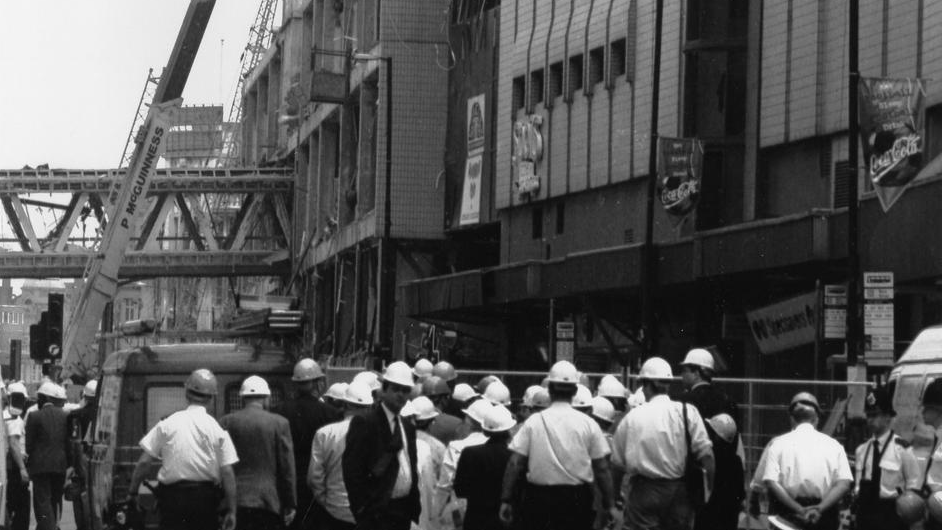
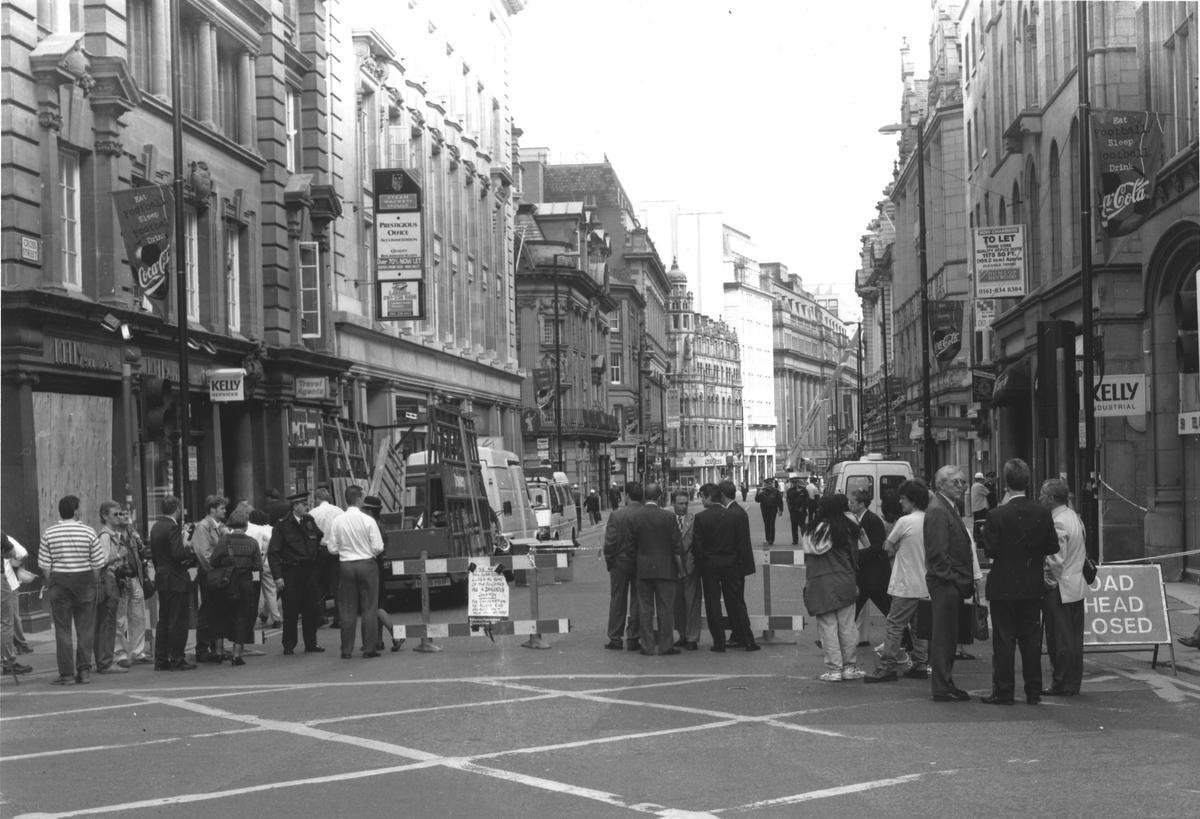
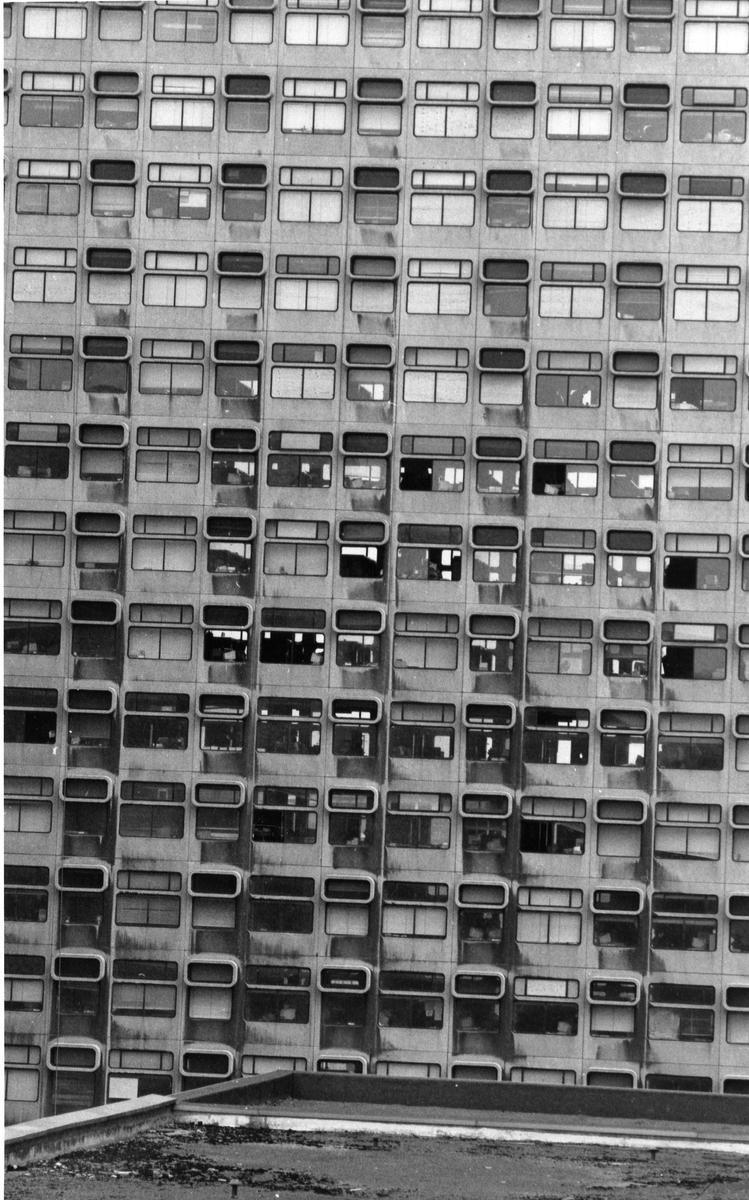
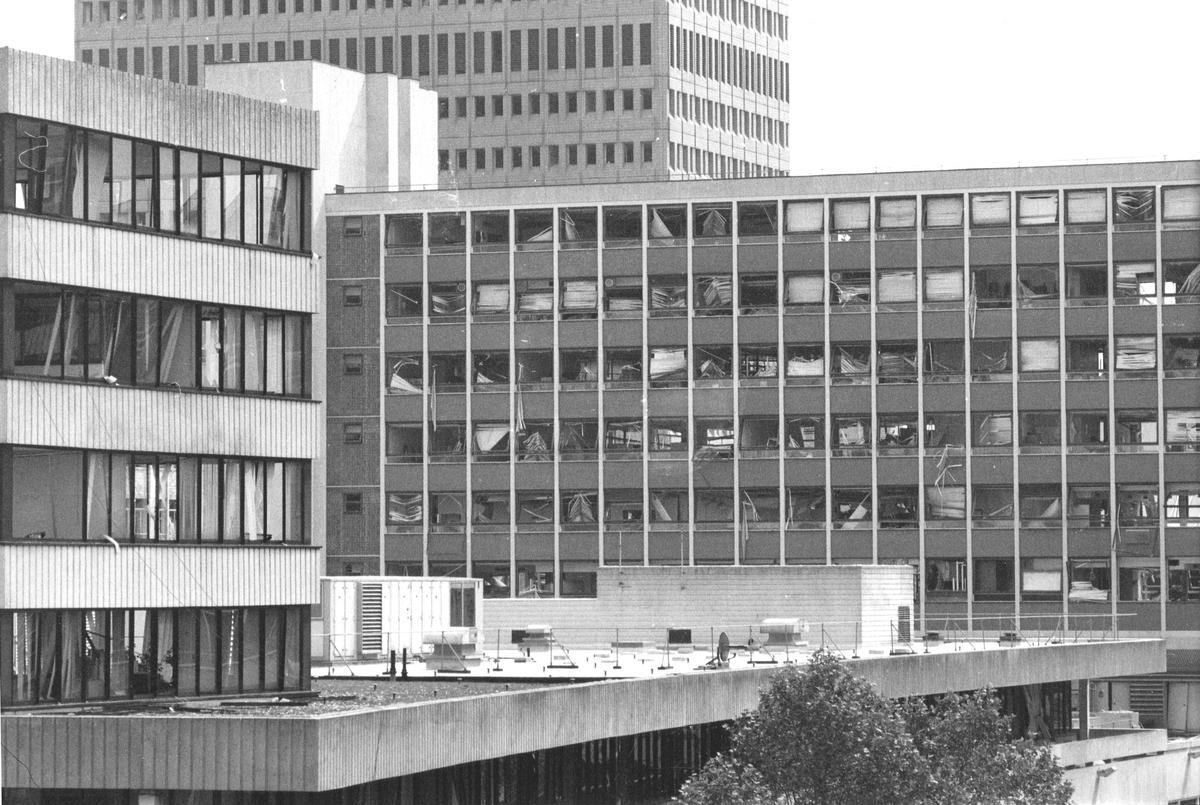
Today marks three whole decades since an explosion from the inside of a lorry parked on Corporation Street shattered windows and destroyed buildings across the city centre.
Causing an evisceration that stretched for miles, when the 1,500 kilogram IRA bomb went off in 1996, it was the biggest detonation in Great Britain since the Second World War.
Following the explosion, the city fell silent – leaving rack, rubble and ruin in its wake. Famously, one red post box was left standing – today fitted with a memorial plaque in remembrance of the tragedy.
It seems scary to think that back then, most people could only stand there, watch on and worry.
The bomb caused an estimated £700 million worth of damage to Manchester’s infrastructure and economy, and over a quarter of a century later, locals still tell the stories of where they were when it went off – and of the devastation it left behind.
ADVERTISEMENT
Notably, one resident of the Cromford Court maisonettes on top of the Arndale – a 77-year-old RAF veteran suffering from the flu – didn’t even bother to get up when the telephone warning to evacuate hit, considering himself to have survived much worse feats during his time in military service.
Having been a rear gunner in a Lancaster in the war, he reportedly told police and authorities “he was buggered if he was going to let a small bomb affect him.”
ADVERTISEMENT
In subsequent years, Danny O’Neill has become a part of an urban legend surrounding the bomb as his staggering story has been told time and time again.
Around 90 minutes prior to the detonation, the Provisional Irish Republican Army had telephoned in warnings – meaning that around 75,000 people were able to be evacuated from the area before the bomb went off from the back of a van.
However, the bomb squad were unable to defuse it in time, leading to over 200 injuries from people still left in the area.
ADVERTISEMENT
Thankfully, despite those injuries, there were no fatalities, and many of those reported traumas came from the shattering of thousands of windows and other damage to buildings in which unsuspecting people were getting on with their days.
Several buildings near the explosion were damaged beyond repair and had to be demolished, while many more were closed for months for structural repairs, and this prompted the biggest regeneration of Manchester city centre ever – something that is still continuing to this day, arguably at a more rapid rate than ever.
The city lay dormant for days after the explosion, as people came to terms with what had happened and kept their distance. Many moved out of the centre for a period of time, while many more simply decided not to visit for fear of another incident.
It was a desolate place, eerily quiet, and in need of some serious TLC.
According to Home Office statistics, an estimated 400 businesses within half a mile (0.8 km) of the 1996 blast were affected, 40% of which did not recover.
ADVERTISEMENT
Credit: Manchester Libraries
Market Street – near the explosion and at that time the second-busiest shopping street in the UK – was considered by some a “fearful” place, and one that was to be “avoided like the plague”.
The prospect of pulling Manchester’s bustling city centre out of its darkest depression was not casually approached by those in charge.
It was acknowledged as a mammoth task from the get-go, but Greater Manchester has never let anything get in its way. Despite how steep the hill is that we’re standing at the base of, we always manage to reach the peak, ready to go again.
Everything you need to know about Manchester Christmas Markets 2026 – dates, locations, and more
Emily Sergeant
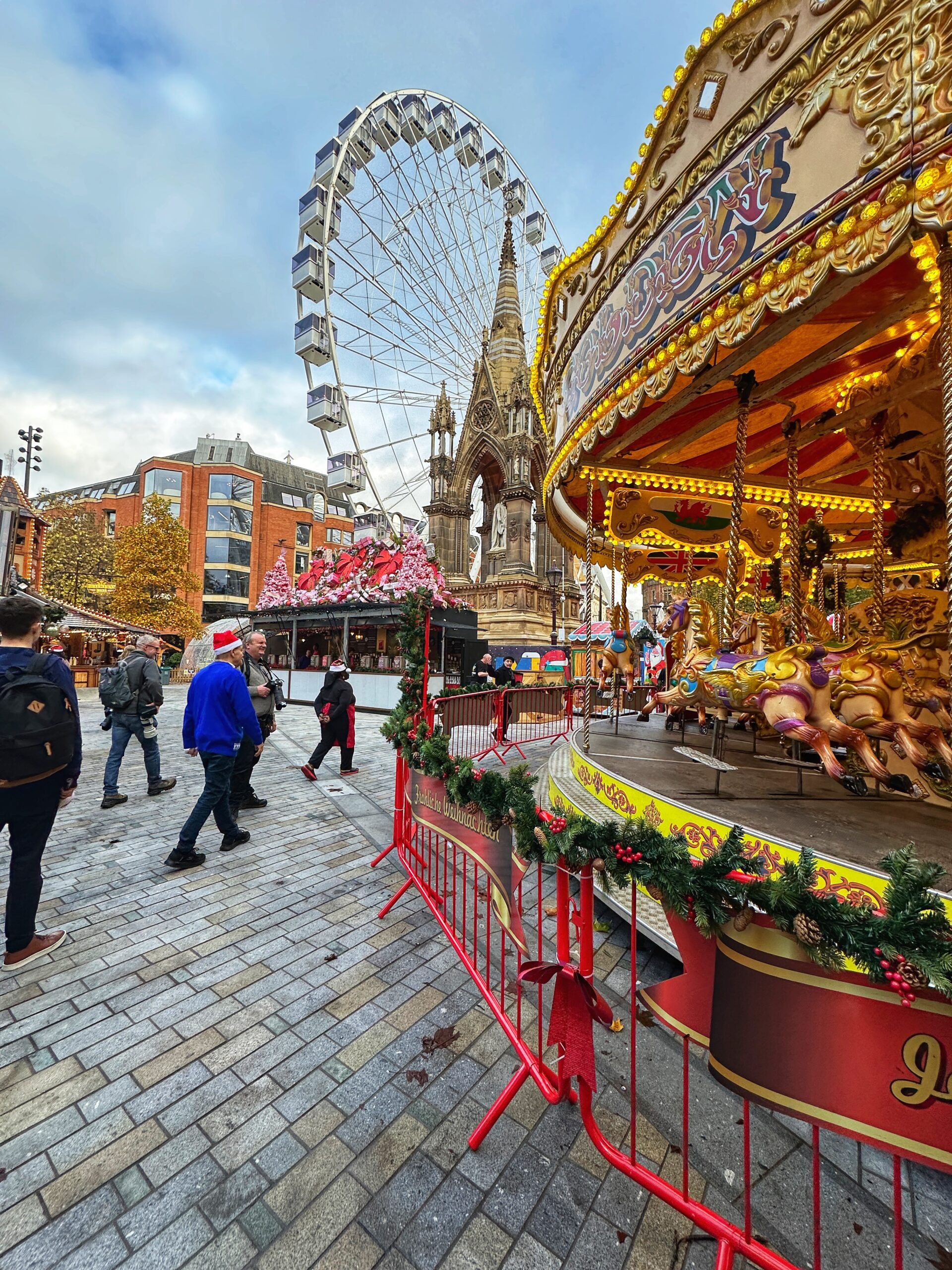
Manchester Christmas Markets will be taking over the city centre this festive season, with hundreds of little wooden huts lining the streets.
Now in their 27th year, Manchester Christmas Markets are known and loved for bringing thousands of people into the city centre each year to fill up on fantastic festive treats and soak up all the Christmas atmosphere.
This year will see a bigger return of Albert Square, after the headline-grabbing partial return at last year’s event – with the big wheel also set to make a comeback.
There’s also set to be some new locations too for 2026, with Lincoln Square joining in on the action, as well as big changes to St Ann’s Square with what is being described as a ‘brand new layout’ bringing in a bigger number of market stalls.
There will be a total of 210 stalls spread out across the city centre, and Manchester
When are the Manchester Christmas Markets 2026?
This year’s Manchester Christmas Markets will take place between Friday 6 November and Monday 22 December, across 10 different city centre locations.
Some sites will remain open even longer though – there’ll be festivities continuing at both Albert Square and Cathedral Gardens (which is home to the Skate Manchester ice rink) until Sunday 3 January 2027.
Another date for your diary is the Manchester Christmas Parade, which will see floats and performers filling the city on Sunday 6 December.
Manchester Christmas Markets locations
Manchester Christmas Markets
There are some brand-new spots to check out this year as the markets officially leave Piccadilly Gardens and return to their spiritual home around Albert Square.
Notably, Lincoln Square will be hosting a food and drink-focused market for the first time.
St Ann’s Square will also have a brand-new look, and Albert Square will again be home to a helter-skelter and a big wheel, along with loads of food, drink, and festive retail.
The locations are:
Albert Square
Lincoln Square
King Street
St Ann’s Square
Corn Exchange
Exchange Street
New Cathedral Street
Market Street
Exchange Square
Cathedral Gardens
You can see more about what each location will offer HERE.
Manchester Christmas Markets 2026 opening and closing times
The vast majority of the Manchester Christmas Markets locations will be open from 10am to 9pm daily, through to 22 December.
The only exceptions are as follows:
Albert Square
6 November – 23 December: 10am to 9pm
24 December (Christmas Eve): 10am to 5pm
25 December (Christmas Day): Closed
26 December – 30 January: 10am to 6pm
31 January (New Year’s Eve): 10am to 12.30am
1–3 January: 10am to 6pm
Cathedral Gardens
6 November – 23 December: 10am to 9pm
24 December (Christmas Eve): 10am to 5pm
25 December (Christmas Day): Closed
26 December – 30 January: 10am to 6pm
31 January (New Year’s Eve): 10am to 12.30am
1–3 January: 10am to 6pm
Food and drink highlights at the Manchester Christmas Markets
Great North Pie Co. at the Manchester Christmas Markets. Credit: The Manc GroupHong Kong French Toast at the Manchester Christmas Markets. Credit: The Manc Group
Until the markets are officially open, we’re not sure exactly what this year’s top stalls and must-eats will be – but looking at the trader list, we can give you a good idea.
The always-popular Yorkshire Pudding Wraps from Porky Pig will be back in Exchange Square, along with the iconic Witch House German bratwursts a short distance away on New Cathedral Street.
Other traders we loved in 2025 who’ll be returning this year include Great North Pie, Flat Baker, Hong Kong French Toast, and Oi Dumplings.
ADVERTISEMENT
Travel advice and how to get to the Manchester Christmas Markets
As usual, passengers are advised to travel with public transport wherever possible, as the city centre will be very busy with both Christmas Markets visitors and shoppers.
There are eight tram stops in the city centre that will put you within walking distance of the festivities, with St Peter’s Square the closest to the main site at Albert Square.
Trains and buses also serve the city centre well, but if you really need to drive, TfGM is advising to make use of the park and ride system rather than risking traffic delays in town.
Alex Warren announces massive Heaton Park gig in Manchester
Daisy Jackson
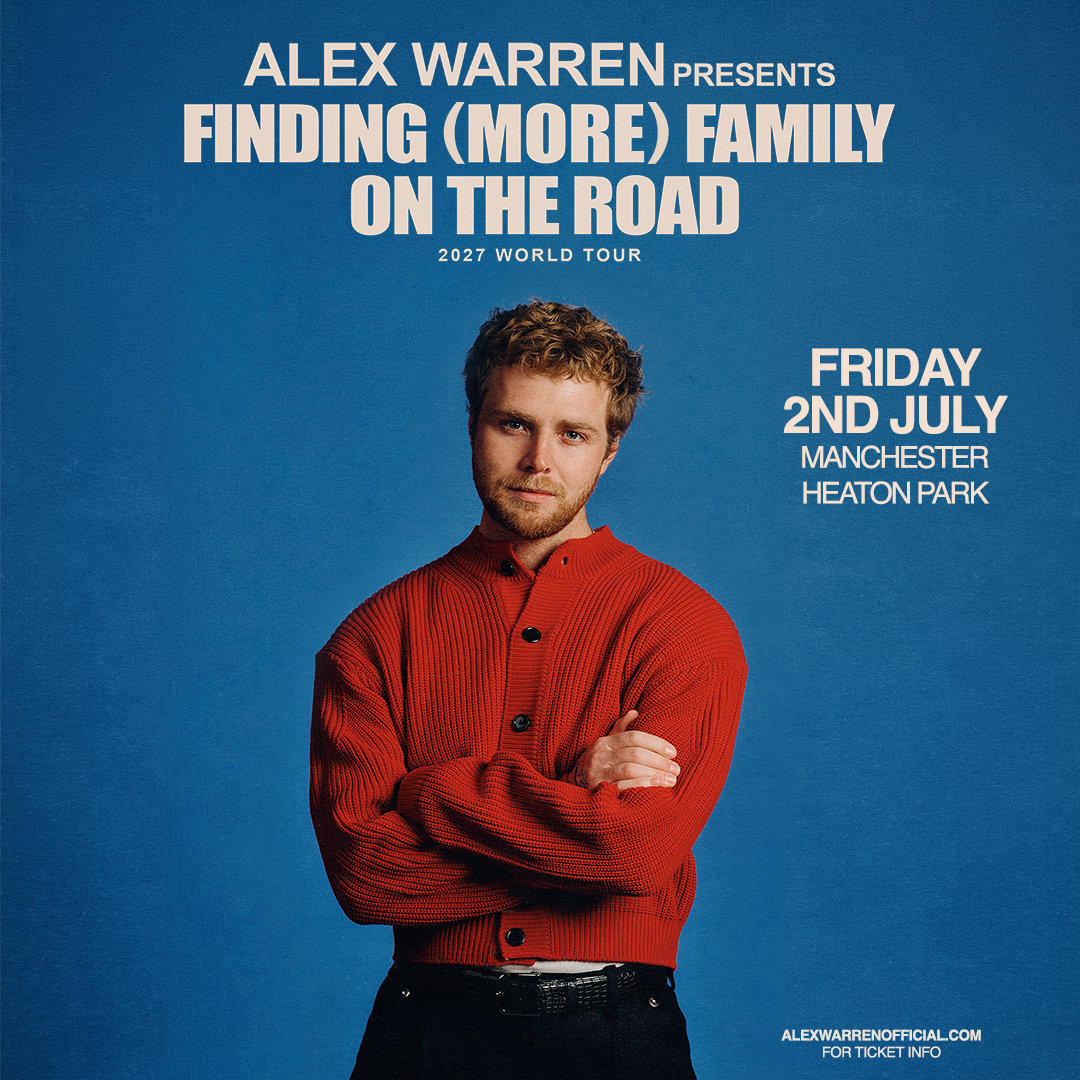
Alex Warren has just announced a huge summer gig in Manchester, performing to massive crowds at Heaton Park.
The chart-topping star will be performing on the hallowed grounds that have hosted the likes of Oasis, Courteeners, and Catfish and the Bottlemen.
Heaton Park will also be the site of two enormous Fontaines D.C. gigs next summer.
And now Alex Warren has added his name to the list, announcing that he’ll be taking the stage here in Manchester in July 2027 – one of the biggest gigs of his career.
The news follows a massive 12 months for the star, whose second album WILDCHILD topped charts around the world.
After first rising to fame as part of the TikTok group The Hype House, he went on to release music independently, eventually getting signed to Atlantic Records.
Since then, he’s topped charts globally with his songs and gone four-times platinum in the UK with his massive track, Ordinary.
He has also won an MTV VMA for best new artist, and has been nominated for a Grammy.
As well as Heaton Park, Alex will play summer shows at Cardiff’s Blackweir Fields, Belfast’s Belsonic, Dublin’s Malahide Castle, Live At Glasgow Green and Live at Powderham in Exeter, plus Blenheim Palace Festival, Scarborough Open Air Theatre, and two huge headline shows at Crystal Palace Park Live in London.
Alex Warren will play at Heaton Park in Manchester on 2 July – tickets will go on sale at 9am on Friday 30 October, with a number of artist, promoter and O2 presale available beforehand.

 Georgina Pellant -
12th June 2026
Georgina Pellant -
12th June 2026