Incredible images of traders at Stockport Market have sat gathering dust for decades. 47 years on, they are about to go on display in central Manchester.
Having endured several house moves and even storage in Scotland, a selection of shots – which recall the bustling market town during the late 70s – will appear at The Refuge and Kimpton Clocktower Hotel this summer.
They’ll be put up as part of a new time capsule exhibit curated by the British Culture Archive: Life in the UK shot exclusively through the eyes of northern women.
Developed from a mass of old negatives uncovered by photographer Heidi Alexander during the 2020 lockdown, the pictures tell a story of a very different time in Greater Manchester’s history. A time when you could buy meat for 4p a pound and when elder, or cow’s udder, was a popular choice on the butcher’s stall.
Captured in 1977, her Stockport street photography series was shot on just five rolls of Tri-X on a Leica M4 and brings back happy memories for Alexander.
ADVERTISEMENT
A stall selling elder, also known as cow’s udder, at Stockport market in 1977 / Image: Heidi AlexanderStockport market, 1977 / Image: Heidi Alexander
One of her images, according to locals, even depicts a young Mark E Smith.
“I remember the bustle and the noise, especially the street pastors and their singing followers competing with the shouting traders for customers’ attention,” said Alexander, reflecting on her time in shooting in Stockport with the British Culture Archive.
ADVERTISEMENT
“One or two noticed a young female with a camera, but most were too busy finding that bargain or exchanging the latest gossip. Despite the bleakness, the atmosphere was unmistakably warm and energetic and jolly.
“It was forty-seven years ago, but I wonder where some of those characters are now.”
Alexander recalled the distinctive taste of the hot dogs from a ‘proper hot dog cart’ which was ‘enough to put you off hot dogs for life!’ / Image: Heidi Alexander
The new exhibit will also celebrate work from acclaimed photographers Shirley Baker, Tish Murtha and Anne Worthington.
ADVERTISEMENT
It appears as part of an artist-in-residence program in association with the British Culture Archive, continuing on from last year’s show on Hulme and Manchester’s club scenes.
Alongside Alexander’s Stockport shots, there will also be some iconic social documentary photography on display from Salford-born Shirley Baker – one of the most pre-eminent British photographers during the post-war era.
Best known for her street photography and street portraits in working-class areas of Manchester, Baker’s images give us a glimpse of washing-lined ginnels filled with playing children and the domestic drudgery for poor mothers stuck at home.
Children playing in a Salford ginnel / Image: Shirley BakerWorking class kids hanging out on a crumbling estate in Tyneside / Image: Tish Murtha
Tyneside photographer Patricia Anne “Tish” Murtha also captures the everyday of human life, documenting marginalised communities and working class life in the North East of England: showing everything from rubbish tips to sex workers.
Anne Worthington’s pieces, meanwhile, highlight conditions of housing and the effects of the social and economic changes that begun in the 1980s.
ADVERTISEMENT
Curated by British Culture Archive, the ‘A Woman’s Work’ exhibition will open at The Refuge and Kimpton Clocktower Hotel from Monday 21 June.
Feature image – Heidi Alexander
Feature
The Peak District walk with amazing views, a cosy cafe, and a great pub at the end
Daisy Jackson
If you’re looking for a country walk that’s got a bit of everything – we’re talking views, lakes, history, picturesque villages and, crucially, pints – this is the one.
Step across the Greater Manchester border into High Peak, and you can take on a circular walk that’s got it all.
The walk takes in all the best bits of the English countryside, from rolling hills to proper pubs.
Park in the village of Hayfield, then head out west to join the Sett Valley Trail, which joins Hayfield and New Mills.
The trail itself is 2.5 miles and follows a former railway line – but now it’s a tree-lined trail that’s perfect for a gentle stroll, cycle or even horse ride.
You’ll pass the Birch Vale reservoir, but won’t be following the trail all the way to New Mills.
Get as far as Emma’s Sett Valley Cafe and stop for an early break – indulgent hot chocolates, great bakes, and a decent amount of brunch dishes beneath colourful festoon lighting.
Emma’s Sett Valley Cafe. Credit: The Manc Group
Once you’re fuelled, head slightly back on yourself to skirt Birch Vale Reservoir, cross the River Sett, and walk towards Sitch Lane.
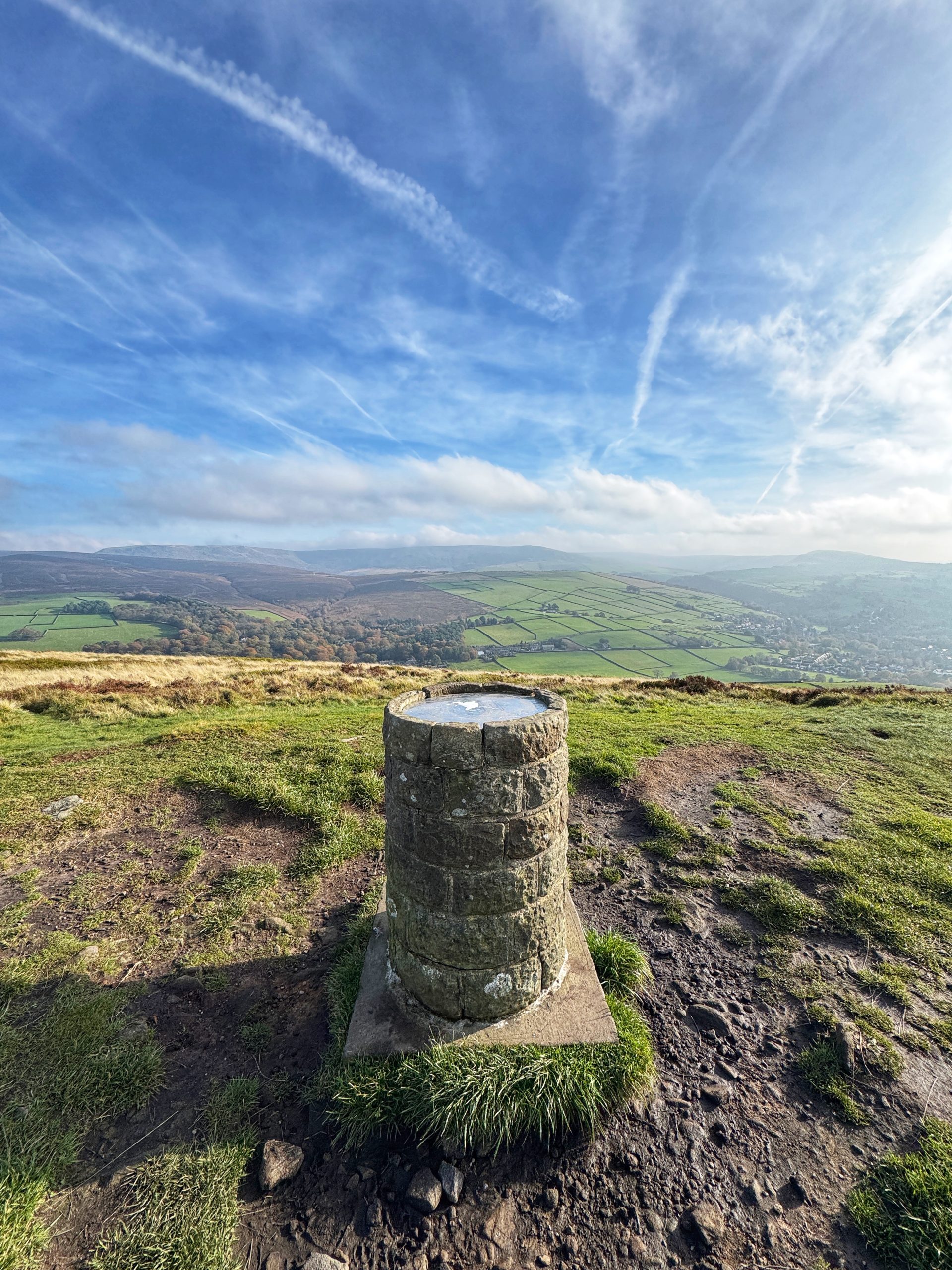
The road will take you to the very edge of the Peak District ready for an uphill climb to the peak of Lantern Pike.
It’s not a giant by Peak District standards (373m compared to Kinder Scout’s 636m) but the views are 360 degrees – fields on all sides and the incredible Manchester skyline in the distance.
Walk straight over the summit and down the other side, walking along the edge of Hey Wood and across fields full of friendly cows, past Little Hayfield and back into the main village of Hayfield.
Views from the Sett Valley trailSummiting Lantern PikePretty views near Little Hayfield
Here you’ll find The Pack Horse, a country pub that’s gained some serious accolades in recent years.
Famed for its seasonal, locally-sourced menu, at this time of year you can expect hearty post-hike lunches like sharing pies, Manchester eggs, and incredible Sunday roasts.
Despite a top-notch menu, the pub is more than happy to welcome in customers (and dogs) who are covered in mud – as all good countryside boozers should.
Sharing pie at The Pack Horse in HayfieldThe Pack Horse in HayfieldTheir famous Manchester egg
You can see a map of the circular walking route at AllTrails HERE.
Mercury Prize 2026 review: RAYE takes home the crown as Newcastle celebrates the very best in music
Clementine Hall
One of the biggest nights in music kicked off last night as the Mercury Prize 2026 was awarded.
If there was ever a night to fall head over heels in love with British and Irish music, the 2026 Mercury Prize made a very convincing case.
Bringing together some of the country’s most exciting artists under one roof in Newcastle, this year’s ceremony was a reminder of just how much talent is packed into the current music scene.
From established legends to the names shaping what comes next, it was an absolute belter.
Images: Audio North
Held at the Newcastle Utilita Arena for the second year running, I think everybody in that room felt very lucky to be there to see firsthand who took home the coveted prize.
The shortlist brought together an impressive mix of artists, with Florence + The Machine, Olivia Dean, JADE, Suede, Pulp, Dave and Sir Paul McCartney among the big names making the lineup very star studded indeed.
Suede kicked things off with ‘Dancing With The Europeans’, bringing their unmistakable energy to the ceremony, while Pulp delivered ‘Begging For Change’ as part of the HELP(2) charity compilation.
It was a line-up that demonstrated the sheer range of music being made across the UK and Ireland, from contemporary pop to established rock and even jungle thanks to Bradford’s own Nia Archives.
And of course, there was one woman who had every reason to leave with a smile on her face.
RAYE took home the coveted Mercury Prize for THIS MUSIC MAY CONTAIN HOPE., an ambitious, genre-hopping album that blends jazz, soul, R&B and classical influences into something so fabulously unique.
Image: Audio North
Newcastle’s own Knats performance was definitely a highlight of the evening, combining slick jazz with spoken-word poetry against a projection of The Tyne Bridge.
A fitting image, and one that underlines the importance of holding such huge events in the north and highlighting the obvious talent that thrives here.
The 2026 Mercury Prize was a brilliant showcase of the country’s music at its best.
And with RAYE taking home the trophy, it’s clear there is plenty of ‘hope’ left in British music.

 Georgina Pellant -
16th June 2021