The watershed moment for women’s football appeared to have already happened by 2011.
Participation was on the rise. Matches were on television. Movies such as Bend It Like Beckham had put female footballers on the big screen. The top tier in England was even being revamped as the ‘Women’s Super League’ – marking an exciting new chapter for the domestic game. It felt like Britain was readily embracing women’s football again.
But then, in January 2011, Sky Sports presenters Richard Keys and Andy Gray were caught live on air scoffing at the very idea of a female comprehending the offside rule.
The leaked audio – in which Keys and Gray agreed the “game had gone mad” for including women as officials – was widely condemned, culminating in their departures. The pair protested that the comments had been taken out of context, but admitted it looked bad. If two of the most respected personnel in football punditry weren’t willing to take women’s opinions seriously, there was little hope for others.
Perhaps women’s football had a bit further to go after all.
ADVERTISEMENT
In the ten years since that infamous sexism row that rocked English football, more than a few things have changed. The number of female officials in English football has risen by 72%. Viewership is higher than ever before (with the latest women’s world cup enticing a global audience of 1 billion spectators in total according to FIFA). Women pundits occupy seats on mainstream analysis shows including Sky Sports – with female stars also enjoying better coverage from their own clubs and in the wider media.
More women have voices in football than they have in over a century. And part of the reason for that progress is down to the people fighting for change at grassroots level: Companies like the one based at Manchester’s old Granada Studios called Miss Kick.
ADVERTISEMENT
Grace Vella
Founded by a University of Manchester student who wanted to give the women’s game another nudge in the right direction, Miss Kick has evolved from just another sports logo into a badge of honour for all female footballers in Britain.
The company sells sports gear and accessories that are specially-designed for females – but is quickly morphing from a clothing store into a tight-knit women’s football community with thousands of members.
ADVERTISEMENT
Owner Grace Vella was balancing her psychology degree with her sports career when she set up Miss Kick in 2017; scribbling revision notes in the back of a car en route to business expos.
Between training and studying she barely had time to lace up her boots, never mind run a business. But Grace persevered – feeling like it was something she had to do.
Around this time, women’s football was spreading into more places and enjoying another resurgence. But it needed something to keep it connected – a place in which all female players and ambassadors could unite under a single umbrella and push the game into exciting new territory together.
That was the vision for Miss Kick.
Grace had grown up knowing her future lay in football – playing regularly with her brother and cousins as a kid before signing a dream deal at Liverpool aged just 13. She moved to Man City four years later and had a spell at Chorley, but despite her successes in football, Grace was left frustrated at the sight of boys being carried up the pyramid whilst she was forced to navigate all the hurdles herself.
ADVERTISEMENT
“I used to think – ‘If I was a boy I’d get all my allowances paid, my travel, my kit, and get football boot sponsorships,’” Grace tells us.
“Girls always have to pay for that stuff.”
“Growing up I was always given a boys’ kit to train in and felt like I had fewer opportunities just because I was a girl.
“I thought: ‘I want to change that. I want to change the way society sees womens’ sport.’”
In her third year at university, Grace got the brainwave for Miss Kick – the UK’s first all-female football brand – and immediately headed out to expos across the north to spread the word.
ADVERTISEMENT
The company has continued to grow ever since – with Grace’s old uni housemate Katie signing on in September and the latest recruit, Yasmin, recently joining as a Digital Executive.
Despite its relative youth, it’s clear Miss Kick has struck a chord.
“I’ve got quite a few professional players and friends in the game – and I knew there wasn’t really a brand out there for girls,” Grace tells us.
“So I thought: Why not give it a go?
“My dad organises one of the biggest girls’ football tournaments in the country, so I thought I’d turn up with my little tent and it went down really well!
ADVERTISEMENT
“Football has always been seen stereotypically, with boys put first with better treatment.
“I quickly realised that there were so many other girls in sport who felt the same way and have gone through the same experiences as me; whether that’s being bullied for liking football or picked last in the team.
“Our message – that anyone should be able to play football – has resonated with people.”
Women’s football is not so much a new trend as a rekindling of a long-dormant passion.
But the game quickly fell into disrepute in 1921 after the FA deemed football “quite unsuitable for females and ought not to be encouraged”. It took fifty years for the ban to be lifted. And another forty years passed before the official formation of the Women’s Super League. But throughout the century, women continued to play – even if it meant flying in the face of convention and ill-founded assumptions that females didn’t have the technical ability or knowhow.
Slowly but surely, women’s football has gained a new foothold. But there remains a strong element of stigma nonetheless – particularly when the men and women’s games crossover.
Jeff Stelling, another football figurehead at Sky Sports, has admitted it’s still tough for women to appear on his Gillette Soccer Saturday results show, calling the social media response ‘horrendous’ at times.
He told The Guardian: “There’s this blinkered idea – ‘It’s a woman, what can she know about football?’
“Twenty years ago I was also sceptical. But my view has changed and obviously we’ve had very good reporters like Michelle Owen, Bianca Westwood and Jacqui Oatley. They’re really experienced.
ADVERTISEMENT
“There’s no reason why women shouldn’t feature more.”
Another part of Miss Kick’s mission is about retaining this mindset and sense of momentum in the women’s game that’s empowering the people who play. A love for football isn’t something that girls have to hide anymore; and Grace believes the Miss Kick brand acts like a “hero cape” they can proudly carry through life.
“The growth of the womens’ game has been incredible,” Grace says.
“They’ve professionalised the WSL now. When I was growing up you couldn’t be a pro. You had to juggle it with something else. Now you can go and make a living from it – which I think is huge.
“We’re doing much better – but I still feel there is stigma. You do still see trolls picking on people.”
ADVERTISEMENT
“The leagues below the WSL need more finance and support – and there’s a big gap from the top league to the bottom.
“There is a bit of reluctance for investment because women’s football won’t develop a return straight away. But there’s no reason [the game] can’t be like it is in America where it’s really popular.
“In general, I think the womens’ game needs more opportunities to grow – and more needs to be done to challenge perceptions.
“That’s what we’re trying to do.”
It’s been a thrilling period for Miss Kick, but COVID has caused its fair share of complications – which is unsurprising for a sports brand that primarily deals with people face-to-face. Nonetheless, instead of standing still, Miss Kick is using the opportunity to evolve its offering and expand its membership base online in the meantime.
ADVERTISEMENT
“We’re not just a clothing brand – we’re a community,” Grace emphasises.
“We want to become a place that shares womens’ content and news; moving into digital space and creating a movement rather than just being a logo on a t-shirt.
“We want to inspire across generations and inspire as many women and girls as possible – including the young stars coming through.”
“We’re in talks about partnering with clubs, too.”
The future for female footballers looks brighter than ever now. But the game will still need to evade some lunging challenges in the years ahead.
ADVERTISEMENT
Grace thinks female football is ready for it. Miss Kick definitely is.
“Growing up being a girl in football you do develop tough skin,” says Grace.
“That’s spilled out into my business career. People underestimate you in both worlds.
“You almost shock them sometimes when it’s clear you know what you’re talking about.
“I almost use it to my advantage to prove people wrong – in sport and in business.”
ADVERTISEMENT
“It’s hard work, don’t get me wrong.”
“But running Miss Kick, I feel like the luckiest person in the world sometimes.”Learn more about Miss Kickonline.
Feature
The most magical Christmas displays have now landed at one of the North West’s best garden centres
Emily Sergeant
Christmas has officially arrived at one of the best garden centres in the North West, and it’s just as magical as you’d hope it would be.
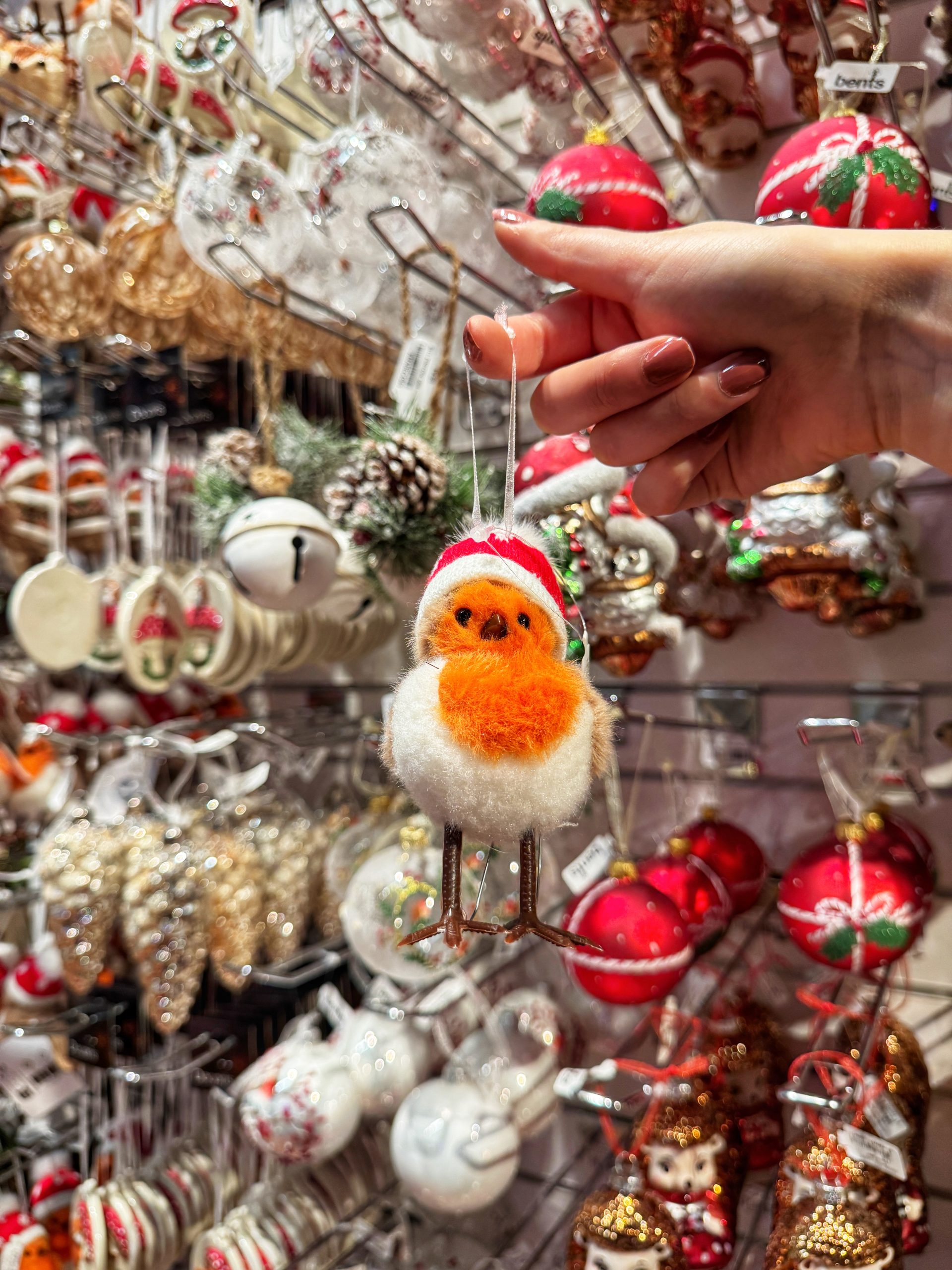
Just outside of Greater Manchester in the village of Glazebury in Warrington, you’ll find Bents Garden and Home – a multi award-winning destination garden centre that’s often voted one of the region’s best. It’s great place to visit all year round, but as anyone who has ever made the trip there will tell you, this place really comes alive during the festive season.
Bents first started out life all the way back in 1937, when Alfred and Margaret Bent began growing and selling roses in the front garden of their terraced house in Glazebury.
Ever since then, the business has gone from strength to strength – opening its first dedicated garden centre building in the early 1950s, and then undergoing several expansions in the 60 years that followed to create the place we know and love today.
A place that’s home to everything you need to kit out your home and garden, several cafes and restaurants, a food hall, a cook shop, a children’s boutique, and plenty more.
Christmas has arrived at Bents Garden and Home for 2026 / Credit: The Manc Group
And then at Christmas time, you can also get to wander around all the magical festive displays and stop for a bite to eat at the winter food markets.
Christmas at Bents originally began in the 1970s, establishing what would become one of the garden centre’s most successful – and favourite – times of the year, with people travelling in their thousands from all across the North West to visit, making it an annual tradition in the festive events calendar for many families.
With a jaw-dropping display to suit everyone’s festive decor tastes, Christmas at Bents really does need to be seen to be believed.
Expertly decorated trees form the centrepiece of each display, with all the baubles and decorations adorning them for sale by the side for you to recreate yourself at home.
Walking around the centre, you’ll also find every type of artificial tree (both normal and pre-lit), an array of fairy lights, wreaths, and garlands, before you arrive at what is sure to be one of the best Christmas Lemax Model Village set-ups you’ve probably ever seen.
A trip to Bents is an annual festive tradition for thousands across the North West / Credit: The Manc Group
Then, once you’ve filled your basket up with all the decs you need, you have to stop off at the Winter Food Markets before you head home.
There’s a wide array of different street food options to choose from like bratwursts, giant filled Yorkshire puddings, loaded fries, nachos, mac and cheese, crepes, churros, and build-your-own crumble, before taking a pew in one of the little wooden huts and washing it all down with festive-themed hot chocolates and mulled wine.
Don’t forget to stop off at the food hall, farm shop, and deli counters to stock up on plenty of goodies there before you leave too.
Basically, if you’ve never been to Bents before, we honestly cannot recommend it enough – even more so during Christmas time.
Don’t forget to stop off at the Winter Food Markets before heading home / Credit: The Manc Group
But it is really important to note that it does get very busy here, especially on weekends and at peak times like the run up to Christmas.
So you may have to be prepared to patiently wait for parking spaces and cooperate with your fellow shoppers, as well as join queues at the cafes and restaurants, all while respecting the hard-working staff at all times.
Let’s be as respectful as possible, and make this a place where everyone can enjoy a magical festive experience in 2026.
Meet Larishka – the DJ making her mark on Manchester’s Garage scene
Emily Johnson
It’s time to meet Larishka – Audio North’s Artist of the Month for October.
For Larishka, music has always been around her in some form. Growing up surrounded by classical and rock music, she never expected her route into electronic music to begin with a Parklife set from Carl Cox, before eventually becoming a DJ, promoter, and co-owner of Manchester’s Ghosts of Garage.
Today, she runs events, DJs across House, Garage and Bass, and is helping build a community around one of Manchester’s most exciting electronic music brands.
From promoter to DJ
Larishka actually started out as a promoter while doing an apprenticeship at a music booking agency. She always knew she wanted to work on the events side rather than bookings, but felt like she wasn’t going to make many connections within the industry while living in Oldham.
Her plan was to go to university to study music, with the hope of learning to produce while also moving into Manchester and making connections within the city’s music scene.
Quite quickly into her studies, she joined Ghosts of Garage. After about a year, she had something of a lightbulb moment.
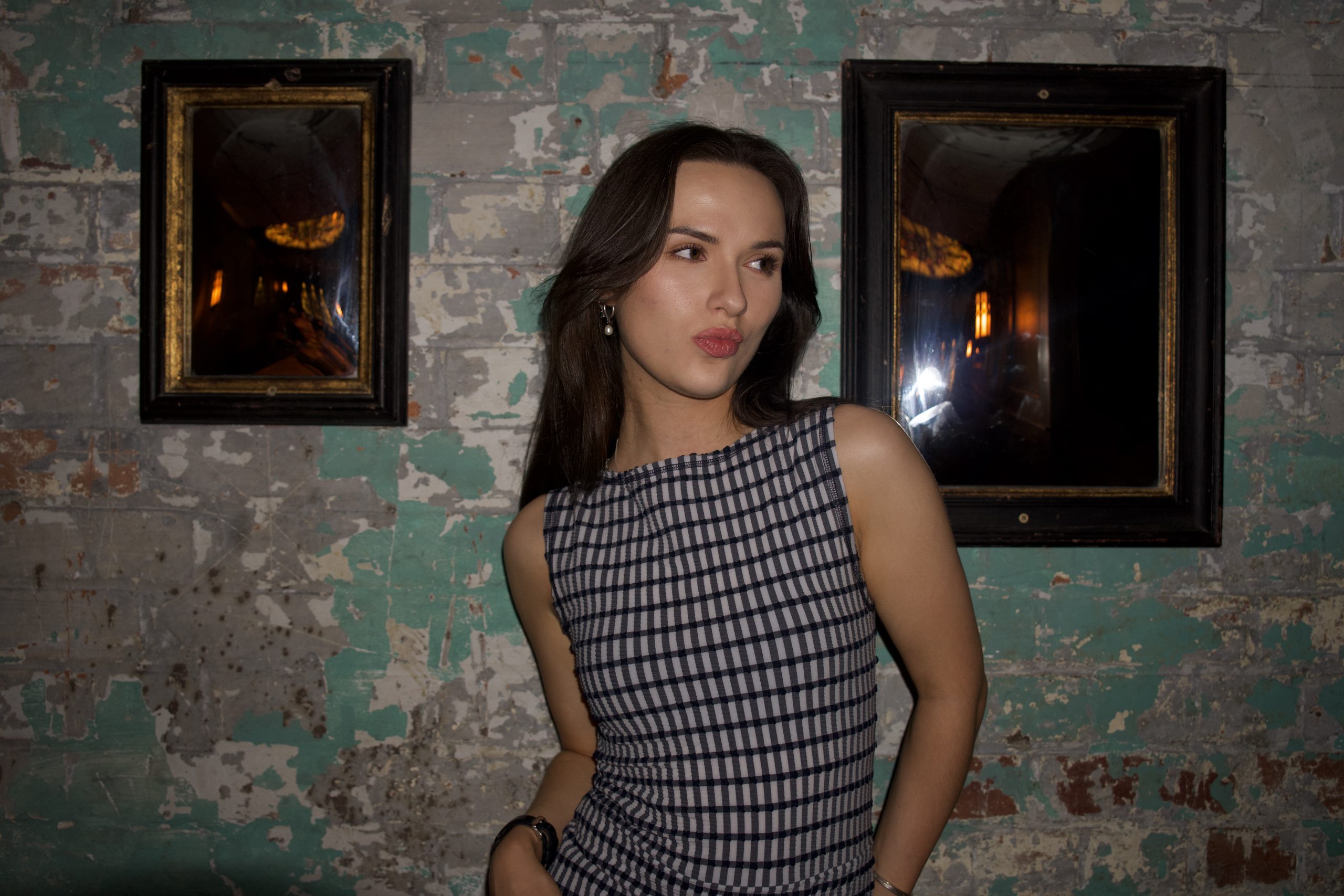
Meet Larishka, the DJ making her mark on Manchester’s Garage scene / Credit: Supplied
“I was studying music, I run my own nights, and I was always on the aux at house parties, so why have I not learned to DJ yet?” she explained.
That realisation came while she was sitting on MATTIK’s living room sofa, where she asked if he would teach her. Before long, she was calling him every day asking if they could go to the studio and practise mixing.
“I owe it to him really, he was a brilliant teacher.”
“I get it” – the Parklife moment that changed everything
Larishka’s introduction to electronic music wasn’t exactly the traditional one.
“I grew up on classical and rock music – my dad was a sound engineer in the 70s so that was his thing really, and my mum played the piano every single day so that’s what I was constantly around.”
She first heard house music when she was around 15 or 16, after a friend sent her a track they had found on SoundCloud.
“I listened to it out of my phone and didn’t really get it, it was too repetitive.”
A few years later, everything changed. After hearing Parklife from her window every year growing up, Larishka eventually went to the festival for the first time and watched Carl Cox close The Valley. He played ‘Finder’ by Ninetoes, and it was the first time she had experienced electronic music on a huge sound system.
“I remember being in absolute awe and turning to my friend and saying ‘I get it’ and from then, I was just absolutely hooked.”
It became a genuine turning point.
“I had my A Level exams that following week and when I was revising all I was listening to was house music and I remember my Dad coming in and saying ‘Is this you forever now?’ and I said ‘Yeah I think it is'”.
Larishka is Audio North’s Artist of the Month for October / Credit: Supplied
Why Manchester means so much
“I mean it’s home, and always has been.”
Having become part of the city’s music scene, she says she feels incredibly lucky to have found a community around her.
“There’s a certain camaraderie that exists here that I don’t know that you’d find anywhere else.”
For her, that sense of community is what makes Manchester’s music scene so special.
“Seeing people you know everywhere you go, you kinda feel like you’re never alone and that you’re actually part of something.”
That spirit extends beyond electronic music, too.
“And it’s not just in electronic music either, that spirit exists across all genres – Manchester music history is so rooted across such a broad spectrum of genres, and to see that still prevailing today is something we should all be proud of.”
Building Ghosts of Garage
It’s impossible to talk about Larishka’s journey without talking about Ghosts of Garage.
She’s a co-owner of the brand, having joined in 2021, and works across its marketing, bookings and creative direction alongside Rich Reason. For her, one of the biggest things that makes a Ghosts of Garage night stand out is its commitment to the music.
“The music and lineups truly never miss, which is a credit to Rich. The guy knows how to program a lineup.”
The team makes a conscious effort to champion new talent, often including at least one Manchester or UK debut on a lineup.
“A big part of each event is making them unique while keeping the brand consistent – each event has to have its own USP or else the nights get boring and people think they can just skip this one and go to the next and it’ll be the same.”
For Larishka, music has always been around her in some form / Credit: Supplied
Community is a huge part of the brand.
“We’re also big advocates of community and want to create the gap between audience and DJ as little as possible, so try to get the crowd involved as much as possible through things like our WhatsApp community.”
The aim is to make people feel like buying a ticket means becoming part of something bigger.
“We want people to feel like if you buy a ticket for our event, then you’ve unlocked a key to be part of something.”
Larishka’s advice for getting into Manchester’s music scene
For anyone hoping to break into Manchester’s music scene, Larishka’s advice is simple – go out.
“I’m way more likely to book you if we’ve met and we’ve had a good chat because it means I can put a face to a name and I know what you’re like.”
For her, being part of the community is about more than simply sending messages and asking for opportunities.
“Being an active member of the community means you’re already part of the night, so booking you to DJ just makes you even more part of it than you already are, rather than someone I’ve never met before who’s in my DMs.”
Ultimately, it comes back to the same thing that has shaped so much of Larishka’s own journey – showing up, meeting people, and becoming part of something.

 The Manc -
9th February 2021
The Manc -
9th February 2021