Whilst Manchester has many musical claims to fame, when we think about the city’s fabled songwriting history we rarely reflect on how its gangsters served as an inspiration.
But according to local lore, a group of particularly well-heeled crime bosses kicking about from the 60s to the 80s had quite the impact on rock band Thin Lizzy, most particularly on its singer, songwriter and bassist Philip Parris Lynott.
As a kid Lynott lived in Ireland with his grandparents, but spent his summers visiting his mum Philomena in Manchester. It was here that he would end up writing a songs about the people he came across at her after-hours club Showbiz, aka the Clifton Grange Hotel in Whalley Range.
Said to have rarely opened before 2am, Showbiz, or ‘The Biz’, was a popular haunt of famous faces including Man United player George Best, singer Helen Shapiro and TV presenters Michael Parkinson and Bob Greaves.
Still, faced with all this material, it was the members of Manchester’s notorious Quality Street Gang that inspired Lynott to write the Thin Lizzy anthem The Boys Are Back In Town.
At the time, Thin Lizzy were in debt and at risk of being dropped by their label, Phonogram, if they didn’t pull through with a big hit on Jailbreak. Before long, they would end up breaking America with a song inspired by a group of spruce Mancunian mobsters
ADVERTISEMENT
Friday night they’ll be dressed to kill Down at Dino’s Bar’n’Grill The drink will flow and blood will spill And if the boys wanna fight, you better let ’em
– The boys are back in town, Thin Lizzy
One summer at his mother’s club, watching the well-dressed mob reappear following a trip to Italy, Lynott reportedly uttered the famous words as they made their entrance, and an anthem was born.
But who were the Quality Street Gang?
A close-knit group of ex-fighters and safe blowers, fraudsters and car dealers, scrap merchants, conmen and armed robbers, they were, by all accounts, part of the furniture of Manchester’s clubland.
ADVERTISEMENT
Most of the men came from Ancoats and whilst it’s not clear that all of them were involved in crime, many were known for having brutal fights.
They also had money to burn and lived the high life, buying suits from the finest tailors and frequenting trendy venues like The Cabaret Club and Deno’s.
Deno’s, referenced in the lyric ‘down at Dino’s Bar and Grill’, was notorious for its strict dress code, with its namesake Mr Denos Kitromilides famously banning Mick Jagger from the club for being too scruffy.
Evidently a penchant for the dapper side of life in clubland was key, and in time it earned the Quality Street group their brilliant nickname.
ADVERTISEMENT
So the story goes, it was inspired by a popular TV advert that showed a group of suited and booted bank robbers pulling off a heist in fedoras, a box of chocolates in hand.
Jimmy the Weed for greed was taken aback Johnny the Fox you old sly cat Cleverly the Fox concealed his stash Crisp dollar bills leave no tracks
– Johnny the fox meets immy the weed, Thin Lizzy
There are numerous reports of people calling out “It’s the Quality Street Gang” as they walked into various bars and nightclubs. The name simply stuck.
One member, Jimmy ‘The Weed’ Donnelly, was a fierce fighter and had a reputation for ruthlessly beating up doormen, hard men and boxers, in spite of his diminutive 5 foot 4 stature.
Jimmy ‘The Weed’ Donnelly holding the gold disc he was presented in 1977 for the Thin Lizzy album Johnny The Fox / Image: Quality Street Gang Manchester Facebook
Jimmy ‘The Weed’ Donnelly at Eric Mason. / Image: Quality Street Gang Manchester Facebook
So named because he had a habit of growing on you, his name also features on Thin Lizzy’s next album Johnny The Fox, appearing on its ninth track Johnny The Fox meets Jimmy The Weed.
The Peak District walk with amazing views, a cosy cafe, and a great pub at the end
Daisy Jackson
If you’re looking for a country walk that’s got a bit of everything – we’re talking views, lakes, history, picturesque villages and, crucially, pints – this is the one.
Step across the Greater Manchester border into High Peak, and you can take on a circular walk that’s got it all.
The walk takes in all the best bits of the English countryside, from rolling hills to proper pubs.
Park in the village of Hayfield, then head out west to join the Sett Valley Trail, which joins Hayfield and New Mills.
The trail itself is 2.5 miles and follows a former railway line – but now it’s a tree-lined trail that’s perfect for a gentle stroll, cycle or even horse ride.
You’ll pass the Birch Vale reservoir, but won’t be following the trail all the way to New Mills.
Get as far as Emma’s Sett Valley Cafe and stop for an early break – indulgent hot chocolates, great bakes, and a decent amount of brunch dishes beneath colourful festoon lighting.
Emma’s Sett Valley Cafe. Credit: The Manc Group
Once you’re fuelled, head slightly back on yourself to skirt Birch Vale Reservoir, cross the River Sett, and walk towards Sitch Lane.
The road will take you to the very edge of the Peak District ready for an uphill climb to the peak of Lantern Pike.
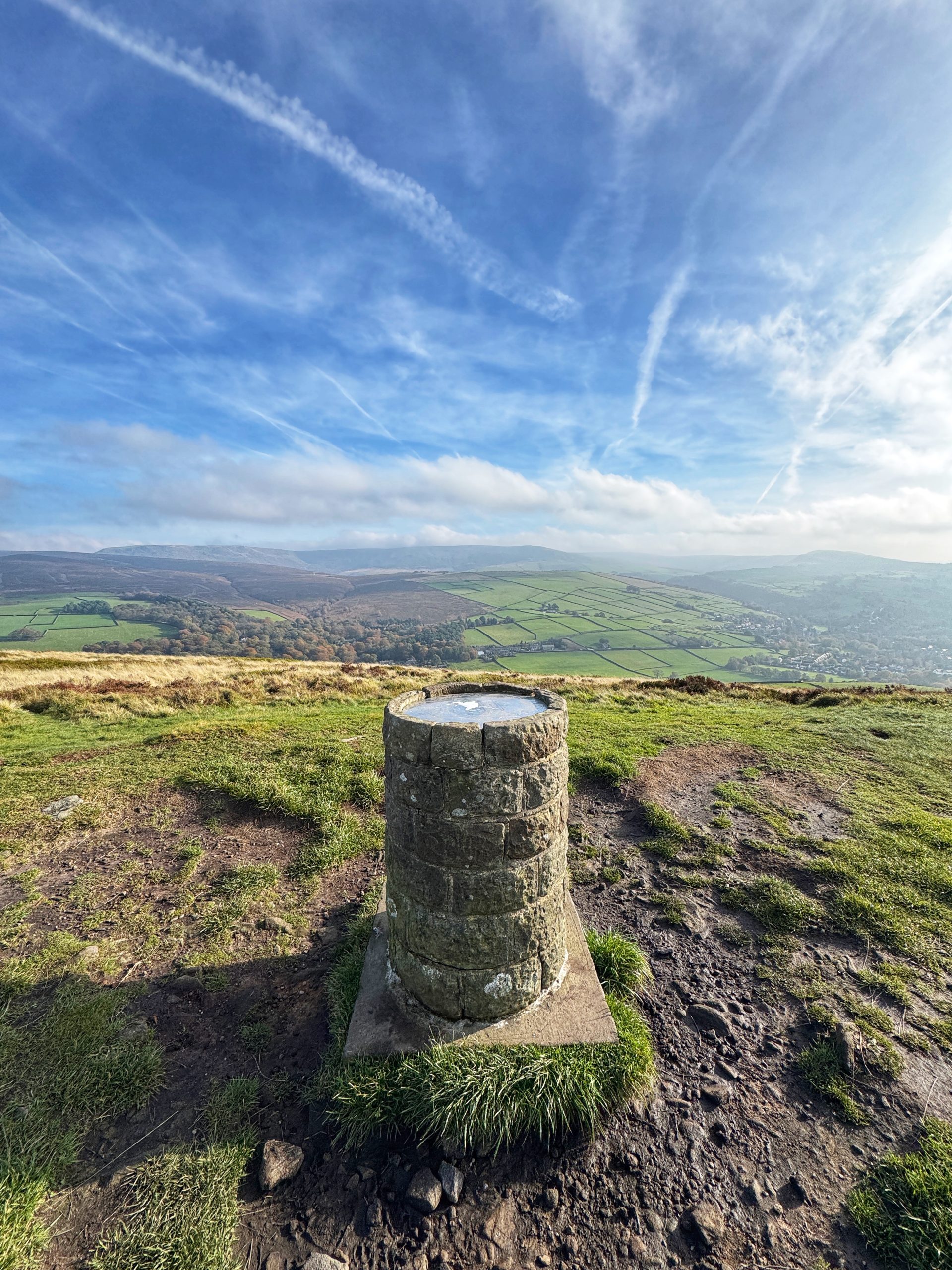
It’s not a giant by Peak District standards (373m compared to Kinder Scout’s 636m) but the views are 360 degrees – fields on all sides and the incredible Manchester skyline in the distance.
Walk straight over the summit and down the other side, walking along the edge of Hey Wood and across fields full of friendly cows, past Little Hayfield and back into the main village of Hayfield.
Views from the Sett Valley trailSummiting Lantern PikePretty views near Little Hayfield
Here you’ll find The Pack Horse, a country pub that’s gained some serious accolades in recent years.
Famed for its seasonal, locally-sourced menu, at this time of year you can expect hearty post-hike lunches like sharing pies, Manchester eggs, and incredible Sunday roasts.
Despite a top-notch menu, the pub is more than happy to welcome in customers (and dogs) who are covered in mud – as all good countryside boozers should.
Sharing pie at The Pack Horse in HayfieldThe Pack Horse in HayfieldTheir famous Manchester egg
You can see a map of the circular walking route at AllTrails HERE.
Mercury Prize 2026 review: RAYE takes home the crown as Newcastle celebrates the very best in music
Clementine Hall
One of the biggest nights in music kicked off last night as the Mercury Prize 2026 was awarded.
If there was ever a night to fall head over heels in love with British and Irish music, the 2026 Mercury Prize made a very convincing case.
Bringing together some of the country’s most exciting artists under one roof in Newcastle, this year’s ceremony was a reminder of just how much talent is packed into the current music scene.
From established legends to the names shaping what comes next, it was an absolute belter.
Images: Audio North
Held at the Newcastle Utilita Arena for the second year running, I think everybody in that room felt very lucky to be there to see firsthand who took home the coveted prize.
The shortlist brought together an impressive mix of artists, with Florence + The Machine, Olivia Dean, JADE, Suede, Pulp, Dave and Sir Paul McCartney among the big names making the lineup very star studded indeed.
Suede kicked things off with ‘Dancing With The Europeans’, bringing their unmistakable energy to the ceremony, while Pulp delivered ‘Begging For Change’ as part of the HELP(2) charity compilation.
It was a line-up that demonstrated the sheer range of music being made across the UK and Ireland, from contemporary pop to established rock and even jungle thanks to Bradford’s own Nia Archives.
And of course, there was one woman who had every reason to leave with a smile on her face.
RAYE took home the coveted Mercury Prize for THIS MUSIC MAY CONTAIN HOPE., an ambitious, genre-hopping album that blends jazz, soul, R&B and classical influences into something so fabulously unique.
Image: Audio North
Newcastle’s own Knats performance was definitely a highlight of the evening, combining slick jazz with spoken-word poetry against a projection of The Tyne Bridge.
A fitting image, and one that underlines the importance of holding such huge events in the north and highlighting the obvious talent that thrives here.
The 2026 Mercury Prize was a brilliant showcase of the country’s music at its best.
And with RAYE taking home the trophy, it’s clear there is plenty of ‘hope’ left in British music.

 Georgina Pellant -
17th August 2022