When you take a stroll through the Peak District, there are some wildlife encounters you expect.
Hares, deer, mice, bats, and dozens of British birds have all made their homes in the north west national park.
But, at least until fairly recently, it wasn’t uncommon to stumble upon an altogether less expected beast – a wild wallaby.
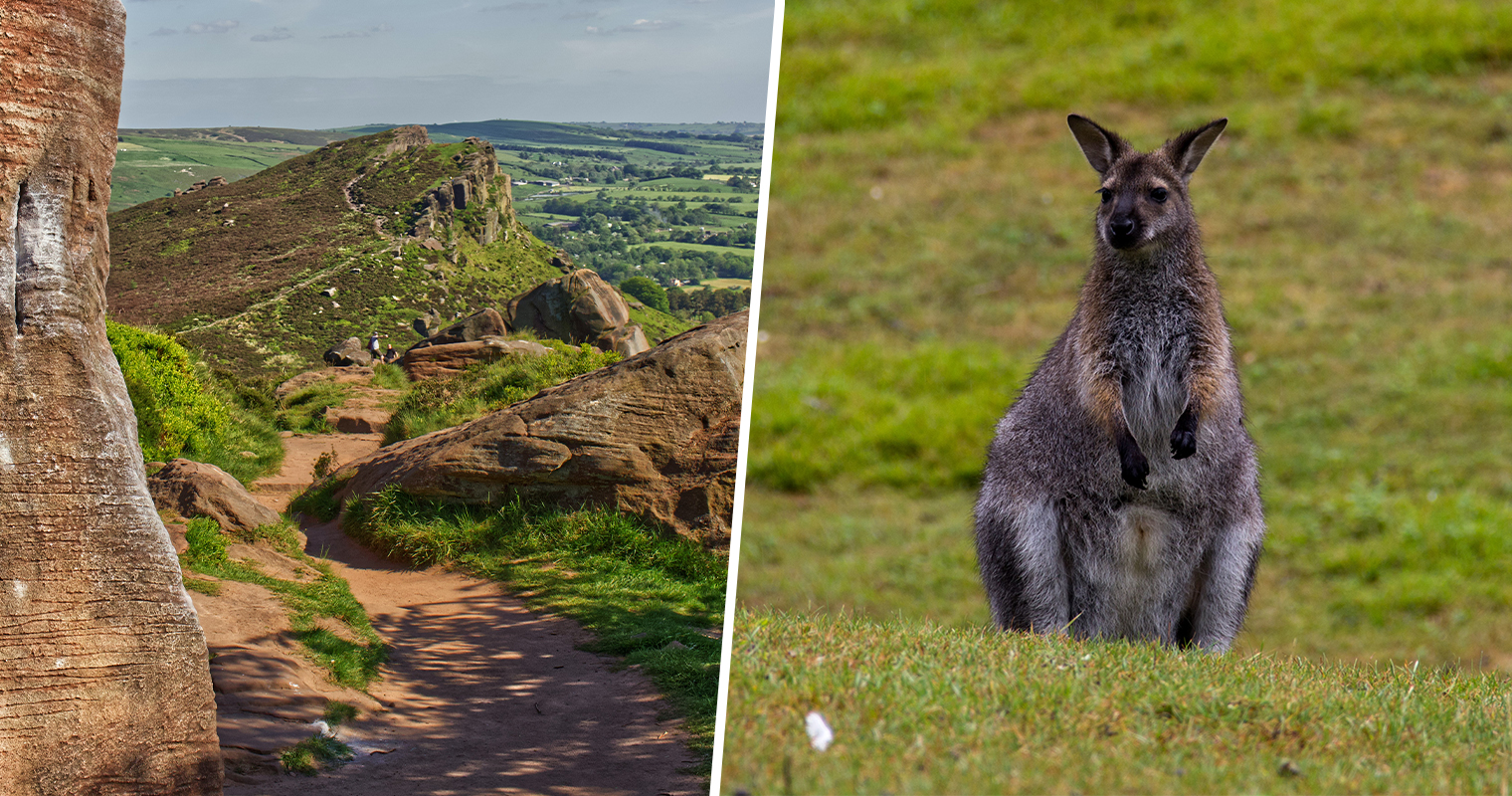
These hopping little macropods, a smaller relative of the kangaroo, used to be seen bouncing around the Peak District.
Although their native home is on the eastern coast of Australia and Tasmania, a small group of Bennett’s wallabies successfully bred and survived in Staffordshire.
ADVERTISEMENT
Credit: Nicholson Museum
But how on earth did they end up here, half a planet away from their natural habitat?
In 1936 a local landowner, Henry Brocklehurst, introduced five wallabies as part of his private zoo collection.
ADVERTISEMENT
The creatures were deliberately released during World War Two, along with three Himalayan yak.
Against the odds, the wallabies thrived.
At the peak of their existence here in the north west, there were around 50 in the colony, though one particularly bleak winter in 1963 is understood to have halved their population (one local recalled seeing ‘several bodies as the snowdrifts melted’).
ADVERTISEMENT
The Roaches. Credit: Unsplash, Nirmal Rajendharkumar
In the Facebook group Roaches Appreciation Society, Clare said: “I saw one at the Roaches skyline in the early ‘90s. It sat watching us climbing with its head poking out of the bracken. Then it bounded off. Much to the bemusement of my King Charles spaniel.”
By the 2000s, most locals believed there were only two wallabies left – a mother and daughter, both white-faced.
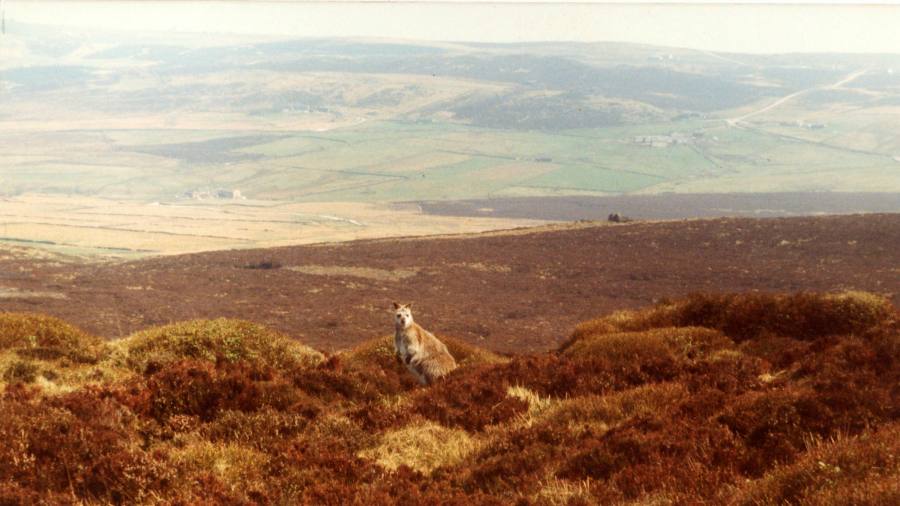
The most recent confirmed sighting was back in 2009, with undeniable footage showing one of the wallabies bounding through the heather near The Roaches.
Sadly, it’s thought that the snowy weather in the winter of 2010 may have finally pushed the colony into extinction.
Extreme snow in 2010 may have ended the wallabies’ roam at The Roaches. Credit: Unsplash, ian kelsall
There have been plenty more submissions of sightings – though none with photos or videos – in the years since, all listed here.
ADVERTISEMENT
Another sighting was in 2017 near the Wild Boar Inn in Wincle, where one person shared a photo of a ‘creature’ that they were ‘fairly certain’ was a wallaby.
When the Financial Times mentioned that sighting to Dr Anthony Caravaggi, a lecturer in conservation biology at the University of South Wales, he replied: “I have no doubt in my mind that that one was a cat.”
Dr Caravaggi published a paper on red-necked wallabies in the UK, which recorded 95 verified sightings in the 10 years leading up to 2018. He’s pretty certain the Peak District wallaby colony is extinct.
A leading expert in the field, who sadly died in 2013, was Dr Derek Yalden.
He found droppings in 2009, but nothing since.
ADVERTISEMENT
He wrote in a letter to Roaches.org.uk: “I think they ran out of decent food. However, accidental deaths, on the roads, falling over cliffs and (especially in 1962-63 and 1979) severe winters also took a toll.
“Why should a wallaby venture onto the roads, or jump over a cliff? Probably because a certain section of the public seemed to respond to a sighting with “let’s chase it”, or their dog did.
“They always were very timid, and I watched them panic both to thunder and to the terrifying sight of a sheep arriving.”
There is one place to get a guaranteed wallaby sighting, but don’t expect much in the way of hopping.
ADVERTISEMENT
The Nicholson Museum in Leek has stuffed Wally, a male who is believed to have died when he fell into the Lud’s Church cavern.
If you did want to head out exploring for your own wallaby sighting, you can head to The Roaches, a stunning gritstone ridge overlooking Leek.
For those who do visit, remember to stick to the footpaths, take litter home, and respect the rules laid out locally.
The incredible Asian food market held every month at an 800-year-old church in Stockport
Daisy Jackson
One of Greater Manchester’s most unique food events is taking place monthly in and around the grounds of an 800-year-old church.
Held on the second Friday of every month at St Mary’s Church in Stockport, the Asian Food Market brings together some of the region’s best independent Asian street food traders under one historic roof.
Organised by Eat Good West, the event brings together 16 traders every month, serving up dishes from across Asia.
Visitors can tuck into everything from crispy Taiwanese fried chicken and Korean corn dogs to homemade strawberry mochi.
A real highlight is the Japanese yakitori skewers, grilled fresh to order on a traditional charcoal grill while you wait, served in a cloud of smoke and delicious charred edges.
The market originally launched in Edgeley, but after growing in popularity it moved to St Mary’s around a year ago, giving organisers more space to accommodate the increasing crowds.
For the team behind the event, it’s about more than just great food. They see the market as a way of bringing together Stockport’s diverse communities, creating a space where people can connect over shared meals and discover new cultures through food.
Strawberry mochiA round of drinks for £10Sticky fried chicken
There’s a lively atmosphere throughout the evening, with live music performances adding to the experience. And if Manchester’s unpredictable weather makes an appearance, there’s plenty of additional seating inside the church.
The bar also serves a selection of Asian beers and soft drinks at surprisingly affordable prices. We picked up an Asahi, a Singha and a plum beer for just £10 – one of the best-value rounds we’ve seen in a while.
If you’re looking for an excuse to spend your Friday evening eating your way across Asia without leaving Stockport, this is one event worth putting in the diary.
The former pub in Hulme that’s now a haven for salvaged mid-century treasures
Daisy Jackson
If you’ve ever wondered where old stained-glass windows, vintage toilets, and dazzling chandeliers go when they’re rescued from demolition, the answer is probably Insitu Manchester.
Standing on Chester Road in Hulme, Insitu occupies the former Turville pub, a Grade II listed Victorian building dating back to around 1870.
What was once a neighbourhood boozer is now one of Manchester’s most fascinating places to browse, packed to the rafters with architectural salvage, antiques, and quirky design pieces.
Spread across three floors, every room feels like a treasure hunt. One minute you’re admiring an elegant fireplace, the next you’re standing in front of a huge stained-glass church window wondering if it would fit in your downstairs loo.
The real showstopper is upstairs. The former billiards room has been transformed into a bright, sunlit showroom that feels more like an art gallery than a salvage yard.
Founded in 1984 as a business specialising in reclaimed doors and fireplaces, Insitu has spent more than four decades saving beautiful objects from being lost forever.
Today, its stock ranges from reclaimed timber flooring and cast-iron radiators to stained glass, doors and other architectural features.
The former billiards room is now a beautiful showroomA beautiful mid-century tiled tableVintage sinks and toiletsIncredible stained glass windows at InsituA room packed with mid-century treasure at Insitu in ManchesterPaintings, stained glass, and ornate furnitureThe outside of Insitu in Hulme, ManchesterA glimpse inside Insitu in ManchesterA glimpse inside Insitu in Manchester
During our visit, we spotted a mid-century tiled coffee table, ornate chandeliers, vintage glass lampshades, paintings and fireplaces.
But perhaps the most unexpected room was downstairs, where an entire collection of antique sinks and vintage toilets is displayed. Who knew a loo could be so beautiful?
Part of the fun is that you never quite know what you’ll find around the next corner. Every item has a story, and many have been carefully rescued from buildings that no longer exist.
Come for the fireplaces, stay for the vintage toilets. Trust us.