Chester Zoo has brought a new rare big cat into town, and she’s one good-looking feline.
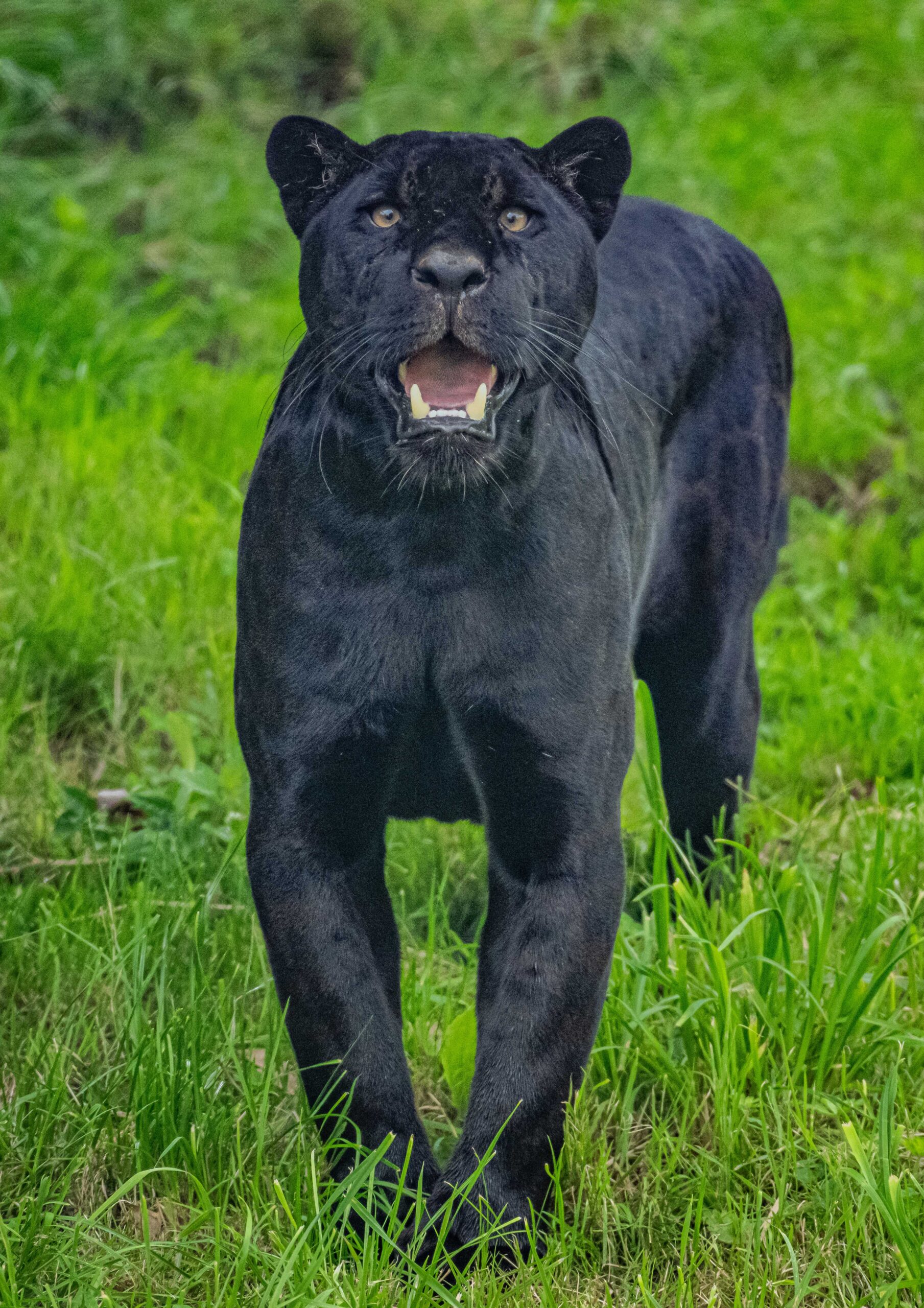
The tourist attraction near Greater Manchester introduced the world to Inka, a two-year-old black jaguar, over the weekend.
She’s been brought to the zoo to be a companion for Chester Zoo‘s resident male, Napo.
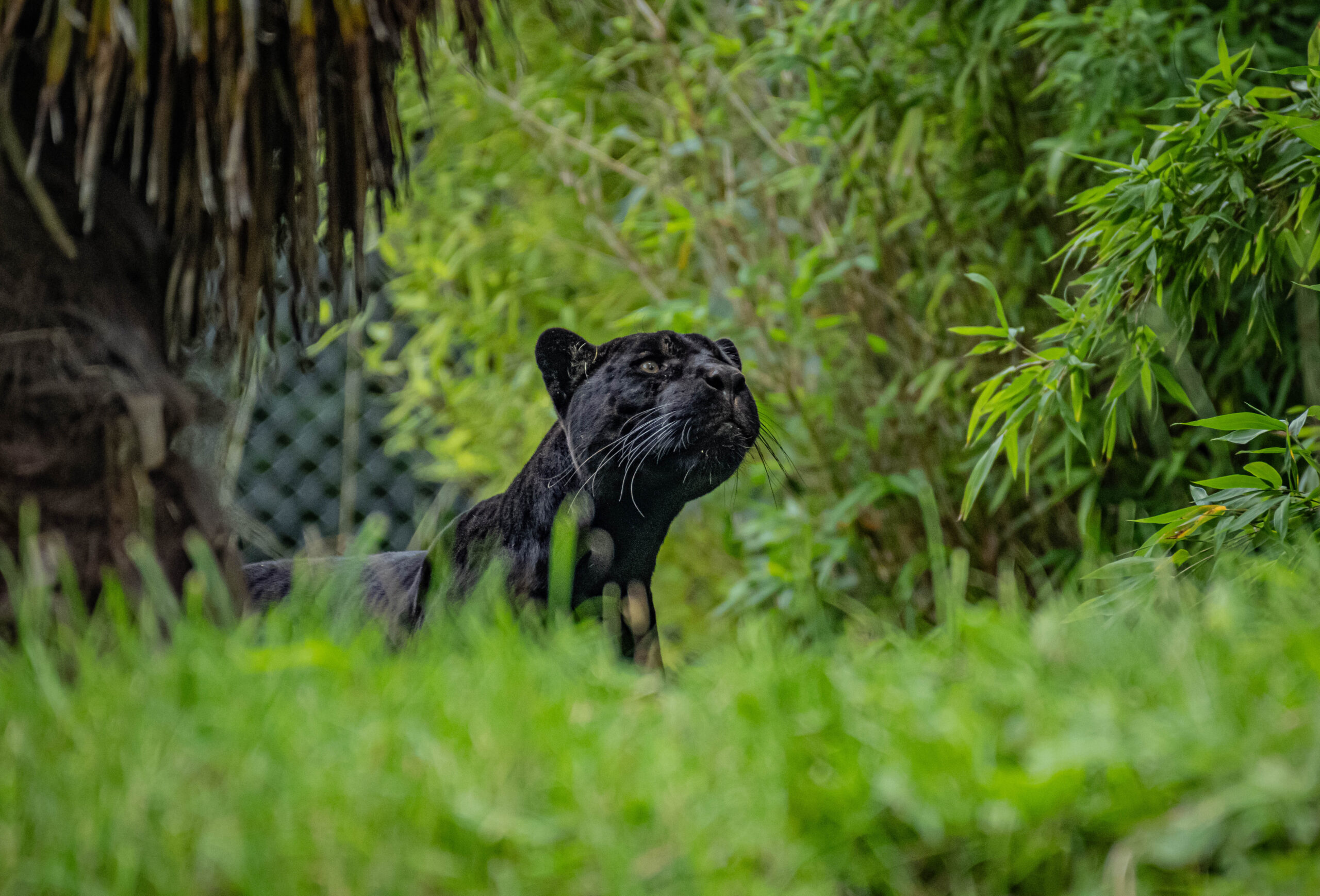
Videos shared by the zoo show Inka exploring her new habitat with her jaw dropped – not a cat body language expert but she looks pretty stunned by her new home.
The gorgeous animal still has those signature jaguar markings, but she’s in shades of black and grey rather than the classic browns and oranges.
ADVERTISEMENT
It’s not just us falling in love with Inka either – Chester Zoo themselves described her as a ‘strikingly beautiful, bold and confident’ young jaguar. Which zookeeper’s been copying my Tinder bio?!
But then the zoo went on to say she has ‘short and thick set limbs’, which isn’t so complimentary.
ADVERTISEMENT
Fans have been delighted to see Inka making herself at home at the zoo, with hundreds of comments calling her ‘stunning’, ‘beautiful’ and ‘gorgeous’.
One person wrote: “She is beautiful! I follow the big cat sanctuary and love seeing her there, looking forward to seeing plenty of pics of her at Chester.”
Another said: “Stunningly gorgeous, what a beautiful addition to a brilliant zoo. So lucky to have Chester zoo on our doorstep.”
Carnivore experts at the zoo say her arrival will help to put a spotlight on her ‘remarkable’ species and support a European-wide conservation programme.
Jaguars are native to the Americas and listed as ‘near threatened’ by the International Union for the Conservation of Nature (IUCN).
Their numbers are declining in the wild, mostly because of humans – habitat loss, illegal hunting and conflict with humans are putting them at risk of extinction.
Dave Hall, team manager of carnivores at Chester Zoo, said: “Inka is a strikingly beautiful, bold and confident young jaguar and she’s quickly taken to her new surroundings.
“The union between her and Napo, the resident male here in Chester, has been carefully orchestrated by carnivore experts from here (Chester Zoo) and The Big Cat Sanctuary and the coordinators of a programme that’s working in partnership to ensure a genetically viable population of jaguars across Europe.
ADVERTISEMENT
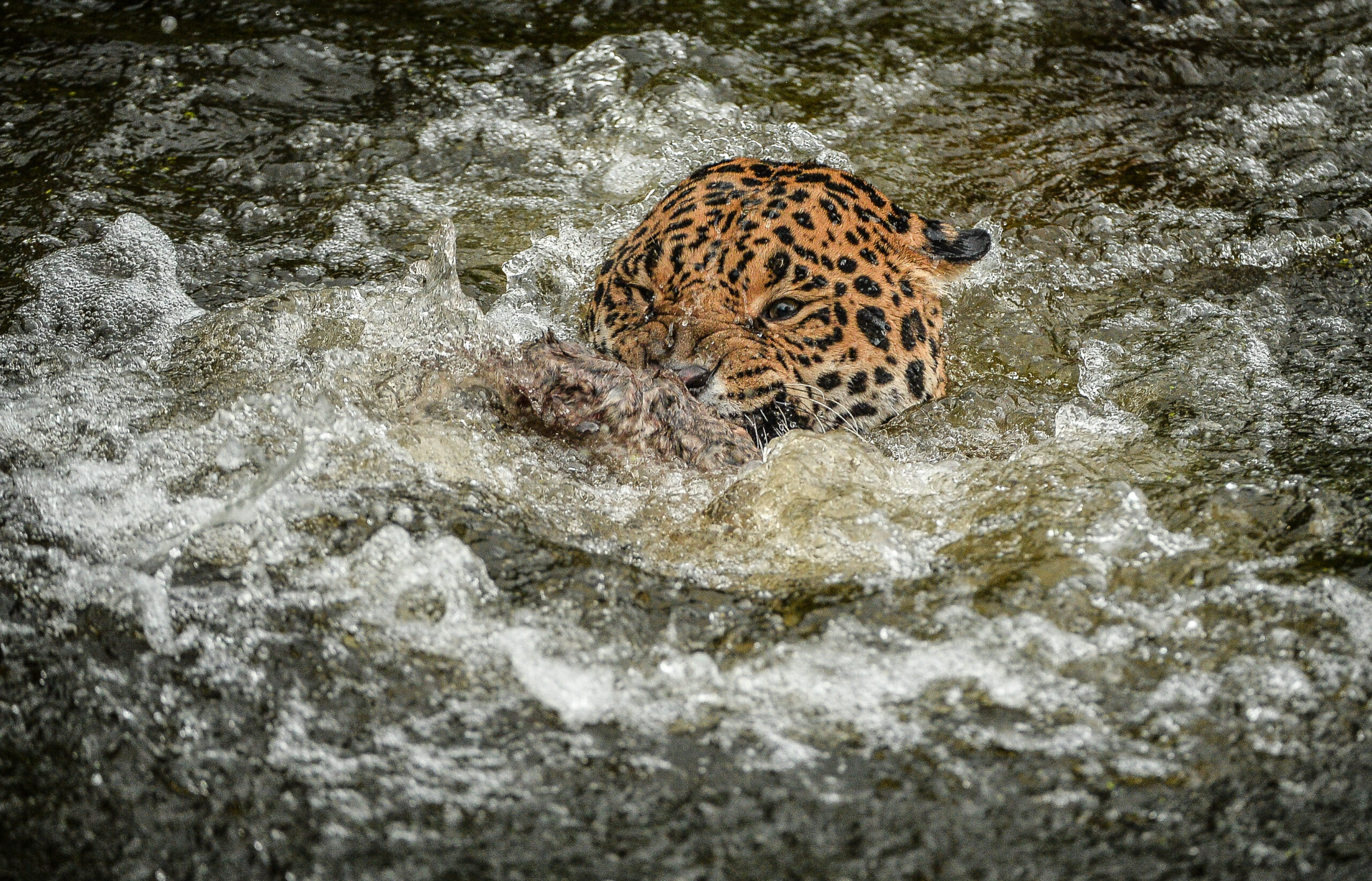
Inka, a rare black jaguar, has arrived at Chester Zoo. Credit: SuppliedChester Zoo’s resident male jaguar Napo, who will be Inka’s companion. Credit: SuppliedInka inspecting her new home at Chester Zoo. Credit: Supplied
“We hope the two of them will go to form a strong and meaningful bond, and the early signs are positive.
“Like Napo, Inka is a wonderful ambassador for her species. Jaguars are remarkable animals and the two of them together will help us to raise more much-needed awareness of the survival challenges that they face in the wild, the work that’s already being done by zoos, our partners and the local conservationists and communities to protect the ecosystems that jaguars live in, and help us to inspire further action for their conservation.”
Paul Bamford, regional field programmes manager for the Americas at Chester Zoo, added: “Deforestation and habitat fragmentation are reducing jaguar populations across their range. According to the IUCN, close to 70% of deforestation in Latin America is driven by industrial agriculture, primarily for soy, oil palm and cattle production.
“Many of these products are exported to countries such as the UK, and therefore, our shopping habits can have a significant impact on global biodiversity loss. In our role as consumers, we are unwittingly contributing to the destruction of nature on our planet.
“At Chester Zoo we are working to influence policy, both in the UK and internationally, to address this. We are supporting efforts to improve production standards and legislation so that deforestation is minimised, or eliminated for good, and wildlife can live safely alongside productive areas.
ADVERTISEMENT
“The goal is to create a deforestation-free economy, in which countries are able to meet their development needs sustainably. If we can break the link between habitat loss and production, then we have the opportunity secure a future for people and wildlife.”
Manchester City’s Stadium Tours are back for the summer and bigger than ever
Danny Jones
Manchester City stadium tours are back for summer 2026, with more to see from the home of the Blues than ever, and with 15% off all tickets until the end of August, too.
It’s safe to say that Man City are going through a HUGE period of change right now: embarking on a new era under Enzo Maresca following the dynasty of Pep Guardiola, vast redevelopments of the wider Etihad Campus, a new club hotel, and the expansion of the North Stand – now named after said Catalan coach.
With that in mind, there’s so much new stuff going on over in East Manchester and arguably more of it all happening in one place than we can recall in recent memory, making it the perfect time for Cityzens to return to the famous home ground – indeed, your Etihad debut if you haven’t made one already.
Giving you greater access to areas usually reserved for players and staff only than ever, this exclusive, interactive and virtual tour will take you through the very bones of the storied sporting arena, all the way through to pitchside.
Fans can explore the dressing room and follow in the footsteps of their favourite City players as they walk through the iconic glass players’ tunnel, before walking out into the open air and sitting in the dugout to take in that incredible view.
You can also try out the latest ‘Beyond the Blue Moon’ experience – an immersive VR adventure that sees supporters journey through Manchester City’s past, present, and future.
Following on from Pep lending his likeness, using innovative technology, you can now even have the chance to put your questions to Erling Haaland in the Press Conference Room.
There aren’t many teams on the planet that offer this level of stadium tour, let alone just here in the UK, so it’s no wonder they remain award-winning almost every single year.
Whether you’re a lifelong City fan, a football lover or visiting this wonderful place we call Manchester for the very first time, there’s something for everyone.
For instance, with The Medlock Hotel and accompanying Medlock Square already lining up its maiden events, the City Football Group (CFG) are once again committing to make the wider Etihad Campus an all-year-round entertainment destination.
That being said, plenty of people online have been generating a lot of buzz about the aforementioned Medlock’s new stadium-view rooms since clips appeared on social media.
Pitch view rooms coming to the Radisson Blu Medlock Hotel at #ManCity’s Etihad Stadium. 🤯
As for the tickets themselves, the club have also taken steps to keep the cost affordable.
Standard prices start from just £32 for adults and only £20 for under-16s, with larger family packages available from £60.
BUT, with the 15% discount mentioned earlier, adults currently cost just £27; kids go for just £17, and those family passes start from just £51.
You can find all the options when it comes to stadium tour passes and grab the type of admission that suits you right HERE.
Speaking of tickets, City have also been met with praise for the introduction of new discounted seats for local residents; find out all the details below.
Elbow get behind campaign to save Jodrell Bank from closure
Danny Jones
Manc band Elbow are among the latest to get behind the campaign to save Jodrell Bank Observatory from closing permanently.
The Greater Manchester natives famously played a sold-out gig at the important scientific and cultural landmark for a very special live album recording well over a decade ago, and know all too well the site’s national and, indeed, global heritage.
Choosing the Observatory and the rare chance to perform a show in the shadow of the world-renowned James Lovell Telescope, it probably remains one of their most significant standalone UK date ever.
With that in mind, the local lads have been left just as worried by the news of its impending closure as everyone else, and have therefore issued a fresh appeal to help keep it open.
Posting a timely statement on social media, the group wrote: “Jodrell Bank has long been close to elbow’s heart. In 2012, the band played beneath the Lovell Telescope for one of the most memorable shows in our history.
“The recent news that funding for the e-MERLIN radio telescope network is set to end in 2028 puts the future of the scientific work at Jodrell Bank under serious threat. It is a remarkable place, with an extraordinary history, and one that continues to play an important role in science, culture and education.”
In addition to reliving clips and images from the historic live set all the years later, they also pointed people towards their ‘elbow – Live at Jodrell Bank‘ album documentary, which has now been made available online for the very first time as part of wider efforts to raise awareness around the cause.
Directing people to key online resources shared by the institution and astrophysics centre itself following their unfortunate update late last month, the push to not only find the funding but sustain support for the facility continues to ramp up throughout the world of science, arts and industry.
For anyone who somehow missed the news – 2028 being the current deadline handed down as per budget cuts across the sector – concerned parties here in the North West and all over the country have since started petitioning to save Jodrell Bank Observatory from shutting down for good.
In addition to being described as a “huge blow” to the field by the Royal Astronomical Society (RAS), some have even gone so far as to describe the decision as a form of “vandalism” when it comes to research and British culture as a whole.
Having also served as the host venue for the annual bluedot Festival since 2016, the multi-genre science and arts celebration could soon be forced to find a new home.
The battle is far from over yet, and the community has time to rescue Jodrell Bank Observatory from its fate, but it will take lots of money and more notable public figures to make it happen.
Once again, you can do your bit by signing the petition mentioned above right HERE.

 Daisy Jackson -
6th August 2023
Daisy Jackson -
6th August 2023