Bolton’s high COVID rate is being made worse by conspiracy theories, says MP
Yasmin Qureshi, Labour MP for Bolton South East, believes conspiracy theories and scepticism over legitimacy of the virus have seen virus cases rise in the town.
A local MP says that conspiracy theories around coronavirus have contributed to Bolton becoming the worst-affected area in England.
The Greater Manchester borough is under tighter restrictions following a surge in positive test results in recent weeks, with local hospitality operating a takeaway-only service and most other venues required to close between 10pm and 5am.
Casinos, skating rinks and bowling alleys are banned from trading.
Residents are also forbidden from meeting anyone outside their support bubble, inside or outside.
But despite the new restrictions, Bolton COVID cases have continued to climb, and Labour MP for Bolton South East Yasmin Qureshi has expressed concern that people are ignoring the rules as they’re questioning the legitimacy of the virus.
ADVERTISEMENT
“There is a lot of confusion about the virus in the area,” she said.
“There are a lot of people now who do not believe it is true.”
ADVERTISEMENT
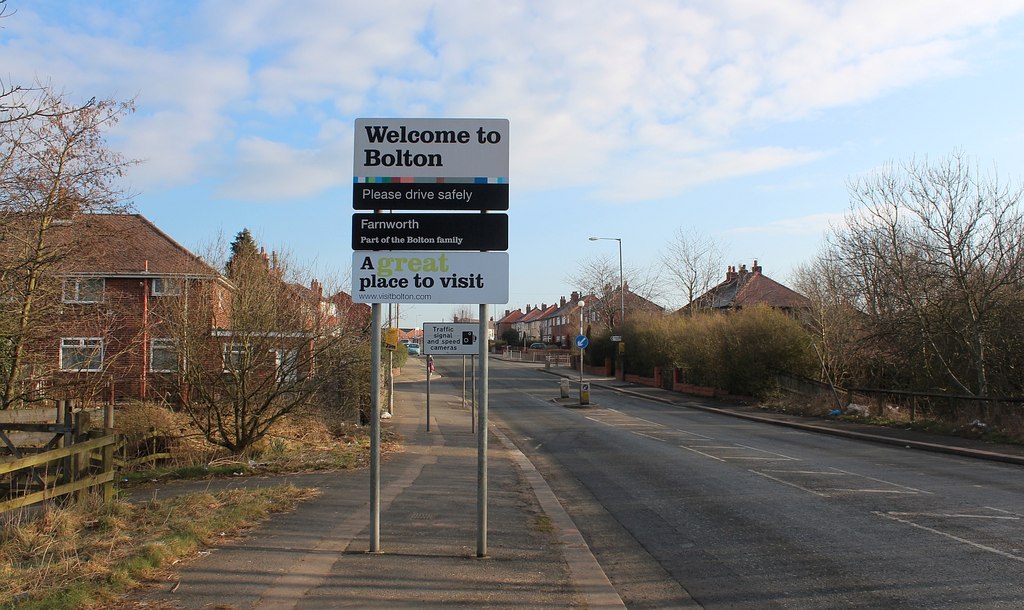
Wikimedia Commons
A hashtag that rejects government rules and regulations, #thinkingforyourself, is gaining momentum and spreading across local forums and social media.
Qureshi added: “They genuinely believe it’s some kind of conspiracy.
“A lot of them don’t understand the rules either and so there are many who just aren’t following them – they think it is a way of controlling them somehow.
ADVERTISEMENT
“It is very dangerous.”
Bolton’s COVID rate is 187.8 cases per 100,000 people, with hospital admittances also increasing.
According to health experts, males in their 40s and 50s are among those worst affected.
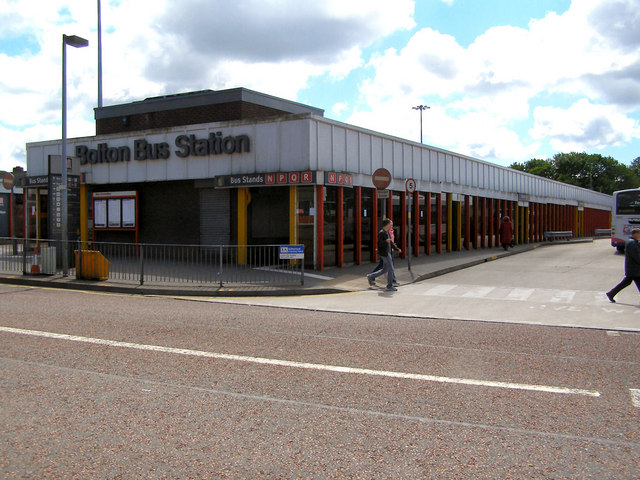
David Dixon / Geograph
Alongside Bolton, the nine surrounding Greater Manchester boroughs are on ‘red alert’ due to a spike in cases in the North West.
Prime Minister Boris Johnson has already confirmed the presence of a second wave in the UK, with as many as 11 million people in Britain now living under tighter restrictions.
Chief medical personnel Chris Whitty and Patrick Valance are due to give a press conference later today to update the public on the situation, with concerns that the infection rate is “heading in the wrong direction.”
News
New images released of Piccadilly Gardens as transformation plans take a big step forward
Daisy Jackson
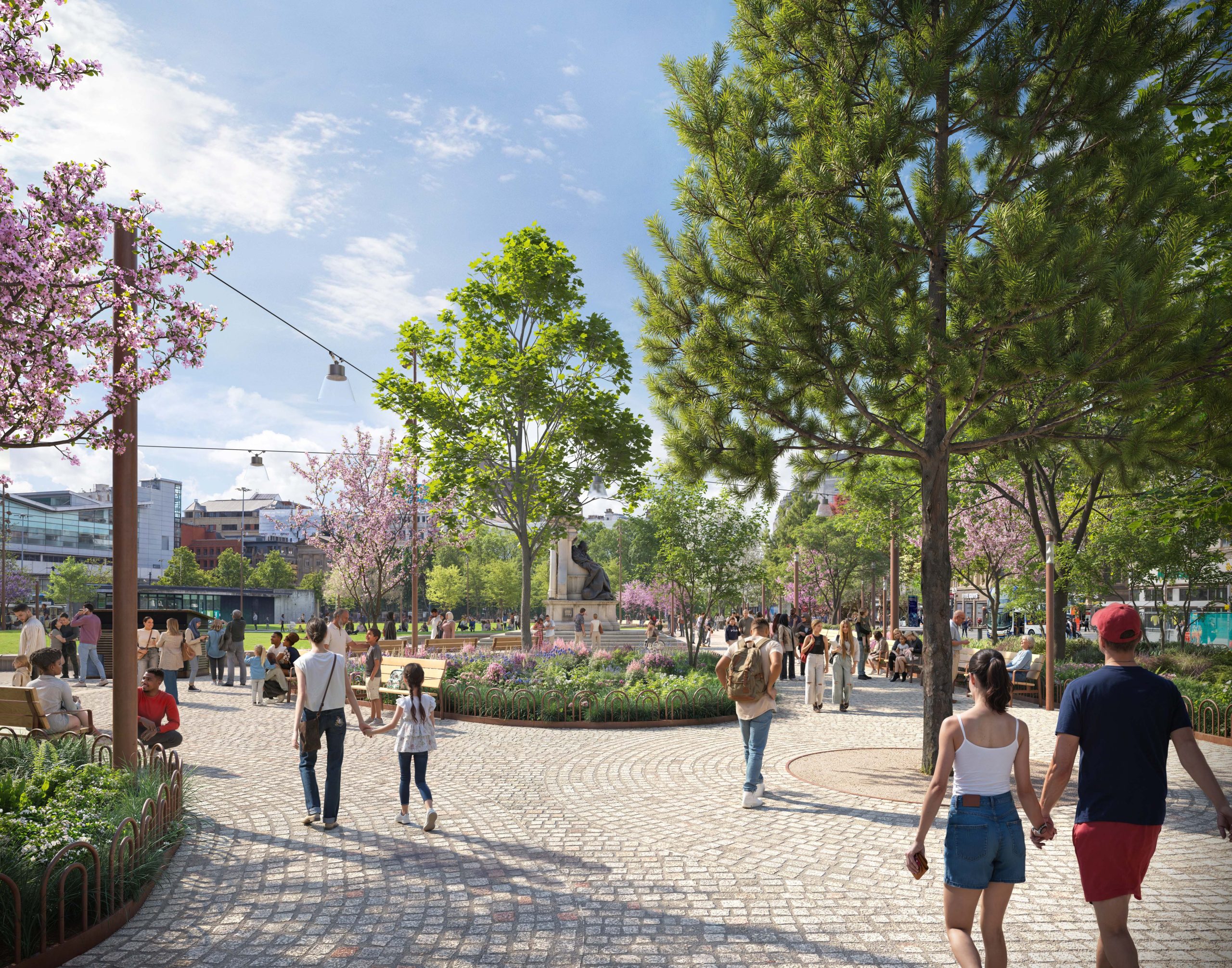
Plans to transform Piccadilly Gardens to make them more ‘colourful, vibrant and safe’ have taken a big step forward today, with new images released.
Manchester City Council has shared the vision to the public ahead of a planning application being submitted this summer.
The plans to finally give Piccadilly Gardens some love were revealed last autumn, but things are now moving at pace with a delivery team appointed to design and build the new public space.
The new images show the vision for more green space, including lawns, trees, planting, seating, and colourful horticultural displays.
The temperamental fountains will also be removed for good, replaced with a new space called The Pavilion which will host family-friendly events.
The low concrete walls and raised planters at the edge of the gardens will be ripped out, improving the setting of the Queen Victoria statue.
There’ll be a new, larger playground for younger children, created in the same high quality style as the new parks at Mayfield Park and Ancoats Green.
A pre-planning consultation has started today and will run until Wednesday 15 July, with plans to submit the final planning application later this summer.
The new-look play area at Piccadilly GardensPlans for the new Piccadilly Gardens from above
The council has said that these new designs reflect feedback from the public and opinions on what we want to see at the new Piccadilly Gardens.
Council Leader Cllr Bev Craig said: “We’re getting on with sorting out Piccadilly Gardens. We all want to see a space which Mancunians can be proud of – a welcoming and attractive environment which people want to spend time in.
“So as well other initiatives which are delivering more police and more CCTV, we’re bringing forward this scheme to transform the public space. That means investment in more flowers, more greenery, a new welcome pavilion, a new and bigger playground and an altogether more inviting Piccadilly Gardens. A bright new chapter is just around the corner.”
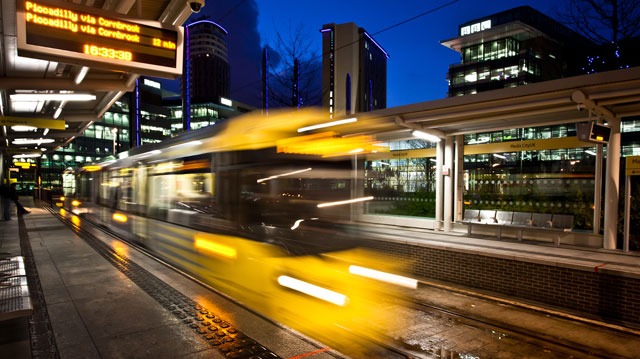
Further planned improvements to the area around Piccadilly Gardens in the coming years will include a multi-million pound investment by Transport for Greater Manchester to create a new, modern transport interchange.
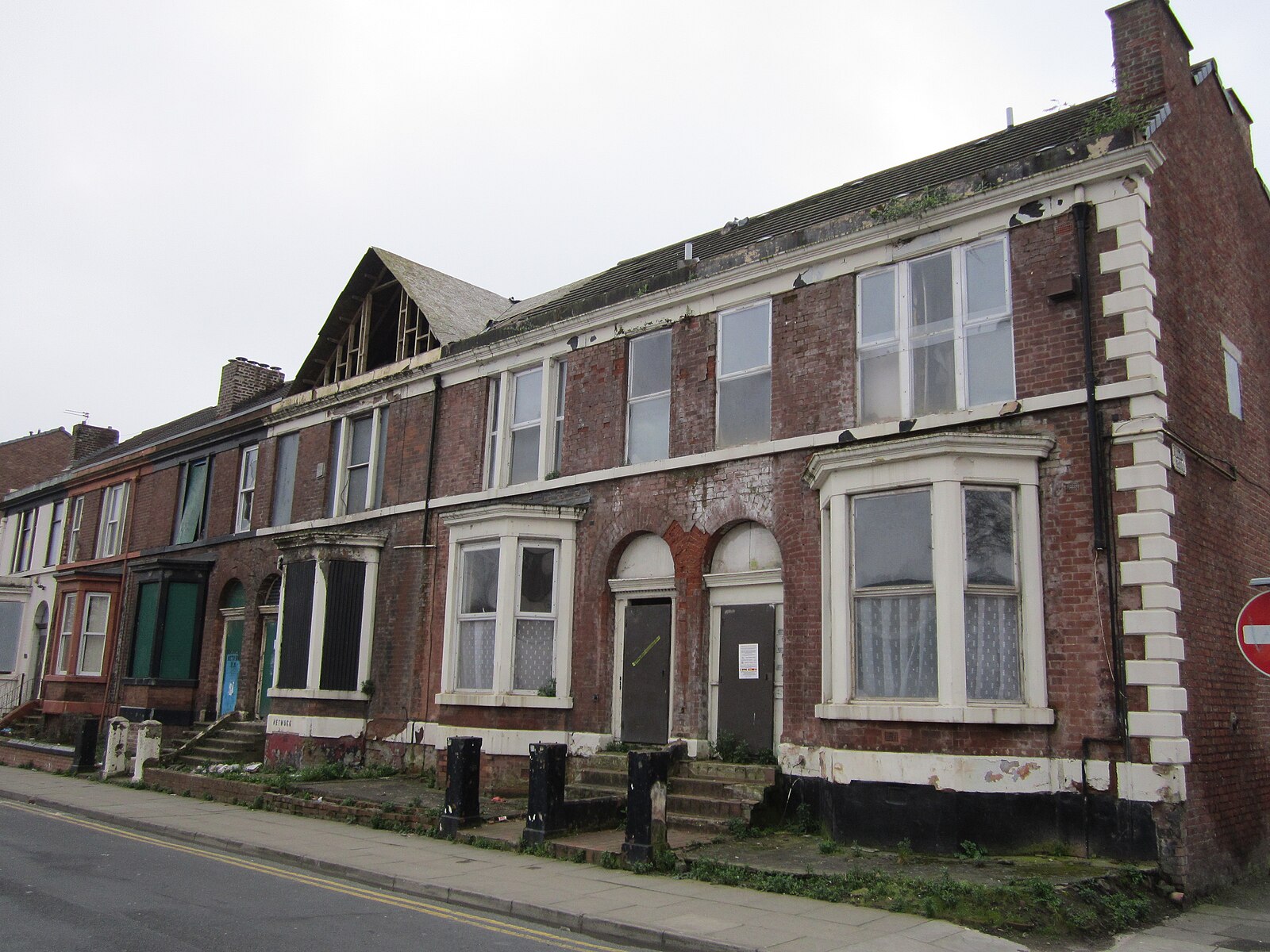
Council calls on Manchester public to help bring hundreds of empty homes back into use
Emily Sergeant
Residents across Manchester are being called on to help bring hundreds of empty homes across the region back into use.
Since the beginning of this year, a major review has been underway around the city’s draft strategy for bringing empty homes back into use to help meet demand for affordable homes across the city, while also improving communities by tackling empty homes that can blight an area… but now, Manchester City Council needs your help.
Following a major public consultation, the Council is now acting on feedback to accelerate plans to bring as many long-term empty homes back into active use as possible.
Although the number of long-term empty homes in Manchester is near a historic low, with the Council having managed to reduce the number by more than half since 2013, there is still more work to be done.
“Every void property is a missed opportunity to provide a family a place to live, reduce homelessness, and lessen the burden on temporary accommodation,” the Council said in a statement.
The Council is calling on the Manchester public to help bring hundreds of empty homes back into use / Credit: Benjamin Elliott (via Unsplash)
So, how can residents help then? What do you need to do if you spot an empty home on a street nearby?
Well, the easiest way to report an empty home is to report the issue online here, or by emailing [email protected]. And then once that’s done, a team of dedicated empty homes officers will take up the case to find out who owns the property and work with the owner on a plan to bring the home back into use.
The vast number of empty homes are privately owned with complex histories, and there are some cases where an owner may have passed away.
While working collaboratively with housing providers, voluntary organisations and public services are also a key element of detecting potentially empty or ‘problematic’ homes to repurpose them.
Officers can also support, where required, if a communication or language poses a barrier to resolving an empty home issue.
Tailored approaches to different communities – where empty homes impact neighbourhoods in different ways – are also being considered, according to the Council.
“To think, if we could bring all empty homes back into use, then we could provide more homes for those on the housing register and take pressure off the whole housing system,” explained Cllr Gavin White, who is Manchester City Council’s executive member for housing and development.
“The potential of making empty homes a thing of the past is huge for Manchester families looking for a place to call home – and a significant part of tackling the housing crisis.”

 The Manc -
21st September 2020
The Manc -
21st September 2020