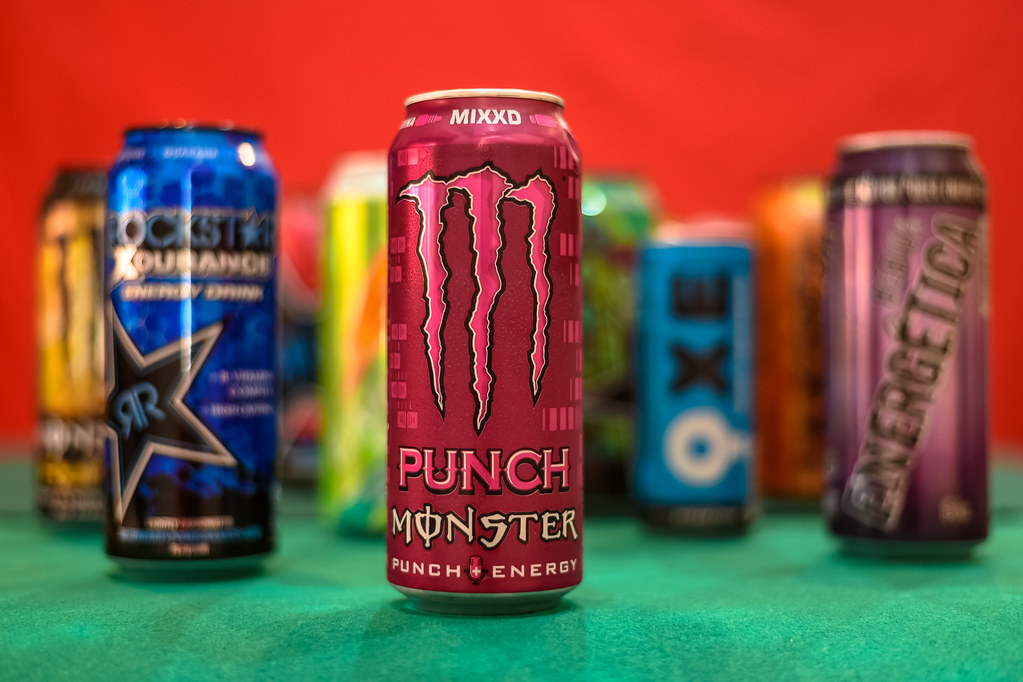
The Government is to consult on banning the sale of ‘high-caffeine’ energy drinks to children under the age of 16.
Currently, it’s thought that around 100,000 children consume at least one high caffeine energy drink every day, and there is said to be ‘growing evidence’ that links these drinks to harmful effects on children – including things like disrupted sleep, increased anxiety, poor concentration, and reduced educational outcomes.
So, in a bid to ‘boost kids’ health’, both physical and mental, plans set out today will stop retailers from selling the drinks to those under 16.
The Government believes this move could prevent obesity in up to 40,000 children and deliver health benefits worth tens of millions of pounds.
The proposal would make it illegal to sell high-caffeine energy drinks containing more than 150mg of caffeine per litre to anyone aged under 16 years across all retailers – including online, in shops, restaurants, cafes and vending machines.
ADVERTISEMENT
The proposals would not affect lower-caffeine soft drinks nor tea and coffee.
Government to ban the sale of energy drinks to children under 16 / Credit: NeedPic
Many major retailers already voluntarily restrict sales, but research suggests that some smaller convenience stores continue selling to children.
ADVERTISEMENT
Leaders and ministers say early intervention is ‘crucial’ if they are to deliver on their pledge to create the healthiest generation of children ever.
The move to ban energy drinks for under 16s is backed by parents, teachers, and also teaching unions who report on pupils being unable to concentrate and focus because of them, and even so far as to negatively affecting grades and academic performance.
Acting now to improve children’s wellbeing will not only help give them the best start in life and prevent them from a lifetime of poor health, the Government claims, but also deliver tens of millions of pounds of health benefits, as well as future savings for the NHS and increased economic productivity.
ADVERTISEMENT
The proposal aims to boost kids’ health, both physically and mentally / Credit: Pexels
“How can we expect children to do well at school if they have the equivalent of four cans of cola in their system on a daily basis?” commented Health and Social Care Secretary, Wes Streeting.
“Energy drinks might seem harmless, but the sleep, concentration, and wellbeing of today’s kids are all being impacted, while high sugar versions damage their teeth and contribute to obesity
“As part of our Plan for Change and shift from treatment to prevention, we’re acting on the concerns of parents and teachers and tackling the root causes of poor health and educational attainment head on.
“By preventing shops from selling these drinks to kids, we’re helping build the foundations for healthier and happier generations to come.”
Featured Image – Jorge Franganillo (via Flickr)
News
Medlock Square: Manchester’s new £300 million entertainment destination on the Etihad Campus
Danny Jones
Manchester’s newest entertainment destination, located over at the ever-growing Etihad Campus, has finally been given a name ahead of its launch later this year.
Alongside the recently announced and Radisson-run hotel, Medlock Square will see the Manchester City-partnered mini leisure district aim to become a new must-visit part of the city.
Hoping to draw in crowds beyond just matchdays and those heading to concerts across the way, approximately £300 million is being pumped into the project.
With Co-op Live having already brought huge revenues into Greater Manchester, it isn’t just set to be a pricey development, but one that will look to serve as yet another money spinner for the wider City Football Group (CFG) and the City Region.
Credit: CFG (supplied)
Unveiling the first CGIs of the square this week, this new area will essentially see attractions and activities spill out of the Etihad Stadium, Co-op Live and the soon-to-open Medlock hotel and on to the campus as a whole.
With other parts of Sportcity already revolving around the footballing epicentre, such as the Manchester Regional Arena and National Squash Centre, this will not only see even more sporting events and supporters brought to the roughly 80-acre plot, but also fans of various other forms of entertainment.
For instance, within the plans that already include the food and drink offerings you would expect – with Radisson Blu backing more of the relaxation and indulgent side of things – other activities include everything from “an adrenaline-fuelled sky walk experience”, as well as zip-wire and abseiling.
We already knew about some of these from the details in Man City’s stadium expansion plans (including the likes of The Medlock and rooftop bar), and glimpses of the impending hotel opening gave us a better idea of the overall look, but there looks to be plenty more in the pipeline.
You can see a trailer for what they have in mind for Medlock Square down below.
Welcome to Medlock Square. Manchester’s newest entertainment destination. A place where mouthwatering cuisine and world class entertainment, experiences and events converge. Coming soon! pic.twitter.com/4bC7NQbMHT
As per an official press release by the fledgling team, more information on further business and employment opportunities has also now been confirmed, centring around the new ‘One Medlock Square’ structure that will be built on the campus.
“Designed to accommodate up to 300 employees, the state-of-the-art workspace will offer high-quality, modern office facilities alongside access to shared event spaces and wellness amenities, uniquely positioned within Manchester’s most exciting new destination”, the statement reads.
There’s certainly some ambitious stuff in the works, put it that way.
And, of course, these will also slot into a renovated club shop turned meagstore, an all-new Man City museum, the Co-op arena, live music and other open-air events, just to name a few. A specific opening date is yet to be scheduled, but you can guarantee it’ll be a big deal when it does launch.
Featured Images — Publicity pictures (supplied via City Football Group)
News
Staff at four Greater Manchester hospitals to start wearing body-worn cameras after rise ‘abusive behaviour’
Emily Sergeant
Frontline staff at four hospitals in Greater Manchester are set to start wearing body-worn cameras on their shifts.
In a move designed to protect and keep frontline healthcare colleagues safe following a noticeable rise in ‘abusive behaviour’ directed towards them, Northern Care Alliance has announced that it has made the decision to introduce body-worn cameras across all four of our hospitals in Bury, Oldham, Rochdale, and Salford.
It’s hoped that these small cameras will help create an overall ‘safer environment’ for staff and visitors, and also allow the NHS to use the footage as evidence in any criminal or civil court action.
— Northern Care Alliance NHS Foundation Trust (NCA) (@NCAlliance_NHS) March 4, 2026
They will be worn by all designated clinical staff with the aim of reducing violent incidents of threatening behaviour for both staff and other patients.
So, how will they work?
The Northern Care Alliance has explained that the cameras are only activated when a worker feels threatened and only after informing the individual involved. Once switched on, they record both video and audio, creating a clear, unbiased account of what happened. This footage can be used to support investigations and deter future incidents.
Staff at four Greater Manchester hospitals are to start wearing body-worn cameras after a rise ‘abusive behaviour’ / Credit: Pxhere
“As a team working on the frontline of emergency care, we have welcomed the introduction of body‑worn cameras as an important step in protecting both our staff and our patients,” commented Julie Newton, who is the lead nurse in the Emergency Department at Fairfield General Hospital.
“Unfortunately, incidents of violence and aggression do occur, and these devices provide an objective record that helps ensure situations are managed safely and appropriately.
“Knowing that footage can support investigations and, where necessary, prosecution gives our colleagues greater confidence and reassurance.
“Most importantly, the cameras help us create a safer, more respectful environment so we can focus on delivering the best possible care to those who need us.”