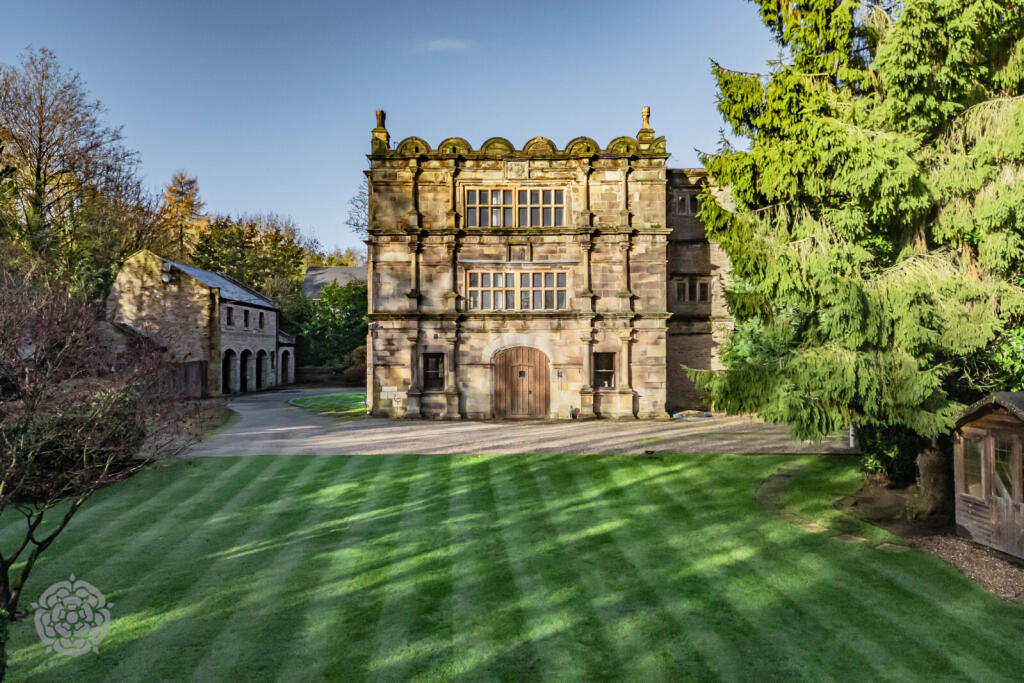
We all know that Greater Manchester is home to some pretty unique properties tucked away in all 10 boroughs of our region.
But this has to be, by far, one of the most special houses on the market at the moment.
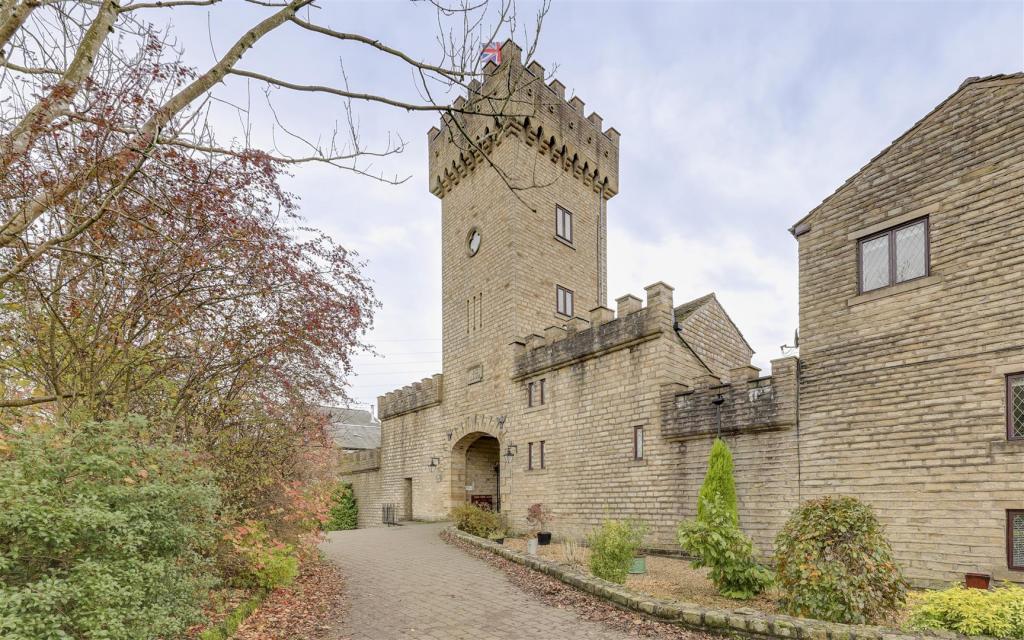
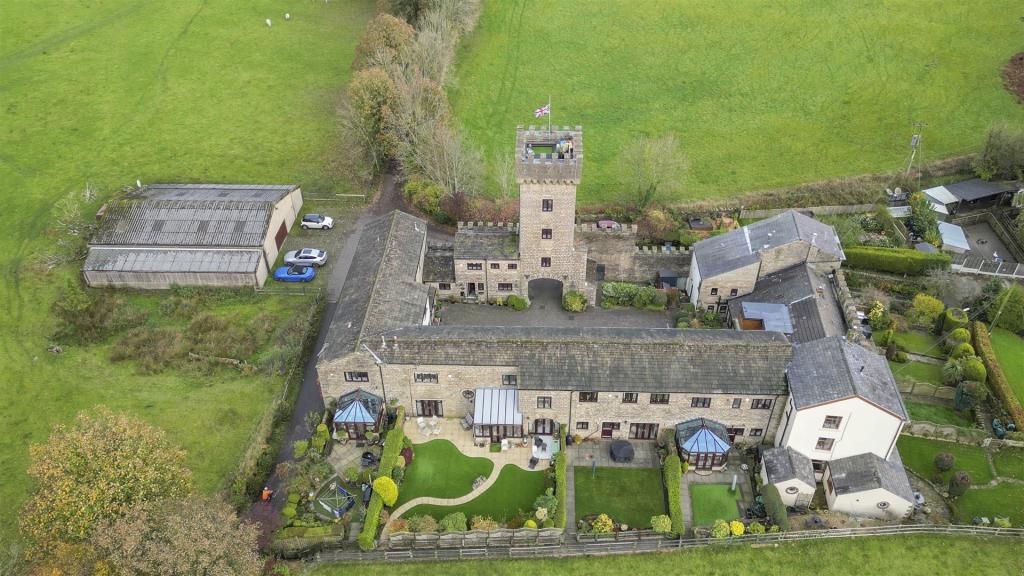
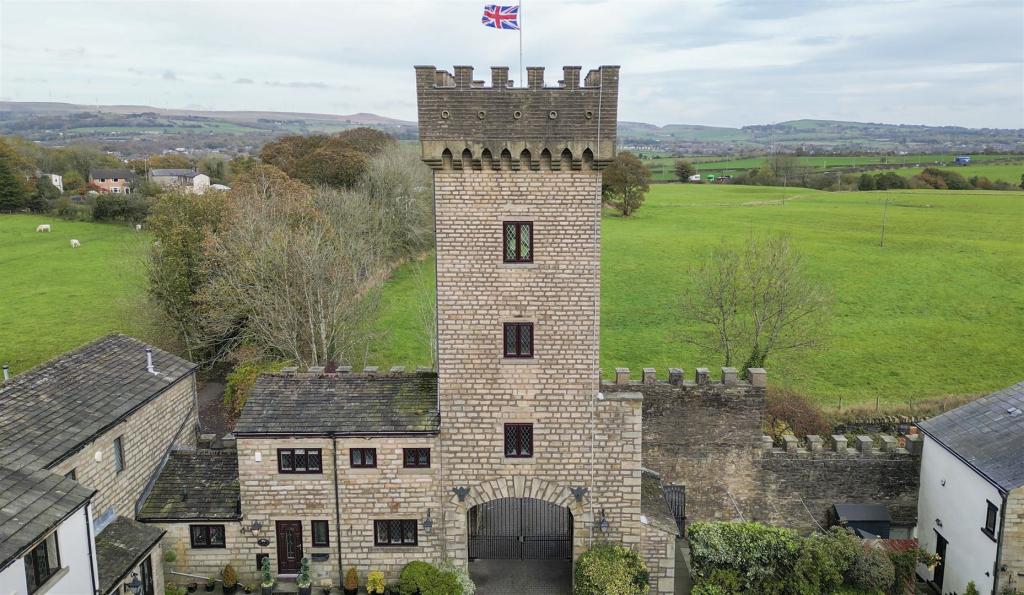
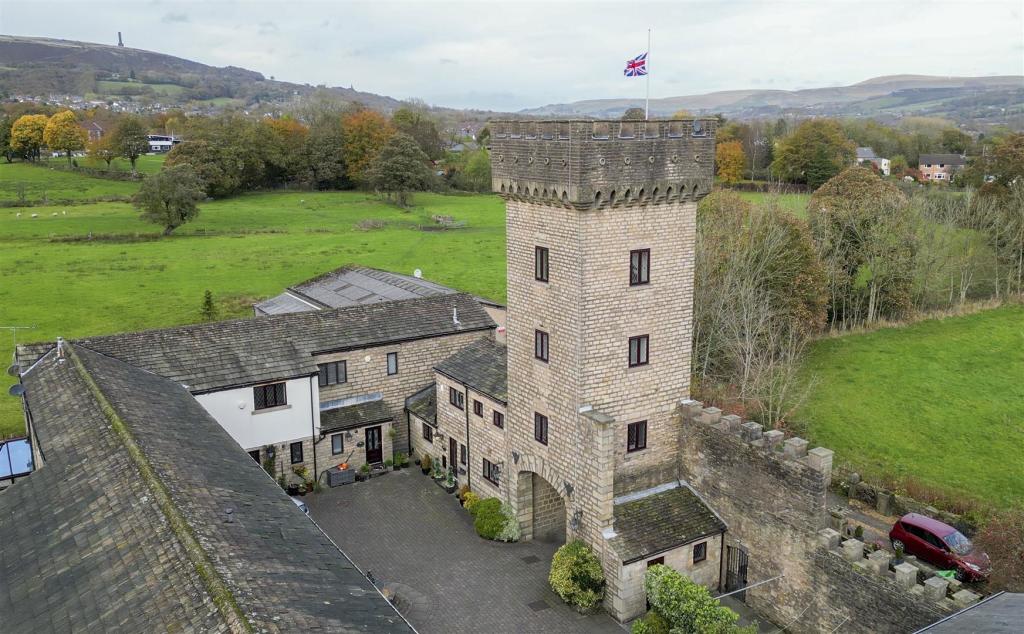
Whether you realise it or not, there’s actually a castle-inspired home sat proudly in the highly-sought-after Bury village of Greenmount, and it comes with a literal turreted tower and panoramic views that stretch to the Peel Monument, over to Manchester city centre, and as far as the eye can see.
Tower Court is an impressive four-bedroom family home filled with character, exceptional features that really make the most of its architecture, and spacious accommodation set over five floors right to the top of the tower itself.
Set in the heart of Greenmount’s Kirklees Trail nature reserve, the home has the type of commanding views over surrounding fields that not many others can boast.
ADVERTISEMENT
Estate agents Fine & Country describe the property as having an “unparalleled outlook”.
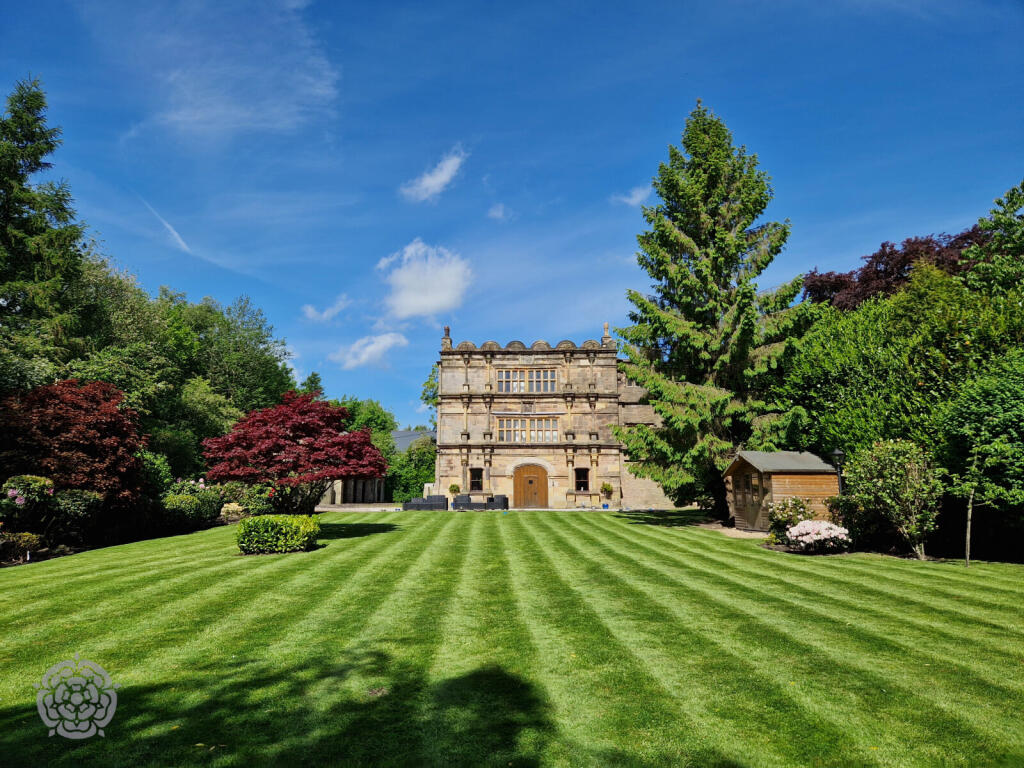
Externals of Tower Court and the surrounding views / Credit: Fine & Country
The development the property sits within in is accessed via a private electric-gated courtyard, which no doubt gives it the sense of grandeur a literal tower deserves.
ADVERTISEMENT
The property enjoys a convenient, yet semi-rural location, while still being within easy reach of a range of local amenities, schools, shopping, and entertainment, as well as lots of walking routes in the open countryside.
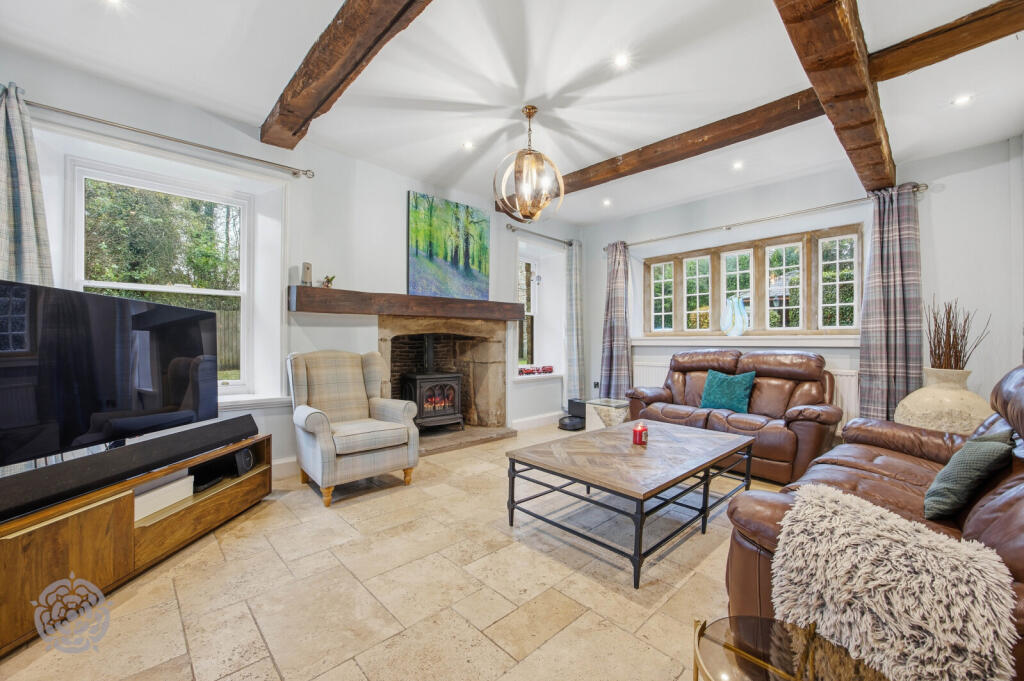
While the Tower Court may look like you’ve taken a step back in time when you look at it from the outside, internally, it’s a different story, as estate agents praise the property for combing unique construction, styling, and thoughtfully-laid-out living space.
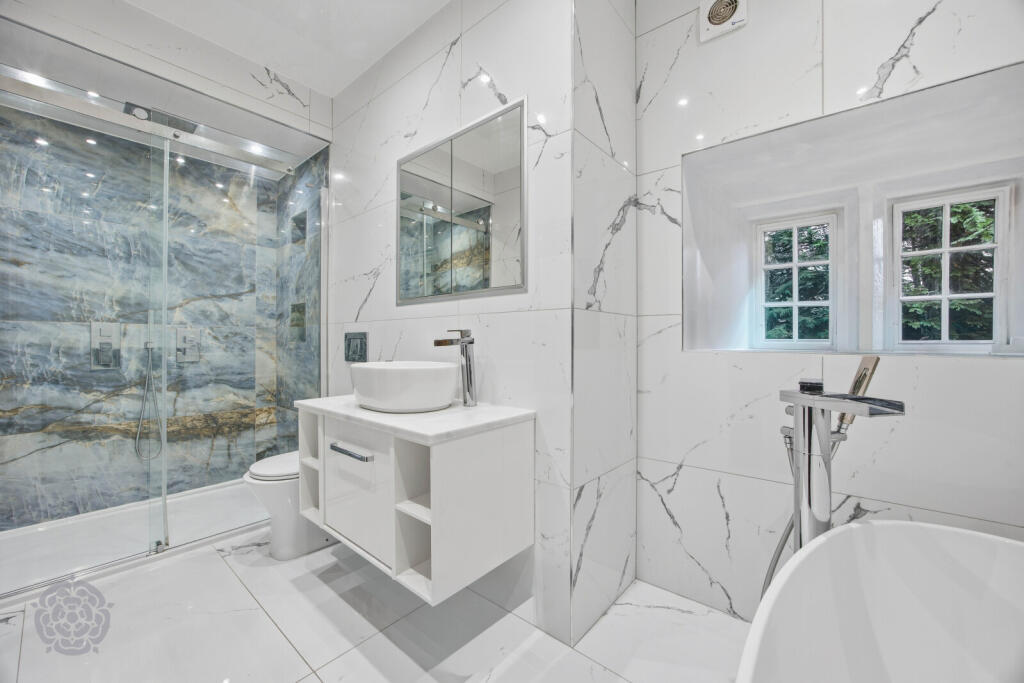
The property boasts modern touches and fittings, with little nods to character at every turn.
ADVERTISEMENT
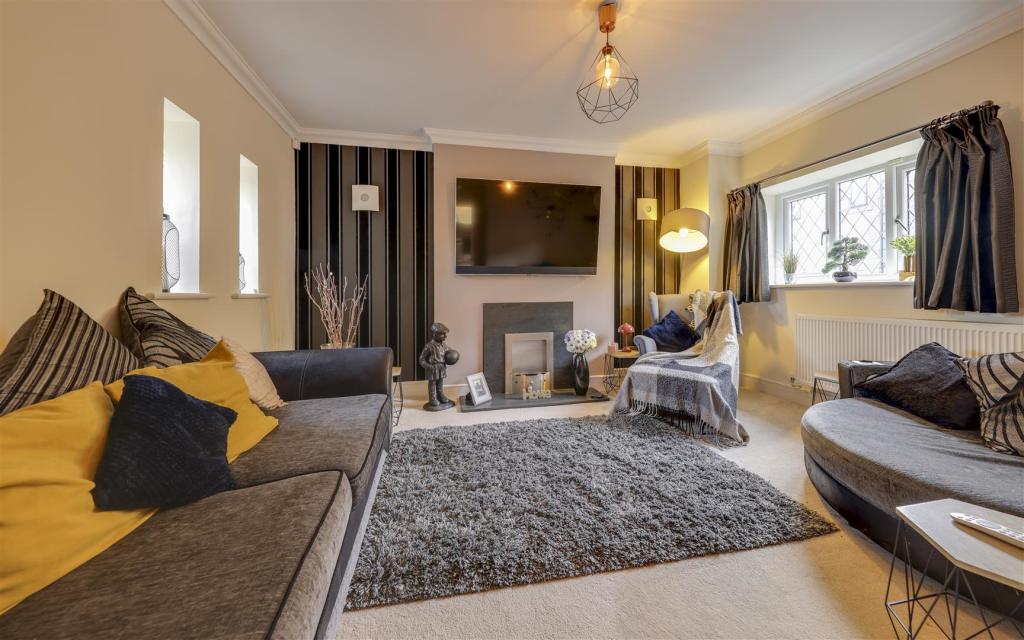
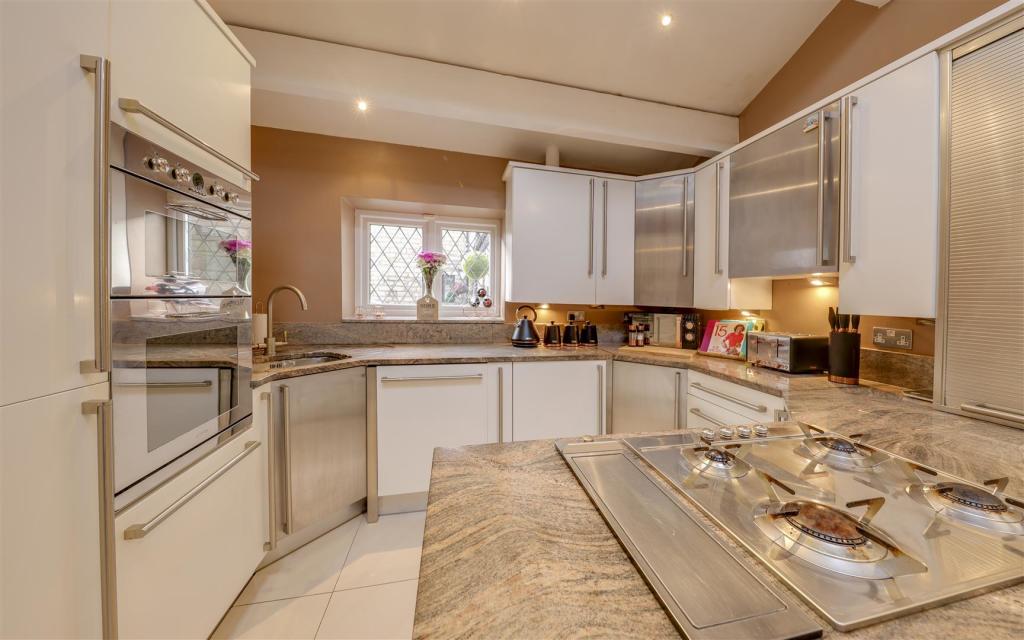
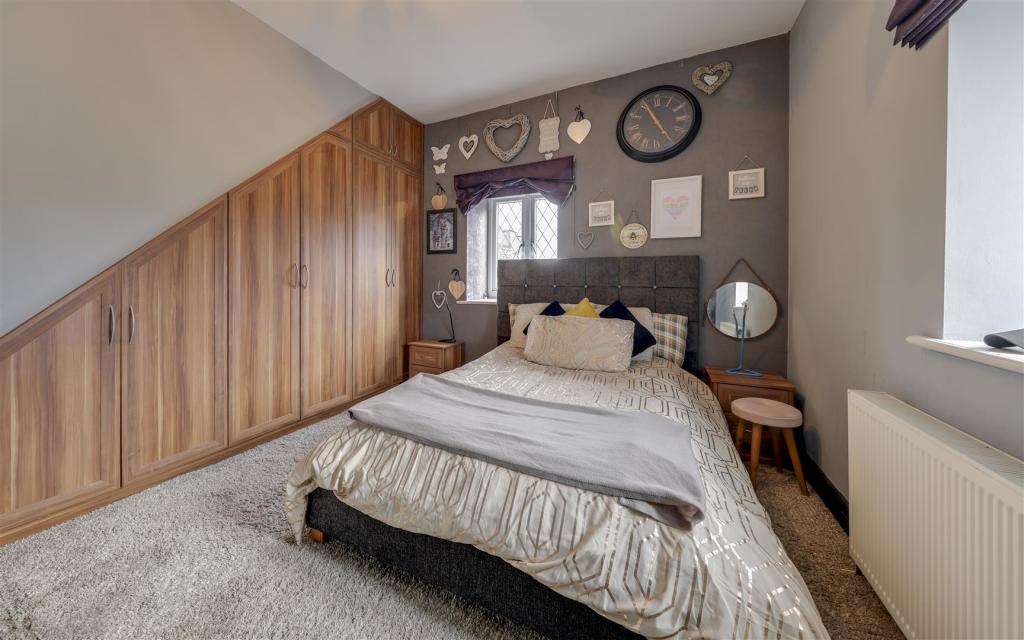
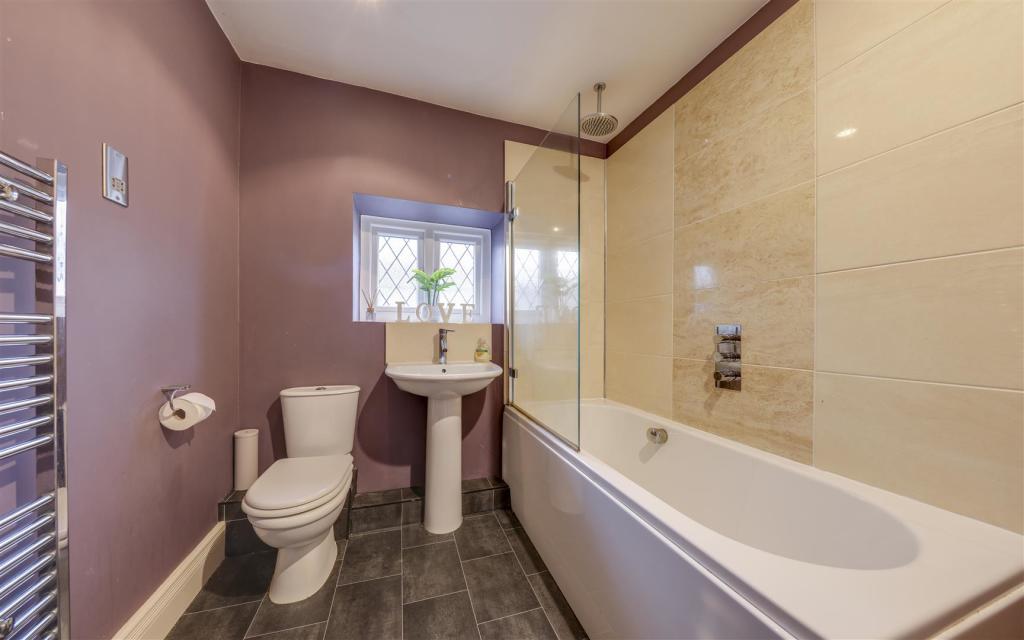
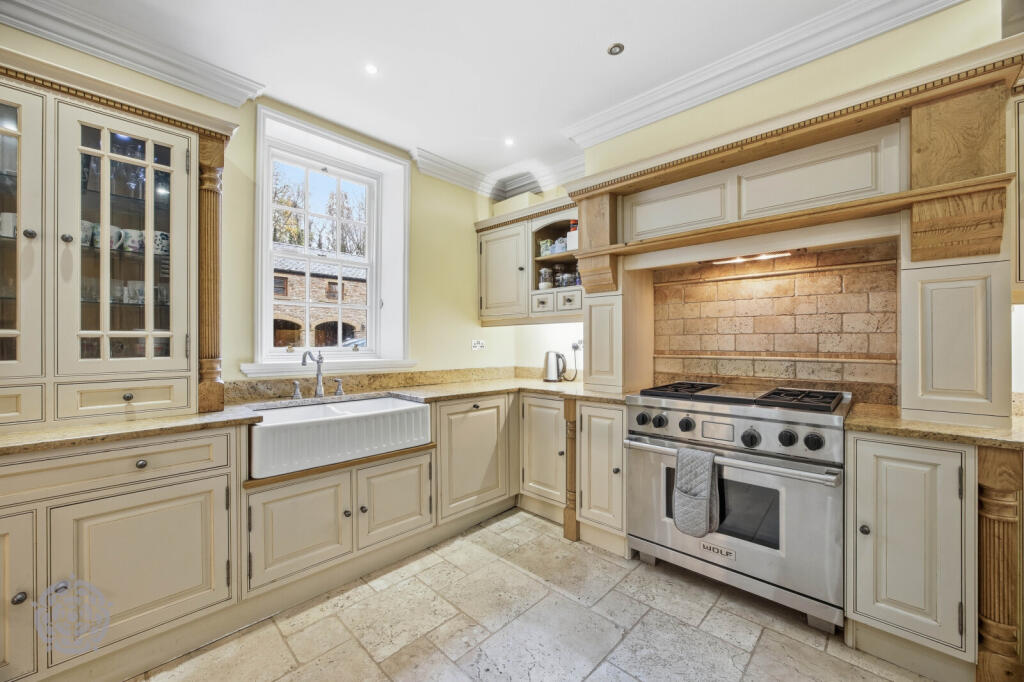
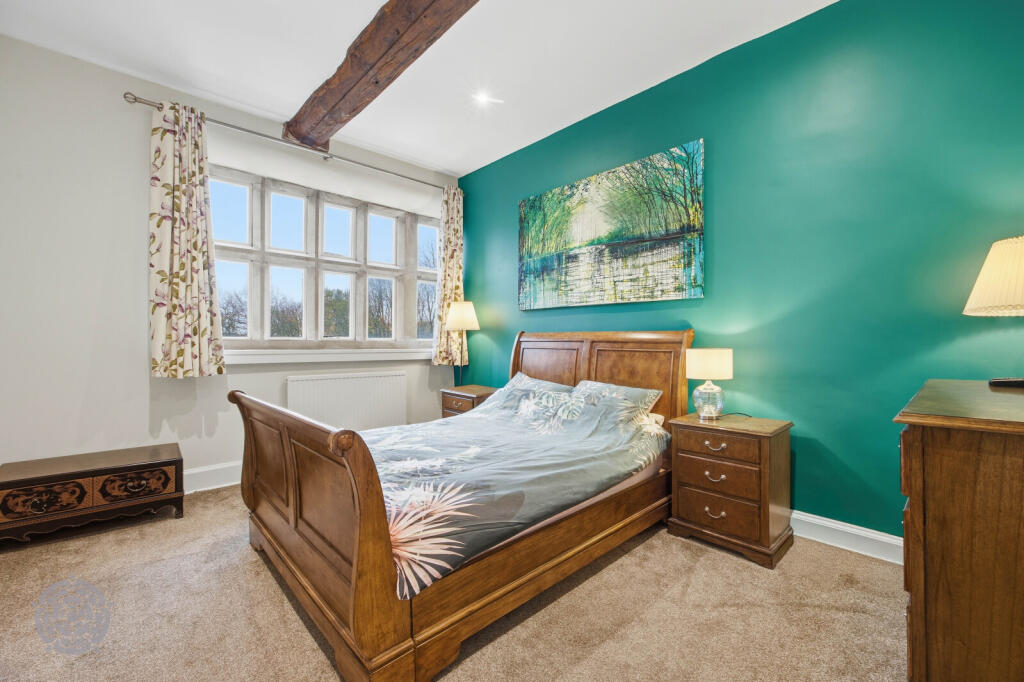
The main living room, kitchen / diner, bedroom, and family bathroom / Credit: Fine & Country
When it comes to the accommodation on offer, the property combines everything you would expect a contemporary home in 2023 to have – with a wide entranceway, plenty of open-plan living spaces, a kitchen / diner that’s ideal for entertaining, and a handful of reception rooms for all the family to make the most of.
The property also has four spacious double bedrooms, with the master bedroom boasting an en-suite shower room and a walk-in wardrobe.
The fourth and fifth floor are where you’ll find some of the most impressive features of the property though.
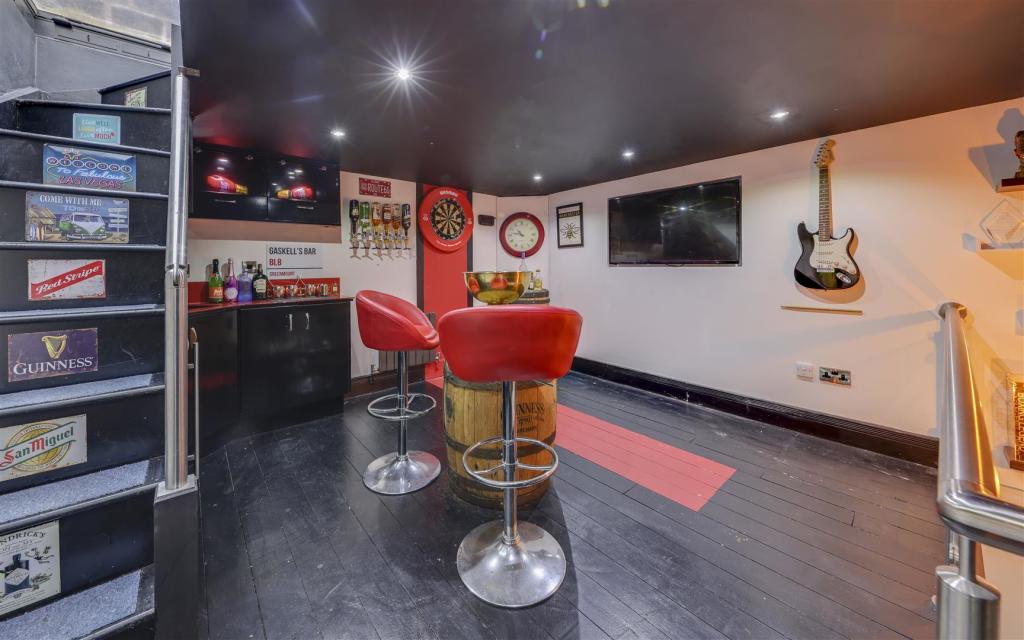
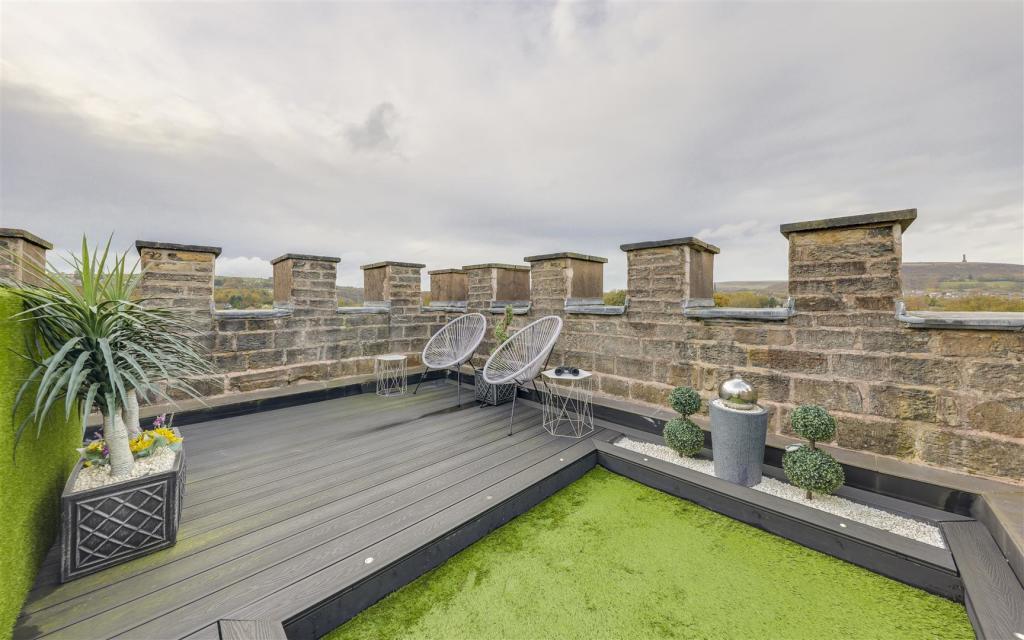
On the fourth floor is an entertainment lounge, bar, and cinema room, which is the perfect place to either relax after a long day or entertain guests, and then if you go up to the fifth floor, this is where you’ll find the property’s undoubted gem – the rooftop garden in the tower turret.
The entertainment lounge and the rooftop garden / Credit: Fine & Country
As well as all the impressive living spaces inside the property, externally, the property also comes with off-road parking spaces for several vehicles, and handy access to storage space within a separate communal garage area.
ADVERTISEMENT
We can probably all agree that this is one of the most unique properties on the market in Greater Manchester now, can’t we?
And, even with all its unrivalled character and charm, Tower Court is only on the market for £600,000.
Manchester rent is now ‘41% more expensive than five years ago, according to a recent study
Danny Jones
Yes, that’s right, as per some of the latest data on leased housing in central Manchester, it’s now approximately 41% more expensive to rent here than it was half a decade ago.
If you’ve lived in and around the city centre for long enough, chances are that you’ve already been feeling that difference, especially of late.
The ongoing cost-of-living crisis roughly began in 2021, following the economy and the world essentially opening back up after multiple lockdowns, so it’s little surprise that new research has shown affordability when it comes to renting has been on a slump ever since, too.
As well as the price of seemingly most things in everyday life going up post-pandemic, the average rental rate for even just a one-bedroom flat/apartment has jumped up significantly between 2020 and 2025.
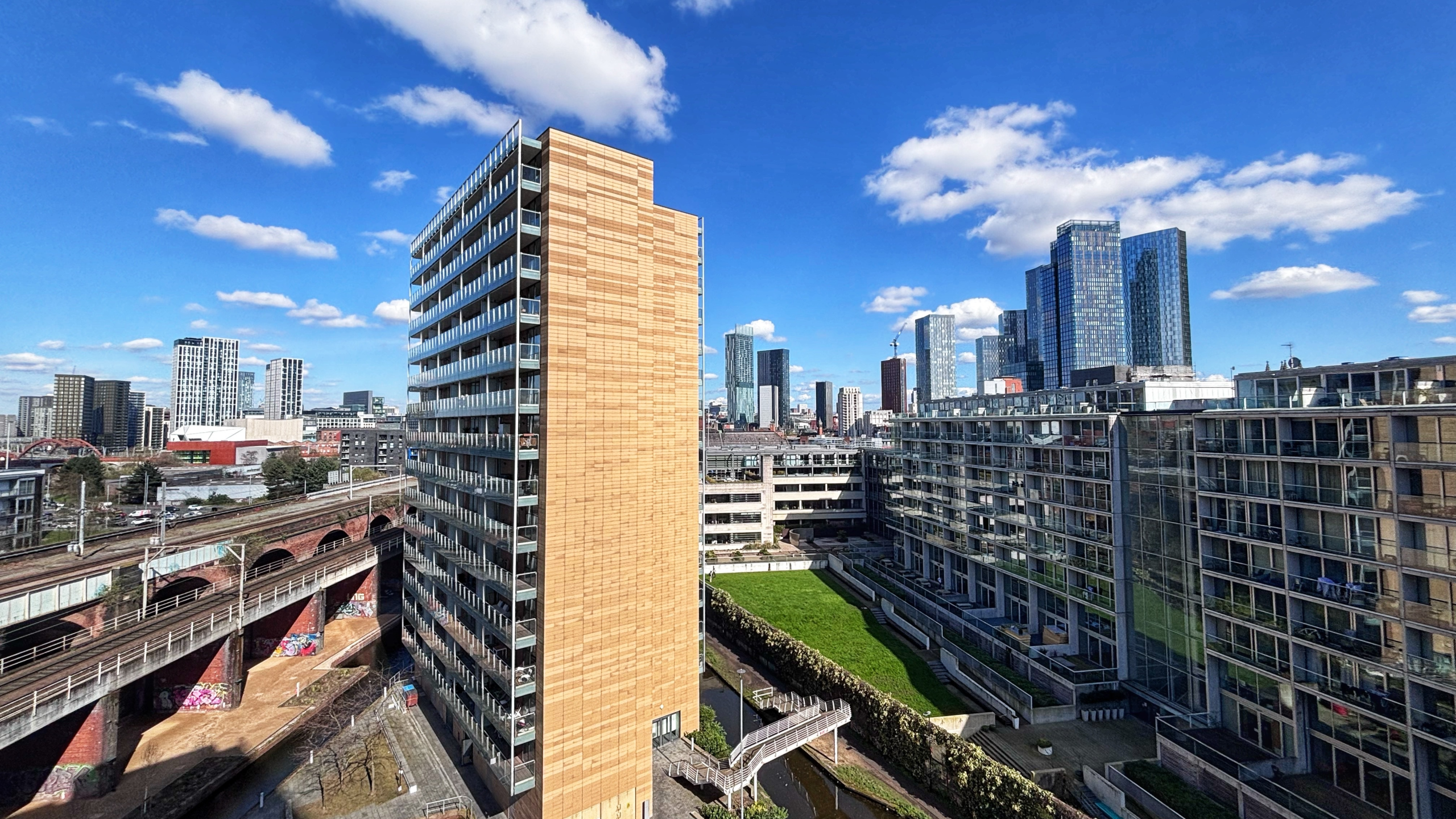
Even some ‘available’ housing in town is being hampered by claddin (Credit: Valienne via WikiCommons)
That’s according to the numbers crunched by credit card experts, Zable, anyway.
Not only did their recent report cite the rent prices going up even before the cost of living crisis – essentially following the outset of the Covid-19 outbreak – but if their figures, the rate of inflation and the unwaveringly high demand for housing are anything to go by, this trajectory is likely to continue in 2026.
As of February this year, around one in three UK households is now a single-person occupancy, which already comes with its challenges (the Manchester City Council tax discount being a thin lifeline for countless), not to mention energy bills and the cost of groceries continuing on an upwards trend.
Put in the simplest and most reductive terms, it’s now almost £300 dearer for most people to live on their own than it was back in 2020, and besides Liverpool clocking in as second on the list of increasingly expensive cities to live (a 42.12% increase), Manchester came in third.
You can see the full table down below:
Rank
City
% increase – 2020-2025
Difference from 2020 to 2025 in £
Average rental cost for a 1 bed 2025
1
Newport
47.39%
£2,611
£8,121
2
Liverpool
42.12%
£2,290
£7,727
3
Manchester
41.00%
£3,364
£11,569
4
Edinburgh
40.28%
£4,620
£16,090
5
Leicester
39.93%
£2,391
£8,379
6
Wolverhampton
39.22%
£2,049
£7,273
7
Nottingham
39.07%
£2,400
£8,543
8
Glasgow
38.02%
£2,679
£9,725
9
Colchester
37.63%
£2,617
£9,572
10
Cardiff
37.06%
£2,828
Average rental cost for a 1-bed 2025
Another fear is that with lots of people finding it hard to manage living in other major cities like London, even those moving to Manchester are also having an impact on how available affordable housing is here.
That’s why schemes such as the new ‘social rent’ development over in Wythenshawe are so important to the current generations of renters, with the possibility of owning your own property in the future becoming increasingly difficult for so many.
It’s also worth noting that Manchester ranked fourth among the British locations where the cost of living is said to have increased the most over the past five years, with the average difference in annual spend growing by an estimated 22.84%.
Inside the £1.3m Bolton gatehouse considered a ‘remarkable’ piece of local history
Emily Sergeant
A magnificent Grade II-listed gatehouse in an affluent area of Bolton has gone on the market, and it’s your chance to own a piece of local history.
You will need a small matter of £1.3 million before you’re able to call it yours, though.
Now, as we always say before we write about these stunning homes, it goes without saying that the vast majority of us won’t have this kind of money just sitting in bank accounts right now… but if like us, you’ve got no shame in admitting you love looking at houses you can’t afford in places you’ll probably never live, then allow us to introduce you to this absolute beauty.
This is Lostock Hall Gatehouse – a breathtaking Grade II-listed residence that’s believed to date back to the late sixteenth century.
Tucked away in ‘complete seclusion’ in the sought-after Bolton area of Lostock – which is known and loved by families thanks to its varied housing options, excellent local schools, convenient transport links, and proximity to amenities including Middlebrook Retail Park – this extraordinary five-bedroom link detached property is described as being ‘rich’ in heritage and architectural significance.
The home has been thoughtfully enhanced over time to introduce refined features for modern life, all while preserving plenty of original features.
Set behind imposing electric gates and nestled on a plot of just under three quarters of an acre, Lostock Hall Gatehouse is divided into two detached buildings, which estate agents say offers ‘unparalleled’ versatility for multi-generational living, business use, leisure space, or even guest accommodation.
This is the impressive Lostock Hall Gatehouse in Bolton / Credit: Miller Metcalfe
The main residence is packed with bags of character – think an original stone frontage, charming mullion windows, feature fireplaces, exposed beams, expansive rooms, and so much more.
Some of the other stand-out features in the main house include two impressive reception rooms, a beautifully presented country-style kitchen, and five large bedrooms arranged over two floors.
A short walk from the main residence stands a substantial two-storey detached building, which is in need of some refurbishment for sure, but estate agents say it presents exceptional potential and flexibility for a wide variety of uses.
It’s currently on the market for £1.3 million / Credit: Miller Metcalfe
Just as you’d expect, the outside of the Lostock Hall Gatehouse is almost an impressive as the inside, as it boasts manicured lawns and gardens stretching beautifully across the plot and designed to be enjoyed in every season.
The large private driveway also provides off-road parking for several vehicles.
This property is currently on the market with the Bolton branch of local estate agency chain, Miller Metcalfe, for £1.3 million, and if you fancy taking a closer look, then you can contact the agents to arrange a viewing.
Or you could just take the cheaper route instead and have a nosy at the Rightmove link here.

 Emily Sergeant -
6th January 2023
Emily Sergeant -
6th January 2023