Almost 40% of UK shoppers have failed to scan at least one item when using self-checkouts, new research has revealed.
Self-checkouts started to become popular in the UK in the 1990s, and since then have evolved to meet consumer demands and solve the problem of queueing, especially taking on a life of their own in supermarkets from the 2010s onwards… but now, some exclusive new research for The Grocer has revealed that could be causing more hassle than they’re worth.
A national survey of more than 1,000 shoppers found that only 63% said they ‘never’ failed to scan an item when using self-checkouts, which leaves almost two in five who do so at least occasionally.
A third (32%) also admitted to having weighed loose items incorrectly, while 38% said they had put through an incorrect loose item.
Experts say these statistics show that “a new breed of shoplifter” has been created.
ADVERTISEMENT
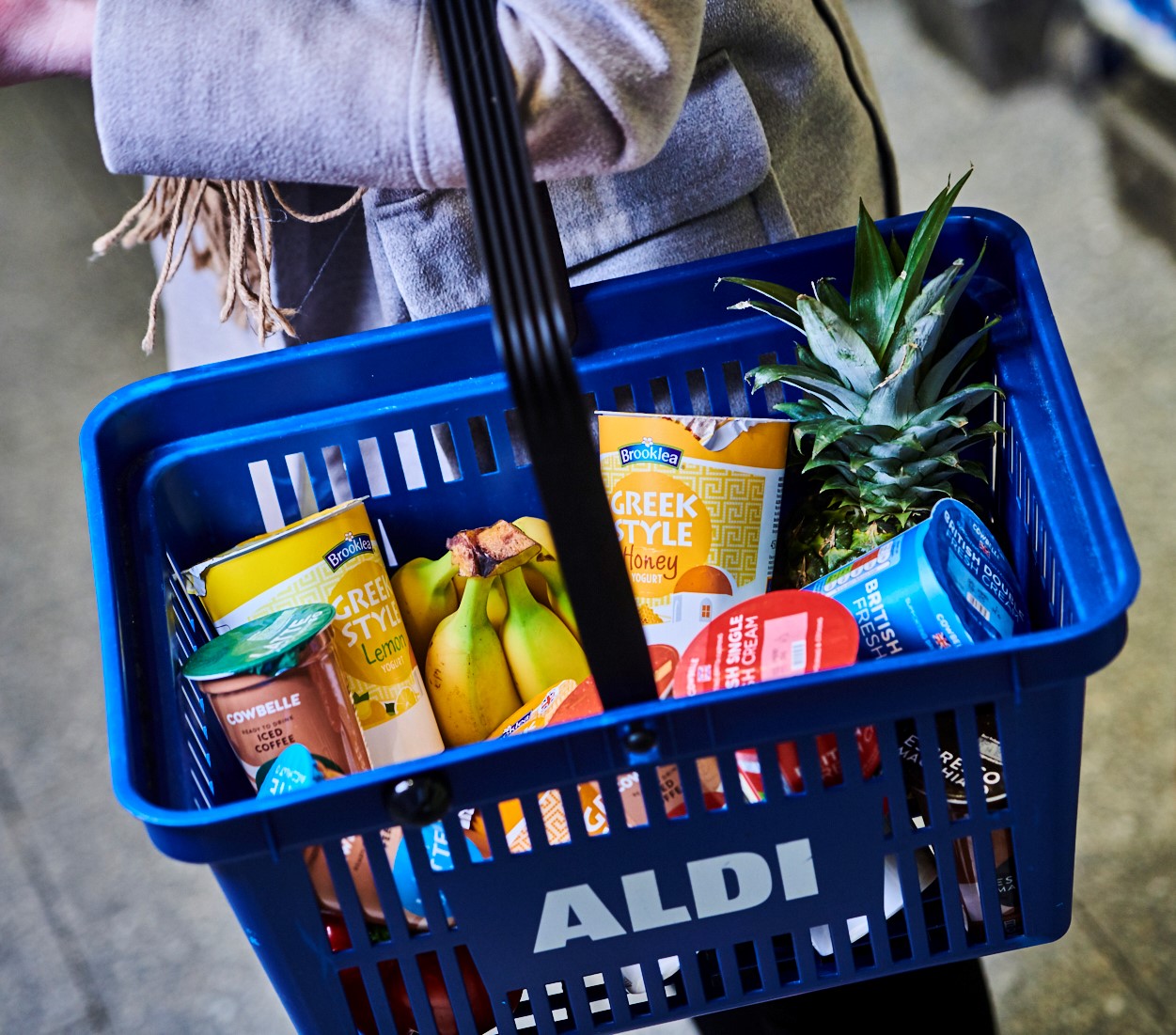
A new survey has revealed that one in three shoppers admits to stealing at self-checkouts / Credit: Aldi
“You’re creating opportunities for people who otherwise wouldn’t even think about shoplifting,” commented Matt Hopkins, who is an associate professor in criminology at the University of Leicester,
When it comes to the biggest culprits of failing to scan items at self-checkouts, the survey revealed that the under 35 age group, and men overall, came out as the most common, but it’s unclear whether this could be blamed on system error, missing barcodes, or rushing shoppers, instead of being intentional.
ADVERTISEMENT
Surprisingly though, despite public perception and a recent headline-grabbing move by supermarket chain Booths to remove self-service checkouts from all but a select few of its busiest stores, this new research also shows that shoppers actually prefer to use self-checkouts (54.2%), over staffed checkouts (29.8%).
“In a short space of time, the self-checkout option has gone from zero to an accepted norm – and now to an active preference for many,” commented Lucia Juliano, the UK head of research and client success at Harris Interactive.
The speed and relative freedom provided by self-checkouts were the main advantages of using them, according to shoppers, with 56% choosing to use them because they’re faster.
ADVERTISEMENT
52% cited the fact that self-checkouts allow them to ‘go at [their] own pace’.
Juliano did, however, comment that shoppers’ preference for self-checkouts may only be a reality “when there are no tech issues during the transaction”, which is said to be the “biggest bugbear by far” according to the survey.
“Retailers need to ensure the tech is spotless, the space is ample and staff are quick to intervene when needed,” Juliano concluded.
Featured Image – Ben Stevens / Parsons Media(via Tesco)
Shopping
Trafford Centre begins months-long refurb of its iconic The Orient foodhall
Emily Sergeant
A new era for The Orient is on the horizon, as the Trafford Centre has begun its months-long refresh of its iconic foodhall.
Forming part of its ongoing commitment to ‘enhancing the visitor experience’, the Trafford Centre is investing in a major refresh of seating and customer facilities within The Orient – creating a more vibrant and welcoming environment for guests to eat, meet and relax.
Works are now underway and will be delivered in phases over the coming months.
Improvements are being carried out in phases to minimise disruption to shoppers, while creating a more comfortable and contemporary dining environment at the same time.
The refreshed area will increase seating capacity by more than 60%, introducing a range of new seating styles in the process – including banquettes, family-friendly tables, accessible seating for guests with mobility requirements, and dedicated areas equipped with phone and laptop charging facilities.
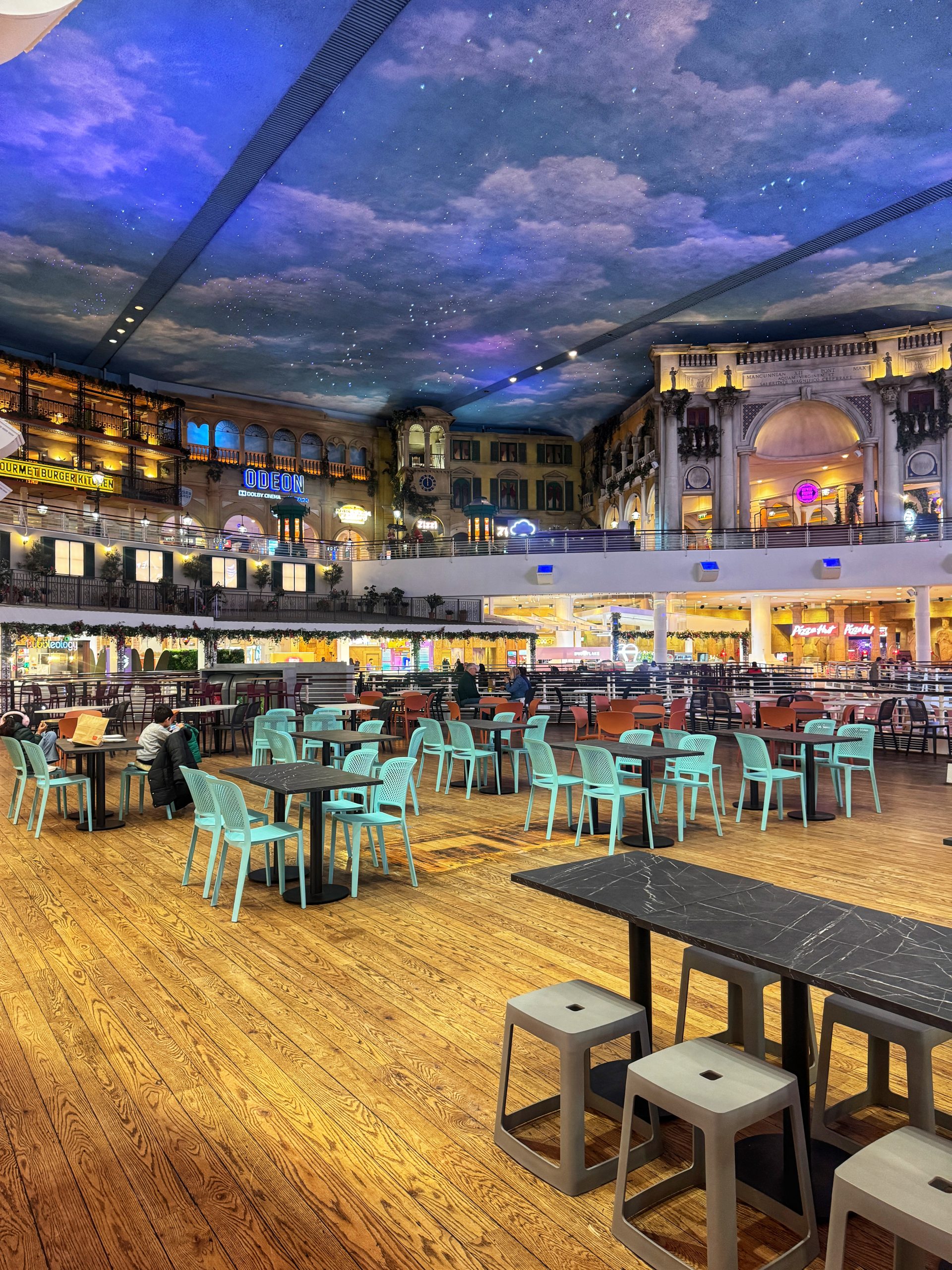
The Trafford Centre begins months-long refurb of its iconic The Orient foodhall / Credit: The Manc Group
Inspired by The Orient’s longstanding maritime heritage, the design takes cues from a contemporary cruise liner, and the space will also feature upgraded furniture and enhanced lighting, alongside flexible areas designed to encourage visitors to spend more time in there.
There’ll also be modern furnishings and a ‘refreshed’ colour palette to create a brighter and welcoming environment.
“The Orient is one of the most popular destinations within Trafford Centre, welcoming millions of visitors each year,” a Trafford Centre spokesperson said on the refurb.
“This investment reflects our commitment to continually improving the experience for our guests, creating a more modern, comfortable and social environment where visitors can meet, dine and spend time together.
“The improvements will not only significantly increase seating capacity but also deliver a much more flexible and accessible space for all visitors to enjoy.”
Featured Image – The Manc Group
Shopping
Home Bargains has announced a special two-day closure of all UK stores
Emily Sergeant
Home Bargains has, once again, announced it’ll be closing all its UK stores on both Boxing Day and New Year’s Day this year.
And it’s to make sure staff get a ‘well deserved break’.
After what has been yet another busy year for the retail industry, many workers have been left feeling like they could do with a little extra time off, which is why Home Bargains is following on with what has become a now-annual tradition by shutting up shop on two bank holidays.
All of our stores will be closing for Boxing Day & New Years Day.
Announcing the move in a post on social media, the discount retailer confirmed: “All of our stores will be closing for Boxing Day and New Years Day. We would like to thank all our colleagues for how hard you have worked this past year, and want you to relax and enjoy the Christmas break with your loved ones.”
Of course, this isn’t the first time the retailer has kept its doors shut on bank holidays.
Many shoppers will recall it has made the same decision to give hardworking staff a break every year since 2019.
Explaining a little more about the decision taken to close all its stores, Home Bargains said: “As a family-run business, we know the importance of being together at Christmas with those we care about most, now more than ever.

 Emily Sergeant -
4th February 2025
Emily Sergeant -
4th February 2025