It’s been a long time coming… but the first images of Manchester’s newest hotel have finally been released ahead of its grand opening next month.
And it looks like a perfect place for a luxury city centre staycation, if you ask us.
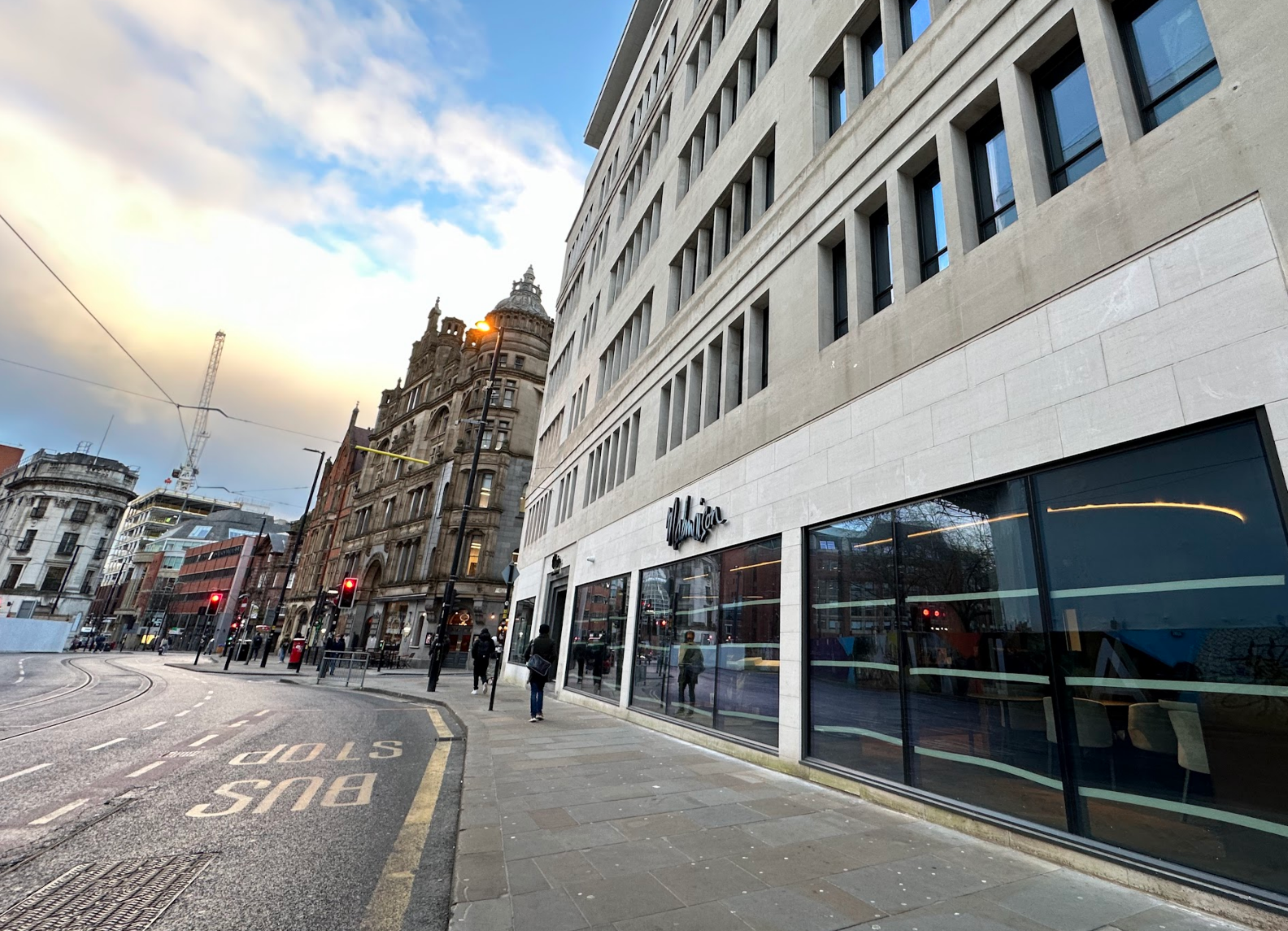
Anyone walking down Princess Street in the heart of Manchester city centre over the past couple of years is likely to have seen the newest addition to lifestyle hotel brand, Malmaison’s, collection slowly taking shape – and now, the time has finally come for Malmaison Manchester Deansgate to officially open its doors at the start of next month.
Ahead of its grand opening on 1 February 2024, a selection of sneak-peak images of the new hotel have been shared, and they give the public a glimpse of what to expect once it’s up and running.
Manchester’s newest luxury hotel is finally set to open its doors next month / Credit: Malmaison Manchester Deansgate
Sat just a stone’s throw from the bustling Deansgate thoroughfare, which connects many of the city’s exciting neighbourhoods, despite its name, this four-star hotel isn’t actually on Deansgate itself, but it will, however, offer 70 rooms and suites – many of which boast views over Albert Square.
ADVERTISEMENT
All the interiors have been given the so-called ‘Mal Treatment’, and have taken inspiration from the city’s industrial heritage and contributions to art and music, which is aiming to “create an experience that is as bold and diverse as the city of Manchester itself”.
The bedrooms are said to pay homage to the retro designs of the 60s and 70s, and feature loads of illustrative murals with an “artistic fusion of nature motifs”.
ADVERTISEMENT
Malmaison Manchester Deansgate is the second Malmaison hotel in our city / Credit: Malmaison Manchester Deansgate
“Malmaison Manchester Deansgate translates themes that are so intrinsic to the story of Manchester into its design,” explained Jonathan Livesey, who is the Group Development Director at Malmaison & Hotel du Vin ahead of the hotel’s opening in a couple of weeks time.
Hungry for more?
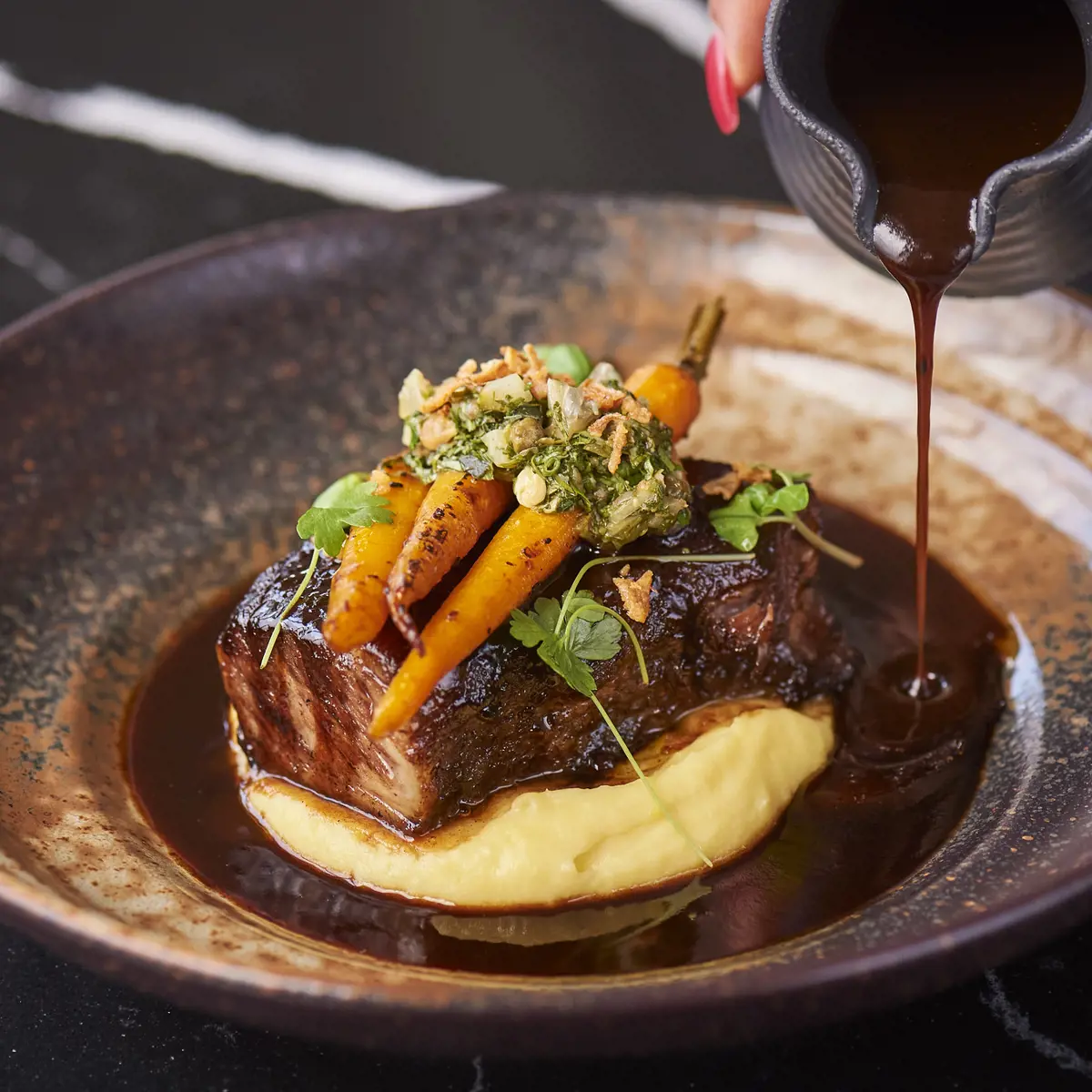
As well as the stunning rooms and suites, the brand-new signature restaurant, Malmaison Bar & Grill, will also be able to seat 114 guests, and is set to serve a stylish fusion grill menu that offers contemporary takes on classic and seasonal dishes, alongside a curated wine list and bar menu.
ADVERTISEMENT
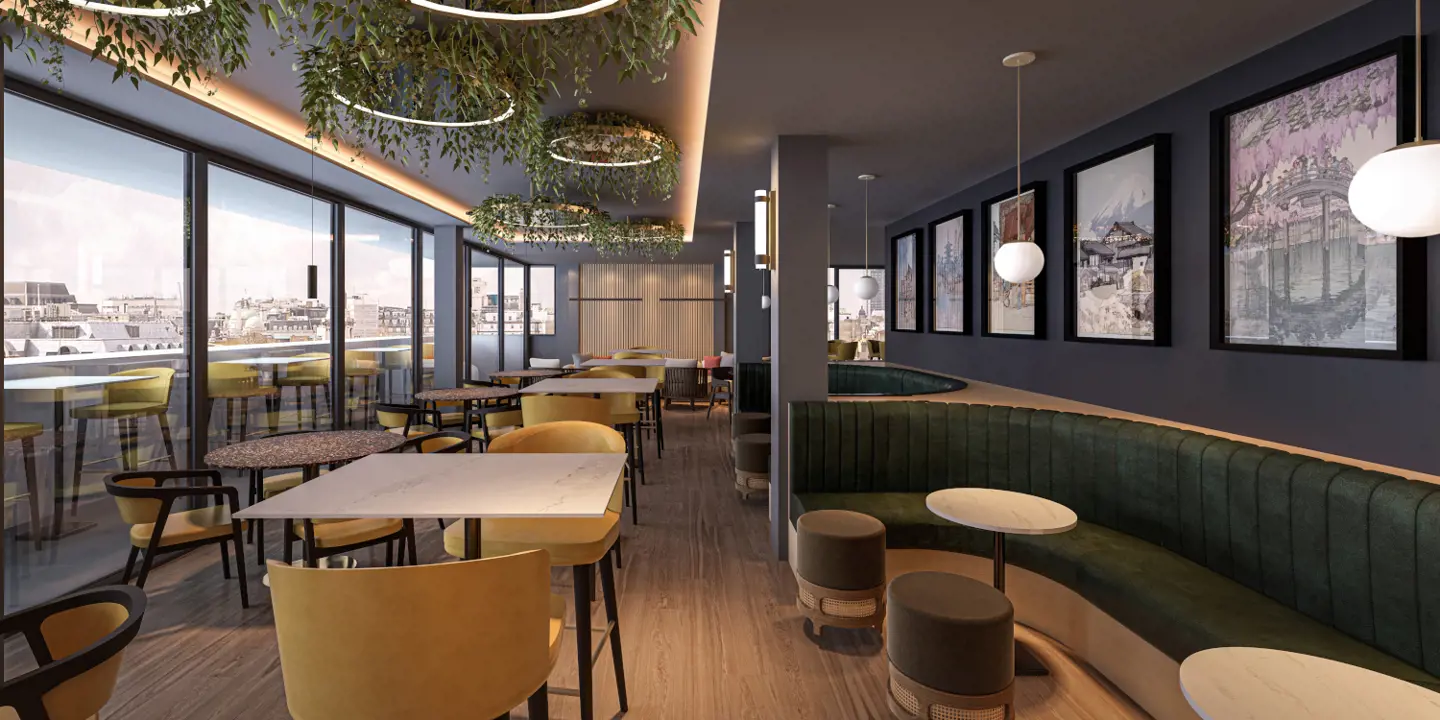
Manchester Deansgate will also be home to Malmaison’s second SORA rooftop bar and restaurant in the UK, with an intimate terrace that overlooks the historic Manchester Town Hall.
The new four-star hotel looks like the perfect place for a luxury staycation / Credit: Malmaison Manchester Deansgate
Hotel guests and diners can mix and match small plates from a selection of sushi, Robatayaki, and Pan-Asian fusion style tapas dishes, all while sipping signature cocktails and taking in the striking views of the city as the sun sets.
Manchester Deansgate will be Malmaison’s 18th hotel in its ever-expanding UK portfolio, and the second here in Manchester city centre itself.
Rooms are now available to book, and you can find out prices and more information about the new hotel ahead of its opening on the Malmaison Manchester Deansgate website here.
Featured Image – The Manc Group
Travel & Tourism
A day of vintage cars and retro entertainment will take over a Greater Manchester town this month
Lydia Mastrolonardo
Roll up, roll up all vintage-lovers – a free full day of live entertainment is returning to Oldham town centre later this month.
Following being crowned Greater Manchester Town of Culture 2026-2027, there are set to be a whole host of exciting activities coming our way across the next couple of months, so be sure to keep your eyes peeled.
From old classic cars to live music and circus performances, Nostalgic Oldham has it all and we are very excited to pay a visit and celebrate one of our beloved boroughs.
The day will centre around the Big Yellow Bus in Parliament Square, serving as a hub throughout the celebrations. Here, visitors can expect plenty of free activities to get involved with, including Raggle Taggle Arts, Betty Brown Bags, Oldham Theatre Workshop and a craft workshop from Oldham Archives.
It is set to be a family-friendly, action-packed day with buckets of civic pride and traditional shows, including a performance from Saddleworth Morris Men as well as celebrating more contemporary dances from Troupe Dance.
While Tame Valley Motors will be showcasing some of their most nostalgic vehicles for all of you car-lovers, cycling enthusiasts will be able to catch a glimpse of the prestigious trophy inside the Tour de France Femmes avec Zwift tent. Fans may also talk to the team behind bringing the competition through Oldham in July 2027.
Amongst the busyness, there will also be the opportunity to witness the unveiling of a brand new mural by artist Dave Draws, inside The Market at 11am.
A day of vintage cars and retro entertainment will take over Oldham
His large-scale illustrated map is a tribute to both the area and the people of Oldham, intertwining collaborative stories and drawings from members of the local community.
If you’re over in Oldham for the day, the charity Northern Roots will be opening its new Welcome Building to the public from 11am.
Visitors are welcome to browse their shop of handcrafted gifts, books and fresh produce, indulge on seasonal dishes at their café, explore the outdoor play area, Forestry Skills Centre and four acres of Urban Farm.
Subnum Hariff-Khan, Head of Libraries and Heritage and Arts at Oldham Council, said: “Nostalgic Oldham is a chance to celebrate everything that makes our borough special, from our history and traditions to the people and communities that shape Oldham today.
“There will be something for everyone to enjoy, whether that’s exploring the vintage vehicle display, watching live performances, getting involved in family activities or seeing the new community mural unveiled.
“As Greater Manchester Town of Culture, we’re proud to bring events like this to the town centre and, because it’s completely free, we hope residents and visitors alike will join us for what promises to be a fantastic day.”
Nostalgic Oldham will take place from 11-4pm on Saturday 19 September – be sure not to miss out
The Greater Manchester book café serving literary afternoon teas and build-your-own bouquets
Daisy Jackson
If you like your afternoon tea with a side of good books, there’s a Greater Manchester café where you can quite literally have your cake and read it too.
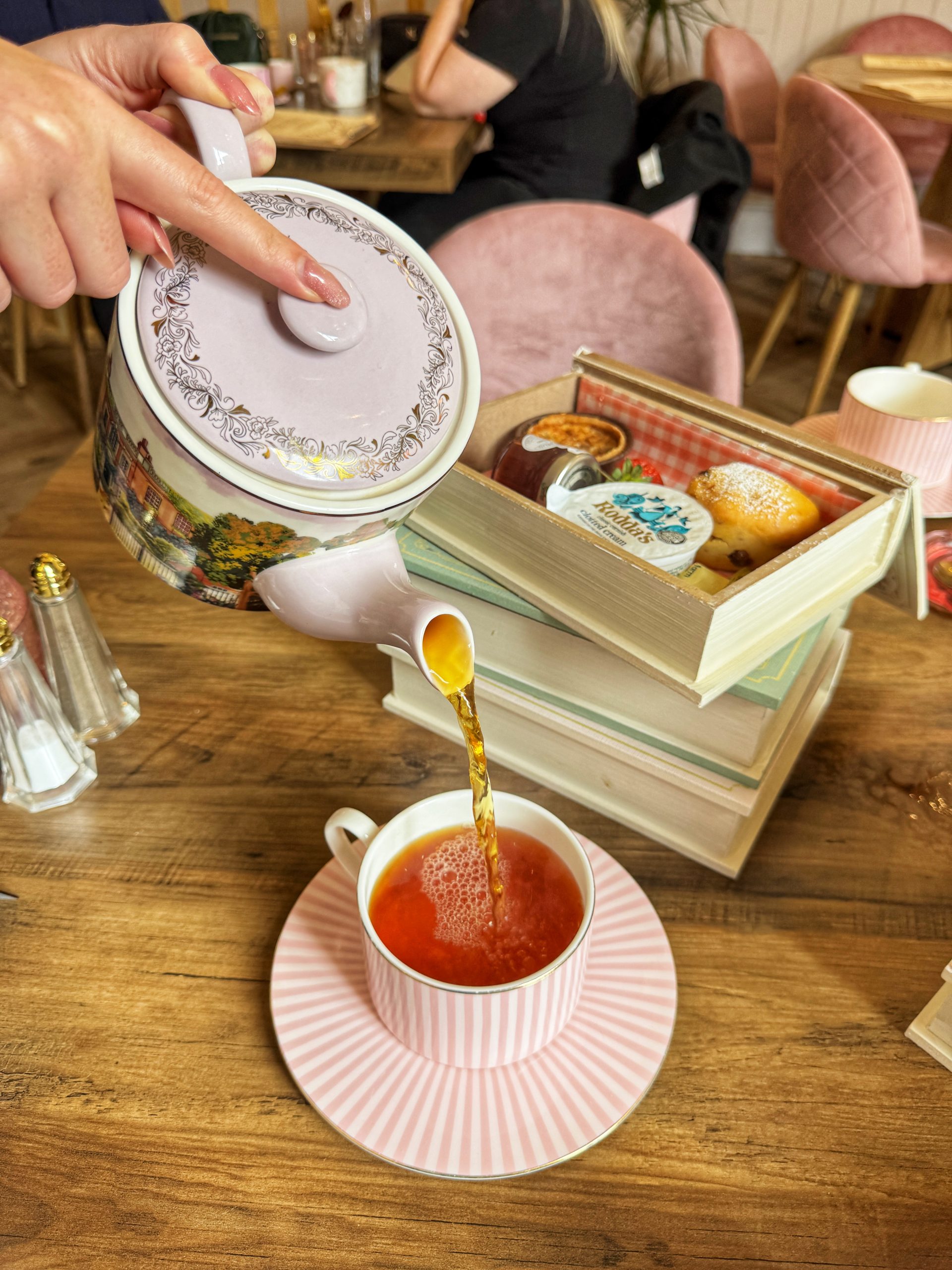
Tucked inside this charming bookish spot, afternoon tea arrives with an unexpected twist. Rather than being presented with the usual three-tiered stand, you’re handed a stack of heavy hardback books.
But don’t start worrying that you’ve accidentally wandered into a very niche library club. The books are hiding something.
Lift the covers in Peony & Parchment – or, more accurately, open the book-shaped boxes – and you’ll discover a full afternoon tea concealed inside.
There are dainty sandwiches to get stuck into, including tiny egg mayo, herby chicken salad, ham and mustard, and cheese and tomato focaccia, alongside a little quiche.
Then comes the scone – classic, fluffy and ready for the obligatory dollop of clotted cream and jam. And, because no afternoon tea should leave you feeling like you’ve been short-changed in the cake department, there are five miniature slices to work through.
Afternoon tea concealed in a stack of booksSome of the other bakes on display
There’s a Victoria sponge with a dreamy vanilla cream, lemon drizzle, rich chocolate cake, a Bakewell slice and a pecan pie, all sourced from a local bakery just across the alleyway.
It’s all served with a pot of tea or coffee, with the option to add a glass of prosecco.
And the bookish theme doesn’t stop at the afternoon tea.
Downstairs you’ll find shelves packed with books, including the intriguing ‘blind books’. Instead of judging a book by its cover, you’ll be given clues and a short summary of what lies inside before taking a gamble on your mystery read.
Downstairs in Peony & Parchment‘Blind books’A role playing village for kids
There’s also plenty here to keep younger visitors entertained, thanks to a children’s area complete with a mini role-playing village.
And if books and cake weren’t enough, there’s another string to this café’s bow.
The Bloom Bar lets you build your own bouquet. Choose the size you want, then wander around selecting your own stems and foliage to create something that’s uniquely yours.
You can build your own bouquetThe Bloom Bar at Peony & Parchment
Of course, you don’t have to be visiting specifically for the afternoon tea. The wider menu includes tapas, full breakfasts and sandwiches, making it just as suitable for a leisurely brunch, lunch or coffee-and-cake stop.
So whether you’re there to discover your next favourite novel, assemble a bouquet, entertain the kids or simply eat your way through five different miniature cakes, this is one café where there are plenty of chapters to explore.

 Emily Sergeant -
11th January 2024
Emily Sergeant -
11th January 2024