Manchester Airport’s new-look Terminal 3 is officially open to the public, bringing a brand-new sports bar plus more than 250 extra seats.
The airport’s smallest terminal is one of those that Mancs sort of love to hate, with significantly less choice for food and drink.
The £1.3bn investment into Terminal 2 has made T3 look even less impressive – until now.
Manchester Airport has now launched a new section of Terminal 3, including Sporting Chance, a brand-new 470-seat sports bar.
The bar has airfield views from one of the highest points in the airport, plus 69 television screens showing a range of sports, including screens in booths that can be controlled by the guests.
ADVERTISEMENT
It does mean that the Lion and Antelope, which operates right in the centre of Terminal 3, will close, so that there can be more capacity for passengers.
This is all part of Manchester Airport’s ongoing project to expand and enhance Terminal 3, which now services just Ryanair.
ADVERTISEMENT
Terminal 1 has now closed, with Terminal 2 catering for around 75% of the airport’s traffic. As the work goes on, Terminal 3 will expand into the former T1 building.
The new bar, Sporting Chance, has opened in a section of Terminal 3 that was previously occupied by private lounges and a viewing area.
Still to come will be a new entrance and security hall, plus extra new spaces.
ADVERTISEMENT
Manchester Airport Managing Director Chris Woodroofe said: “Here at Manchester Airport we’re proud to connect the North to the world with a route network of more than 200 destinations through upwards of 50 airlines.
“It means we have something for everyone in terms of where you can go – but that’s matched by what we offer right here at the airport.
“We’ve talked a lot about our £1.3bn investment in Terminal 2 but a key thing that has enabled is our work to improve Terminal 3 – and the opening of Sporting Chance is a huge step forward in that project.
“Sporting Chance is a fantastic new bar – perfect for watching your favourite team before your flight, eating a great meal or just enjoying a spectacular view – but it’s also in a whole new area for most passengers adding more seats and space to the terminal.
“It means even passengers who don’t use the bar will be able to enjoy the extra space and capacity in the Terminal. I’m looking forward to sampling the bar myself and hearing people’s feedback.”
ADVERTISEMENT
Beth Brewster, Senior Coordinating Director F&B & Essentials UK, Avolta said: “Sporting Chance represents a further evolution of Avolta’s UK F&B portfolio and responds to continued passenger demand for premium hospitality spaces and access to live sport while travelling.
“The ability to integrate brand activation and retail selling within the bar environment is an important step in bringing retail and F&B closer together. We’d like to take this opportunity to thank our colleagues at MAG for their valued partnership and support. Together we have delivered a space that combines operational excellence with an engaging, all-day offer.”
Richard Jackson, retail director at Manchester Airport, said: “Everything we’re doing in Terminal 3 is focused on improving the passenger experience – our new bar, Sporting Chance, will be a great addition to the terminal and will provide more than 200 extra seats.
“But that doesn’t mean we’re not really sad to see last orders the Lion and Antelope. It’s been here since 2015 and I know that it’s got a special place in a lot of people’s hearts; it’s been the starting point for people’s first holidays, a place for newlyweds to raise a toast before they go on honeymoon, it’s where business travellers have relaxed ahead of long trips and much more.
“So people can feel assured that we know how special it is – and we wouldn’t be closing it if we didn’t know that what we’re putting in its place will be brilliant.”
EasyJet is paying for passports for newborns to help families take their first holidays
Daisy Jackson
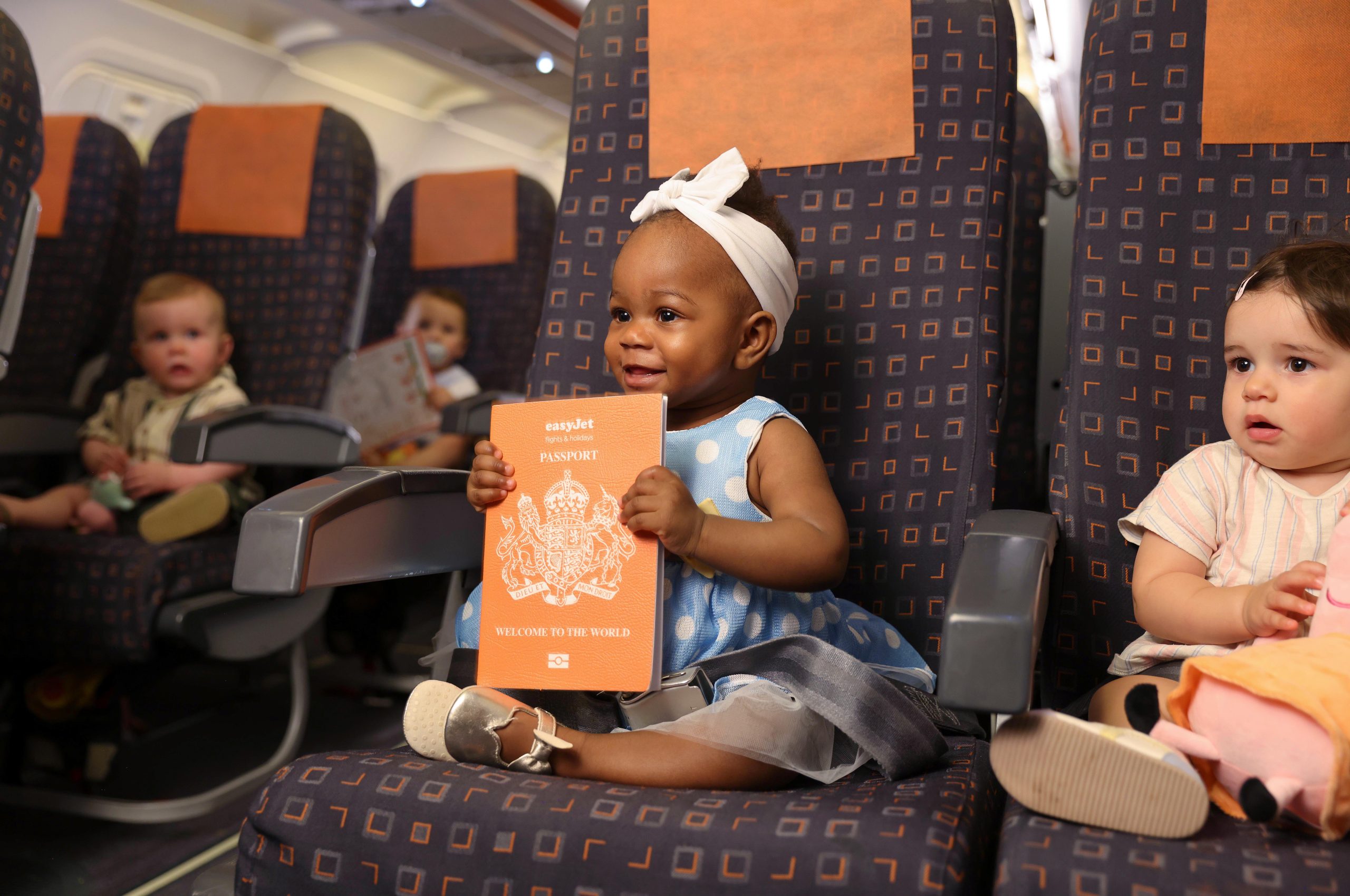
EasyJet has announced a new scheme where the airline will cover the cost of a baby’s first passport, allowing young families to take those memorable first holidays.
The company has announced that it will pay for a child’s passport (£66.50) when parents book an EasyJet holiday, making it a little easier to start those travel adventures sooner.
Research conducted by the airline and easyJet Holidays has found that 75% of parents agree the move would make a holiday with a baby feel a bit more affordable.
Their surveys also found that four in five parents believe a baby’s first holiday is a landmark family moment, and more than half called it one of their proudest parenting milestones.
But parents also said that they needed an average of four attempts to get an approved passport photo of their baby (have you tried making a newborn follow instructions…?).
easyJet holidays has reported – even this early in the year – a 10% increase in infants travelling this year compared to 2025.
And now, the thought of a holiday with your newborn is more tempting than ever, with the offer to get a free passport for your baby from easyJet.
To claim it, and save £66.50, you can use the code FIRSTPASSPORT until 26 November – find out more HERE.
easyJet Captain Kate West, said: “We carry millions of families across Europe every year, and we know that travelling with a baby brings a whole series of exciting firsts.
“We want to make travel as easy and accessible as possible for everyone, including young families, so they can enjoy all the experiences and memories that travel can bring.
“We hope that covering the cost of a baby’s first passport goes a small way towards making that first family adventure a little easier and gives our youngest travellers a warm welcome to the world.”
Stuart Wright, Customer Director at easyJet holidays, said: “Travel has a unique way of bringing families together, and a baby’s very first holiday is often one of those moments parents remember for years to come.
“By covering the cost of a baby’s first passport, we’re helping more families start making those memories that little bit sooner.”
Chester Zoo welcomes The Traitors stars Claudia and Alan – but it’s not what you think
Lydia Mastrolonardo
No, Chester Zoo isn’t keeping actual Claudia Winkleman and Alan Carr in enclosures – everybody stand down.
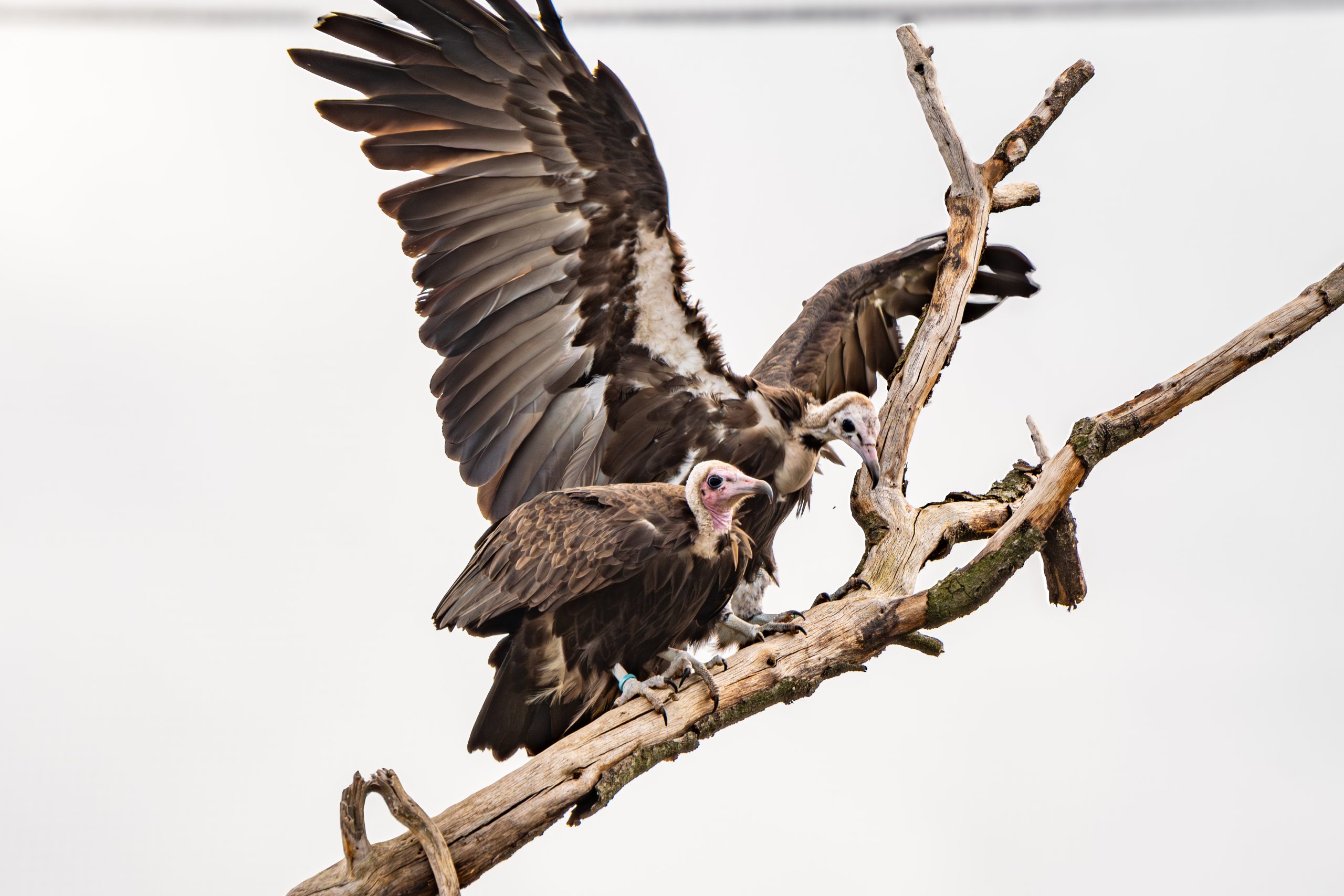
The zoo is in fact welcoming its first pair of hooded vultures, to hopefully boost the critically endangered species, and they just so happen to be named after some of our favourite celebrities from The Traitors.
As famous as Alan Carr and Claudia Winkleman are, these two give them a run for their money, as the first of their kind to ever come to Chester Zoo – making them pretty big celebs in the animal kingdom.
The pair of vultures are currently nestling in to their new home, alongside their new white-headed vulture roommates, at the Heart of Africa aviary. It is here that conservationists are hoping the newly bonded pair will start a family, as part of a Europe-wide breeding programme, to help safeguard their species from extinction – no pressure or anything.
Bird Keeper Heather-Anne Pedley said: “Alan and Claudia came to us from the Horstmann Trust, a conservation breeding centre for vultures, where they are an established breeding pair. We named them after Traitors stars Alan Carr and Claudia Winkelman, because what better way to reflect how funny and engaging they are, than to name them after two national treasures?
“Nobody prepared me for how much I would fall in love with them, their antics and characters. They look like they’ve just put a hood up, and they have this beautiful blue ring around their eyes, like natural eyeliner.”
Alan and Claudia, Chester Zoo’s new vultures. Credit: Chester Zoo
Hooded vultures are distinctive with dark brown feathers, a buff ‘hood’ and a bald face and throat, with wingspans of up to 180cm. They are native to west, central and southern Africa, where they typically pick up their lunch by soaring over the land, looking for carcasses to feed upon as part of ‘nature’s clean-up crew.’
It’s not all gore though, they are very active, clever and interested in their environment. The couples are monogamous, will preen each other, gently touch each other’s bills and co-build nests – quite the romantics.
Heather-Anne added: “This pair are real love birds, and we are hopeful they’ll go on to breed. Any youngsters they go on to have will become part of a European conservation breeding programme, helping to create an insurance population for this incredibly rare species.
“In the wild, vultures help prevent zoonotic diseases – illnesses that can spread between species – because their stomach acid is so strong they can eat decaying meat that other animals would not be able to digest. This helps prevent the spread of diseases like anthrax and botulism into the soil.”
Despite their crucial role across various ecosystems, vulture numbers are declining and they are now sadly classified as critically endangered, according to the IUCN Red List of Endangered Species.
This decline is driven by mid-air collisions or accidental electrocution by scanning the ground for prey whilst perched on uninsulated power lines. These birds are also at risk of being poisoned or even hunted to facilitate an unsustainable demand for vulture body parts and eggs to be used in traditional medicine and rituals, while there is no scientific evidence to support this use.
We are really rooting these two and hope that they settle into their new home.

 Daisy Jackson -
19th March 2026