Halifax has told customers they are free to close their accounts if they disagree with pronouns being on staff name tags.
After taking to social media earlier this week to share an image of a staff name tag which had Gemma written on it with the pronouns ‘she/her/hers’ underneath, and to state that “pronouns matter”, the bank was met with praise on the move by many customers, as well as by leading LGTBQ+ charity, Stonewall.
Stonewall said it was great to see companies like Halifax offering staff the option of displaying their pronouns, and claimed it was a great way to “make sure LGBTQ+ identities are respected” in the workplace.
A spokesperson for Halifax said the bank wants to “create a safe and accepting environment that opens the conversation around gender identity”, and it hopes the move will support colleagues to be themselves and feel included.
“We care about our customers’ and colleagues’ individual preferences,” the spokesperson added.
But despite all the praise it received, Halifax was also hit with criticism from some other customers who said they didn’t agree with the move.
One critical Twitter user accused the bank of “pathetic virtue signalling” and questioned why it was trying to “alienate” people, to which Halifax responded in a now-viral tweet telling the customer to close their account.
ADVERTISEMENT
Halifax said: “We strive for inclusion, equality and quite simply, in doing what’s right. If you disagree with our values, you’re welcome to close your account.”
In another critical tweet, another customer wrote: “If a person is wearing a NAME badge, wouldn’t it more polite to use that NAME, isn’t that the point of a NAME badge, otherwise, why put the NAME on the NAME badge in the first place?”
Halifax then responded to reiterate that it wishes to “create a safe and accepting environment that opens the conversation around gender identity,” for staff and customers alike.
ADVERTISEMENT
We strive for inclusion, equality and quite simply, in doing what’s right. If you disagree with our values, you’re welcome to close your account. ^AndyM
Hi Jamie. We want to create a safe and accepting environment that opens the conversation around gender identity. We care about our customers and colleagues individual preferences. For us, it’s a very simple solution to accidental misgendering. ^Lee
Halifax is the latest organisation to offer employees the chance to display their pronouns on name badges, and it comes after retailer M&S made the headlines for adopting the optional move back in November 2021.
The move by M&S came from a suggestion via the retailer’s employee suggestion initiative, and it now means that workers have the choice to use “whichever combinations of pronouns is right for them”.
Announcing the decision to introduce the new pronoun badges, M&S explained: “Recently, we introduced pronoun name badges for our colleagues, encouraging as many of them as possible to wear whichever combination of pronouns is right for them.
“An amazing initiative provided by one of our colleagues as we continue to build an inclusive future, together.”
Featured Image – Halifax
Trending
Major pop star crowns humble rice and three cafe as ‘Jewel of Manchester’ ahead of sold-out gig
Thomas Melia
A beloved city centre takeaway has been given the title of ‘Jewel of Manchester’ by chart-topping UK singer Sam Smith.
Known for hits like ‘Stay With Me’, ‘I’m Not The Only One’ and more recently ‘Unholy’, UK pop-ballad act Sam Smith also likes to drop a food review every once in a while.
Currently on the road with a run of shows in Manchester and London for their ‘To Be Free’ live shows, Sam Smith is stopping off at some of our city’s much-loved spots.
On their food-reviewing account titled ‘Sam Served’, where they adopt the aptly-fitting nickname ‘Ham Smith’, Sam has visited restaurants across the globe – and most recently turned their attention to Manchester’s own This & That.
Smith decided to pop in and grab a cheeky rice and three from long-standing backstreet food business This & That, and it certainly went down a treat.
After sampling their amazing selection of meat, vegetable and vegan curries, the musician crowned this family-run Indian takeaway a ‘Jewel of Manchester’.
The hitmaker described this Northern Quarter Indian eatery as ‘Everything food should be’ and definitely enjoyed all the curries on offer ‘leaving belly and heart full’.
This & That prides itself on affordable and comforting food with its ‘Rice and Three Curries’ starting from just £6 – not bad for a city centre foodie spot.
Sam has racked up an impressive 490k followers via their ‘Sam Served’ profile, with famous faces like Lily Allen, Denise Welch and CMAT all wanting to know the superstar’s foodie thoughts.
After enjoying a curry or three, Sam Smith also made sure to feed their soul to by venturing down to Afflecks and getting lost in the music at Mars Tapes.
Recognised as one of the UK’s only cassette and tape shops, Mars Tapes lets you flick through their crates of physical media and even preview tracks before you buy with its dedicated listening areas.
It’s safe to say that Smith has ‘Latched’ onto Manchester’s independent business scene and we’re here for it.
The London-born artist has just released their latest album Hazel Eyes and is currently amid a UK residency tour with two dates in Manchester’s Albert Hall and eight shows set for London Coliseum.
You can now have a private sleepover amongst all the history inside Manchester Museum
Emily Sergeant
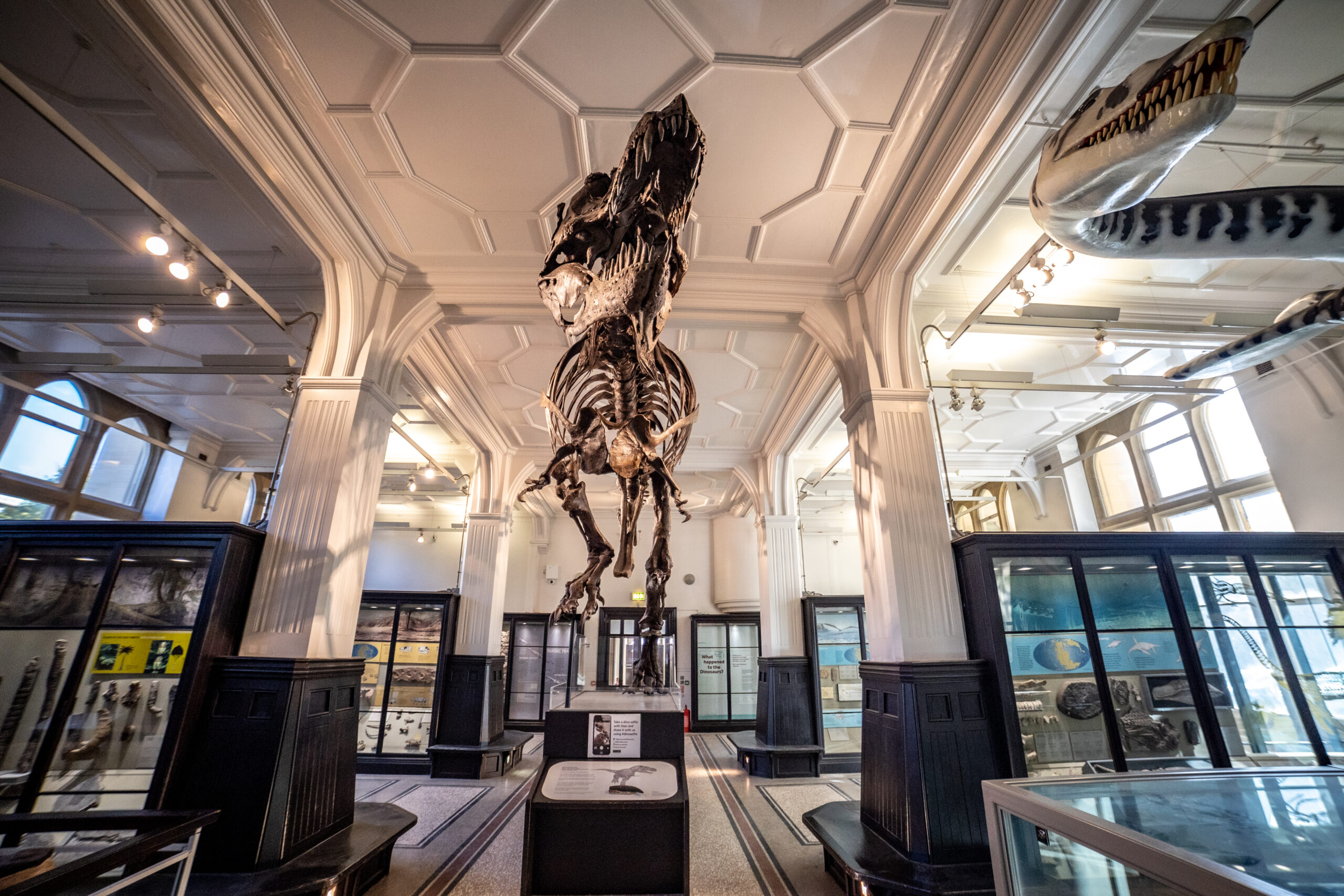
Manchester Museum is now offering one lucky family the chance to have a sleepover with Stan the Tyrannosaurus rex.
For the first time in Manchester Museum’s history, one lucky family will be given the chance to experience an incredible night at the museum.
This unique opportunity is being offered as part of a prize draw, allowing visitors to find out what happens once the sun goes down inside the Fossils and Dinosaurs gallery – in the company of Stan, the famous Tyrannosaurus rex, of course.
The Fossils and Dinosaurs gallery is one of the most iconic spaces within Manchester Museum.
Having opened to the public all the way back in 1888, it’s part of the museum’s original building designed by celebrated Alfred Waterhouse, who also designed Manchester Town Hall and London’s Natural History Museum.
Not only will the lucky winning family enjoy an overnight stay in the gallery, but they’ll also be treated to a guided torchlight tour of the galleries after the Museum has closed, as well as other fun activities and a film screening too before bed.
You can now have a private sleepover inside Manchester Museum / Credit: The Manc Group
“We can’t be completely sure what happens when the sun goes down in our Fossils and Dinosaurs gallery, because nobody has ever spent the night in there before, but we can only imagine the kind of fun that can be had with Stan the T. rex and his friends,” said Dean Whiteside, Head of Commercial and Operations at Manchester Museum.
“This is a chance to be a part of museum history and enjoy the kind of once-in-a-lifetime experience you can’t usually buy.
“At the same time, Manchester Museum is a charity so, by getting behind this initiative, you’ll be helping to support vital work that impacts the lives of people across Greater Manchester and beyond.”
Fancy it then? You can enter the prize draw by buying a ticket for £5 from the Manchester Museum Shop, with each ticket counting as one entry and the winner set to be chosen at random from all valid entries.
The prize draw is now open and closes on Monday 28 September 2026.

 Emily Sergeant -
1st July 2022
Emily Sergeant -
1st July 2022