There’s no denying that there has been a significant rise in sophisticated scamming and phishing activity throughout the past year of the coronavirus (COVID-19) pandemic.
Fresh warnings of fraudulent acts seem to be being issued to the public every month.
Scammers have been carrying out fraudulent activity under the guise of just about everything from Amazon Prime and hot tub sales companies, to social media platforms such as Facebook, and even the NHS in recent months, but it’s the Royal Mail – the nation’s postal service company – in particular, that appears to be the most-frequent subject of scams targeting vulnerable people.
But it’s this latest scam that’s proving to be one of the most scarily-accurate yet.
ADVERTISEMENT
Several people have come forward on social media to say that they’ve fallen for the scam, with one woman saying in a now-viral warning tweet that the scammers took her for “every penny [she] had”.
Victims are said to have received a text message tasking them with paying an “unpaid shipping fee”, alongside a link where they can go to pay the supposed amount that they owe, and with the text message only asking for as little as £2.99, the scammers appear to then be able to access that person’s card details to spend the money elsewhere.
ADVERTISEMENT
Using the hashtag #RoyalMailScam, dozens more have also claimed they nearly fell for the scam due to it looking so legitimate.
But it’s Emmeline Hartley’s now-viral tweet that’s made people really start to take note.
Ms Hartley took to Twitter to share her experience of a scam which saw the culprits trying to spend £300, as well as attempting to set up direct debits for different retail stores.
ADVERTISEMENT
Sharing a detailed account of what she was subject to, Emmeline said: “I mentioned yesterday that I’d been scammed out of every penny I had [so I] thought I’d post what happened in case it helps anyone avoid being in the same position.
“Please save the lectures, I don’t think it’s possible for me to feel any stupider”.
In the accompanying statement, Emmeline explains that she put her account details into the link provided on the text purported to be from Royal Mail, only to later receive a call from her bank to report suspicious activity to her.
I mentioned yesterday that I’d been scammed out of every penny I had. Thought I’d post what happened in case it helps anyone avoid being in the same position. Please save the lectures, I don’t think it’s possible for me to feel any stupider 🤦🏻♀️ #royalmailscam#safeaccountscampic.twitter.com/YRrh8W6uje
She was then advised to move her money out of her three accounts into a new one, but to make matters worse, the person on the other end of the phone was also another highly-experienced scammer who then completely cleared out her accounts leaving her with nothing.
While Emmeline has fortunately since made progress with her legitimate bank and filed a fraud claim – which is currently being investigated – her bank has stated that they couldn’t guarantee that she’d get all of her money reimbursed.
ADVERTISEMENT
“I’m usually very good at not falling for scams, but this one caught be off-guard at a pretty vulnerable time in my life,” Emmeline said.
“This s**t can happen to anyone – Please [share] and keep each other safe”.
The tweet has since gone on to amass over 13.5K retweets and 23.K likes, with many members of the public spreading word of the message to protect people and others sharing their own similar experiences.
People from across the country have still reported receiving the text in the following days.
___
ADVERTISEMENT
Always remember to keep vigilant.
You can report suspicious messages to Action Fraud here, or call – 0300 123 2040.
Featured Image Credit – Royal Mail
Trending
Classic FM will be back playing calming music for anxious pets this Bonfire Night
Emily Sergeant
Classic FM will be back playing calming music for anxious pets during this year’s fireworks season.
Bonfire Night may be loved by us humans for the spectacular firework displays and all the festive-themed activities that come along with it… but sadly, the November holiday isn’t quite so fun for our four-legged friends.
Loud bangs, flashing lights, and unpleasant strong smell of spent explosives are just some of the reasons why fireworks are frightening to pets.
Not only that, but with multiple bangs occurring from numerous displays across this time of year, pets are rarely able to pinpoint when and where the booming explosions are coming from, therefore creating even more anxiety around this time of year.
Classic FM will play calming music for anxious pets during this year’s fireworks / Credit: DESIGNECOLOGIST (via Unsplash)
Which is why, for the ninth year running now, Classic FM is once again teaming up with the RSPCA for two Pet Classics programmes packed with ‘the most soothing and comforting classical music’.
The music has been handpicked to help calm and settle any anxious pets.
A survey by the RSPCA revealed that almost two-thirds (63%) of animal owners reported their pet was distressed during fireworks season, and that playing relaxing music was the most common way (36%) to help calm or prepare their animal.
Presenters Dan Walker, Aled Jones, and Dawn O’Porter will each host a night of the specially created programme to help keep the nation’s pets calm through the whizzes and bangs.
Dan will present the first programme on Bonfire Night itself (Thursday 5 November), and then as celebrations continue throughout the weekend, Aled will be on hand to bring some peace to Friday 6 November, and Dawn picks up the baton on Saturday 7 November.
All three Pet Classics programmes will be broadcast from 5pm to 10pm, and you can listen on Classic FM or Global Player available across the UK.
Featured Image – The Manc Group
Trending
What is the UK’s national dish? New survey reveals Brits’ pick in landslide victory
Emily Sergeant
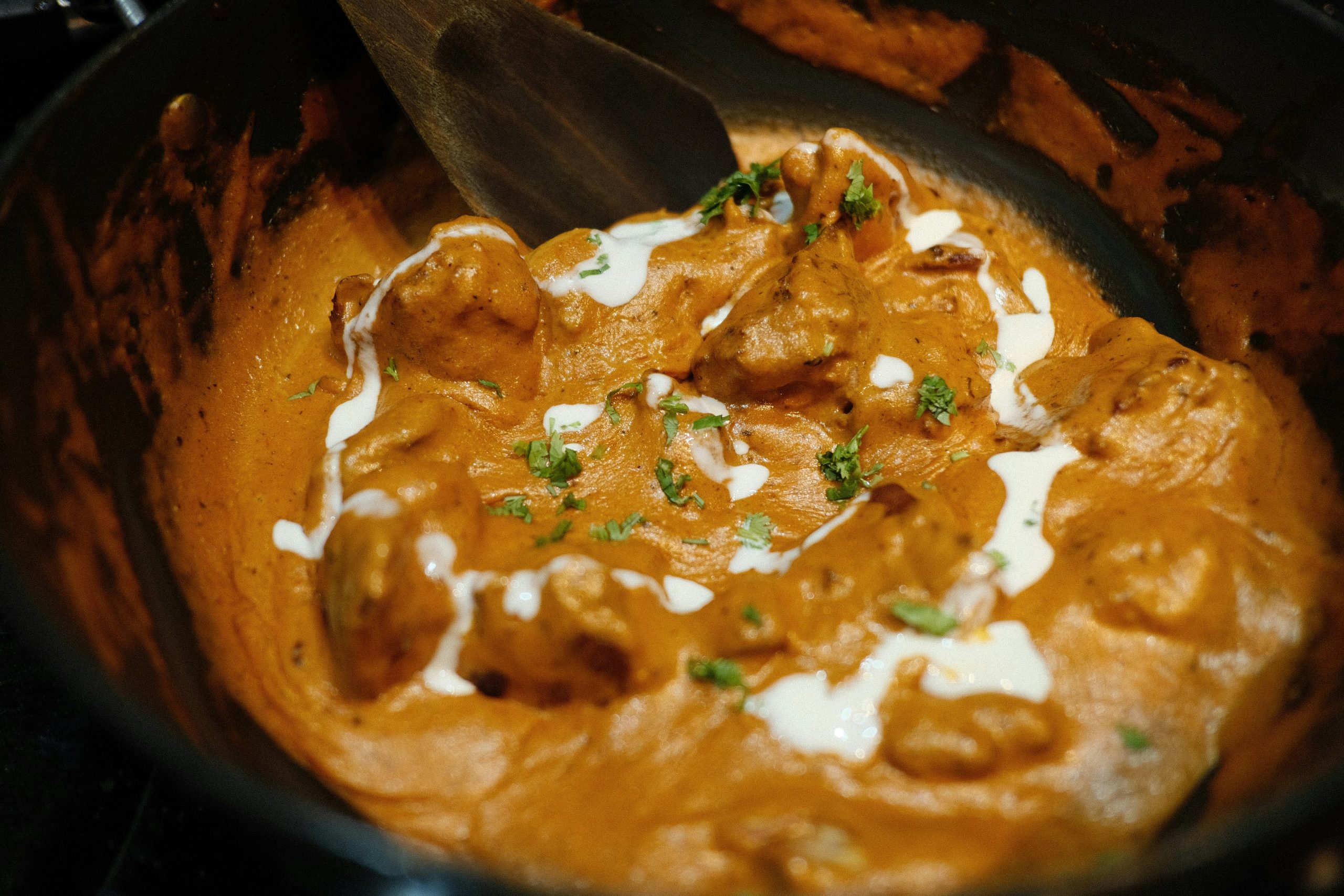
If you’ve ever thought to Google the question ‘what is Britain’s national dish?’, then you probably came away thinking it’s chicken tikka masala.
But is that actually the truth? A new survey has disproved the claim, massively.
There’s no denying that chicken tikka masala – an Indian curry that’s actually widely thought to have been created in Britain – is a popular dish that’s loved by many, but despite what many headlines have claimed over the years, a new YouGov survey has revealed it’s not what Brits consider to be the country’s ‘national dish’.
YouGov conducted two online surveys earlier this month, made up of 2,079 and 2,104 adults aged 18+ living in Great Britain.
And, in their own words, Brits chose fish and chips as the country’s national dish, making it the ‘resounding’ winner with 49% of the vote.
What is the UK’s national dish? A new survey has revealed Brits’ pick in a landslide victory / Credit: The Manc Group
With nearly half of the overall vote, this puts fish and chips far ahead of the roast dinner in second place, which only 24% of people picked – including the 6% who made sure to specify a beef roast.
In fact, only 3% of Brits actually name chicken tikka masala as the UK’s national dish, although 52% in the survey did confess that they eat some form of curry at least once a month, so it is still a popular pick regardless.
Fish and chips is by far the most common answer across all generations too, according to the survey (45-50%), with the biggest difference between age groups being that 18-24 year olds are less likely to have nominated roast dinner and more likely to have chosen chicken tikka masala instead.
What do Brits say is the UK’s national dish?
Fish and chips – 49%
Roast dinner – 24%
Chicken tikka masala – 3%
Curry (non-specific) – 2%
Full English breakfast – 2%
Bangers and mash – 1%
Cottage or shepherd’s pie – 1%
Other – 3%
Don’t know – 15%
The survey also showed that, of the three top contenders for the UK’s national dish, roast dinners are the most frequently eaten, as 52% of people said they eat them on a monthly basis – including 16% who do so every week.
Aside from the frequently mentioned dishes, some survey respondents also gave shoutouts to the full English breakfast (2%), bangers and mash (1%), and cottage or shepherd’s pie (1%).

 Emily Sergeant -
24th March 2021