Even before last weekend’s insane scenes, which left people ‘trapped’ inside a multi-storey, Transport for Greater Manchester (TfGM) had issued some travel advice.
ADVERTISEMENT
@MENnewsdesk I think have officially broken the record for the longest time trying to exit the Arndale Car Park on Saturday 26th November. It took us 5 hours 3 minutes to get from Level 12 to the exit. It is not fit for purpose Manchester Council!! FUMING! pic.twitter.com/VK6sTBX9N2
They said that the same weekend last year saw an 11% increase in peak journey times, with between 3pm and 7pm the busiest part of the day.
The first weekend of the Christmas Markets this year reportedly led to a 7% increase in vehicles around the city centre.
ADVERTISEMENT
TfGM encouraged people to use public transport or active travel wherever possible, predicting a massive upswing in visitor numbers coming to the city to shop, eat, drink, attend concerts and see the Christmas Markets.
TfGM outlined a few options available to cope with the increase in trips in the festive season.
Travel advice has been issued for the festive season. Credit: TfGM
There are thousands of free park and ride sites around Greater Manchester’s Metrolink network, with family tickets offering travel for one to three children and one or two adults from as little as £3.60.
ADVERTISEMENT
The new bus fare cap is in place now too, so a single trip will never cost more than £2 (or £1 for a child).
Congestion has increased in the city centre and inner ring road, with car trips returning back to pre-pandemic levels and some big road layouts that leave less space for cars (like the pedestrianisation of the Northern Quarter).
Travel advice for drivers is as follows:
Drive at a quieter time – this means avoiding driving to and around the city after 12pm on Fridays, Saturdays and Sundays and between 3pm and 7pm during the week.
Know where road congestion may be – our data shows that journeys along the Mancunian Way typically have higher journey times during the week, and journeys along the northern section of the Inner Ring Road (Great Ancoats Street) have higher journey times at the weekend.
Take a different route – if you need to drive across the city at the weekend, it may be quicker to use Alan Turing Way/Mancunian Way.
Park on the same side of the city as your route if you can – driving across the city can add additional time to your journey, so if it’s an option for you, park in a car park closest to your route out of the city centre.
Check for quicker routes before every car journey on Google, Waze and other Apps. You can also use TfGM’s journey planner.
TfGM’s Get on Board Christmas campaign has helpfully mapped out festive offerings around the region – from food to free things to family activities – and includes travel advice on how to get there.
TfGM’s Head of Highways, Peter Boulton, said: “We want everyone coming to enjoy the many great attractions that the city centre and Trafford Centre have to offer to enjoy the festivities and have a great time.
ADVERTISEMENT
“The number of trips on our roads is back to where they were before the pandemic and that is leading to added congestion at key times – which means more people stuck in traffic.
“To avoid this, we’d encourage people to plan their journey by thinking about how they plan to get in, around and out of the city centre.
“Public transport is a great option, with frequent services and great value products as well as plenty of staff and information on hand to help you plan the perfect journey.”
Councillor Tracey Rawlins, Executive Member for Environment and Transport at Manchester City Council, said: “It has been great to see people returning to Manchester to enjoy what the festive season has to offer.
“We are expecting it to be increasingly busy the closer we get to Christmas which is why we’d urge people to plan ahead before they travel and stay up to date with the region’s transport network through the TfGM website.
ADVERTISEMENT
“We’d encourage people to use public transport as much as possible when travelling into Manchester as it is the most environmentally friendly method, as well as the best way of beating the traffic.”
Featured image:TfGM
Travel & Tourism
‘Groundbreaking’ new police team launches on Bee Network to make it one of the safest in the world
Emily Sergeant
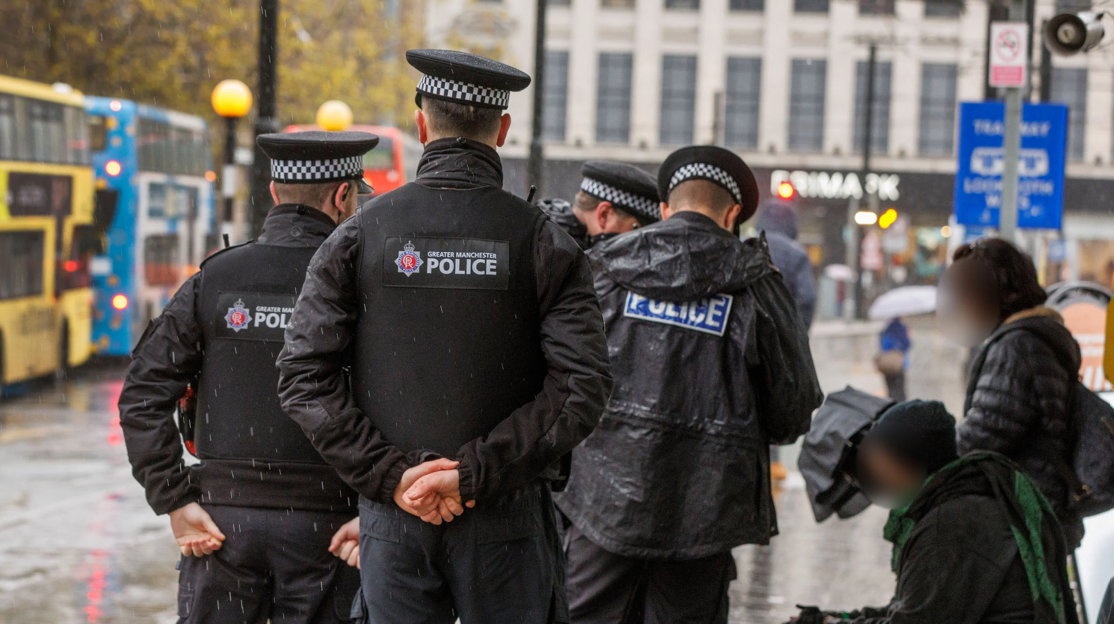
A ‘groundbreaking’ new policing model aimed at making the Bee Network one of the safest public transport networks in the world has launched.
Described as being ‘pioneering’, the first-of-its-kind approach – named the Transport Policing and Crime Command (TPACC) – will bring Greater Manchester Police (GMP), Transport for Greater Manchester (TfGM), and Greater Manchester Combined Authority (GMCA) even closer together to tackle crime, antisocial behaviour, and safety issues across the region’s transport network.
So, how will it work then? Well, according to TfGM, the command will ‘effectively establish’ the Bee Network as GMP’s eleventh policing district.
It will bring together up to 300 personnel, including new police officers, who are all involved in keeping the network safe and providing greater reassurance to passengers travelling across the region.
Efforts to keep passengers safe on buses, trams, active travel routes, and roads across Greater Manchester will be ‘strengthened’ through the new team – improving co-ordination in response to incidents, and helping to reassure communities.
A ‘groundbreaking’ new police team has launched on the Bee Network to make it one of the safest in the world / Credit: TfGM
The new team will also incorporate the existing Roads Policing Unit within GMP that includes specialist functions such as the Central Ticket Office, the Tactical Vehicle Intercept Unit, the motorbike unit, the Commercial Vehicle Unit, the Serious Collision Investigation Unit, and more.
Overall, the key focus of TPACC is to:
Increase public confidence on safety across the transport network
Reduce violence, antisocial behaviour and criminality across the transport network
Increase the number of users of the Bee Network across Greater Manchester
The launch of TPACC is said to represents ‘the next phase’ of Greater Manchester’s commitment to creating a ‘safer, more secure, and more welcoming’ transport network for everyone who lives, works, and travels across the region.
“I want a world-class Bee Network where everyone feels safe,” commented Greater Manchester Mayor, Bev Craig.
“Our new dedicated transport policing command will bring together more than 300 police and safety officers, with high-profile patrols across our roads and the Bee Network. It means a stronger presence in our communities and faster action when people need help.
“TPACC will also crack down on dangerous driving to reduce the number of deaths and serious injuries on our roads, which have devastating consequences for families and communities.”
Featured Image – TfGM
Travel & Tourism
First 14 Greater Manchester train stations set to join Bee Network this year revealed
Emily Sergeant
The first 14 train stations in Greater Manchester that are set to join Bee Network before the end of the year have been revealed.
In case you need bringing up to speed, back in December of last year, Andy Burnham – who was then Greater Manchester Mayor, at the time – announced a step-by-step plan for bringing the region’s rail lines into the Bee Network, all with the aim of creating the first truly integrated public transport system outside London.
Eight commuter rail lines will be brought onto the Bee Network in phases through to 2028, with the final additions expected by 2030, so passengers can enjoy all the benefits of joined up buses, trams, trains and active travel.
And now it’s been revealed which stations are set to be the first to join.
The first two lines – which will connect Manchester to Glossop and Stalybridge – will become part of the Bee Network from December 2026, with contactless ‘tap in, tap out’ ticketing also rolled out across 14 stations at the same time.
Here’s everything you need to know.
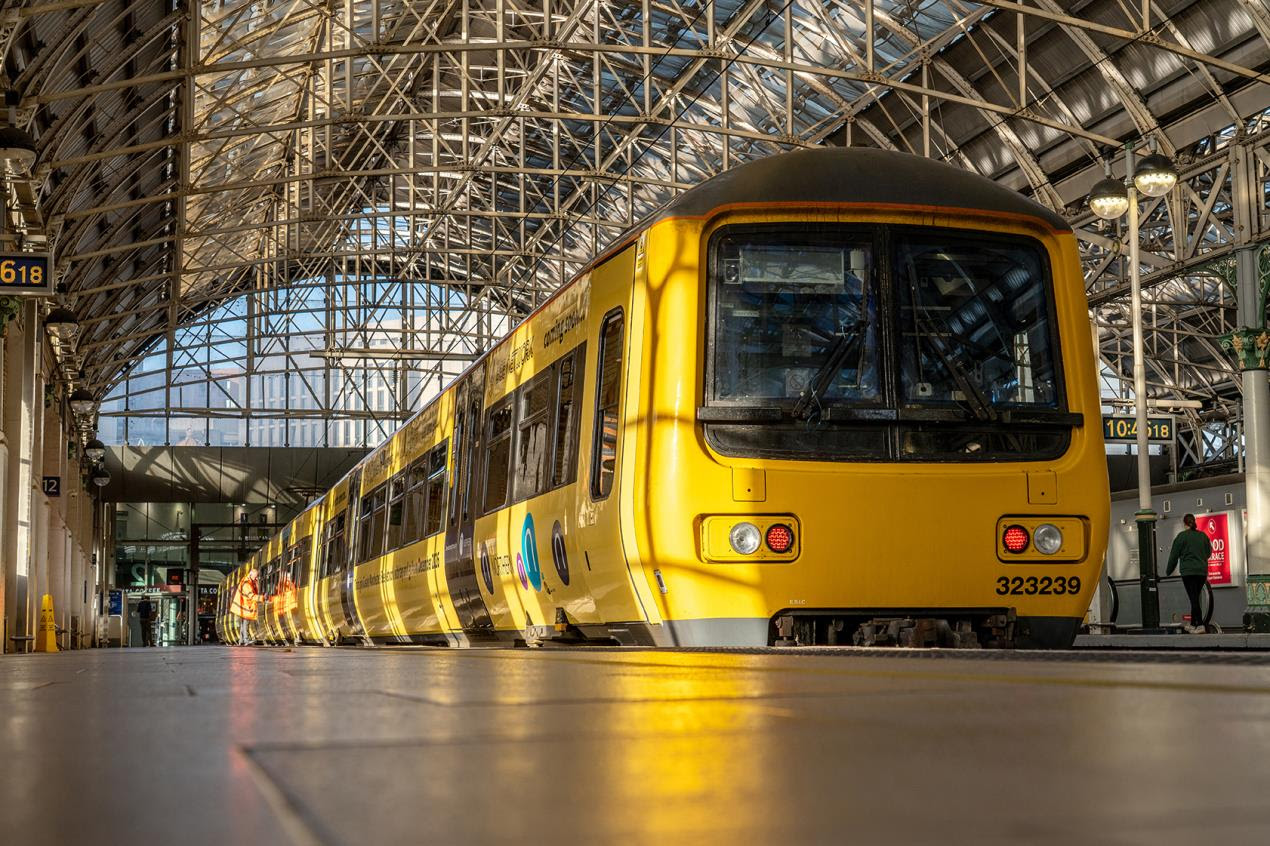
The first 14 Greater Manchester train stations set to join the Bee Network this year have been revealed / Credit: TfGM
The 14 Greater Manchester stations joining the Bee Network in December 2026
Ardwick
Ashburys
Broadbottom
Dinting
Fairfield
Flowery Field
Glossop
Godley
Gorton
Guide Bridge
Hadfield
Hattersley
Manchester Piccadilly
Newton for Hyde
The 15 stations planned to join the Bee Network in March 2027
Ashton-under-Lyne
Belle Vue
Bredbury
Brinnington
Hyde Central
Hyde North
Manchester Victoria
Marple
Reddish North
Romiley
Rose Hill Marple
Ryder Brow
Stalybridge
Strines
Woodley
The 43 stations planned to join the Bee Network by December 2028
Appley Bridge
Atherton
Bolton
Burnage
Castleton
Cheadle Hulme
Clifton
Daisy Hill
Davenport
Deansgate
East Didsbury
Eccles
Farnworth
Gathurst
Gatley
Hag Fold
Hazel Grove
Heald Green
Heaton Chapel
Hindley
Ince
Kearsley
Levenshulme
Manchester Airport
Manchester Oxford Road
Mauldeth Road
Middlewood
Mills Hill
Moorside
Moses Gate
Moston
Patricroft
Rochdale
Salford Central
Salford Crescent
Stockport
Swinton
Walkden
Westhoughton
Wigan North Western
Wigan Wallgate
Woodsmoor
The remaining 25 stations planned to join the Bee Network by 2030
Altrincham
Blackrod
Bramhall
Bromley Cross
Bryn
Chassen Road
Denton
Flixton
Glazebrook
Greenfield
Hale
Hall-i’-th’-Wood
Horwich Parkway
Humphrey Park
Irlam
Littleborough
Lostock Parkway
Mossley
Navigation Road
Orrell
Pemberton
Reddish South
Smithy Bridge
Trafford Park
Urmston
This means that contactless ‘tap and go’ payments with capped fares will be brought in across bus, tram and train services from 2030.
All timings are subject to ongoing work between Greater Manchester leaders and the Department for Transport (DfT), Network Rail, Shadow Great British Railways, and Train Operating Companies.

 Daisy Jackson -
2nd December 2022