The UK Government is facing fresh calls from doctors to introduce a ban on smacking children in England.
In case you weren’t aware, a new law was introduced in Wales back in March 2022 to ban “reasonably punishing”, with the nation following in the footsteps of more than 60 other countries across the world at the time, and ever since then, the Government in England has faced increasing calls by NSPCC, Barnardo’s, and other charities and organisations to follow suit.
Any form of corporal or physical punishment – including smacking, hitting, slapping, and shaking – is now against the law in Wales, Scotland, Jersey and dozens of other nations.
But here in England, and also in Northern Ireland, it is still legal for a parent or carer to discipline a child physically, if it’s considered to be reason “reasonable” punishment, despite the fact The Children Act 2004 says it’s unlawful to assault a child in a way that causes actual or grievous bodily harm, or with child cruelty.
Now, the Royal College of Paediatrics and Child Health (RCPCH) is, once again, urging ministers to consider ending the “reasonable chastisement” defence.
ADVERTISEMENT
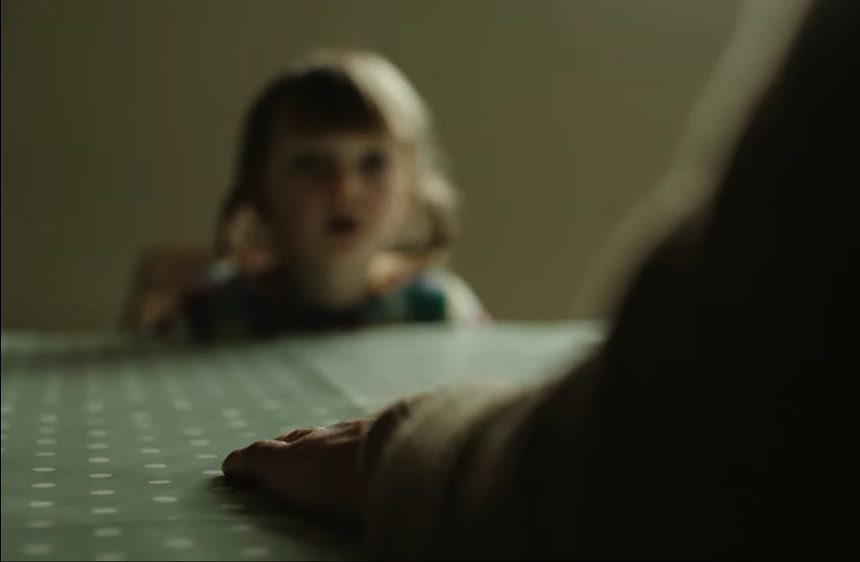
Doctors are urging the Government to ban smacking children in England / Credit: Welsh Government
Doctors called England’s current laws around physical punishment “unjust and dangerously vague”.
In a report on the contentious matter, which has been a topic of debate for several decades, published this week, the RCPCH explained that the laws currently “create a grey area” and ultimately make it more difficult to distinguish which forms of physical punishment are “lawful” and which are not.
ADVERTISEMENT
Professor Andrew Rowland, who is a consultant paediatrician and an officer for child protection at the RCPCH, said in a statement on the report that he was “regularly faced with situations where it’s alleged that physical punishment has been used against a child”, but, due to what he claims is the “vague nature of the laws”, this makes it “extremely challenging” to talk to families about what the rules are.
“This lack of legislative clarity can even add an extra layer of complexity when trying to identify cases of child abuse,” Professor Rowland added.
He called for there to be “no grey areas when it comes to safeguarding children”, and concluded that changing the laws in England and Northern Ireland “will give us absolute clarity”.

ADVERTISEMENT
The Royal College of Paediatrics and Child Health (RCPCH) says England’s current laws are “unjust and dangerously vague” / Credit: iStockPhoto
The UK Government says any form of violence towards a child is “completely unacceptable”.
Following the publishing of the RCPCH’s report, a Department for Education spokesperson commented: “Any form of violence towards a child is completely unacceptable, and we have clear laws in place to prevent it.
“It is the responsibility of the parent to discipline their children, appropriately and within the boundaries of the law.
“We are supporting teachers, social workers and all safeguarding professionals to spot the signs of abuse or neglect more quickly, and our statutory framework for safeguarding children in England makes clear what organisations should do to keep children safe.”
Featured Image – NSPCC
News
Police pursuing civil action after reports of women being filmed without consent on nights out in Manchester
Emily Sergeant
Civil action is now being pursued after a police investigation into reports of women being filmed on nights out in Manchester.
Greater Manchester Police (GMP) has confirmed in a statement that it is ‘exploring’ civil action in connection with ‘several’ reports of women being filmed without their consent on nights out in Manchester city centre, particularly around the Deansgate and Peter Street areas, following an investigation which began after social media videos of this nature were brought to its attention.
The police‘s subsequent public appeal lead to multiple women coming forward to report the impact finding themselves in these videos, and the commentary by the public, had on them.
GMP says it had to conclude its criminal investigation ‘due to limitations within the current legislation’, which is why it working with Manchester City Council to look at other routes of taking action.
“We took the reports from women who came forward, as well as the public feeling towards this behaviour, really seriously,” explained Superintendent Nicola Williams, from GMP’s City of Manchester district.
“The arrest of an individual in November 2024 was the first in the country and was our commitment to acting on all the information we have received.
“Throughout our investigation, we explored all lines of enquiry thoroughly, including digital forensic examination of various devices. The investigation was also reviewed by an experienced, senior detective to ensure no stone was left unturned.
Police are pursuing civil action after reports of women being filmed without their consent on nights out in Manchester / Credit: GMP
“Predatory behaviour is completely unacceptable, and tackling this has been a priority for our night time economy policing operation.”
GMP says it encourages anyone who experiences anything that ‘makes them feel unsettled or unsafe’ on a night out to report it, as all information received helps build a picture of the issues, allocate our resources effectively, and take action under our the dedicated nighttime policing operation, Op Safer Streets.
Reports can be made to GMP via 101, or on the website or Live Chat service, but you should always call 999 in an emergency.
Featured Image – GMP
News
Entertainment union Equity makes £1 bid for Manchester Pride to protect workers from ‘further exploitation’
Emily Sergeant
Performing arts and entertainment trade union Equity has made a £1 bid for Manchester Pride.
You may remember that, back in October last year, Manchester Pride – the charity / organisation that ran the Manchester Pride Festival – entered into voluntary liquidation, and news emerged last week that the assets were being sold off to the highest bidder by liquidators.
By offering a ‘symbolic’ £1 for the assets – which include the Manchester Pride brand name and associated domain names – Equity says its bid has been made to give workers the opportunity to ‘decide the future’ of the event.
The bid is also said to have been made to prevent a repeat of 2025 – which apparently left Equity union members more than £70,000 out-of-pocket in unpaid fees.
Equity’s variety organiser, Nick Keegan, warned that selling the Manchester Pride brand to a commercial buyer risks ‘undermining the values’ of the event and the community that built it.
He worried it could also leave performers and workers ‘vulnerable to further exploitation’.
“Manchester Pride is not just a city-wide party,” Mr Keegan explained. “Its roots in protest are as important today as then.”
He added: “Manchester Pride was built by the LGBTQ+ workers of Canal St and beyond who provide a space and a community for LGBTQ+ people all year round. The event should not be treated as a commodity to be bought and sold off to the highest bidder.
“The cultural workforce are at the heart of Pride, without them, there is no festival.
“After what happened in 2025, with members left tens of thousands of pounds out of pocket, we don’t want to see history repeat itself.”
Equity says that if its bid is successful, the workers will have control over who the ‘asset’ goes to.
“Our bid is about protecting Pride as a community asset, not a commercial one,” the union’s statement continued.
“Allowing the people whose labour was used to build this ‘asset’ to decide how the trademark of Manchester Pride is used in the future will help protect them from further exploitation, as well as preserve the values and the longevity of the event itself.”