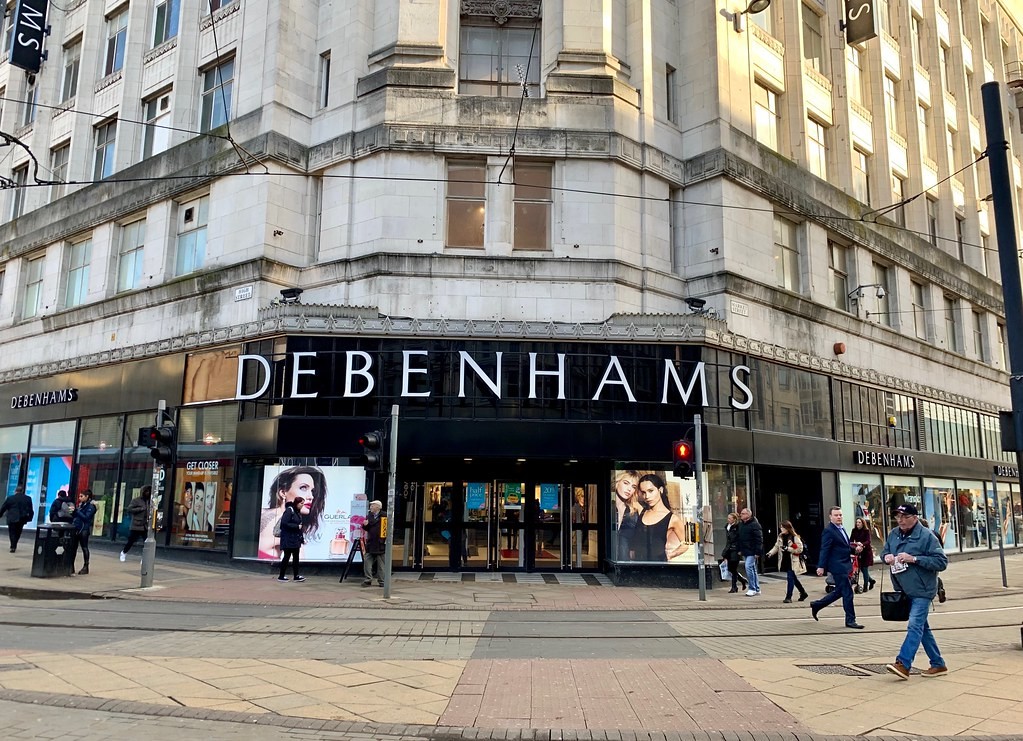
It has officially been announced this morning that Manchester-based fashion retailer Boohoo has paid £55 million to acquire the collapsed Debenhams brand.
It’s not quite as straight forward as that though – there’s a catch.
While the online fashion retail giant has acquired the brand name, intellectual property and customer lists of the iconic department store chain – which had been a stalwart of UK high streets since 1778, before falling into administration from April 2019 – this will still result in the eventual closure of Debenhams’ 118 remaining stores, and comes after Debenhams’ owners announced at the start of last month that the company would be closing all 124 stores throughout the country for good, with the chain’s collapse leaving 12,000 workers facing an uncertain future.
Why? Well, this is because none of the Debenhams sites are actually included in the sale, as Boohoo intends to relaunch the department store brand solely online.
Retail experts are already branding this a significant acquisition – and it’s not hard to see why.
ADVERTISEMENT
“Debenhams is a long-standing and leading UK fashion and beauty retailer with high brand awareness, and an established online platform with approximately 300 million UK website visits per annum.” a spokesperson for Boohoo Group plc confirmed.
“This makes it a top 10 retail website in the UK by traffic.
ADVERTISEMENT
“The transaction represents a fantastic opportunity to grow the group’s target addressable market and increase the share of wallet opportunity through a new capital light and low-risk operating model that is complementary to the group’s highly successful direct-to-consumer multi-brand platform.”
Boohoo has said the relaunch of the Debenhams online sales platform – which is expected in a year’s time – would include new categories including beauty, sport and homewares, but what exactly does this mean for the future of the UK high street?
Let’s break it down.
ADVERTISEMENT
Boohoo Group plc
What is Boohoo?
Boohoo is Manchester-based online fashion retailer aimed at 16-30 year olds, offering a selection of over 27,000 styles of clothing.
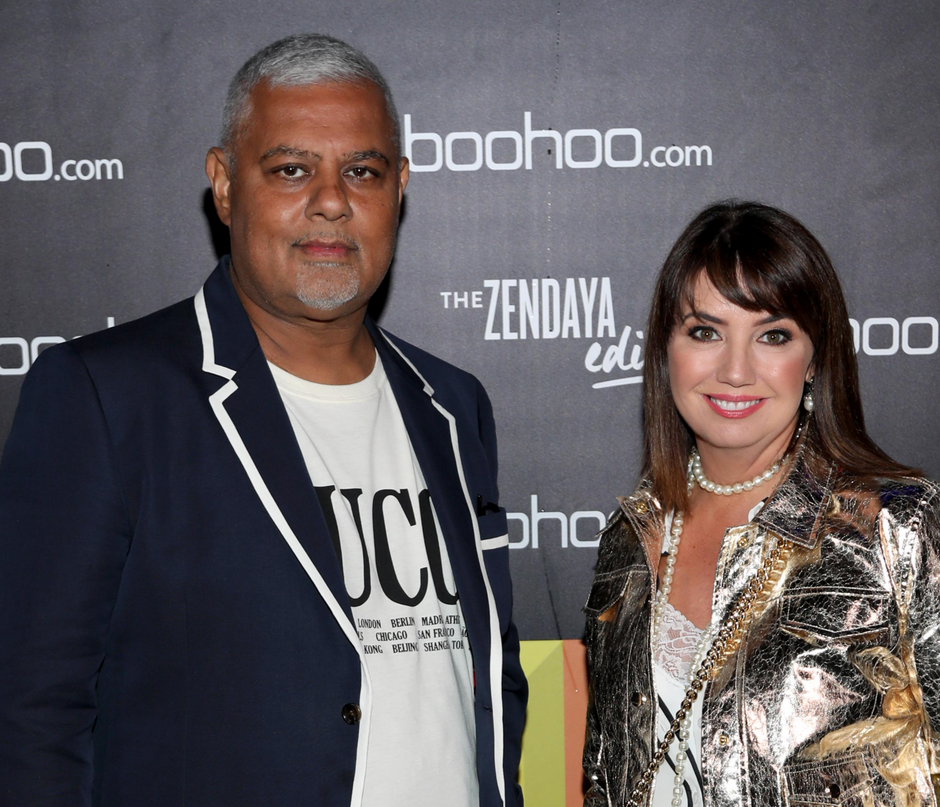
It was founded by entrepreneur Mahmud Kamani and designer Carol Kane after the pair had worked together at Pinstripe Clothing – a company that was set up by Kamani’s father Abdullah, which was one of the first suppliers to ASOS, and designed and sourced clothes for Primark and New Look.
Kamani and Kane decided to cut out the middle man, and so they set up their own online fashion store in 2006, with the aim of selling on-trend clothes directly, and cheaply, to shoppers.
Boohoo Group plc also includes boohooMAN, PrettyLittleThing, Nasty Gal, and Miss Pap.
Is this the only acquisition of its kind?
The short answer is no.
ADVERTISEMENT
While acknowledging that Boohoo acquiring the Debenhams brand as an online retailer does seem like somewhat of an exceptional circumstance at this point, it is likely to be something we will see a greater deal of in the ever-changing retail landscape – especially post-COVID – and it could serve as an indicator of what’s to come in the future.
And potentially sooner than we think.
It has also been confirmed this week that rival online fashion retailer ASOS is too in exclusive talks to buy a number of the UK’s best-known high street brands – including Topshop, Topman, Miss Selfridge, and more – which are all part of Sir Philip Green’s fashion empire Arcadia that also collapsed into administration last year.
This isn’t the first time Boohoo has bought high street brands out of administration either, having previously snapped up Oasis, Coast and Karen Millen, but not the associated stores.
Has the high street really fallen out of favour?
The news of Boohoo’s acquisition and plans for the future of the Debenhams brand understandably brings the discussion of the decreasing popularity of UK high streets to the forefront once again, as according to the latest data released by Centre for Retail Research, there are around 50,000 fewer shops on our high streets than just over a decade ago.
ADVERTISEMENT
Some analysts are predicting this will only get worse too, citing everything from overall population lifestyle changes, to, of course, the rise of online retail, to back this claim up.
Dr Gordon Fletcher – retail expert from the University of Salford Business School – has also said highlighted that structural issues at the heart of the UK high street are to blame for it falling out of favour.
He said: “The UK high street is increasingly a fragile house of cards that suffers from a concentration of ownership, insufficient investment to keep pace with online developments and a general lack of dynamism and engagement between brands and consumers.”
What affect has the coronavirus (COVID-19) pandemic had on physical retail?
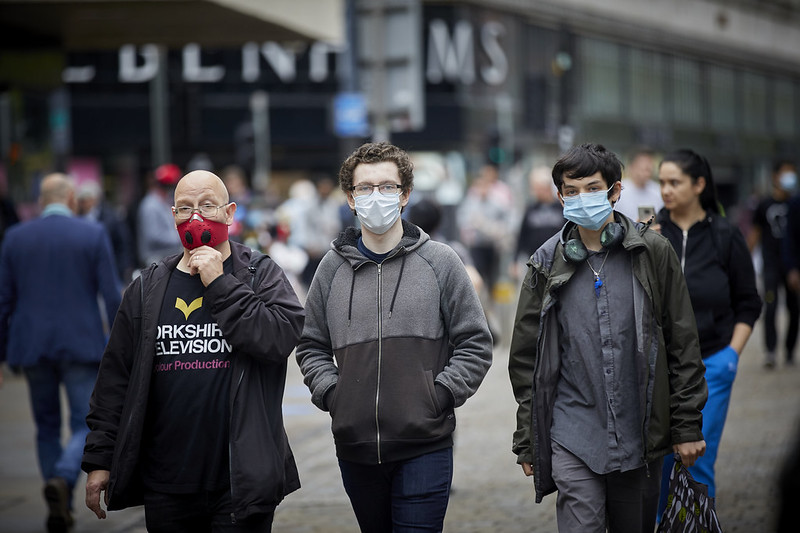
It’s also becoming increasingly difficult to count how many retailers have fallen victim to the ongoing coronavirus (COVID-19) pandemic, with the closure of non-essential stores during lockdowns, more people working from home, and the accelerating demand for online shopping among the challenges facing bricks and mortar companies throughout the ongoing crisis.
ADVERTISEMENT
In the latest blow dealt, a report published last week by professional services giant KPMG said that UK high streets could be set to lose 20-40% of their retail offering as the impact of this shift is felt.
This hasn’t quite been the same for online retail though.
At the height of pandemic restrictions in April 2020, retail sales fell by a quarter compared with pre-COVID levels, and even though overall sales have now recovered this lost ground, in-store sales are still nearly 10% down.
Online sales however, were up by nearly half on the start of the same year, with the big winners revealed to be those businesses that specialise in online retail and already have established home delivery networks in place.
Boohoo reported a 51% rise in profits year on year to £68.1 million in the six months to 31st August 2020.
ADVERTISEMENT
Has footfall been affected?
Given all the points just raised, it stands to reason the number of people visiting the high street has dropped by 20.5% over the past decade, according to figures from retail analyst company Springboard.
And the coronavirus (COVID-19) pandemic has only accelerated this drop further.
Springboard’s latest data declared that retail footfall overall was 39.1% lower in 2020 than it was the previous year and fell by 75% in the week after the first lockdown in March – which is a level never previously recorded by the company.
Footfall on high streets in 2020 fell by 45.2%, compared to a 23% fall at retail parks, and a 41.9% fall in shopping centres.
ADVERTISEMENT
The stark reality of the recent footfall statistics right here in Greater Manchester has even lead to the forming of United City – a collective of business leaders seeking to encourage people to return safely to towns and the city centre post-COVID.
United City says increasing footfall is “critical to the success” of the entire region, and will campaign to get Greater Manchester on the road to economic recovery, fix its “broken ecosystem”, and also commission independent research to back up its messages, with hard data and use findings to negotiate with central government.
Mark WaughMark Waugh
Where does the high street go from here then?
While much of the narrative surrounding the future of the high street post-COVID has proved grim reading for retail companies and physical shopping fans in Greater Manchester and beyond, it’s not all doom and gloom and many are still electing to remain positive.
Richard Hyman – Professor at London School of Economics – told PA that the high street still has a future, although it will look “quite different”.
“The high street isn’t dead, but it is currently sleeping,” he said.
ADVERTISEMENT
“When it is allowed to wake up properly, I think you will see a huge amount of the population go out shopping because it is something people miss, but obviously it will be smaller and we continue to see a lot of changes as stores react to what customers want and expect from the experience.”
Diane Wehrle – Insights Director at Springboard – added: “To use the word ‘unprecedented’ truly underplays the impact that COVID-19 has had on the retail industry as businesses large and small fought for survival, however, as the vaccine is successfully rolled out across the UK in 2021, this offers hope for retailers in the second half of the year, albeit with social distancing measures still in place.
“If COVID -19 has taught us anything, it is the need we all have for human interaction and sensory satisfaction, and this is likely to drive visits and spend in stores and destinations.
“What is likely to continue to change in 2021 is the types of destinations that consumers visit and the frequency and when they do so, and much of this change will be driven by the shift to home working.”
There’s also particular glimmer of hope for the UK’s indie retailers and smaller high streets too.
ADVERTISEMENT
Research by the British Independent Retailers Association and Starling Bank last month showed that 66% of shoppers plan to buy gifts from independent shops, with a Reinventing the High Street for COVID-19 Recovery report by Sustrans recommending that capitalising on the increased use of smaller high streets is a way to economic recovery, along with reinventing high streets as places for people and ensuring equitable access for all ages and abilities.
So, like much of life right now, the future of retail may be a little foggy, but the mist is starting to clear and change is gearing up to be welcomed by those willing to embrace it.
There’s always hope.
Business
Thanks to Terminal 2’s major upgrade, now holidays really do start at Manchester Airport
Danny Jones
It’s a phrase that’s almost as old as air travel itself, but luckily, Manchester Airport are well and truly getting your holidays started early, courtesy of the new and improved Terminal 2.
T2‘s massive upgrade technically finished in 2025, but with other bits debuting already this year and even more to come in 2026, Manchester’s biggest terminal is a more fully-fledged travel hub than ever.
Complete everything from the essentials and a healthy supply of food and drink, to lots of luxuries and plenty of ways to unwind and kill time between both before and after flights, you can feel extra smug about getting to the airport early.
As part of their latest ‘Terminal Explorer’ campaign, we recently paid a visit to see just how much fun we could get up to in and around T2. Spoilers: quite a lot.
With a little help from their wayfinding screens dotted around the various areas, from the World Duty Free section and ever-growing internal shopping district, to all the bars and restaurants that have opened since the big refurb, we took ourselves on a very fun day out.
And that was without even having an actual holiday booked to look forward to, so just imagine how good it must feel to top all this off with a real trip away.
In fact, you don’t even need to think that hard about it; roughly 80% of all passengers heading in and out of Manchester Airport now come through T2, and with the experience improving all the time, they’re seeing a serious uptick in visitors and their time spent enjoying some leisure before their getaway.
From additions like the LEGO store to keep the kids entertained, as well as numerous places to grab a brew, a bite, or even your first adult beverage of the holiday, it’s up to you how you choose to explore – they’ve just given you plenty of options.
There’s no bigger testament to the latest hospitality offerings in Terminal 2 than the recently opened Great Northern Market, which brings a rather big taste of the Mackie Mayor vibe to Manchester Airport.
A VERY comfortable place to wind down any wait times before you fly.
You’ll be blown away by the amount of choice on offer in here – we certainly were – and, of course, the multi-vendor culinary destination epicentre is just one of many fantastic food and drink offerings now boasted by the T2 ‘2.0.’
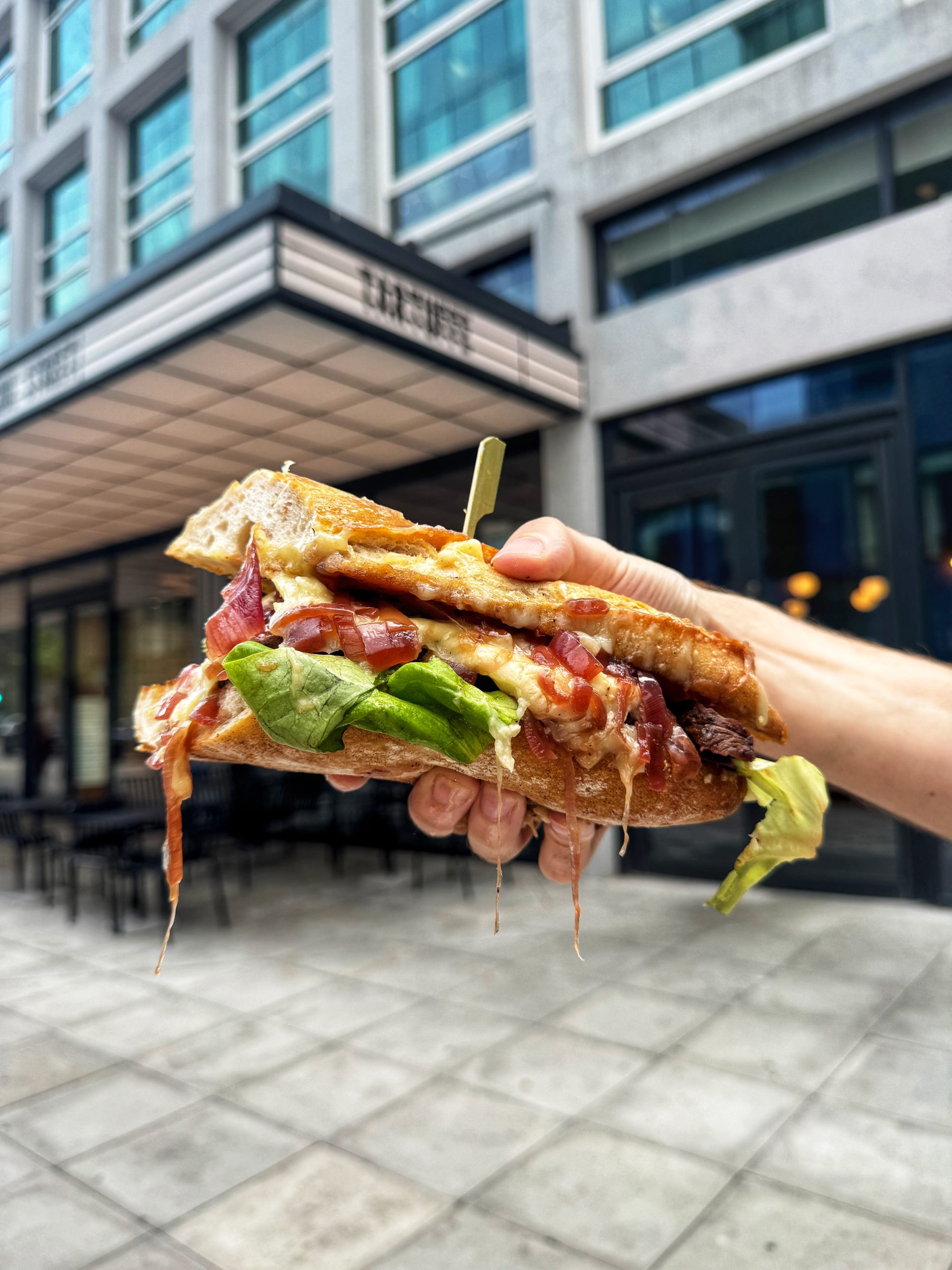
For instance, we could happily spend most of the time before our next hypothetical flight just chilling in the super stylish Fever-Tree Bar, which includes a wonderful range of breakfast and light bites, charcuterie boards, small plates, sandwiches and so on – plus a cocktail menu perfect for any occasion.
Put simply, you’ve now been given all the tools and means to turn downtime of almost any duration into an excuse to explore Manchester Airport at its best; in fact, scratch that: it’s an opportunity to go for a wander and make the most of it – and it’s one you don’t want to waste.
Whether it’s stocking up pre-flight or kicking back with your first drink of many, don’t just be another person sitting watching the departures board, be a terminal explorer.
The lost but still much-loved Greater Manchester food and drink spots that Mancs miss the most
Danny Jones
Unfortunately, these days, it feels as if we read about another place closing across the Manchester boroughs almost every week at this point – in fact, many of you might find out about those very closures right here on The Manc.
But, like anyone, we often just sit thinking back on some of our favourite bars, restaurants, takeaways and more that have sadly closed over the years.
10 of the most missed restaurants, bars, cafes and clubs in and around Manchester
1. Danish Food Centre
Starting off with the one we saw the most in the comments is the Danish Food Centre on the shopfront of the Royal Exchange on Cross Street, before sadly closing during the mid-1980s.
Exactly what it sounds like, this old Scandinavian spot first opened back in 1965 and was even known for a traditional sarnie known as ‘The Danwich’, as well as an interior lounge dubbed ‘Copenhagen Corner’.
That being said, many people used to nip here on their dinner break, to meet friends for lunch and a brew, or even to buy things to take home. It was eventually shut down by the Danish government, and we still envy those who got to experience it; still, without the original, we’d never have the likes of KRO Bar.
2. Horts/Ronnie’s Cafe Bar
Another one that popped up plenty in the long list of replies was Horts that used to sit on St. Ann’s Square and the attached Ronnie’s.
The former was more of a wine bar and the latter your standard cafe, but together, they were an ideal city centre favourite that served locals day and night.
By the late 80s, both had sadly disappeared, but people still reminisce about “the grand piano sat under a gorgeous glass dome” and how much they “loved the comfy leather Chesterfield sofas.”
Also up there in the trio of most-mentioned places below the post was the legendary Dutch Pancake House – no, not the one that rears its head at the Manchester Christmas, but at least you can still look forward to your annual fix.
The one we’re talking about was the busy corner of Elisabeth House (now 1 St Peter’s Square), which served a giant menu of sweet and savoury pancakes.
We lost it in the 2000s after developers bought the building, and lots of people are still angry about it.
Number four is Blinkers French and Bistro, which held that border between Salford and Manchester, and was owned by Cheshire-based millionaire, Selwyn Demmy.
The Wilmslow-born businessman may have been known for his famous ‘Hunter’s Moon’ in Wilmslow, but he was also the man behind the bar, restaurant and club which used to be on King Street West.
Before that, it was called the Le Phonographe, and it’s also not to be confused with the modern-day Blinker Bar now serving up top-notch cocktails over on Spring Gardens. By all accounts, it was a real ‘if you know, you know’ kind of gaff…
Next up is the old Grinch bar and grill, which used to be on Chapel Walks just off Cross St, and sadly closed back in 2016 after more than two decades.
More than a few Mancs said they “loved” either visiting and/or working here back in the day, and another cited that “their fried chicken was amazing”.
There’s plenty still open around there these days – including the likes of 10 Tib Lane, New Wave Ramen and the ever-reliable Town Hall Tavern – but evidently, there’s still plenty that really miss it. These days, it’s a pretty good Korean place called Annyeong.
6. Dry Bar/’Dry201′
This next one is a location that does still exist and is technically still a very busy bar most evenings, weekends and sunny afternoons if you can get a seat in the window.
However, many will argue that nothing quite compares to the old Dry Bar, a.k.a. Dry201/’FAC 201′, over in the Northern Quarter.
Nowadays, it’s home to the new and improved Freemount, which moved from its previous venue on Oldham Street; nevertheless, countless people still recall the watering hole in “the original format” as one of the best bars in town.
Their social presence still exists. (Credit: Dry Bar via Facebook)
7. UCP
One we’ve heard tales of now and again over the years, but still slightly wince whenever we hear the full name. In case you’re unaware, UCP is an abbreviation of United Cattle Products, which was the name of a company that had a big presence here in Greater Manchester.
To be fair, it was a pretty familiar brand across the region and the North as a whole, but their flagship four-storey shop over at Market Street/Pall Mall was the go-to place for lots of meat products.
We’ll say it, one of the main things people would go there to seek out was that word that still makes lots of people squirm: tripe – but remember, for generations this was a very common ingredient in various meals and for some, still is.
8. Croma
Ok, this one is more of a recent one that we’re sure lots of you still remember like it was yesterday, because in relative terms to most of this list, it kind of was.
Croma in Manchester city centre shut in 2022 after the pandemic, their Didsbury restaurant closed by March 2023, and the Chorlton site followed suit just last year.
However, we still maintain we’ve had some of our best pizza nights in these places.
For our/your penultimate pick, a fair few people noted Henry’s, which also lay claim to being Manchester’s ‘first’ cafe bar back in the day – that, of course, is still up for debate.
The group behind this brand opened up a venue in our city centre back in 1986, near Parsonage Gardens, but only made it to 2007 despite remaining fairly popular for a long time.
It went on to be replaced by another chain in Revolution; however, they are also closing locations all across the UK. Gutting.
It was arguably better known in London, such as in Mayfair. (Credit: Ewan Munro via Flickr)
10. Cornerhouse
Last but not least, the legacy of the Cornerhouse cinema needs no explanation, really, but there’s a lot to be said for the lasting love lots of people had for their memories made in there and the joint bar next door, quite literally spitting distance away.
Still sitting like a bittersweet reminder on the (you guessed it) corner leading up to Oxford Road Station and Whitworth Street, the theatre itself is home to little more than gig posters and an ever-changing rotation of murals these days.
However, you will be glad to know that the bar and visual arts centre across the road is still Manchester Metropolitan’s Arts, Culture and Media Hub, so it’s still alive in some fashion.
We (well, I*) couldn’t wrap up this round-up without paying tribute to one of the best places this city has ever seen, let alone just NQ.
It might not be right at the top of your dream revival list, but we’re sure plenty of you will agree that, for a period of time, CBR+B was the place to be.