As the clock chimed 8pm on Thursday evening, pockets of sound began to erupt in the distance.
Scattered at first. Then it came closer.
Silhouettes of neighbours moved into view. Lights came on. Windows flung open. Whistles zipped through the air. An airhorn squawked from somewhere within the darkness.
Three years ago, clapping for our carers felt like a simple gesture – but will go down in history as one of the most emotionally overwhelming moments our country has ever seen.
We are indebted to our health service. And this spectacle of noise proved that most of us realise that. Without the NHS, Britain would not be so Great.
ADVERTISEMENT
At a time when nurses, doctors and carers are fighting for fairer working conditions, and on a day that marks 75 years since the inception of our NHS, we’ve opted to venture back to the beginning and investigate the origins of our unique healthcare system.
As it so happens, the NHS has roots right here in Manchester…
ADVERTISEMENT
Image: It’s No Game/Flickr
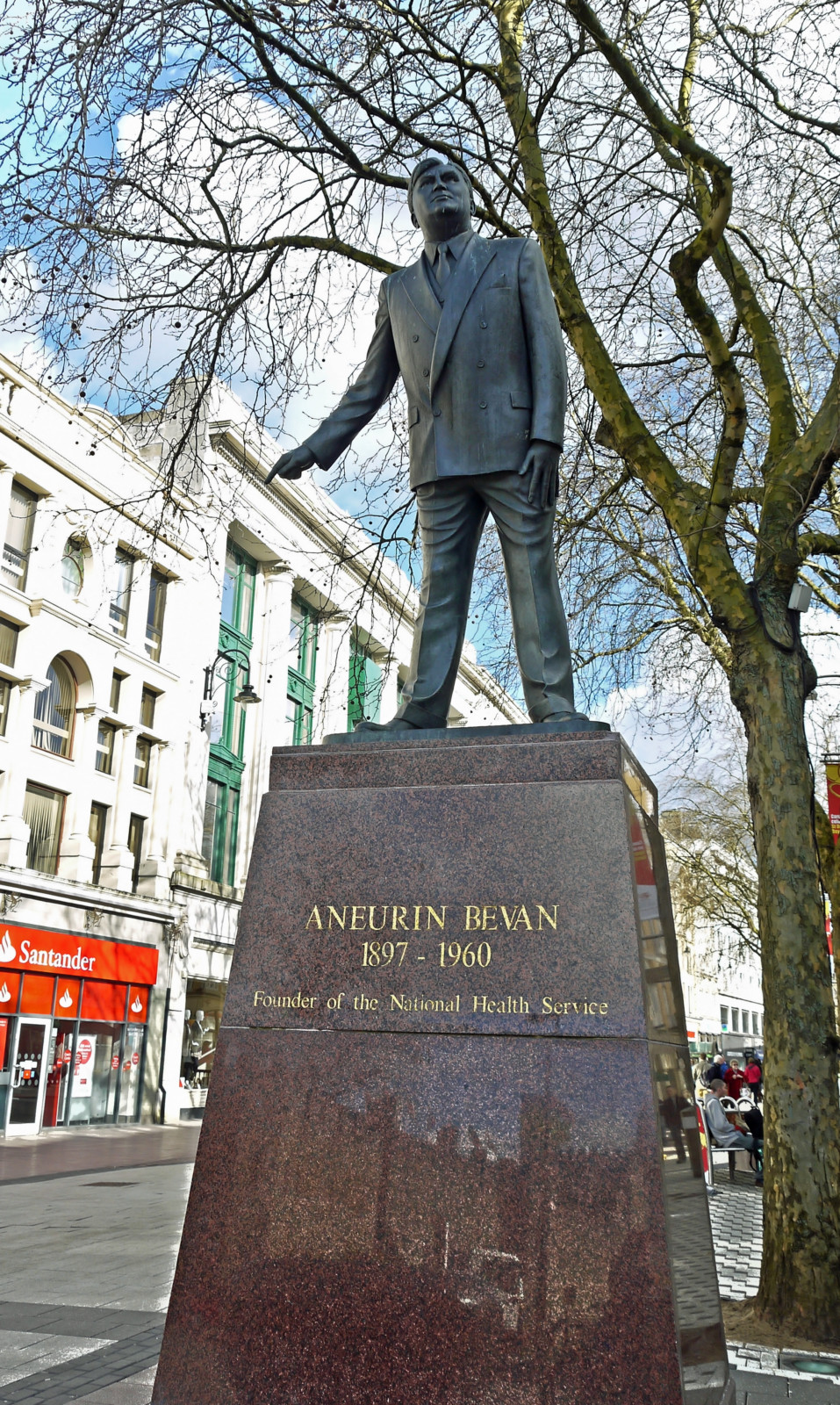
On 5 July 1948, Health Minister Aneurin “Nye” Bevan successfully brought all healthcare workers under a single umbrella – creating a service that was funded through public tax and free-to-use when needed.
The idea was that everyone – rich or poor – could access any type of treatment they required at any time.
It was a revolutionary, innovative and daring concept – and the principles on which the NHS was founded remain the same to this day.
Bevan visited Trafford General Hospital – then known as Park Hospital in Davyhulme – to kickstart the new regime, earning this healthcare facility the prestigious title: “The birthplace of the NHS”.
Sadly, Bevan would only see the NHS in its infancy. He passed away in 1960 from stomach cancer, sparking a mass outpouring of national grief.
A local facility has been named in his honour (Nye Bevan House in Rochdale) and his title also appears on a leadership qualification supported by Alliance Manchester Business School (The Nye Bevan programme).
ADVERTISEMENT
But Bevan’s greatest legacy is the healthcare system he left behind – the same one that’s carrying Britain through its toughest fight since WWII.
Manchester played an instrumental role in the formation of the NHS, and that is something we, as a city, can be mightily proud of.
Featured image – Wikipedia
Feature
The incredible Asian food market held every month at an 800-year-old church in Stockport
Daisy Jackson
One of Greater Manchester’s most unique food events is taking place monthly in and around the grounds of an 800-year-old church.
Held on the second Friday of every month at St Mary’s Church in Stockport, the Asian Food Market brings together some of the region’s best independent Asian street food traders under one historic roof.
Organised by Eat Good West, the event brings together 16 traders every month, serving up dishes from across Asia.
Visitors can tuck into everything from crispy Taiwanese fried chicken and Korean corn dogs to homemade strawberry mochi.
A real highlight is the Japanese yakitori skewers, grilled fresh to order on a traditional charcoal grill while you wait, served in a cloud of smoke and delicious charred edges.
The market originally launched in Edgeley, but after growing in popularity it moved to St Mary’s around a year ago, giving organisers more space to accommodate the increasing crowds.
For the team behind the event, it’s about more than just great food. They see the market as a way of bringing together Stockport’s diverse communities, creating a space where people can connect over shared meals and discover new cultures through food.
Strawberry mochiA round of drinks for £10Sticky fried chicken
There’s a lively atmosphere throughout the evening, with live music performances adding to the experience. And if Manchester’s unpredictable weather makes an appearance, there’s plenty of additional seating inside the church.
The bar also serves a selection of Asian beers and soft drinks at surprisingly affordable prices. We picked up an Asahi, a Singha and a plum beer for just £10 – one of the best-value rounds we’ve seen in a while.
If you’re looking for an excuse to spend your Friday evening eating your way across Asia without leaving Stockport, this is one event worth putting in the diary.
The former pub in Hulme that’s now a haven for salvaged mid-century treasures
Daisy Jackson
If you’ve ever wondered where old stained-glass windows, vintage toilets, and dazzling chandeliers go when they’re rescued from demolition, the answer is probably Insitu Manchester.
Standing on Chester Road in Hulme, Insitu occupies the former Turville pub, a Grade II listed Victorian building dating back to around 1870.
What was once a neighbourhood boozer is now one of Manchester’s most fascinating places to browse, packed to the rafters with architectural salvage, antiques, and quirky design pieces.
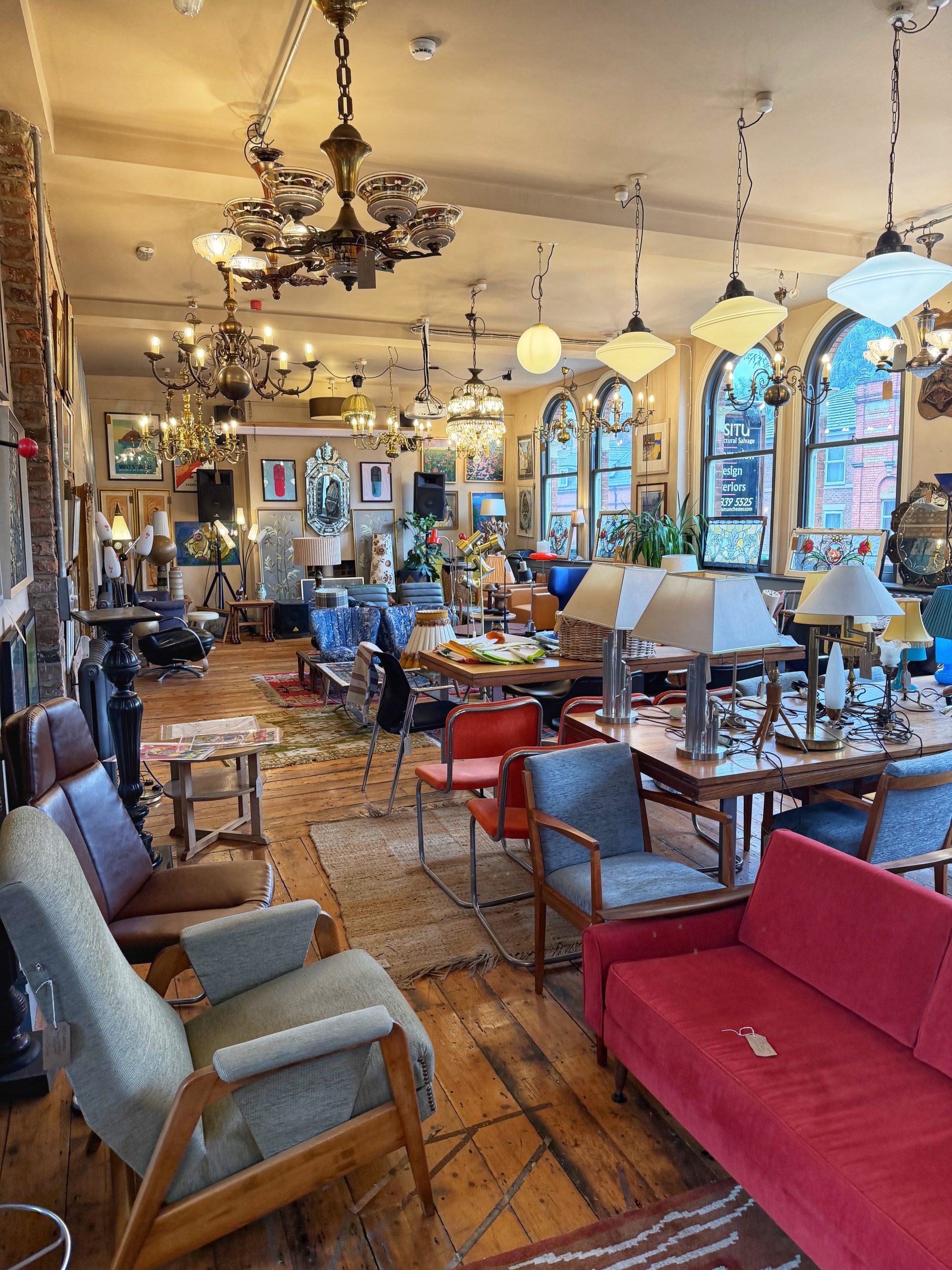
Spread across three floors, every room feels like a treasure hunt. One minute you’re admiring an elegant fireplace, the next you’re standing in front of a huge stained-glass church window wondering if it would fit in your downstairs loo.
The real showstopper is upstairs. The former billiards room has been transformed into a bright, sunlit showroom that feels more like an art gallery than a salvage yard.
Founded in 1984 as a business specialising in reclaimed doors and fireplaces, Insitu has spent more than four decades saving beautiful objects from being lost forever.
Today, its stock ranges from reclaimed timber flooring and cast-iron radiators to stained glass, doors and other architectural features.
The former billiards room is now a beautiful showroomA beautiful mid-century tiled tableVintage sinks and toiletsIncredible stained glass windows at InsituA room packed with mid-century treasure at Insitu in ManchesterPaintings, stained glass, and ornate furnitureThe outside of Insitu in Hulme, ManchesterA glimpse inside Insitu in ManchesterA glimpse inside Insitu in Manchester
During our visit, we spotted a mid-century tiled coffee table, ornate chandeliers, vintage glass lampshades, paintings and fireplaces.
But perhaps the most unexpected room was downstairs, where an entire collection of antique sinks and vintage toilets is displayed. Who knew a loo could be so beautiful?
Part of the fun is that you never quite know what you’ll find around the next corner. Every item has a story, and many have been carefully rescued from buildings that no longer exist.
Come for the fireplaces, stay for the vintage toilets. Trust us.

 The Manc -
4th July 2023
The Manc -
4th July 2023