Rochdale Town Hall is one of Greater Manchester’s most impressive and historic buildings – but until now, large parts of the building have been closed to the public.
All that has changed this weekend when, following several years of careful restoration, the magnificent Grade I-listed giant threw open its doors.
From Sunday 3 March, people are able to visit Rochdale Town Hall completely free of charge seven days a week (excluding Bank Holidays), exploring grand halls, historic offices, and impressive sweeping staircases.
The landmark looms over the heart of Rochdale town centre, an easy walk from tram and train stations.
Up until this year, spaces were available to book for events like weddings, and it was used for official business, but has never been properly utilised as a tourist attraction.
ADVERTISEMENT
It’s taken a 500-strong team of volunteers and teams of conservation specialists thousands of hours to bring it fully back to its former glory – they’ve carefully stripped away years of grime using cotton buds and other equipment to expertly bring life back to the ornate stained glass windows and historic features in almost every room.
So what exactly is it like inside after its multi-million-pound refurb, you ask? Well it’s pretty damn impressive.
ADVERTISEMENT
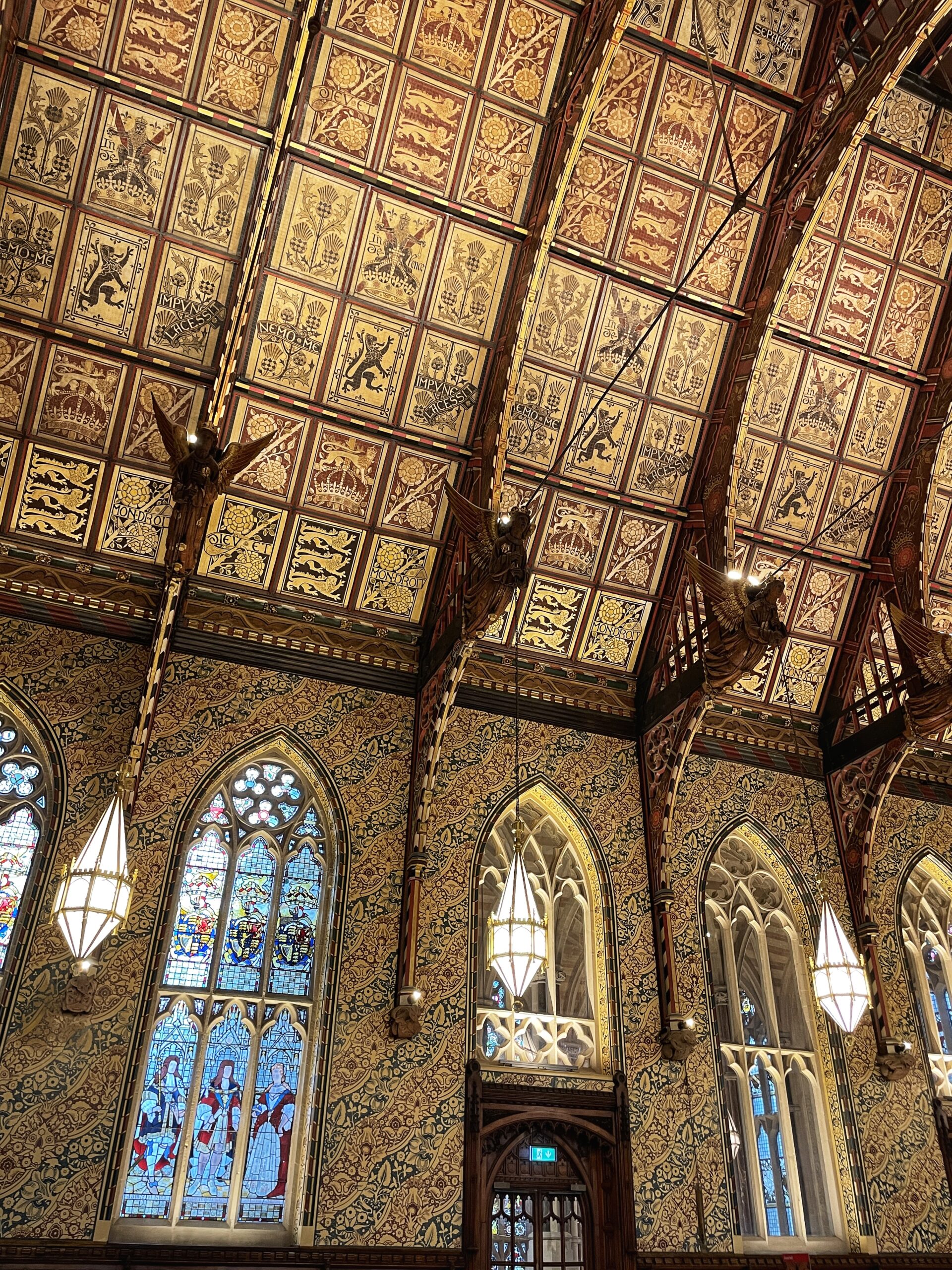
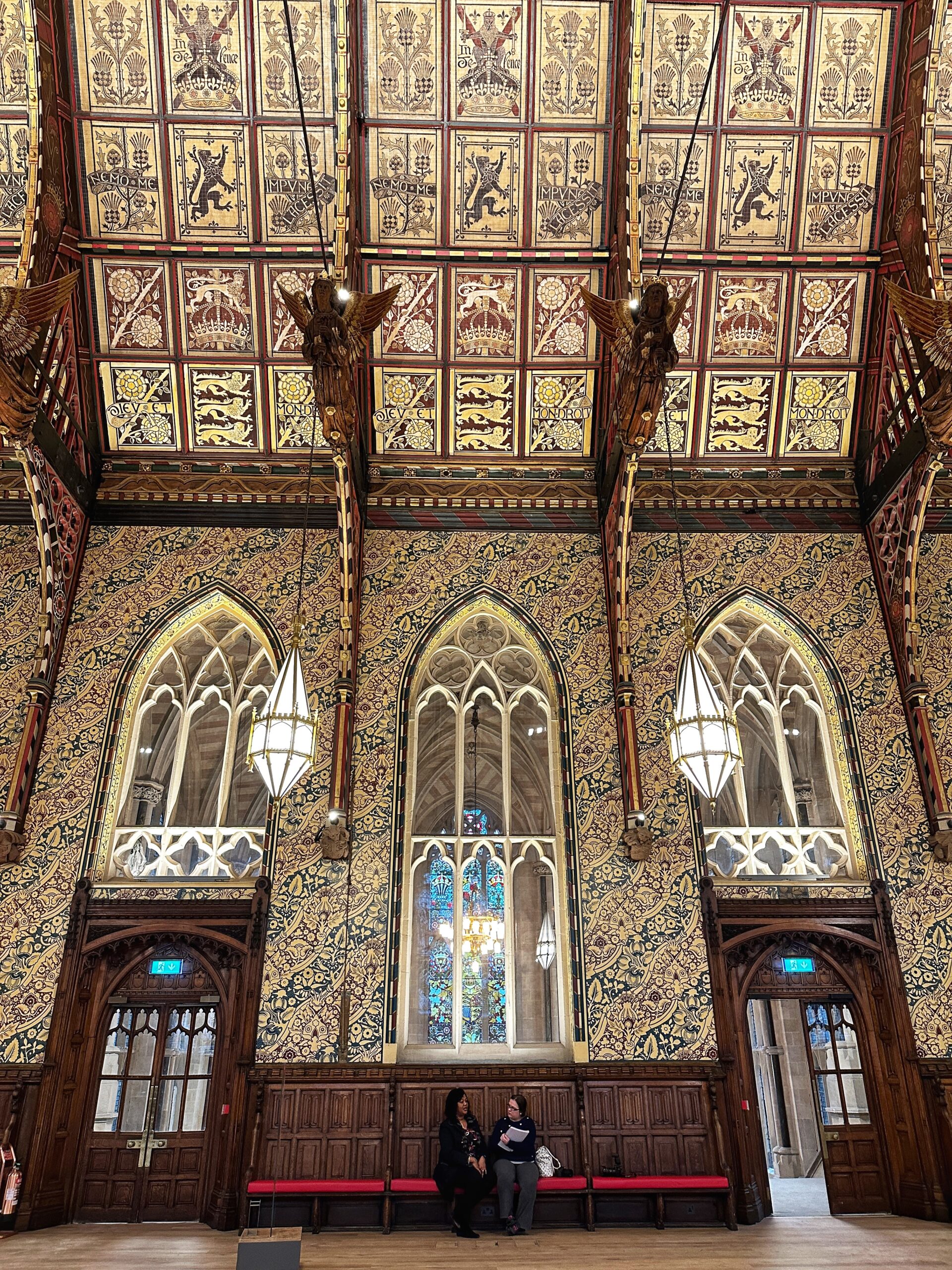
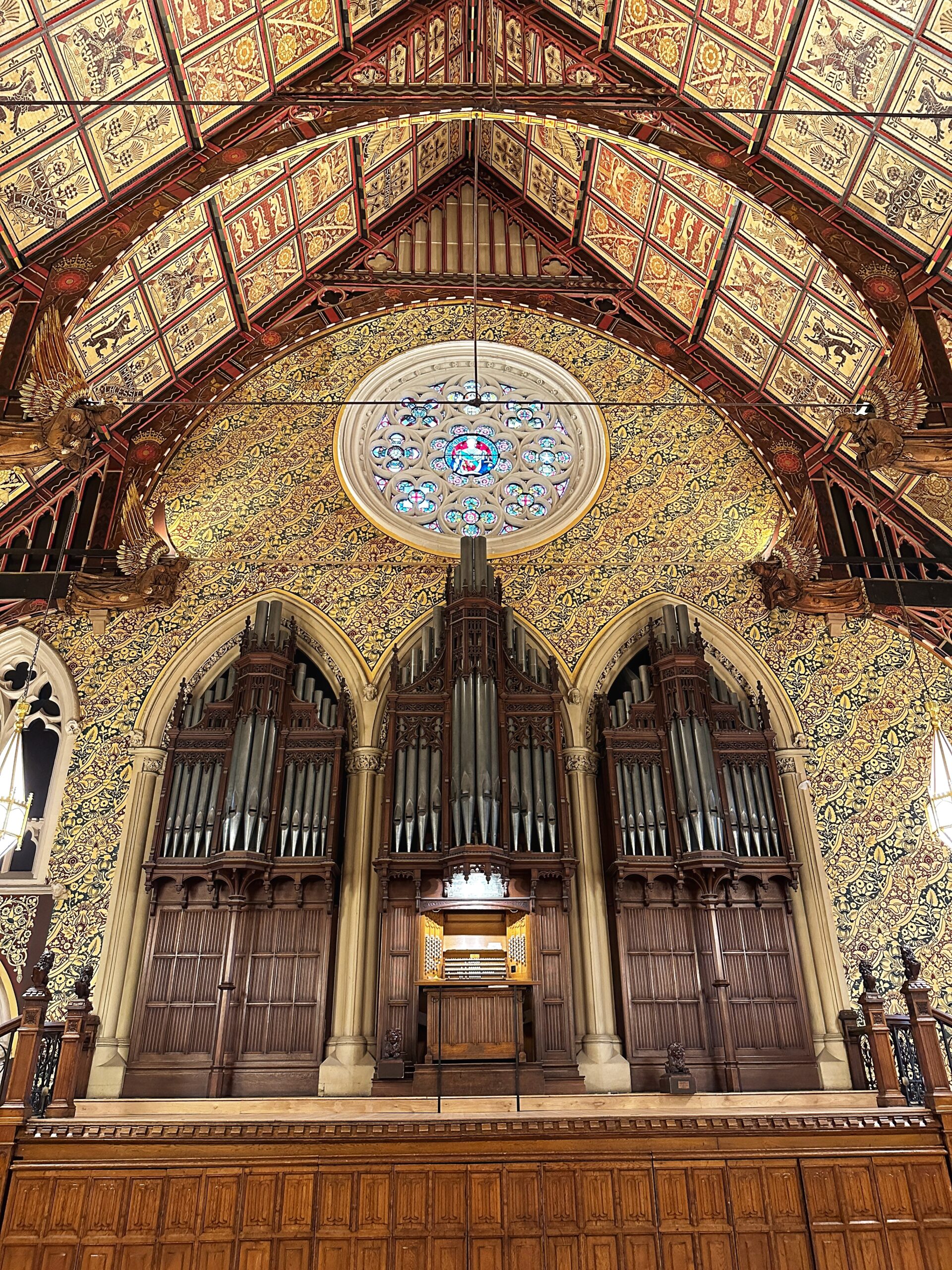
The most breathtaking space of all is the Great Hall, where 350 hand-painted panels cover the vaulted ceiling, carved wooden angels hold lanterns, stained glass windows tower overhead, an enormous organ stands on the stage, and a huge Magna Carta mural covers one wall.
The incredible hand-painted ceiling panels in the Great HallInside Rochdale Town Hall
It’s a room filled with red and gold patterns, including images of the English lions and Scottish thistle, and you might recognise these colourful walls from a little show called Peaky Blinders…
But before you even reach this point, there are wonders to behold.
ADVERTISEMENT
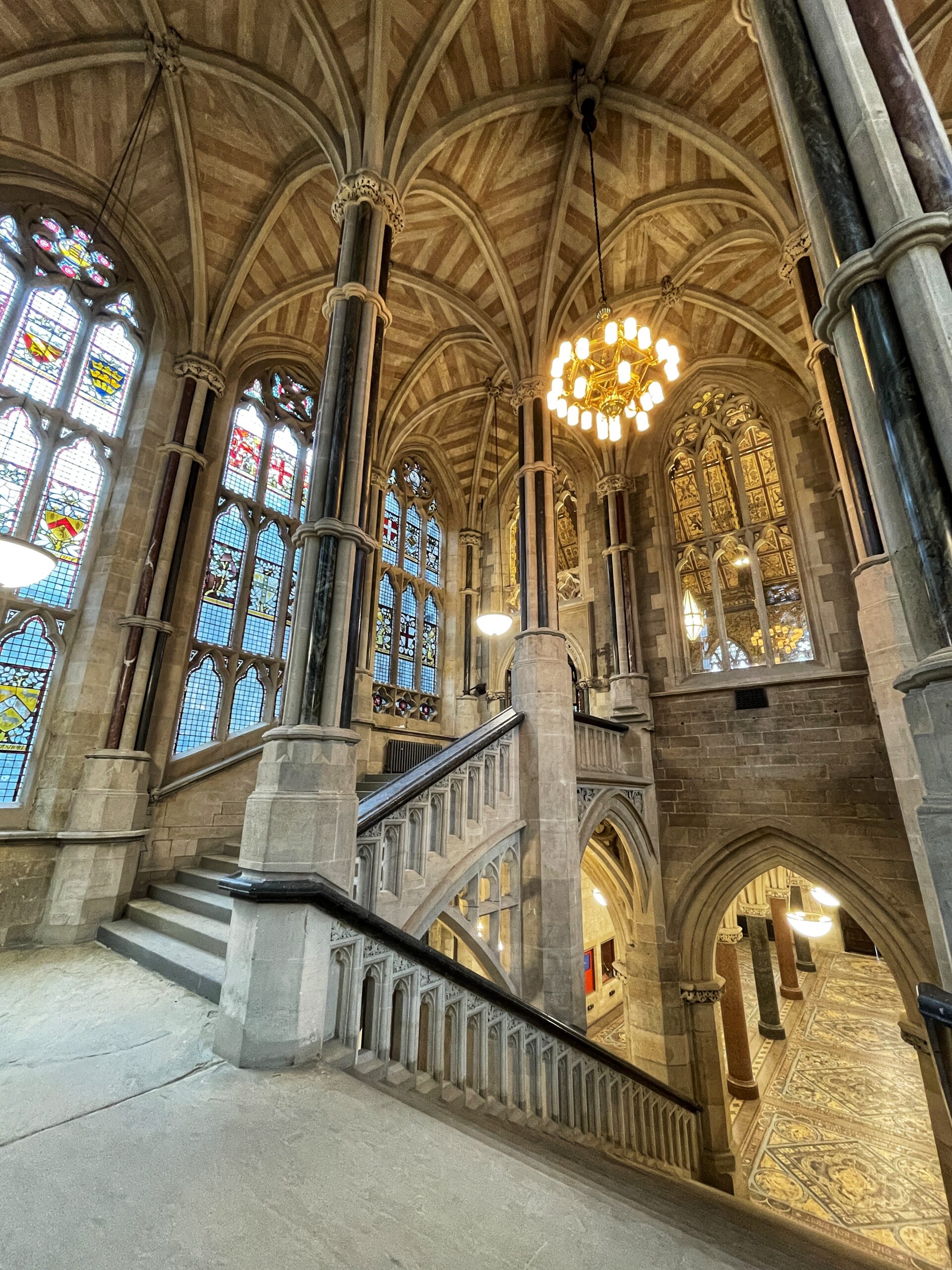
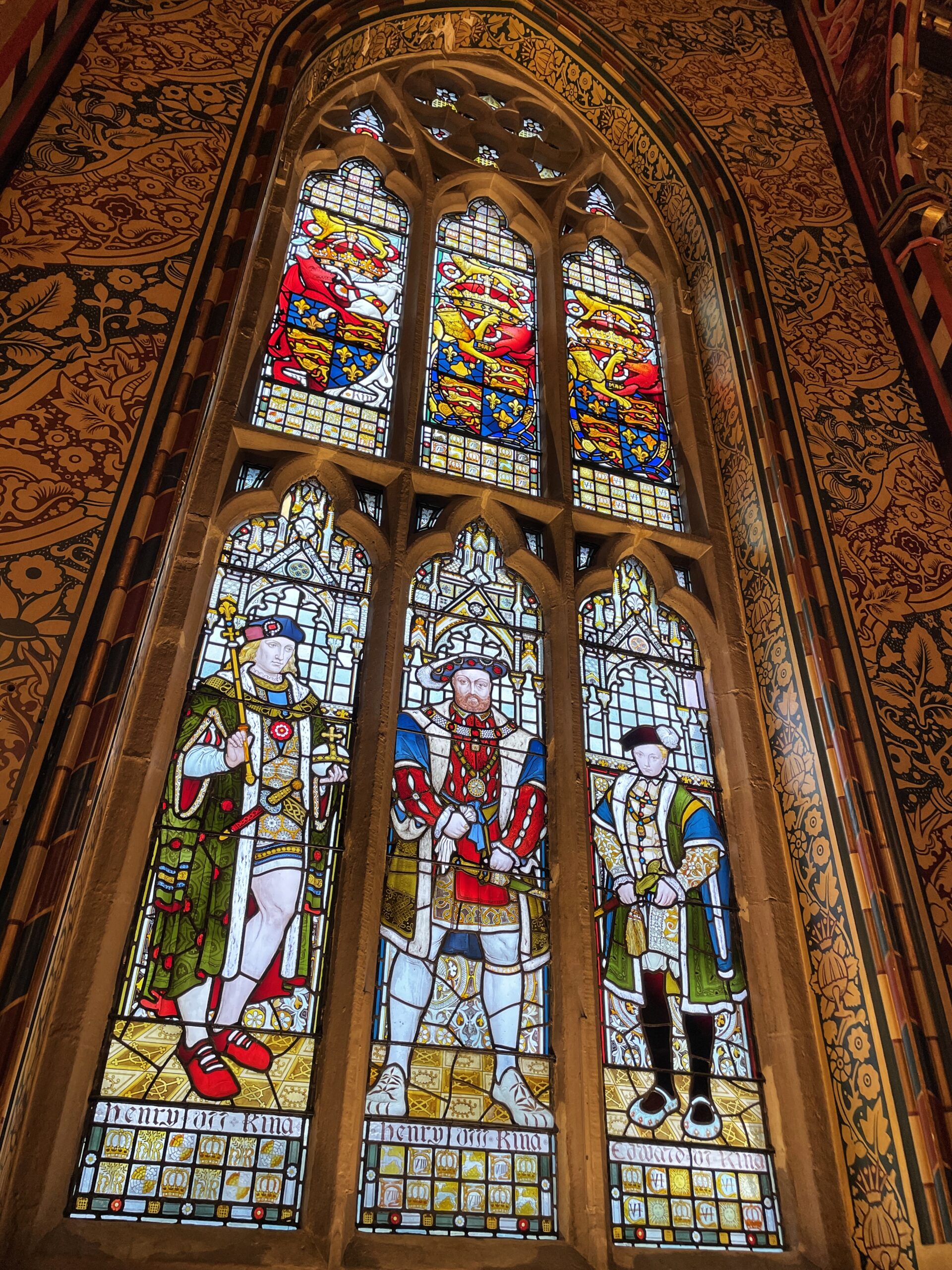
The Grand Staircase sweeps its way up from the ground floor – look up and you’ll see enormous stained glass windows documenting Rochdale’s place on the global stage.
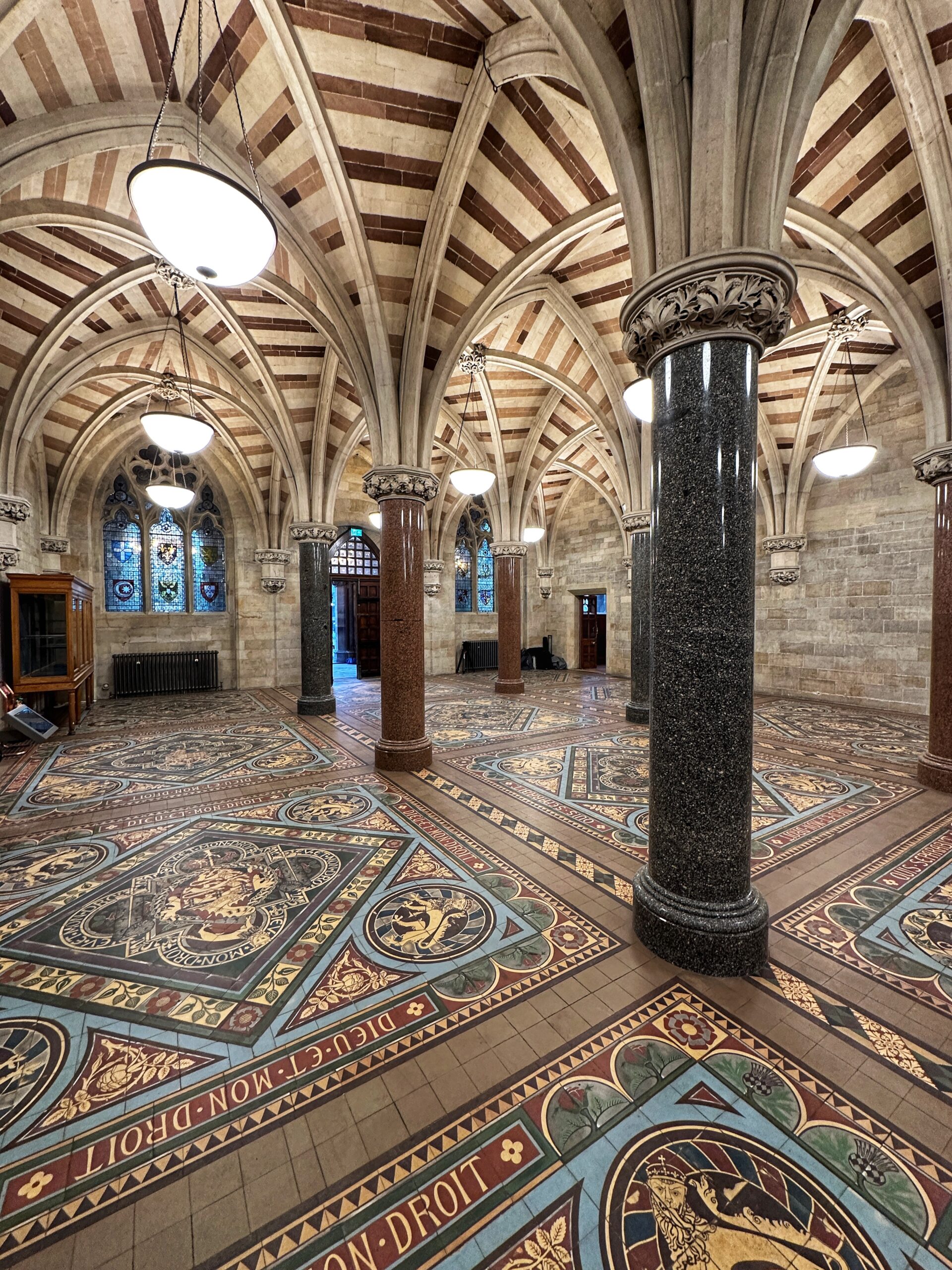
The Exchange will be used as the town hall’s main entrance, where different shades of granite and marble were used to make candy-striped ceilings, and craftsmen carved various flora and fauna into the stone pillars.
The Great Staircase at Rochdale Town HallThe Exchange will be used as the main entrance for Rochdale Town Hall
Off here there’s a brand-new exhibition space, known as the Welcome Gallery, which tracks the timeline of the landmark, including the fire that destroyed its original clock tower (it was later re-designed by the legendary Alfred Waterhouse).
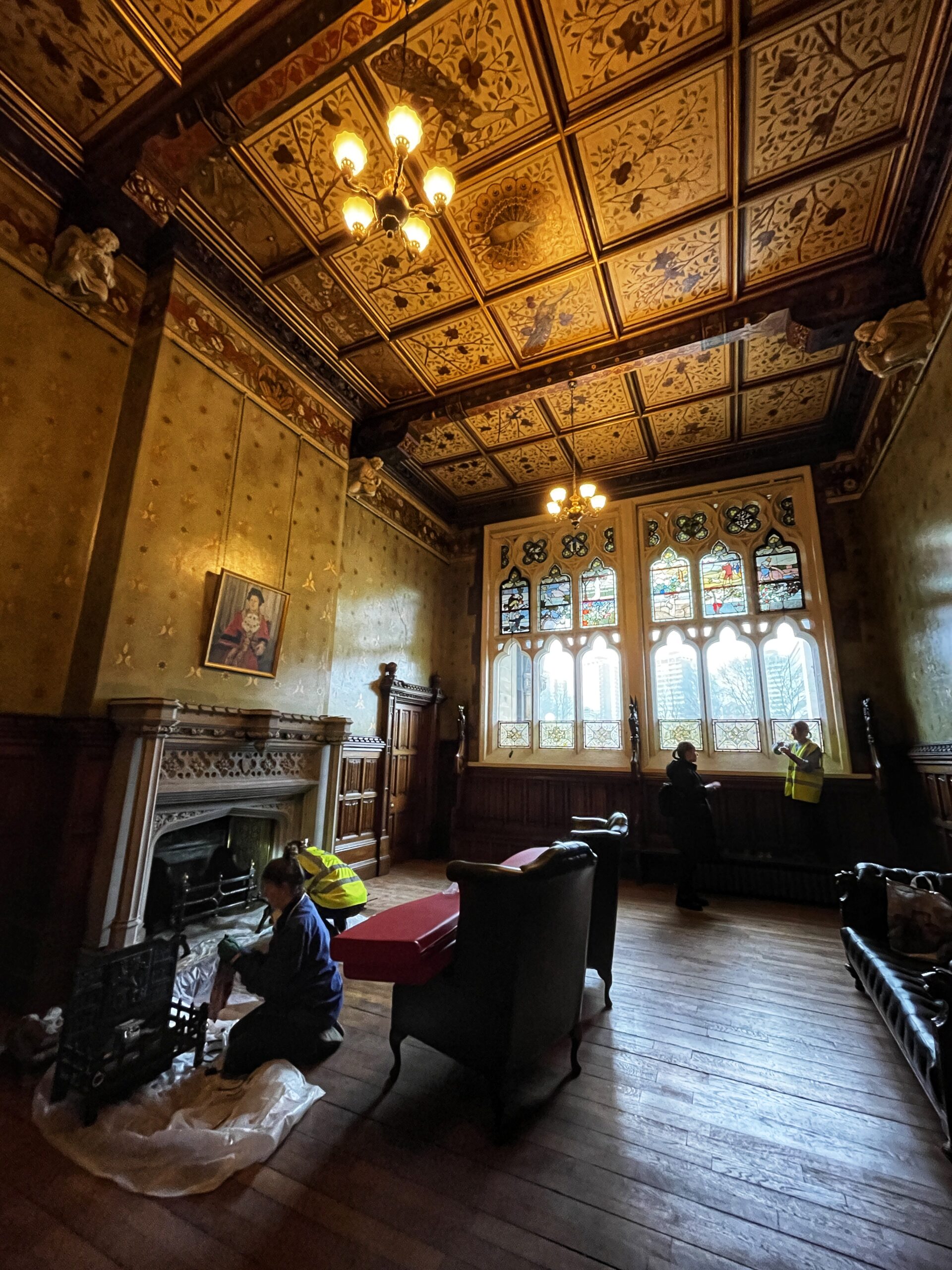
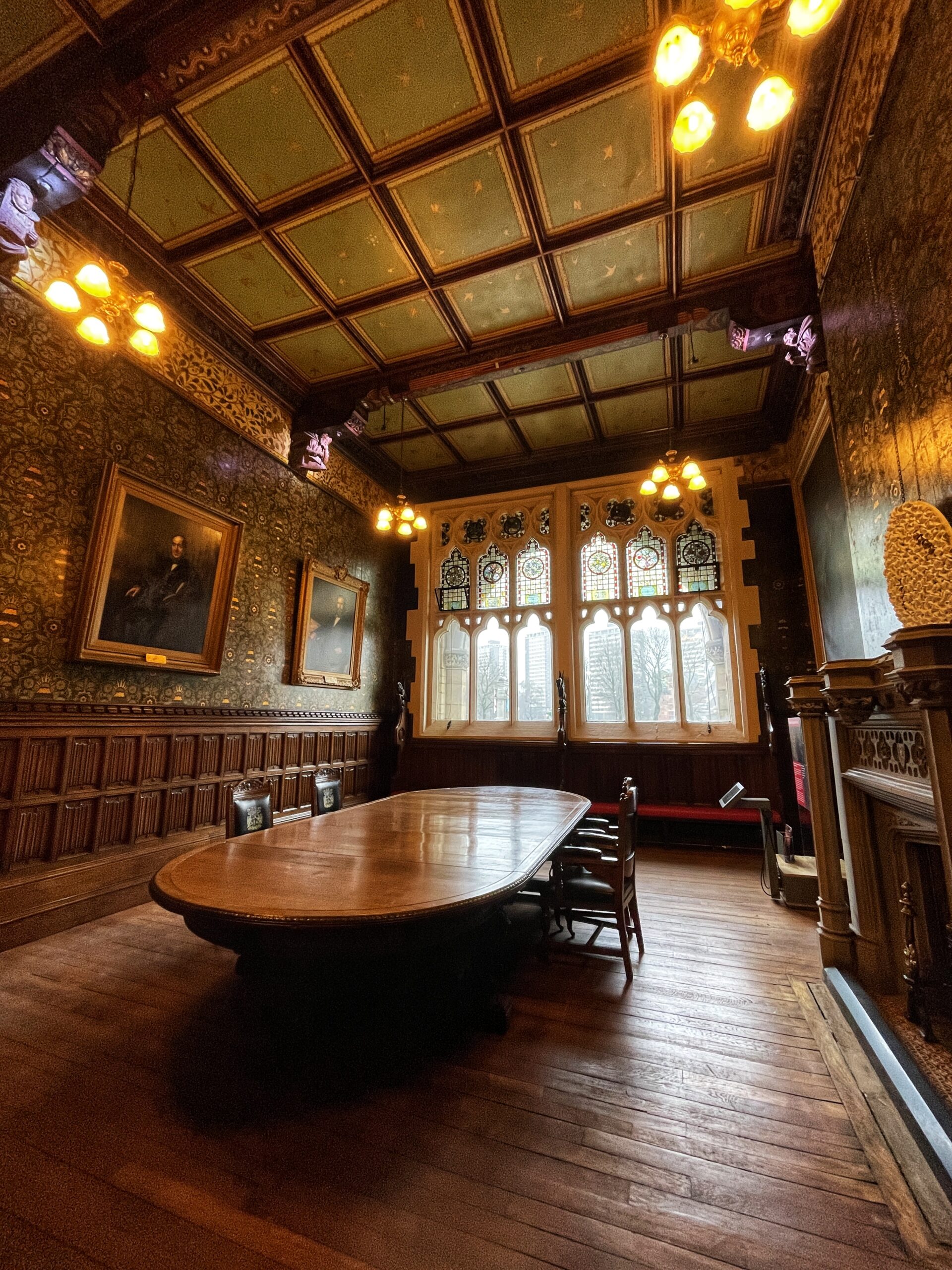
There are also historic spaces, where the walls are covered not with wallpaper but with hand-painted patterns. These intricate designs have also been restored.
In one room, you can see the history of the cotton industry in the paintings, from the Ancient Egyptians all the way up to the industrial era that Rochdale played such a huge part in.
ADVERTISEMENT
And as well as celebrating the historical features of Rochdale Town Hall, there are also new artworks that have been created with local community groups and schools, celebrating present day Rochdale.
Rooms which were formerly used by council staff and councillors have been turned into usable spaces for the public, like the new Bright Hall, which has double-height ceilings, angels along the walls, and a window overlooking the Great Hall from up high. The Bright Hall will now be available for community use and events.
Hundreds of volunteers and specialists have worked on Rochdale Town Hall’s refurbishmentAnother grand space in Rochdale Town Hall
When it officially reopens on Sunday 3 March, there’ll be bookable tours, longer opening hours, and new exhibition spaces for locals and visitors to explore.
And in a few months’ time, a brand new restaurant – The Martlet – will open, under the steer of executive chef Darren Parkinson who has honed his craft at some of the country’s best gastropubs.
The whole building has been made fully accessible for the first time, and there are new heating systems and a sturdier roof in place to future-proof Rochdale Town Hall for decades to come.
ADVERTISEMENT
Councillor Neil Emmott, leader of Rochdale Borough Council, said: “It’s been a long wait for our residents and I’m delighted that they will finally get to see their beautiful town hall, fully restored in all its glory.
“Not only will they see the town hall they know and love, looking as good as it would have when it first opened in 1871, but they will see brand new features, like the Welcome Gallery, which makes it an even better space than it was before. We can’t wait to welcome people back in.”
One of many beautiful stained glass windows inside Rochdale Town HallThe huge organ in Great Hall
Councillor Janet Emsley, cabinet member with responsibility for Rochdale Town Hall, said: “Sunday 3 March will be a wonderful celebration, but it’s really just the beginning for our brand new town hall. Our new offer means that residents will be able to see it and enjoy it seven days a week.
“We will soon be offering guided tours, alongside a full activity, events and education programme, which will be revealed soon.
“We anticipate the opening day being very busy, so people who would prefer a quieter experience may wish to come along another day. This beautiful building certainly isn’t going anywhere and our new extended opening hours offer many opportunities to enjoy this special place.”
ADVERTISEMENT
The huge project was made possible with funding support to the tune of an £8.9m grant from the National Lottery Heritage Fund.
For its launch weekend, there’ll be activities at Rochdale Town Hall like rug tufting workshops, the roving Bombay Raja brass band, and a special puppet show by Fool’s Paradise.
Pre-booking is now full but walk-ups are available, so, if you don’t mind a wait, you can head to Rochdale Town Hall between 10am and 4pm this Sunday to see the incredible spaces for yourself.
For more information about the town hall, including opening times and upcoming events and activities, go to rochdaletownhall.co.uk.
Mercury Prize 2026 review: RAYE takes home the crown as Newcastle celebrates the very best in music
Clementine Hall
One of the biggest nights in music kicked off last night as the Mercury Prize 2026 was awarded.
If there was ever a night to fall head over heels in love with British and Irish music, the 2026 Mercury Prize made a very convincing case.
Bringing together some of the country’s most exciting artists under one roof in Newcastle, this year’s ceremony was a reminder of just how much talent is packed into the current music scene.
From established legends to the names shaping what comes next, it was an absolute belter.
Images: Audio North
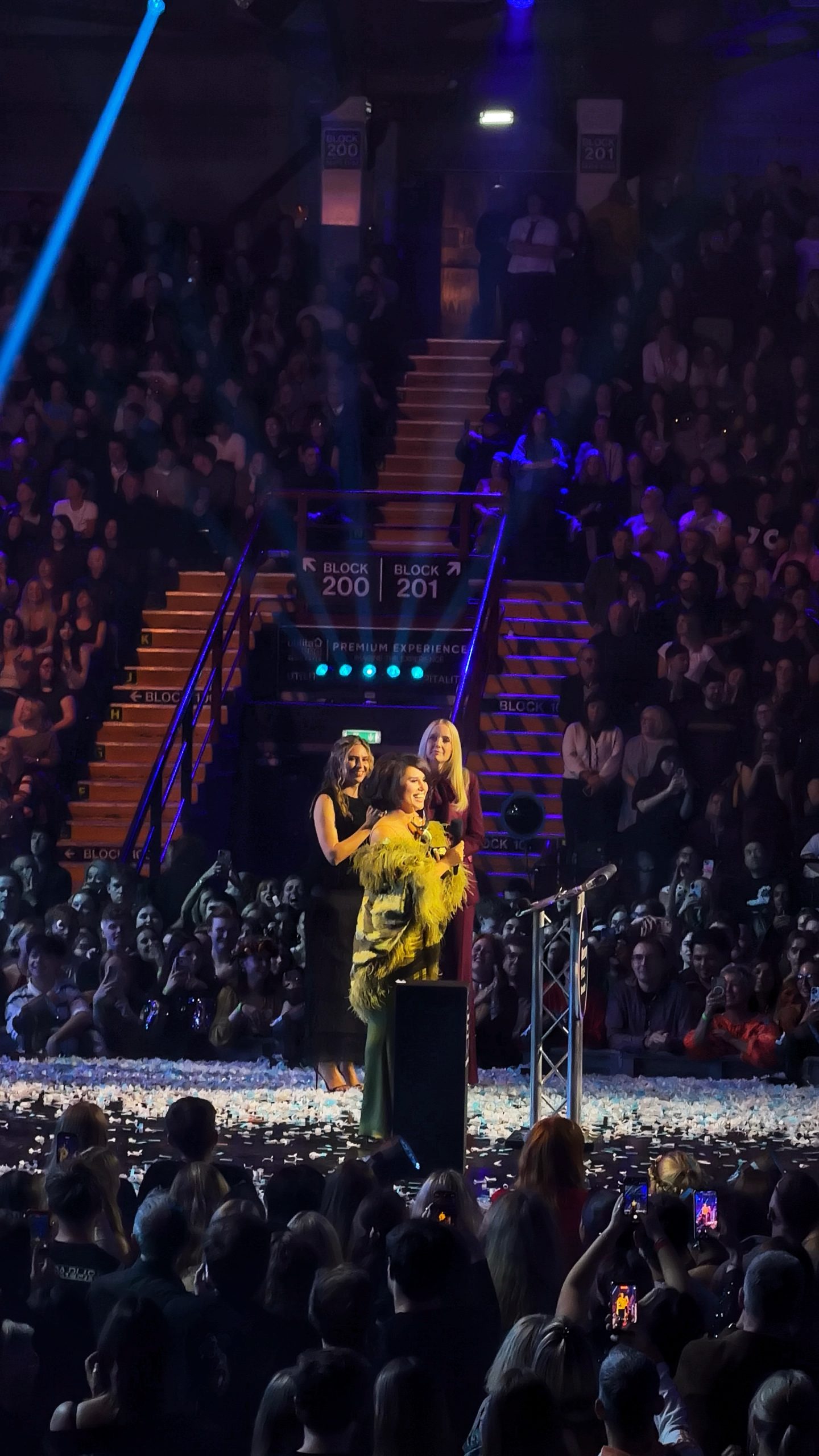
Held at the Newcastle Utilita Arena for the second year running, I think everybody in that room felt very lucky to be there to see firsthand who took home the coveted prize.
The shortlist brought together an impressive mix of artists, with Florence + The Machine, Olivia Dean, JADE, Suede, Pulp, Dave and Sir Paul McCartney among the big names making the lineup very star studded indeed.
Suede kicked things off with ‘Dancing With The Europeans’, bringing their unmistakable energy to the ceremony, while Pulp delivered ‘Begging For Change’ as part of the HELP(2) charity compilation.
It was a line-up that demonstrated the sheer range of music being made across the UK and Ireland, from contemporary pop to established rock and even jungle thanks to Bradford’s own Nia Archives.
And of course, there was one woman who had every reason to leave with a smile on her face.
RAYE took home the coveted Mercury Prize for THIS MUSIC MAY CONTAIN HOPE., an ambitious, genre-hopping album that blends jazz, soul, R&B and classical influences into something so fabulously unique.
Image: Audio North
Newcastle’s own Knats performance was definitely a highlight of the evening, combining slick jazz with spoken-word poetry against a projection of The Tyne Bridge.
A fitting image, and one that underlines the importance of holding such huge events in the north and highlighting the obvious talent that thrives here.
The 2026 Mercury Prize was a brilliant showcase of the country’s music at its best.
And with RAYE taking home the trophy, it’s clear there is plenty of ‘hope’ left in British music.
The most magical Christmas displays have now landed at one of the North West’s best garden centres
Emily Sergeant
Christmas has officially arrived at one of the best garden centres in the North West, and it’s just as magical as you’d hope it would be.
Just outside of Greater Manchester in the village of Glazebury in Warrington, you’ll find Bents Garden and Home – a multi award-winning destination garden centre that’s often voted one of the region’s best. It’s great place to visit all year round, but as anyone who has ever made the trip there will tell you, this place really comes alive during the festive season.
Bents first started out life all the way back in 1937, when Alfred and Margaret Bent began growing and selling roses in the front garden of their terraced house in Glazebury.
Ever since then, the business has gone from strength to strength – opening its first dedicated garden centre building in the early 1950s, and then undergoing several expansions in the 60 years that followed to create the place we know and love today.
A place that’s home to everything you need to kit out your home and garden, several cafes and restaurants, a food hall, a cook shop, a children’s boutique, and plenty more.
Christmas has arrived at Bents Garden and Home for 2026 / Credit: The Manc Group
And then at Christmas time, you can also get to wander around all the magical festive displays and stop for a bite to eat at the winter food markets.
Christmas at Bents originally began in the 1970s, establishing what would become one of the garden centre’s most successful – and favourite – times of the year, with people travelling in their thousands from all across the North West to visit, making it an annual tradition in the festive events calendar for many families.
With a jaw-dropping display to suit everyone’s festive decor tastes, Christmas at Bents really does need to be seen to be believed.
Expertly decorated trees form the centrepiece of each display, with all the baubles and decorations adorning them for sale by the side for you to recreate yourself at home.
Walking around the centre, you’ll also find every type of artificial tree (both normal and pre-lit), an array of fairy lights, wreaths, and garlands, before you arrive at what is sure to be one of the best Christmas Lemax Model Village set-ups you’ve probably ever seen.
A trip to Bents is an annual festive tradition for thousands across the North West / Credit: The Manc Group
Then, once you’ve filled your basket up with all the decs you need, you have to stop off at the Winter Food Markets before you head home.
There’s a wide array of different street food options to choose from like bratwursts, giant filled Yorkshire puddings, loaded fries, nachos, mac and cheese, crepes, churros, and build-your-own crumble, before taking a pew in one of the little wooden huts and washing it all down with festive-themed hot chocolates and mulled wine.
Don’t forget to stop off at the food hall, farm shop, and deli counters to stock up on plenty of goodies there before you leave too.
Basically, if you’ve never been to Bents before, we honestly cannot recommend it enough – even more so during Christmas time.
Don’t forget to stop off at the Winter Food Markets before heading home / Credit: The Manc Group
But it is really important to note that it does get very busy here, especially on weekends and at peak times like the run up to Christmas.
So you may have to be prepared to patiently wait for parking spaces and cooperate with your fellow shoppers, as well as join queues at the cafes and restaurants, all while respecting the hard-working staff at all times.
Let’s be as respectful as possible, and make this a place where everyone can enjoy a magical festive experience in 2026.

 Daisy Jackson -
29th February 2024
Daisy Jackson -
29th February 2024