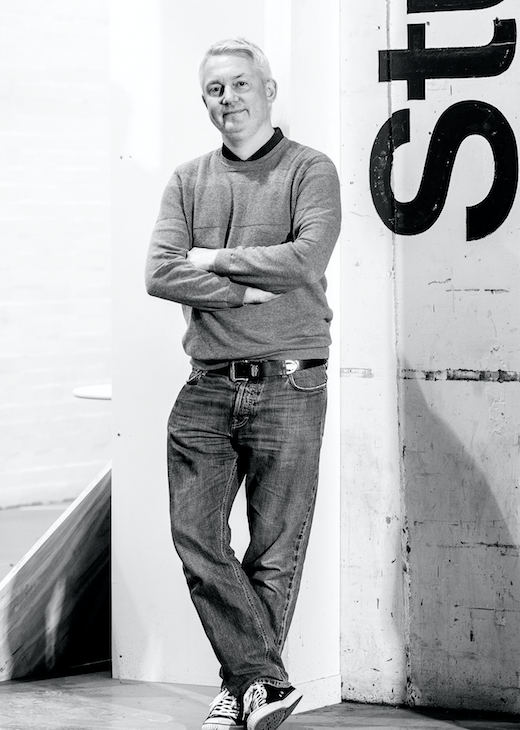
Like so many of us, Paul Grogan spends most of his time at home these days.
With three kids being home-schooled by his wife Marian, they have had to get better at multitasking – sharing the chores whilst running two businesses.
On this particularly wintry January afternoon in Radcliffe, Paul’s got the phone in one hand and cutlery in the other, making his youngest son’s lunch as he talks.
“Working from home with three kids here… there’s always a lot going on as you can imagine,” he chuckles.
For a man who’s spent a huge chunk of his life exploring the outdoors taking photos, the past year has been quite the adjustment for Paul.
ADVERTISEMENT
The pandemic has domesticated even the biggest nomads – but it’s been particularly challenging for photographers who ordinarily rely on the freedom to roam in return for a paycheque.
“[COVID] has impacted everything quite significantly for me,” Paul tells us.
ADVERTISEMENT
“I’m quite fortunate in that I own a branding and web design agency, so I have income from there. But I know a lot of photographers who have really struggled.”
“Ever since the tiers were brought in, we haven’t been able to leave our boroughs.
“I know it’s technically work, but I still shouldn’t be going from Manchester to the Lake District just to take some photographs, should I?
ADVERTISEMENT
“We need to stay local.”
Due to the ongoing national lockdown; Paul is confined to his market town in Bury for the foreseeable future.
For a photographer, there are much worse places to be, of course.
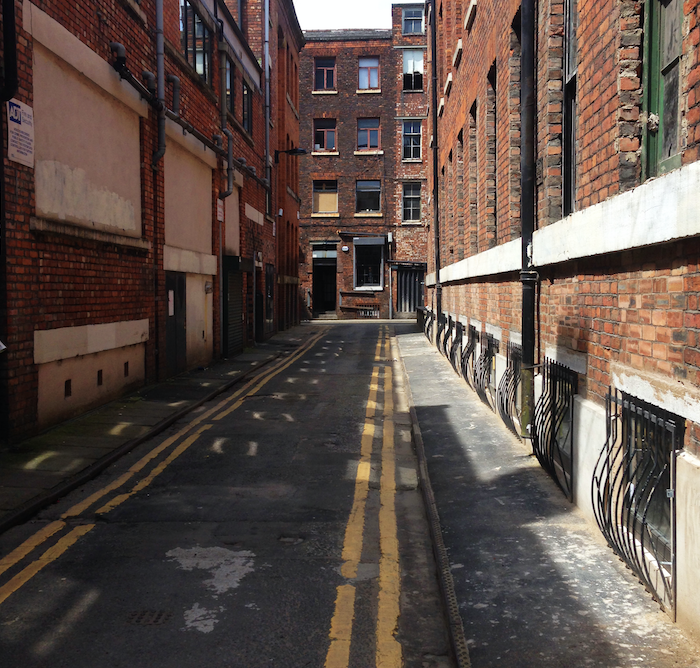
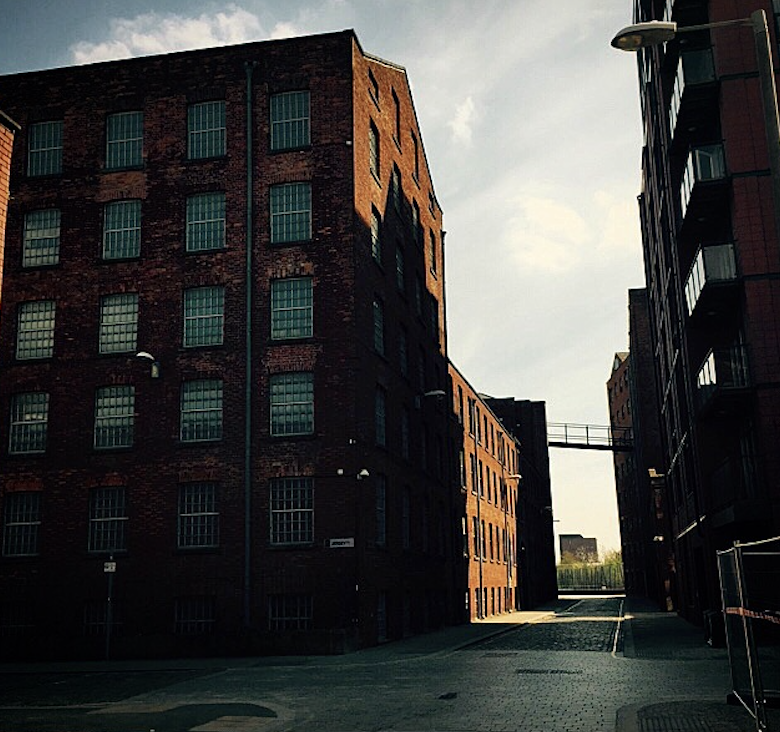
“There’s plenty of really cool buildings knocking about in Radcliffe,” Paul says.
“It’s a place that’s stuck in time a bit.
ADVERTISEMENT
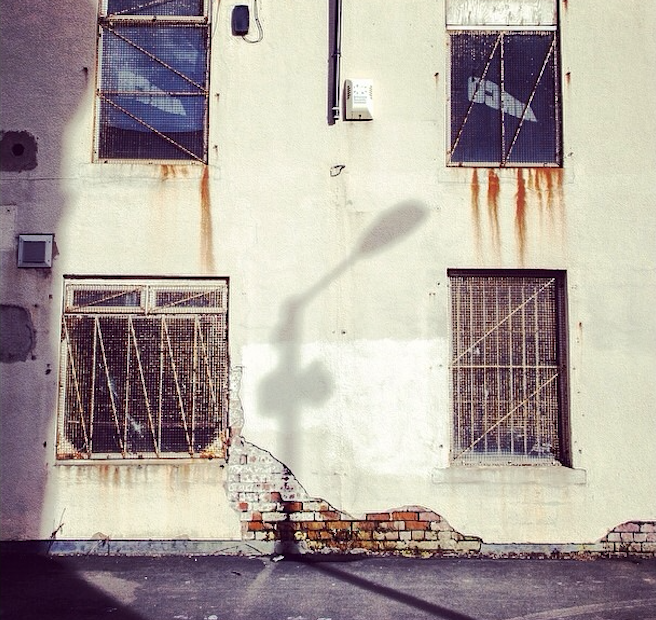
“It doesn’t have the clamour of Prestwich and Whitefield. That will change eventually, I think, but for the time being we’ve still got these interesting 70s and 80s vibes that make it quite an interesting looking place… especially when the light catches it just right.”
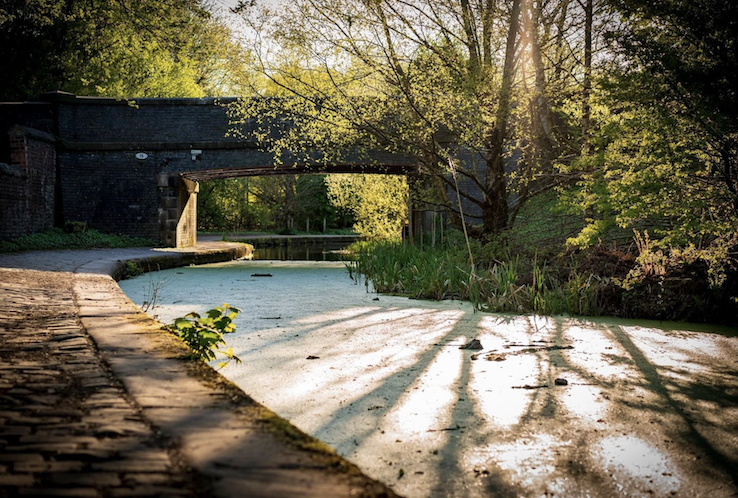
Paul has grabbed some snaps of his local town and the surrounding greenery on his weekend lockdown walks, but many of his most famous images were captured pre-COVID nine miles south in the rainy metropolis of skyscrapers and lights.
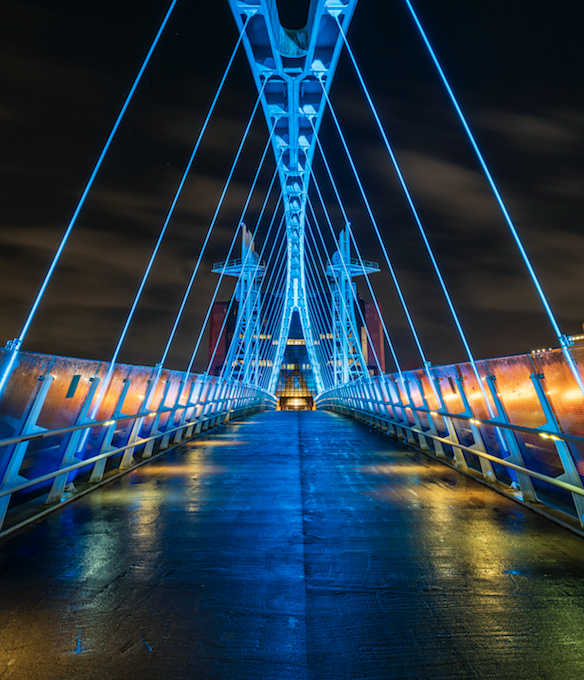
For the past twenty years, Paul’s been taking the kind of landscape photos of Manchester city centre that strike a chord with locals and out-of-towners alike – selling hundreds to people right around the world.
Paul’s prints have been sent to addresses in the States, Canada, Australia, States, Spain, Norway and Germany; and copies of his hugely-successful Made of Manchester Photobook were even purchased by airline Virgin Atlantic for passengers taking flights to Manchester.
It’s the kind of track record that puts Paul among the top local photographers of current times.
ADVERTISEMENT
But his biggest project is only just getting started.
Paul has been given the great responsibility of producing a Manchester edition for Fotovue – one of the most popular, widely-published city and country guidebooks available.
“The book will include lots of things for people to look out for in Manchester,” Paul explains.
“It’s a proper guidebook.
“The whole thing will be done over a longer period of two or three years and it’ll involve going to certain spots at certain times; for example Salford Quays at sunrise or Ancoats in the evening when the sun is coming down the streets.”
ADVERTISEMENT
Paul refers to these types of areas as ‘Honeypot locations’ – places where there are lots of opportunities for good photos, or ‘more honey for the bees’.
It’s a fitting statement to describe Manchester. Worker bees are a symbol of unity in adversity here; with Mancs prideful hanging images of the yellow and black insects up in their homes.
Perhaps unsurprisingly, one of Paul’s most popular photos is a shot of a bee statue taken from the Town Hall.
“I’d been attending a wedding as a guest, and thought ‘oh, that looks nice’, shot it and carried on,” Paul says.
“I didn’t think it was particularly exciting at the time.”
ADVERTISEMENT
But this simple shot – dipped in a honey-glazed hue – has become iconic; with copies being shipped off to all four corners of the globe.
A few years prior, Paul also saw huge demand for his bee prints in the midst of the Arena Bombing. But on this occasion he refused to take the money.
“I decided I can’t profit off this,” he stated.
“I donated all that money to the charity set up by Manchester City Council.
“It’s important to do these kinds of things.”
ADVERTISEMENT
www.paulgroganphotography.com
Paul’s career as a photographer has taken him to almost everywhere in Manchester; up to the roof of Piccadilly Tower; into the city’s nooks and crannies; and even onto book pages alongside the Tony Walsh poem ‘This is the Place’.
But when it comes to defining what makes Manchester quite so photogenic, Paul doesn’t think there’s any single right answer.
“Manchester’s definitely got something special… but there’s so much about it,” he says, racking his brains.
“We’re the first industrial city. We invented the global economy. A lot has changed here since the late eighties early 90s with the music which obviously started it all. But it’s retained a lot of its decrepit, decaying stuff, too.
“If you go to Spinningfields at the right time of day you can pick out the juxtaposition between new and old; a shiny building close to a shutter that hasn’t been open for 30 years.
ADVERTISEMENT
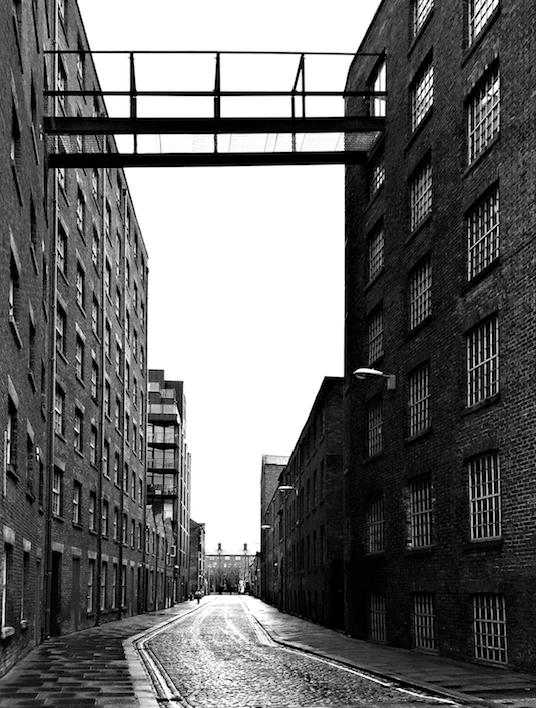
“But then, there’s the industrial heritage in Ancoats, too, and the gorgeous old buildings still standing. St John St Hotel is one. And the Hatters Hotel – that’s a stunning building. In another city it would be a boutique hotel that locals couldn’t afford to use. It’s great that it’s retained a degree of its authenticity.”
www.paulgroganphotography.com
Hopefully, it won’t be too long before Paul is allowed to venture back out into the city and snap more photos for the world to feast their eyes upon.
When he does, he’ll be considering the same ingredients as always: Looking; lighting; and luck.
“Getting good photos is a mix of knowing what you’re looking for and getting the right light,” Paul tells us.
“That photo caught on the corner of Deansgate – Manchester in the rain – is a perfect example of right place, right time. It’s a fantastic photograph.
ADVERTISEMENT
“That’s the thing about Manchester. There are proper little nuggets you can find everywhere.
The most magical Christmas displays have now landed at one of the North West’s best garden centres
Emily Sergeant
Christmas has officially arrived at one of the best garden centres in the North West, and it’s just as magical as you’d hope it would be.
Just outside of Greater Manchester in the village of Glazebury in Warrington, you’ll find Bents Garden and Home – a multi award-winning destination garden centre that’s often voted one of the region’s best. It’s great place to visit all year round, but as anyone who has ever made the trip there will tell you, this place really comes alive during the festive season.
Bents first started out life all the way back in 1937, when Alfred and Margaret Bent began growing and selling roses in the front garden of their terraced house in Glazebury.
Ever since then, the business has gone from strength to strength – opening its first dedicated garden centre building in the early 1950s, and then undergoing several expansions in the 60 years that followed to create the place we know and love today.
A place that’s home to everything you need to kit out your home and garden, several cafes and restaurants, a food hall, a cook shop, a children’s boutique, and plenty more.
Christmas has arrived at Bents Garden and Home for 2026 / Credit: The Manc Group
And then at Christmas time, you can also get to wander around all the magical festive displays and stop for a bite to eat at the winter food markets.
Christmas at Bents originally began in the 1970s, establishing what would become one of the garden centre’s most successful – and favourite – times of the year, with people travelling in their thousands from all across the North West to visit, making it an annual tradition in the festive events calendar for many families.
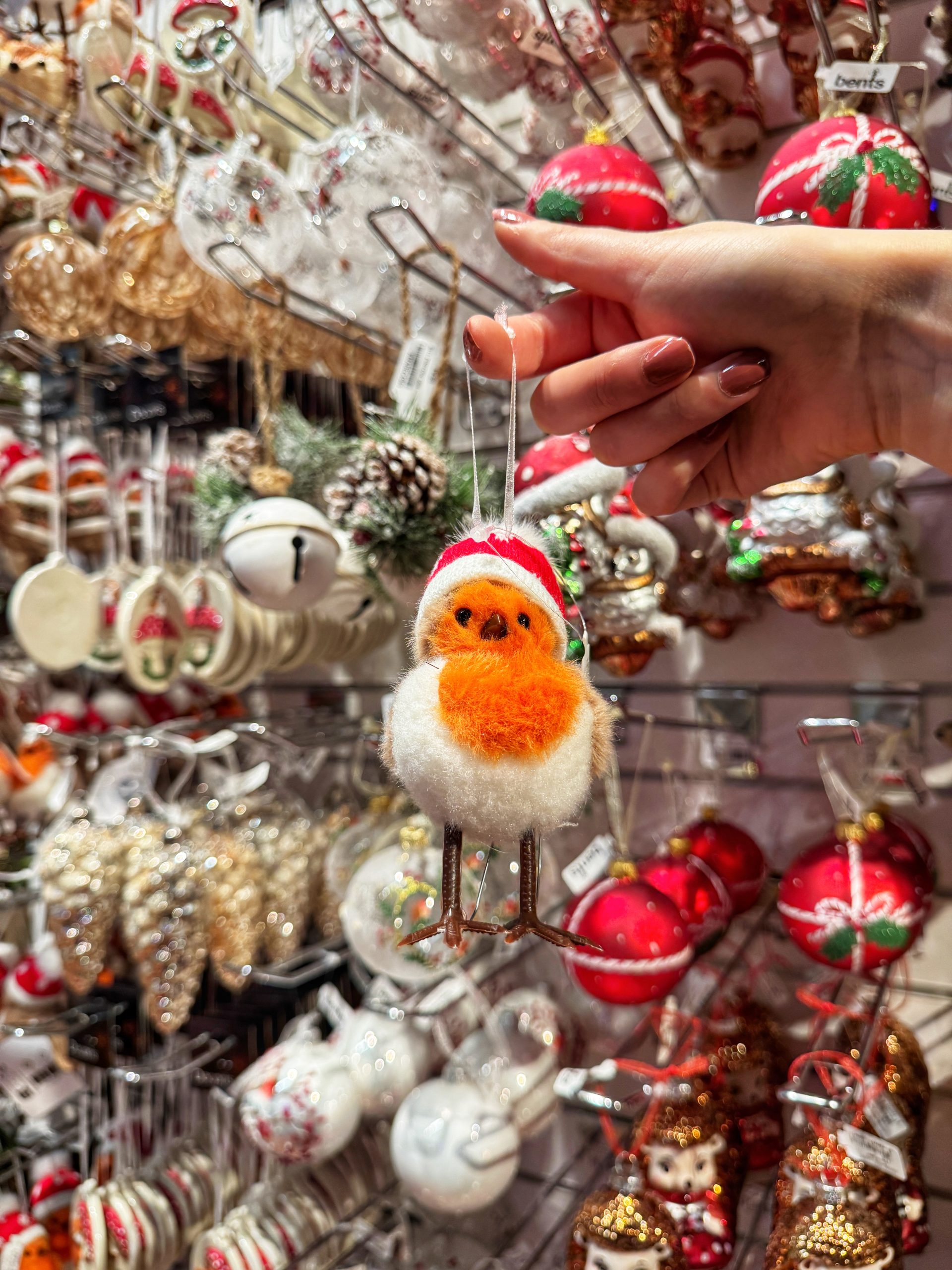
With a jaw-dropping display to suit everyone’s festive decor tastes, Christmas at Bents really does need to be seen to be believed.
Expertly decorated trees form the centrepiece of each display, with all the baubles and decorations adorning them for sale by the side for you to recreate yourself at home.
Walking around the centre, you’ll also find every type of artificial tree (both normal and pre-lit), an array of fairy lights, wreaths, and garlands, before you arrive at what is sure to be one of the best Christmas Lemax Model Village set-ups you’ve probably ever seen.
A trip to Bents is an annual festive tradition for thousands across the North West / Credit: The Manc Group
Then, once you’ve filled your basket up with all the decs you need, you have to stop off at the Winter Food Markets before you head home.
There’s a wide array of different street food options to choose from like bratwursts, giant filled Yorkshire puddings, loaded fries, nachos, mac and cheese, crepes, churros, and build-your-own crumble, before taking a pew in one of the little wooden huts and washing it all down with festive-themed hot chocolates and mulled wine.
Don’t forget to stop off at the food hall, farm shop, and deli counters to stock up on plenty of goodies there before you leave too.
Basically, if you’ve never been to Bents before, we honestly cannot recommend it enough – even more so during Christmas time.
Don’t forget to stop off at the Winter Food Markets before heading home / Credit: The Manc Group
But it is really important to note that it does get very busy here, especially on weekends and at peak times like the run up to Christmas.
So you may have to be prepared to patiently wait for parking spaces and cooperate with your fellow shoppers, as well as join queues at the cafes and restaurants, all while respecting the hard-working staff at all times.
Let’s be as respectful as possible, and make this a place where everyone can enjoy a magical festive experience in 2026.
Meet Larishka – the DJ making her mark on Manchester’s Garage scene
Emily Johnson
It’s time to meet Larishka – Audio North’s Artist of the Month for October.
For Larishka, music has always been around her in some form. Growing up surrounded by classical and rock music, she never expected her route into electronic music to begin with a Parklife set from Carl Cox, before eventually becoming a DJ, promoter, and co-owner of Manchester’s Ghosts of Garage.
Today, she runs events, DJs across House, Garage and Bass, and is helping build a community around one of Manchester’s most exciting electronic music brands.
From promoter to DJ
Larishka actually started out as a promoter while doing an apprenticeship at a music booking agency. She always knew she wanted to work on the events side rather than bookings, but felt like she wasn’t going to make many connections within the industry while living in Oldham.
Her plan was to go to university to study music, with the hope of learning to produce while also moving into Manchester and making connections within the city’s music scene.
Quite quickly into her studies, she joined Ghosts of Garage. After about a year, she had something of a lightbulb moment.
Meet Larishka, the DJ making her mark on Manchester’s Garage scene / Credit: Supplied
“I was studying music, I run my own nights, and I was always on the aux at house parties, so why have I not learned to DJ yet?” she explained.
That realisation came while she was sitting on MATTIK’s living room sofa, where she asked if he would teach her. Before long, she was calling him every day asking if they could go to the studio and practise mixing.
“I owe it to him really, he was a brilliant teacher.”
“I get it” – the Parklife moment that changed everything
Larishka’s introduction to electronic music wasn’t exactly the traditional one.
“I grew up on classical and rock music – my dad was a sound engineer in the 70s so that was his thing really, and my mum played the piano every single day so that’s what I was constantly around.”
She first heard house music when she was around 15 or 16, after a friend sent her a track they had found on SoundCloud.
“I listened to it out of my phone and didn’t really get it, it was too repetitive.”
A few years later, everything changed. After hearing Parklife from her window every year growing up, Larishka eventually went to the festival for the first time and watched Carl Cox close The Valley. He played ‘Finder’ by Ninetoes, and it was the first time she had experienced electronic music on a huge sound system.
“I remember being in absolute awe and turning to my friend and saying ‘I get it’ and from then, I was just absolutely hooked.”
It became a genuine turning point.
“I had my A Level exams that following week and when I was revising all I was listening to was house music and I remember my Dad coming in and saying ‘Is this you forever now?’ and I said ‘Yeah I think it is'”.
Larishka is Audio North’s Artist of the Month for October / Credit: Supplied
Why Manchester means so much
“I mean it’s home, and always has been.”
Having become part of the city’s music scene, she says she feels incredibly lucky to have found a community around her.
“There’s a certain camaraderie that exists here that I don’t know that you’d find anywhere else.”
For her, that sense of community is what makes Manchester’s music scene so special.
“Seeing people you know everywhere you go, you kinda feel like you’re never alone and that you’re actually part of something.”
That spirit extends beyond electronic music, too.
“And it’s not just in electronic music either, that spirit exists across all genres – Manchester music history is so rooted across such a broad spectrum of genres, and to see that still prevailing today is something we should all be proud of.”
Building Ghosts of Garage
It’s impossible to talk about Larishka’s journey without talking about Ghosts of Garage.
She’s a co-owner of the brand, having joined in 2021, and works across its marketing, bookings and creative direction alongside Rich Reason. For her, one of the biggest things that makes a Ghosts of Garage night stand out is its commitment to the music.
“The music and lineups truly never miss, which is a credit to Rich. The guy knows how to program a lineup.”
The team makes a conscious effort to champion new talent, often including at least one Manchester or UK debut on a lineup.
“A big part of each event is making them unique while keeping the brand consistent – each event has to have its own USP or else the nights get boring and people think they can just skip this one and go to the next and it’ll be the same.”
For Larishka, music has always been around her in some form / Credit: Supplied
Community is a huge part of the brand.
“We’re also big advocates of community and want to create the gap between audience and DJ as little as possible, so try to get the crowd involved as much as possible through things like our WhatsApp community.”
The aim is to make people feel like buying a ticket means becoming part of something bigger.
“We want people to feel like if you buy a ticket for our event, then you’ve unlocked a key to be part of something.”
Larishka’s advice for getting into Manchester’s music scene
For anyone hoping to break into Manchester’s music scene, Larishka’s advice is simple – go out.
“I’m way more likely to book you if we’ve met and we’ve had a good chat because it means I can put a face to a name and I know what you’re like.”
For her, being part of the community is about more than simply sending messages and asking for opportunities.
“Being an active member of the community means you’re already part of the night, so booking you to DJ just makes you even more part of it than you already are, rather than someone I’ve never met before who’s in my DMs.”
Ultimately, it comes back to the same thing that has shaped so much of Larishka’s own journey – showing up, meeting people, and becoming part of something.

 The Manc -
29th January 2021
The Manc -
29th January 2021