Watching Simon Pegg stride through Great Northern ODEON on a Sunday afternoon is more than a little strange.
This is a place where people come to see the movie stars – but today it looks like a celebrity has stepped right off the big screen.
Fans flock to grab photos with Pegg as he weaves from the box office towards the theatre; filling the walkspace with the clamour of shouts and snapping cameras.
Bumping into the star of Spaced, Shaun of the Dead and Hot Fuzz on Deansgate would be arresting at the best of times, but it’s even more extraordinary when you consider the context.
Pegg is in Manchester for a premiere he couldn’t originally attend, for a film that almost didn’t get shot, starring in a role that’s unrecognisable to anything he’s done before.
ADVERTISEMENT
“It felt like something I needed to put right…”
One of the big features on the bill this weekend at Manchester International Film Festival is Lost Transmissions – an independent movie starring Pegg and Juno Temple about music, creativity and psychosis.
Pegg made the movie in between stints on Hollywood blockbusters Star Trek and Mission:Impossible, and whilst his busy schedule had cast doubt on any potential appearance at the premiere, a last-minute scheduling change means that Pegg makes it to town just in time.
Lost Transmissions is a smaller kind of production than the star is used to nowadays, but he’s as visibly passionate about the project as much as any other he’s been involved with.
ADVERTISEMENT
Grappling with complex mental health issues, Lost Transmissions presented Pegg with am unfamiliar and particularly challenging role – but it also allowed him to break new ground by working with a female filmmaker.
“I hadn’t done a movie that has been directed by a woman in twenty years of making films,” Pegg tells us, sounding a little surprised by his own answer.
“That felt like something I needed to put right.”
ADVERTISEMENT
Pegg has long been a loud advocate for female representation in cinema, and when the opportunity came to work with Katharine O’Brien for her directorial debut, he was hungry to take it.
“It was the script [that attracted me to the project] first and foremost… and the fact that Katharine had sent me a script that was straight drama.
“I tend to get pigeon-holed as a comedy actor, which is my own fault.”
“At one point, it looked like it was going to get dropped…”
After realising they were both on the same page, Pegg and O’Brien began to throw some momentum behind Lost Transmissions, with excitement growing around its potential. However, schedule clashes meant the film was, for several months, left dangling by a thread.
“I was attached to the project for a very long time,” Pegg tells us.
ADVERTISEMENT
“At one point it looked like it was going to get dropped or I was going to have to drop out because of Mission: Impossible.
“But Katharine waited for me, thank goodness, and we got to make the film.”
“Making it was a really fun experience. It was a 20-day shoot, which is not what I’m used to compared to the bigger films, but she was so sure of what she wanted in terms of performance and the look of the movie.
“It’s really nice when you work with a director who knows what they’re doing.”
Lost Transmissions dives into territory few films have dared to explore and even fewer have managed to understand: The world of schizophrenia.
ADVERTISEMENT
Speaking about his role Pegg explains: “I play a guy called Theo Ross whose a music producer working in Los Angeles, a British guy, who has developed schizophrenia due to some bad acid he took in the nineties.
“In the movie, he decides to come off his medication because he’s worried it’s stifling him creatively, but of course that leads to him drifting back into the realm of schizophrenic delusion.
“It comes down to Juno Temple’s character trying to save Theo as he drifts off further and further into mania.”
“It’s easy to approximate madness in film; mental health issues seem to be one of the last kind of things that it’s ok to be flippant about…”
Pegg went to great lengths to embody the character during production – with the role of Theo so different to his usual roles.
“I researched it thoroughly; it didn’t feel like a role I could just guess,” Pegg says.
ADVERTISEMENT
“Schizophrenia is a very real, very specific condition. It gets mistaken a lot of the time for split personality, but schizophrenia isn’t like that at all. [It’s] more about people’s perception getting confused, the brain starts to make certain patterns and create delusional narratives which the person responds to.
“So, I really had to learn about that and meet schizophrenics, read about it, watch documentaries, and go into the film knowing what I was talking about.
“It’s easy to approximate madness in film, mental health issues seem to be one of the last kind of things that it’s ok to be flippant about. Acting crazy, you know, anyone can do that – but it’s not at all the way to approach it.
“You have to approach these things faithfully and give a genuine, authentic portrayal.”
Before Pegg heads off to host a Lost Transmissions Q&A alongside his director, he fills us in on his next chapter.
“I’ve got two Mission:Impossible films to make over the next two years,” he confirms.
ADVERTISEMENT
“And there’s something I’m developing at Stolen Picture – mine and Nick Frost’s production company.
Pegg’s features scrunch together as he searches his memory banks.
“It’s a show I’ve been developing for… eight years, I think. I’ve finally found a way to do it!”
Suddenly, a wide smile spreads across his face.
“But I can’t say anything about it yet… which is really frustrating.”
Now’s not the time for that, anyway. Today is all about the indie film that pulls Pegg from his self-confessed comedy “pigeon-hole”. And he’s proud of it.
Catch Lost Transmissions in cinemas during its wide release from 14 March. For more information on some of the fantastic films playing this week at MANIFF, head to their website.
Feature
Mercury Prize 2026 review: RAYE takes home the crown as Newcastle celebrates the very best in music
Clementine Hall
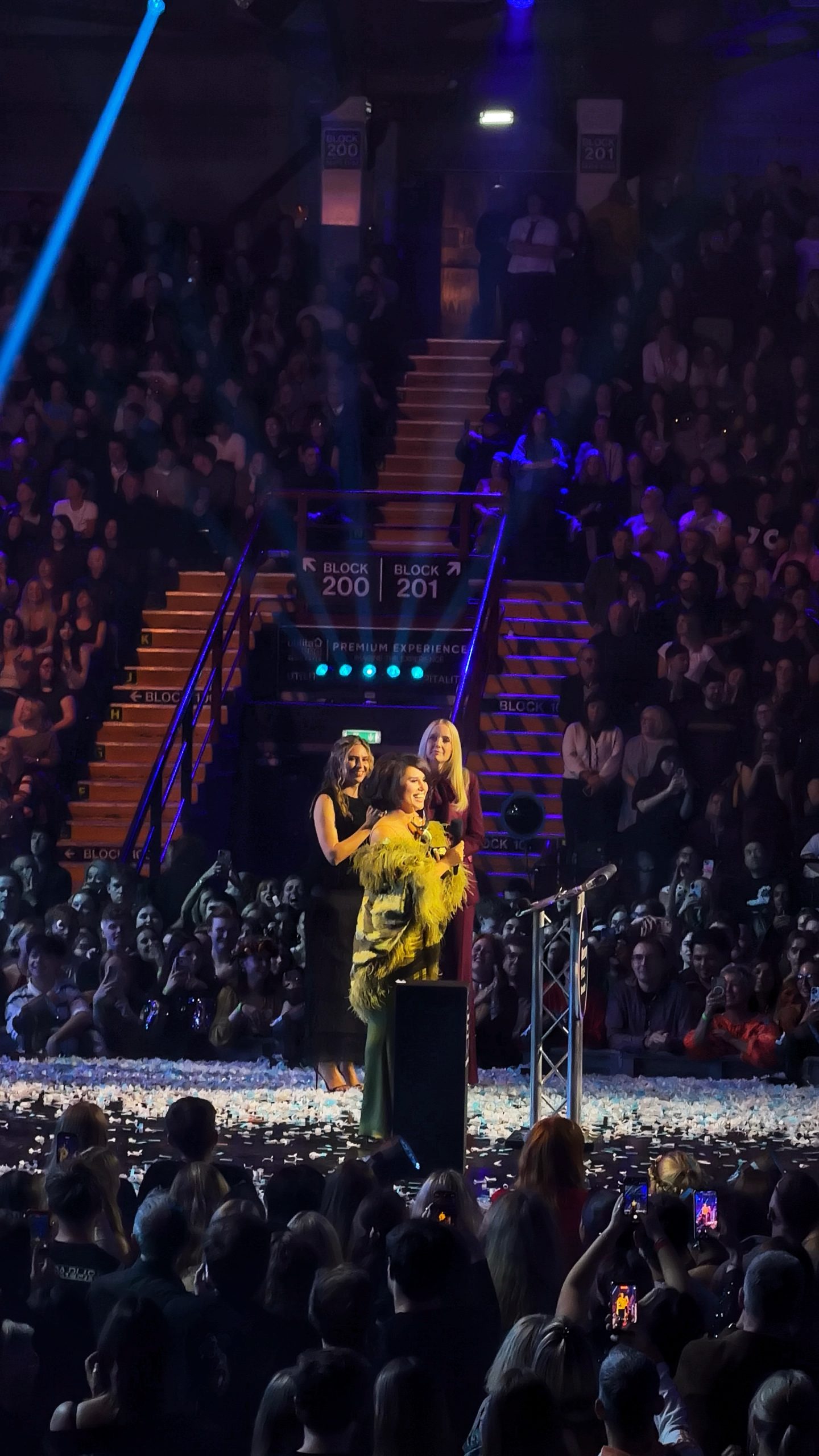
One of the biggest nights in music kicked off last night as the Mercury Prize 2026 was awarded.
If there was ever a night to fall head over heels in love with British and Irish music, the 2026 Mercury Prize made a very convincing case.
Bringing together some of the country’s most exciting artists under one roof in Newcastle, this year’s ceremony was a reminder of just how much talent is packed into the current music scene.
From established legends to the names shaping what comes next, it was an absolute belter.
Images: Audio North
Held at the Newcastle Utilita Arena for the second year running, I think everybody in that room felt very lucky to be there to see firsthand who took home the coveted prize.
The shortlist brought together an impressive mix of artists, with Florence + The Machine, Olivia Dean, JADE, Suede, Pulp, Dave and Sir Paul McCartney among the big names making the lineup very star studded indeed.
Suede kicked things off with ‘Dancing With The Europeans’, bringing their unmistakable energy to the ceremony, while Pulp delivered ‘Begging For Change’ as part of the HELP(2) charity compilation.
It was a line-up that demonstrated the sheer range of music being made across the UK and Ireland, from contemporary pop to established rock and even jungle thanks to Bradford’s own Nia Archives.
And of course, there was one woman who had every reason to leave with a smile on her face.
RAYE took home the coveted Mercury Prize for THIS MUSIC MAY CONTAIN HOPE., an ambitious, genre-hopping album that blends jazz, soul, R&B and classical influences into something so fabulously unique.
Image: Audio North
Newcastle’s own Knats performance was definitely a highlight of the evening, combining slick jazz with spoken-word poetry against a projection of The Tyne Bridge.
A fitting image, and one that underlines the importance of holding such huge events in the north and highlighting the obvious talent that thrives here.
The 2026 Mercury Prize was a brilliant showcase of the country’s music at its best.
And with RAYE taking home the trophy, it’s clear there is plenty of ‘hope’ left in British music.
The most magical Christmas displays have now landed at one of the North West’s best garden centres
Emily Sergeant
Christmas has officially arrived at one of the best garden centres in the North West, and it’s just as magical as you’d hope it would be.
Just outside of Greater Manchester in the village of Glazebury in Warrington, you’ll find Bents Garden and Home – a multi award-winning destination garden centre that’s often voted one of the region’s best. It’s great place to visit all year round, but as anyone who has ever made the trip there will tell you, this place really comes alive during the festive season.
Bents first started out life all the way back in 1937, when Alfred and Margaret Bent began growing and selling roses in the front garden of their terraced house in Glazebury.
Ever since then, the business has gone from strength to strength – opening its first dedicated garden centre building in the early 1950s, and then undergoing several expansions in the 60 years that followed to create the place we know and love today.
A place that’s home to everything you need to kit out your home and garden, several cafes and restaurants, a food hall, a cook shop, a children’s boutique, and plenty more.
Christmas has arrived at Bents Garden and Home for 2026 / Credit: The Manc Group
And then at Christmas time, you can also get to wander around all the magical festive displays and stop for a bite to eat at the winter food markets.
Christmas at Bents originally began in the 1970s, establishing what would become one of the garden centre’s most successful – and favourite – times of the year, with people travelling in their thousands from all across the North West to visit, making it an annual tradition in the festive events calendar for many families.
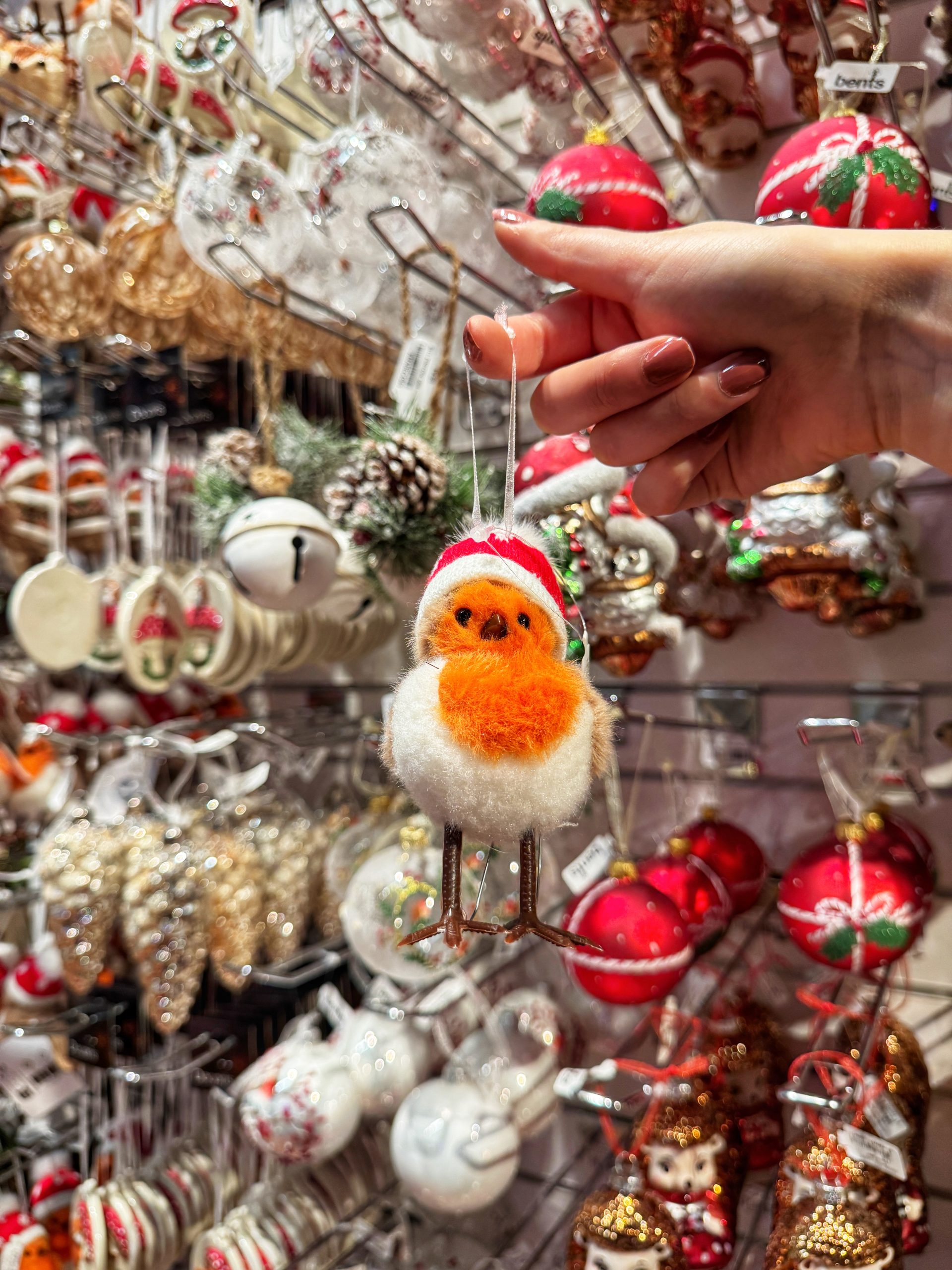
With a jaw-dropping display to suit everyone’s festive decor tastes, Christmas at Bents really does need to be seen to be believed.
Expertly decorated trees form the centrepiece of each display, with all the baubles and decorations adorning them for sale by the side for you to recreate yourself at home.
Walking around the centre, you’ll also find every type of artificial tree (both normal and pre-lit), an array of fairy lights, wreaths, and garlands, before you arrive at what is sure to be one of the best Christmas Lemax Model Village set-ups you’ve probably ever seen.
A trip to Bents is an annual festive tradition for thousands across the North West / Credit: The Manc Group
Then, once you’ve filled your basket up with all the decs you need, you have to stop off at the Winter Food Markets before you head home.
There’s a wide array of different street food options to choose from like bratwursts, giant filled Yorkshire puddings, loaded fries, nachos, mac and cheese, crepes, churros, and build-your-own crumble, before taking a pew in one of the little wooden huts and washing it all down with festive-themed hot chocolates and mulled wine.
Don’t forget to stop off at the food hall, farm shop, and deli counters to stock up on plenty of goodies there before you leave too.
Basically, if you’ve never been to Bents before, we honestly cannot recommend it enough – even more so during Christmas time.
Don’t forget to stop off at the Winter Food Markets before heading home / Credit: The Manc Group
But it is really important to note that it does get very busy here, especially on weekends and at peak times like the run up to Christmas.
So you may have to be prepared to patiently wait for parking spaces and cooperate with your fellow shoppers, as well as join queues at the cafes and restaurants, all while respecting the hard-working staff at all times.
Let’s be as respectful as possible, and make this a place where everyone can enjoy a magical festive experience in 2026.

 Gareth Lloyd -
12th March 2020
Gareth Lloyd -
12th March 2020