The legislation was handed down by the Department for Environment, Food and Rural Affairs (DEFRA) on 23 October, with ratification in England and Wales coming on Thursday; it is expected that Scotland and Northern Ireland will follow suit.
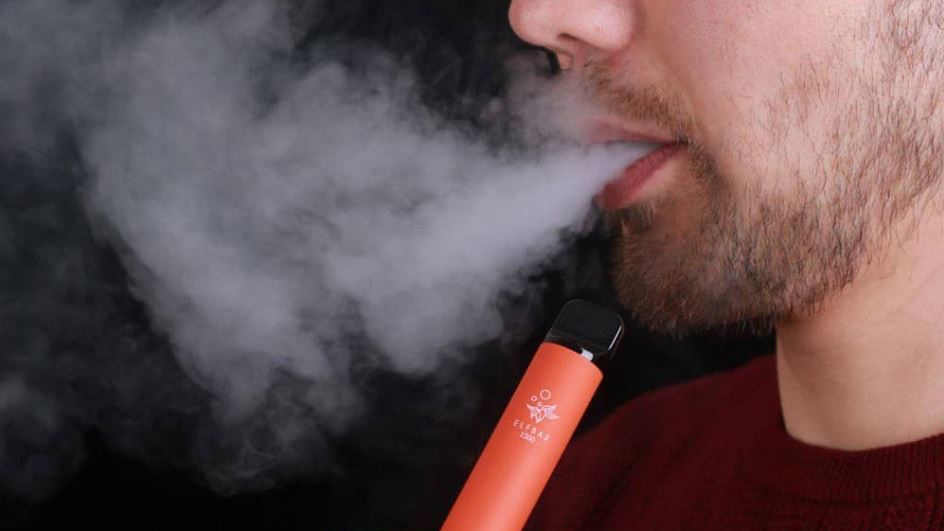
Common examples of disposable vapes currently available in the UK. (Credit: The Manc Group/6289AIT via Wikimedia Commons)
Announcing the impending ban this week, DEFRA confirmed that what they have labelled as an “extremely wasteful and blight our towns and cities” – not to mention a gateway substance for non-smokers and children – will finally be banned by June 2025.
ADVERTISEMENT
In addition to a marked increase in users who have never even smoked before, it is estimated that around 9% of the British population now enjoy vaping and that the popularity among young people is alarming and only increasing.
The Minister for Public Health and Prevention, Andrew Gwynne said: “It’s deeply worrying that a quarter of 11-15-year-olds used a vape last year and we know disposables are the product of choice for the majority of kids vaping today.
ADVERTISEMENT
“Banning disposable vapes will not only protect the environment but importantly reduce the appeal of vapes to children and keep them out of the hands of vulnerable young people.”
Meanwhile, Circular Economy Minister Mary Creagh, who announced the new law on Wednesday, added: “This is the first step on the road to a circular economy, where we use resources for longer, reduce waste, accelerate the path to net-zero and create thousands of jobs across the country.”
The new vape law gives suppliers in England a deadline of June 1st 2025 to rid of all disposable vapes.
This is all well & good but children will switch to refillable vapes. I don’t smoke/vape but even I can see that! 🤦🏼♂️ pic.twitter.com/9hDImziqRR
69% of those who responded to the consultation were in favour of doing away with disposable vapes which are not only a public health risk but a massive detriment environmentally, as plastic, lead, and mercury leaching into waterways and/or other habits to harm wildlife is a prevailing concern.
ADVERTISEMENT
The usual type of vape pens bought from off-licenses and most major retailers cannot typically be recycled, meaning that they usually end up in landfill or being incinerated, which also poses a fire risk due to their lithium-ion batteries and can cause poor air quality.
Despite still being a hugely profitable industry, the government is also set to introduce a landmark Tobacco and Vapes Bill, first submitted in September of this year, set to be the biggest public health intervention in a generation.
In theory, it aims to protect young people from nicotine addiction and pave the way for a smoke-free UK by 2030 – banning disposable vapes is just the latest in the comprehensive nationwide plans.
Government launches £442m drive to get rough sleepers off streets before Christmas
Emily Sergeant
Prime Minister Andy Burnham has launched a £442m drive to get rough sleepers off the streets before Christmas.
Learning from ‘innovative’ approaches put into place during the pandemic, the Government has announced that new accommodation will be rolled out across England this winter, as well as offering practical help with housing, health, and other needs to support people to build a more stable life for themselves in the future.
The new commitment to offer everyone a route off the streets this Christmas, along with boosted funding, reflect the Andy Burnham‘s national drive to make ‘real change’ and get everyone playing their part in ending rough sleeping.
Not only will these plans change the lives of rough sleepers, but it’s also said they will have huge benefits for the country as a whole.
Research from homelessness charity Crisis suggests that by preventing 40,000 people from becoming homeless for a year, taxpayers could save around £370 million.
The Government has launched a £442m drive to get rough sleepers off the streets before Christmas / Credit: Number 10 Press Office | Jon Tyson (via Unsplash)
As well provisions to get people off the streets, and the intensive ‘wraparound’ support, the newly allocated funding will also help local areas deliver more than 1,000 ‘settled’ homes over the next three years, it has been confirmed.
Areas facing the greatest pressures will receive the largest share of support.
Working alongside councils, Mayors will play a leading role in driving local action to end rough sleeping, and will be tasked with making decisions that are right for their communities to deliver help where it’s needed most.
The Prime Minister says he ‘won’t accept’ rough sleeping any longer. He commented: “No one should have to bed down in a doorway or outside a station, but we’ve seen it for so long that it feels like Westminster has started to accept it.
“That’s why my first instruction as Prime Minister was to end rough sleeping, and it’s why today we’re getting started with a national drive to get everyone in for Christmas. We did it in the pandemic, we can do it again. But it needs all of us.
“Government will put the money in, but I’m asking leaders in communities and sectors across society to play their part locally too.
“Let’s get people out the cold, and let’s bring back hope.”
Featured Image – Gary Knight (via Flickr)
News
Trainline and Virgin Atlantic among companies being investigated for ‘misleading’ pricing
Emily Sergeant
A number of companies are currently under investigation for ‘misleading’ pricing practices.
The Competition and Markets Authority (CMA) has launched three new consumer protection investigations into Trainline, Virgin Atlantic, and RED Driving School over concerns that customers were not shown the total price upfront when buying things like train and coach tickets, holidays, or even driving lessons.
The investigations are part of a wider CMA clampdown on misleading pricing practices – in this instance, where mandatory charges are separated from the headline price, or added later in the buying process, which is known as drip pricing.
These practices leave consumers facing ‘unexpected’ costs or having to calculate the so-called true cost themselves.
Such practices can also impact competition between businesses, as a firm using drip pricing may falsely appear to be cheaper than a competitor pricing correctly, and therefore attract more customers.
Trainline and Virgin Atlantic are among the companies being investigated for ‘misleading’ pricing / Credit: Northern | Aric Cheng (via Unsplash)
Trainline is being investigated over whether all mandatory fees have been included in the upfront prices displayed to consumers buying tickets in advance on its app and website, while Virgin Atlantic’s investigation will focus on whether mandatory resort fees and local taxes have been included in the upfront prices shown to customers buying package holidays.
RED Driving School is being investigated over how a mandatory booking fee and ‘digital’ fee have been displayed to people booking driving lessons – specifically whether these fees have been included in the total upfront price.
“At a time when many households are watching every pound they spend, it is important that people are not surprised by extra fees,” commented Emma Cochrane, who is the Executive Director for Consumer Protection at the CMA.
“Clear pricing helps people compare offers confidently and choose the option that works best for them.
“Unexpected mandatory charges make this much harder, which is why the CMA initially put these firms on notice over concerns about their pricing practices and is now opening formal investigations.”
The CMA says it’s at the beginning of its investigations and has reached no conclusions about whether these firms have broken the law.
If it finds there has been an infringement of the law, the CMA can order businesses to pay compensation to affected customers or be charged up to 10% of global turnover.