The Manchester city centre skyline is set to change once again, as a nine-year project to build four “iconic” skyscrapers has been approved by councillors.
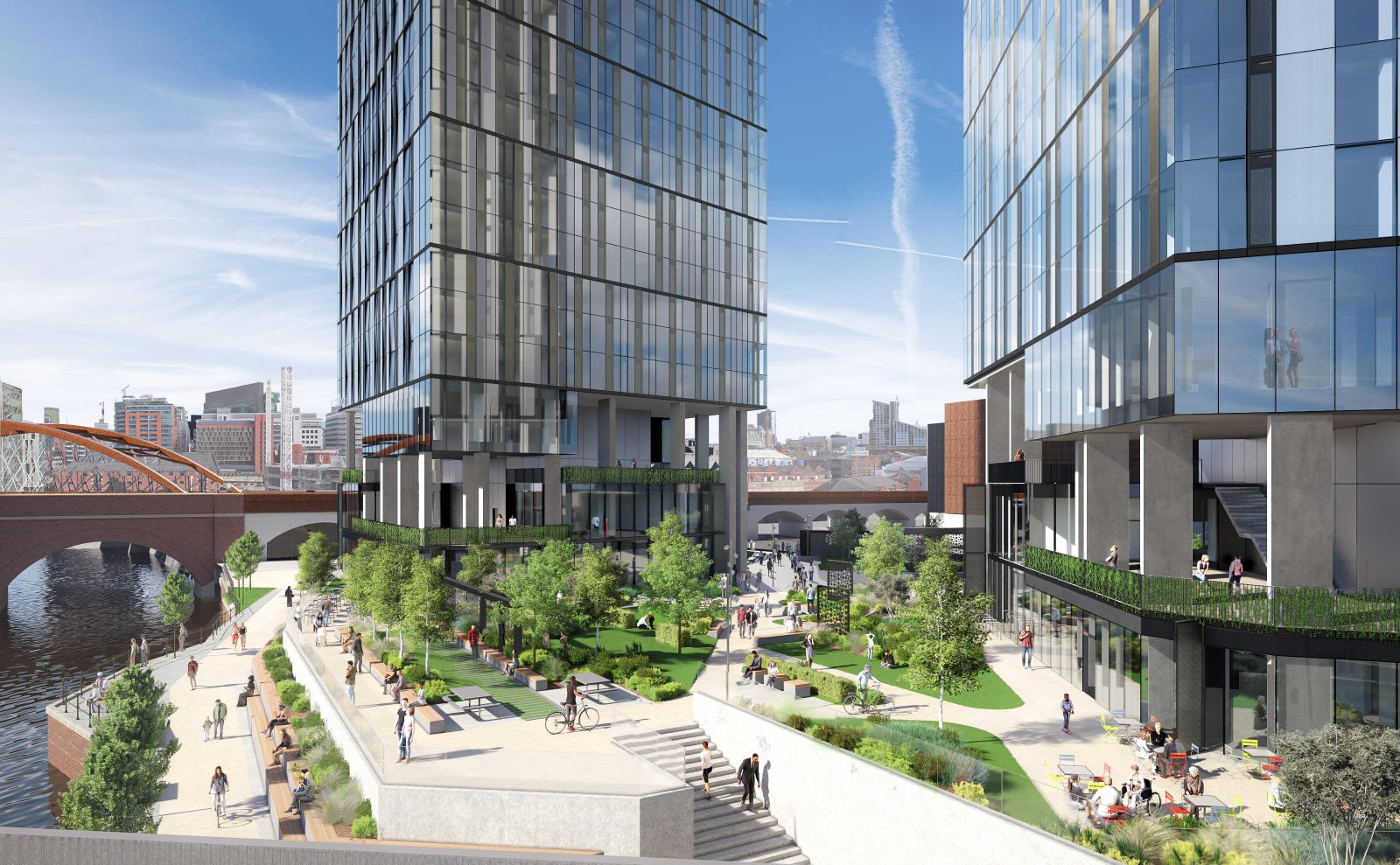
Set to be known as ‘Trinity Islands’, the £751 million plans for the SimpsonHaugh-designed apartment blocks – which were submitted by residential tower specialists, Renaker – are to take shape on two pieces of land on the banks of the River Irwell, and will include a total of 1,950 apartments.
The apartments are to be built on a car park plot between Regent Road, Liverpool Road, and Water Street.
As well as the residential facilites, each of the skyscrapers will feature co-working space, a gym, and lounge areas, and then externally, each building would also have a private residents’ garden that’s accessed directly from the ground floor space.
ADVERTISEMENT
There’ll also be private underground car parks and cycle storage within both the three-storey basements.
(1/3) We are delighted to announce we have been granted full planning permission for our Trinity Islands development! pic.twitter.com/z2q2L3O864
Nearly two-thirds of the site off Trinity Way will become green space open to the public.
ADVERTISEMENT
This approval by Manchester City Council comes after previous plans for five towers – including one which would have been the tallest residential building in Western Europe – failed to materialise, however one of the skyscrapers in these latest plans by Renaker would still be among the tallest towers in the UK outside of London, second in Manchester to the South Tower at Deansgate Square.
Controversially however, none of the new apartments would be deemed “affordable”, as the developer said this would affect the financial viability of the scheme.
An initial contribution of £106,000 towards affordable housing elsewhere in the city has been agreed and a “clawback” clause means the developer could be asked to contribute more cash if the project becomes more profitable.
ADVERTISEMENT
The developer also agreed to contribute £1.5 million towards a new school on Crown Street.
During yesterday’s planning meeting, Manchester City Council’s planning development manager Dave Roscoe told the committee that there were some “very serious challenges” with the site, but that this project was “special”, and admitted that some significant financial public benefits come from the scheme, including a £10 million public space and the funding towards the school.
The nine-year £751 million project has been approved by councillors this week / Credit: Renaker & SimpsonHaugh
Speaking on the green light given to the plans, a spokesperson for Renaker said the company is “delighted” with the decision, adding: “We look forward to delivering these new, iconic buildings, as well as new homes and facilities of the highest quality for residents and the wider community.”
Deansgate councillor Joan Davies, who represents the ward where the site is located, said she was “disappointed” with the amount of affordable housing, but was pleased the “clawback” clause created the possibility for the council to demand more money from the developer later.
ADVERTISEMENT
Manchester City Council Leader Bev Craig added: “It’s important that we look at major schemes like Trinity Islands in the round, alongside our city’s plans and the positive impact that this sort of growth continues to have on our city.
“I am passionate about ensuring that Manchester’s growth benefits everyone.
“Manchester remains a place of prodigious population growth and the city can only meet the demand for new housing through major schemes such as this one, which also brings brownfield land back into use.”
(3/3) All at Renaker are excited to begin working on Trinity Islands, which will sit near the emerging St John’s area and new factory venue for culture and the arts, as well as the Deansgate and Spinningfields districts.
She added: “Trinity Islands is a significant investment in our city, which is testament to the confidence developers continue to have in Manchester, despite the ongoing economic challenges posed by the COVID-19 pandemic.
“This development alone will create 2,000 homes and 4,000 jobs in the construction stage.”
Featured Image – Renaker & SimpsonHaugh
News
Manchester’s historic Portico Library secures £6.4m funding grant towards its transformation
Emily Sergeant
Manchester’s Portico Library has secured a whopping £6.4 million grant from The National Lottery Heritage Fund.
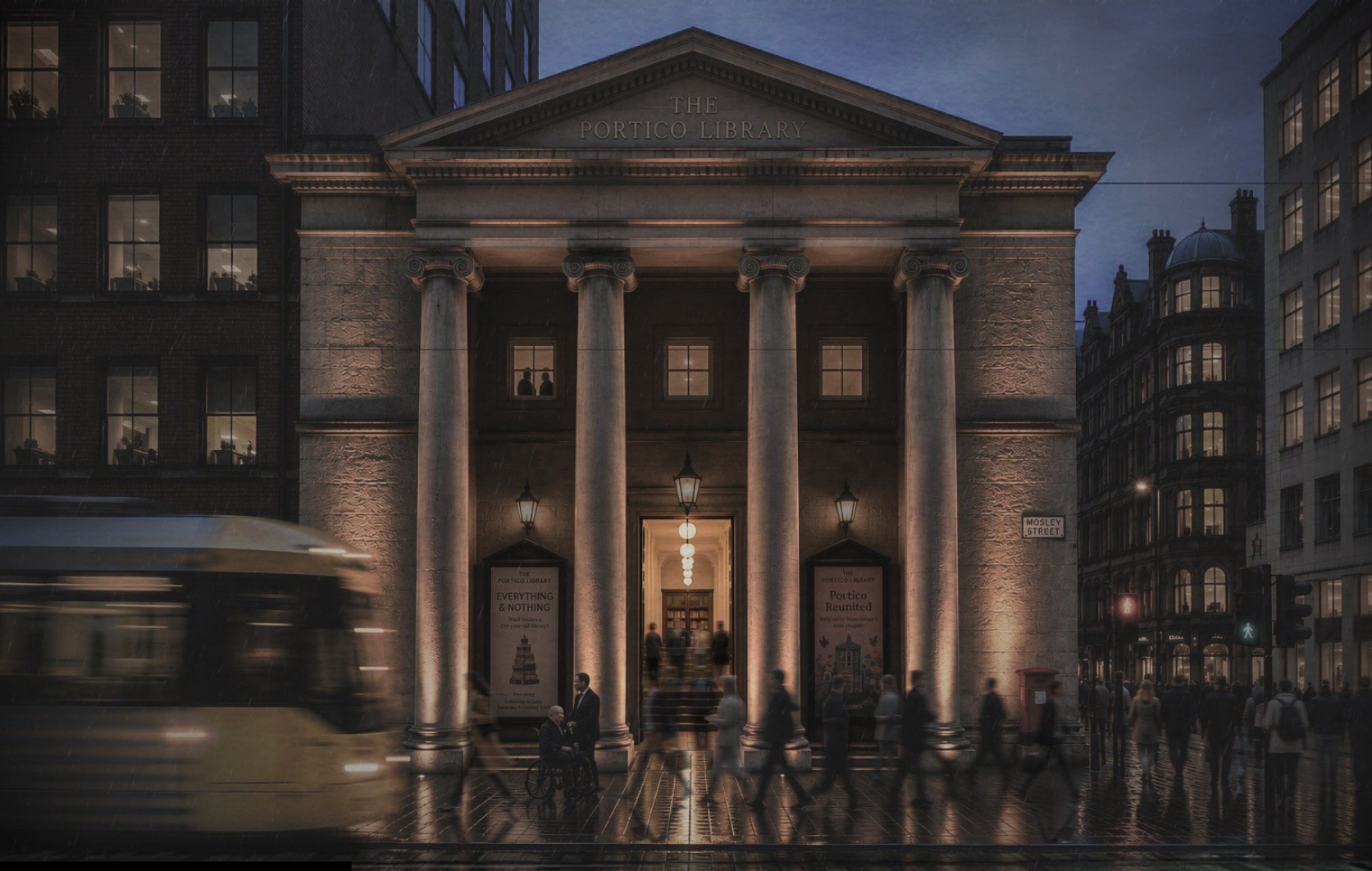
In case you missed it, ambitious plans to transform the historic Grade II-listed building on Mosely Street were already unveiled last October… but now, The National Lottery Heritage Fund has announced it is committing £6.4 million of funding towards the project, hoping that the building thrives as the UK’s most sustainable historic library for generations to come.
The grant is being described as a ‘major milestone’ in the approximately £12 million Portico Reunited project.
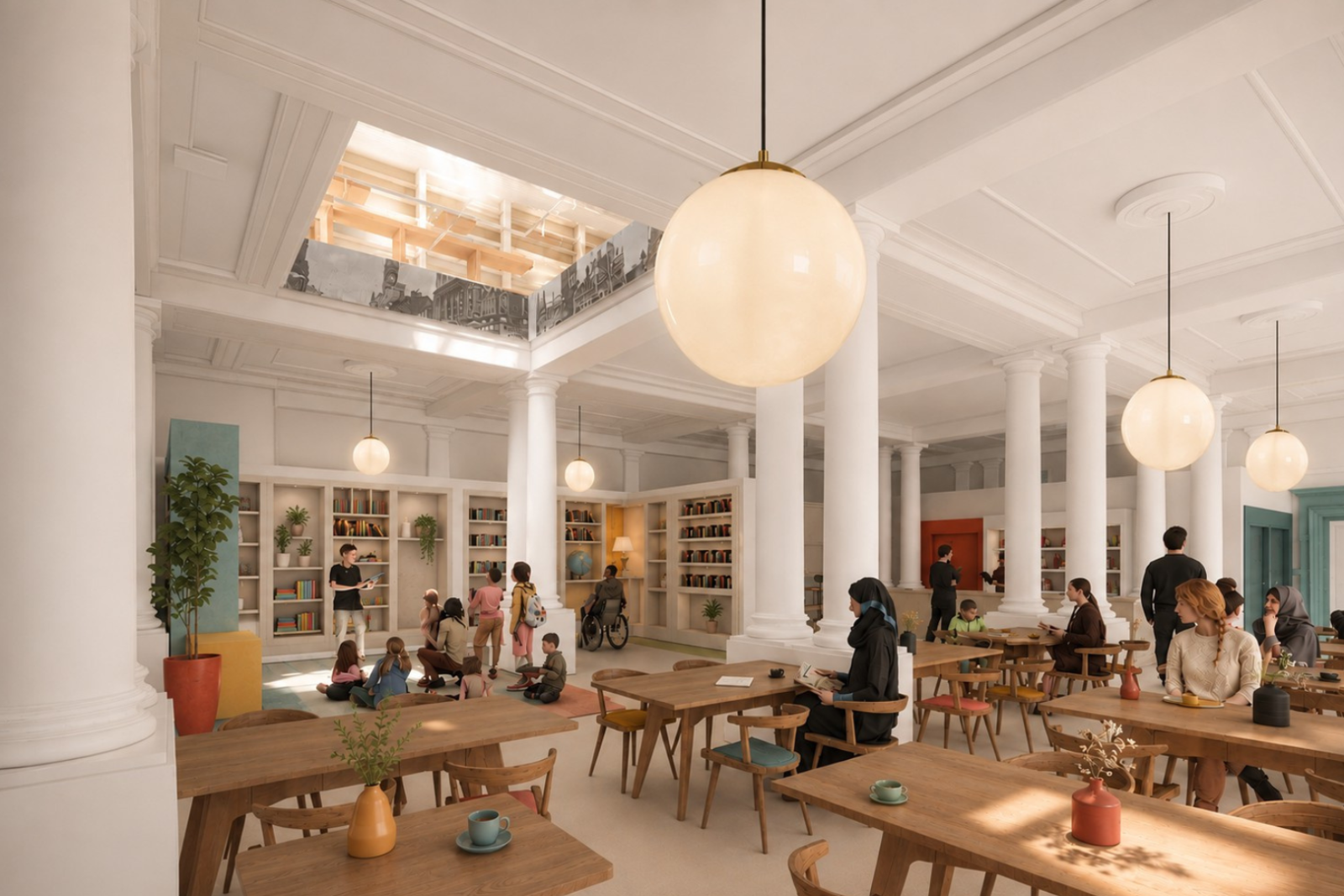
The Portico Reunited project will look to ‘reunite’ the historic building’s three floors for the first time in over a century, creating a fully-accessible and sustainable cultural library.
Founded all the way back in 1806, The Portico Library played a central role in Manchester’s rise as the world’s first modern city, and since then has been serving as a window into the past and a providing a place of inspiration for anyone who needs it.
The Portico Library has secured a £6.4m funding grant towards its transformation / Credit: Purcell Architecture (Supplied)
Crucially, plans will see a step-free entrance and lift installed to make the library accessible to all.
There’ll also be new exhibition and event spaces introduced as part of the scheme to explore the stories of Manchester’s communities and the city’s heritage. There will a Northern Bookshop, showcasing regional and emerging writers, and independent publishers, as well as a creative Portico Kitchen, which will celebrate the city’s food culture, writing, and history.
A place for school groups, families, and all people to explore Portico’s collection and experiment creatively also forms part of the plans.
Dr Thom Keep, Librarian and CEO of The Portico Library, called the funding grant a ‘landmark moment’ in the Portico’s ‘rich and complex history’, and a ‘huge achievement’ for its staff, trustees, volunteers, and partners.
“Thanks to National Lottery players, we can reunite this extraordinary building and make room for people to discover, learn and create together,” he added.
“We have listened to thousands of people about what the Portico could become, and their ideas and experiences have helped shape these plans.
“Our ambition is a library that belongs to the whole city – a place to discover remarkable collections, question the stories we have inherited, and create new possibilities together.”
Manchester City Council has granted planning permission and listed building consent for the project, and the building is expected to close for construction in late spring 2028 and reopen once again in early March 2030.
Following reopening, the transformed library is expected to welcome around 95,000 visitors each year.
Featured Image – Purcell Architecture (Supplied)
News
New data estimates that 7.3m Oasis fans are set to miss out on 2027 tour tickets
Emily Sergeant
New data has revealed that as many as 7.3 million Oasis fans could be set to miss out on tickets to the band’s 2027 tour.
In case you need bringing up to speed a little, it was announced earlier this week that, following the unprecedented success of the reunion tour, Oasis Live ’25, last year, including five nostalgia-drenched gigs at Manchester’s Heaton Park, Oasis would be hitting the road once again in 2027, and this time around, they’re going BIG.
We’re talking 11 nights at the Etihad Stadium and a return to the iconic grounds of Knebworth for four special shows there too, kind of ‘big’.
The iconic Manchester band will also be taking to a range of other world-famous stages across the globe, including five nights at Glasgow’s Celtic Park, and major cities like Barcelona, Amsterdam, Paris, Rome, and Las Vegas.
But despite the elevated number of dates the Gallaghers and co will be performing, some new data has unfortunately revealed that millions of fans may still not be lucky enough to snag a ticket.
The ticketing system for Oasis Live ’27 is not what it was for the last tour, nor will it be similar to many other tours of a similar scale in the past either, as this time, the band and their promotors are taking necessary measures to ensure ‘genuine fans’ get their hands on the tickets and that dynamic pricing doesn’t creep in.
Instead of going into detail on that now though, you can read our full guide on how to get tickets for the Manchester and Knebworth shows here.
Experts at online ticketing platform TicketSource have analysed the scale of demand for Oasis tickets by comparing the 10 million fans worldwide who queued for the initial release of 1.4 million tickets for their 2025 tour, with the newly announced 2027 tour dates and stadium capacities.
With an estimated 2.67 million tickets available across 38 dates and 11 locations between 21 May and 19 September 2027, Oasis could still face huge demand from fans hoping to see them live.
But research reveals the band would need to play 112 Wembley-sized shows to accommodate everyone who tried to get a ticket in 2025.
The 2027 tour would accommodate just 26.7% of those who tried to get tickets last time, meaning almost three-quarters (73%) of them could miss out, leaving a shortfall of more than 7.3 million fans.
Fingers crossed you’re among the lucky lot that secure tickets, though.
Featured Image – Joshua Halling (Press Image – Supplied)

 Emily Sergeant -
18th February 2022
Emily Sergeant -
18th February 2022