‘The last 48 hours have been catastrophic’ – Manchester restaurants report a huge spike in cancellations
Restaurants fear another tough Christmas ahead as Omicron concerns rise - with some establishments fearing they may not survive 2022 if cancellations continue
A number of pubs, restaurants and bars in Manchester are reporting a dramatic spike in cancellations as the new Omicron variant raises concern amongst the public.
As news of Christmas party cancellations spread, some Manchester operators say they fear they may not survive into the new year without the large takes that the festive season typically brings.
Manchester’s nighttime economy adviser Sacha Lord told Sky News this morning that the ‘last 48 hours have been catastrophic for the industry’.
“December is the time when people have a good time, you know they can take up to 25% of their annual turnover in December and sadly at the eleventh hour it’s been smashed away from them,” he said.
Responding to a number of cancellation reports coming out of the city’s hospitality sector, Lord laid the blame at the door of Jenny Harries, head of the UK’s Health Security Agency, who on Tuesday advised the government that people should limit their social contact ‘a little bit’ in the run-up to Christmas to ‘help to keep the virus at bay’.
ADVERTISEMENT
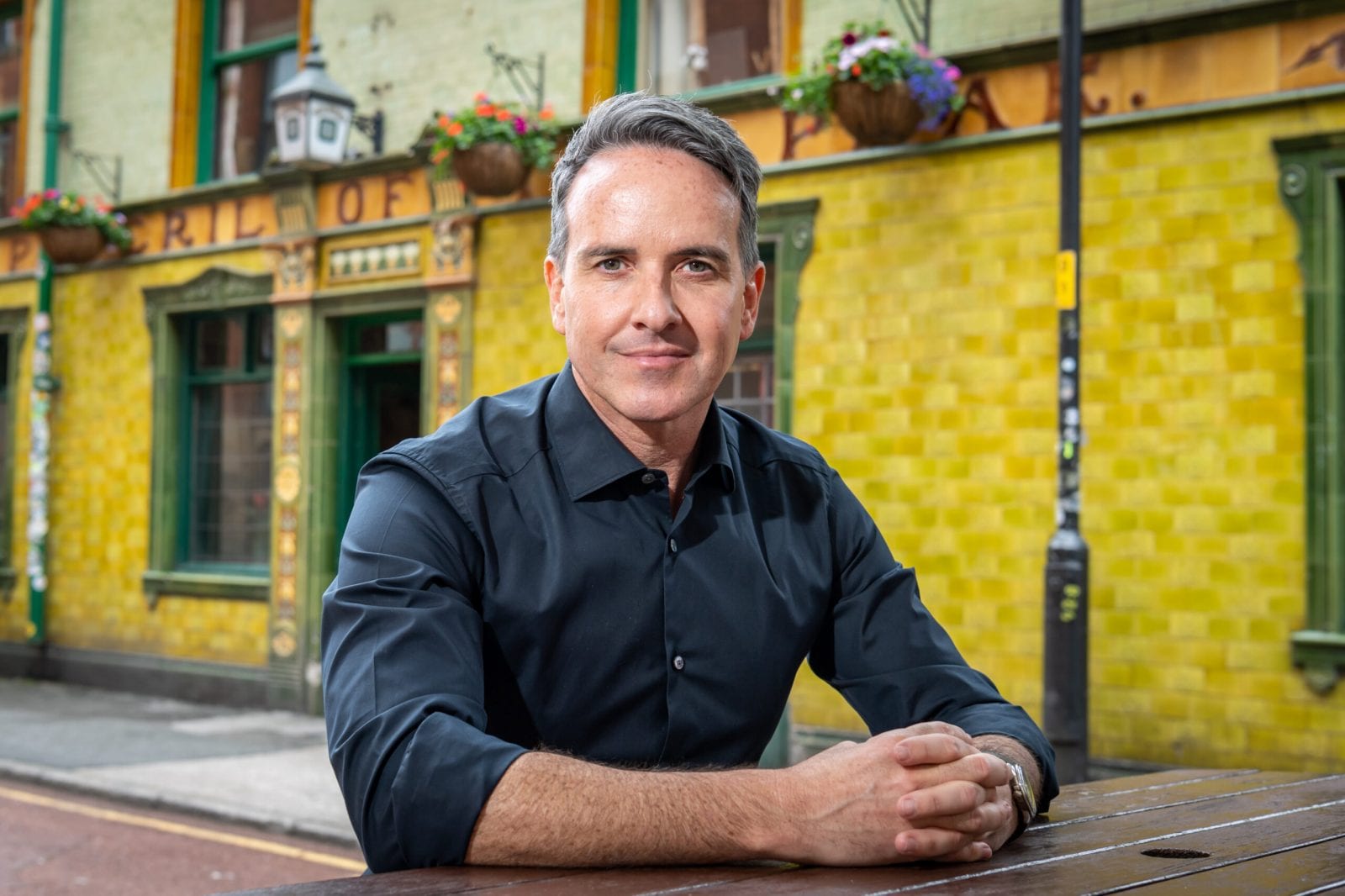
Sacha Lord. Credit: Darren Robinson Photography
He later added in a statement: “Whilst is it highly important that individuals follow Government guidelines to limit the spread of the new variant, they should not make any rash decisions about cancelling their Christmas plans.”
“If the hospitality sector is not supported and closes in December, it will be the final nail in the coffin for many of our beloved venues. This festive period was supposed to help these businesses reach back to pre-pandemic levels and boost revenues for the first time in months.”
ADVERTISEMENT
The government has officially rejected this advice and Prime Minister Boris Johnson has urged people not to cancel their Christmas parties, as has GM Mayor Andy Burnham – but as Lord put it this morning, it seems that ‘bad news spreads a lot quicker than good’.
“It’s yet another blow. A less busy than expected December might be the final straw for a lot of hospitality business,” said Mary Ellen McTague, owner of The Creameries restaurant in Chorlton.
“We’ve had two years of closures, unpredictable business, rising costs etc etc.
ADVERTISEMENT
“I honestly don’t know how much more we can take.”
'I think what we would hope is that the consumers listened to the Prime Minister who came out very strongly'@UKHospKate of @UKHofficial on whether Omicron will deal a death blow to the hospitality sector
Following nearly two years of struggles through lockdowns, tier restrictions and closures caused by staff illnesses, many operators have been counting on a good Christmas – not just to help see them through to the next year, but make up for trade lost to date.
Many businesses have installed extra safety procedures – such as PPE for staff, perspex screens, hand sanitiser points and more rigorous cleaning schedules – at their own expense, and there is a hope amongst some that this, combined with ‘green light’ government messaging, will reassure customers to honour their bookings.
Ultimately, though, the sector is now calling on people to at least let restaurants know if they are no longer going to attend – with some advising that people should be prepared to ‘at the very least lose their deposits’ if they pull out of a booking.
“We have had reports from multiple Manchester-based clients that they have seen particularly large bookings start to cancel,” said Abi Dunn of Manchester-based hospitality recruitment consultants Sixty Eight People.
ADVERTISEMENT
Credit: Unsplash
“This is very sad actually and I truly hope this is the minority. The message from the operators will be clear – if you feel you have no choice but to cancel, then please let the venue know immediately.
“Customers should expect at the very least to lose their deposits and shouldn’t be questioning this. The industry have spent months preparing for Christmas and for many operators a successful December will be key to survival.”
Elsewhere, City Pub Group chief executive Clive Watson said that some bookings had made the choice to postpone to next year instead of cancelling – a welcome move for hospitality businesses already on the knife edge.
“We’ve had some larger parties call up and not cancel – but postpone until January or February,” he told Sky News.
“But from what we can see, smaller work parties and friends meeting up before Christmas is still fine.”
ADVERTISEMENT
Add hotel / venues to that list @Sacha_Lord – at least 50% of our Christmas parties, conferences and groups for December all cancelled this week. Soul destroying.
The cancellations also appear to be having a knock-on effect across wider industries, with local photographers reporting booking cancellations and hoteliers saying that they’ve seen huge conferences, Christmas parties and other groups pull out of bookings too.
“At least 50% of our Christmas parties, conferences and groups for December all cancelled this week. Soul destroying,” said Scott Brown, the Director of Sales for Melia and Innside hotels in Manchester and the north of England.
Speaking at a Downing Street press conference this week, the PM said: “We don’t want people to cancel such events.”
“What we are doing is trying to take a balanced and proportionate approach to the particular risk that seems to be posed by Omicron – certainly is posed by Omicron – focused, in particular, on measures at the border.”
ADVERTISEMENT
Speaking to Mail Plus this morning, CEO of UK Hospitality Kate Nicholls said: “I think what we would hope is that […] consumers listened to the Prime Minister who came out very strongly yesterday afternoon, to say that the government measures on booster jabs on testing on masks were efficient and to recognise the investments that hospitality has made in ventilation, caffeine and sanitation.
“So there was no need to cancel Christmas festivities and bookings, and that people could socialise safely.”
Manchester rent is now ‘41% more expensive than five years ago, according to a recent study
Danny Jones
Yes, that’s right, as per some of the latest data on leased housing in central Manchester, it’s now approximately 41% more expensive to rent here than it was half a decade ago.
If you’ve lived in and around the city centre for long enough, chances are that you’ve already been feeling that difference, especially of late.
The ongoing cost-of-living crisis roughly began in 2021, following the economy and the world essentially opening back up after multiple lockdowns, so it’s little surprise that new research has shown affordability when it comes to renting has been on a slump ever since, too.
As well as the price of seemingly most things in everyday life going up post-pandemic, the average rental rate for even just a one-bedroom flat/apartment has jumped up significantly between 2020 and 2025.
Even some ‘available’ housing in town is being hampered by claddin (Credit: Valienne via WikiCommons)
That’s according to the numbers crunched by credit card experts, Zable, anyway.
Not only did their recent report cite the rent prices going up even before the cost of living crisis – essentially following the outset of the Covid-19 outbreak – but if their figures, the rate of inflation and the unwaveringly high demand for housing are anything to go by, this trajectory is likely to continue in 2026.
As of February this year, around one in three UK households is now a single-person occupancy, which already comes with its challenges (the Manchester City Council tax discount being a thin lifeline for countless), not to mention energy bills and the cost of groceries continuing on an upwards trend.
Put in the simplest and most reductive terms, it’s now almost £300 dearer for most people to live on their own than it was back in 2020, and besides Liverpool clocking in as second on the list of increasingly expensive cities to live (a 42.12% increase), Manchester came in third.
You can see the full table down below:
Rank
City
% increase – 2020-2025
Difference from 2020 to 2025 in £
Average rental cost for a 1 bed 2025
1
Newport
47.39%
£2,611
£8,121
2
Liverpool
42.12%
£2,290
£7,727
3
Manchester
41.00%
£3,364
£11,569
4
Edinburgh
40.28%
£4,620
£16,090
5
Leicester
39.93%
£2,391
£8,379
6
Wolverhampton
39.22%
£2,049
£7,273
7
Nottingham
39.07%
£2,400
£8,543
8
Glasgow
38.02%
£2,679
£9,725
9
Colchester
37.63%
£2,617
£9,572
10
Cardiff
37.06%
£2,828
Average rental cost for a 1-bed 2025
Another fear is that with lots of people finding it hard to manage living in other major cities like London, even those moving to Manchester are also having an impact on how available affordable housing is here.
That’s why schemes such as the new ‘social rent’ development over in Wythenshawe are so important to the current generations of renters, with the possibility of owning your own property in the future becoming increasingly difficult for so many.
It’s also worth noting that Manchester ranked fourth among the British locations where the cost of living is said to have increased the most over the past five years, with the average difference in annual spend growing by an estimated 22.84%.
1,500 miles of roadworks lifted to help ease congestion for drivers this bank holiday weekend
Emily Sergeant
1,500 miles of roadworks have now been lifted across the UK.
With half term well underway already, and now millions of drivers set to hit the road over the next five days as Easter bank holiday weekend arrives, giving Brits two extra days off, National Highways has now confirmed that, as of today (Thursday 2 April), around 1,500 miles of roadworks have been lifted nationwide.
Roads are expected to be ‘especially’ busy tomorrow in particular (Good Friday), National Highways predicts, as this is the day people are most likely to head on a spring getaway.
So, in a bid to help ease congestion for drivers up and down the motorways, roadworks have been removed up until Bank Holiday Monday (6 April).
“By keeping 98% of routes clear, we’re supporting the wider economy where it matters most to tourism, freight, and local businesses,” National Highways said in a statement.
1,500 miles of roadworks have been lifted to help ease congestion for drivers this bank holiday weekend / Credit: pxfuel
The decision to lift the roadworks comes as a new national survey revealed a total of 71,254 breakdowns were recorded in spring (March–May) last year, compared with 56,702 in 2022.
It also showed that more than one in two (53%) UK drivers have broken down on a motorway or major A-road in their lifetime, highlighting how common the experience is for both drivers and passengers, and why it’s important to take relevant safety precautions from all sides.
29% of drivers think their breakdown could have been prevented with simple vehicle safety checks, but 17% admit to rarely or never conducting these.
National Highways echoes the statement that most of these incidents could be avoided through ‘quick and basic’ checks, and is urging drivers heading away this bank holiday weekend to familiarise themselves with how to do these before hitting the roads, so they can reach their destinations safely, saving costs and reducing delays for all road users in the process.
“Millions of people will be hitting the roads over Easter, and we want everyone to have a safe and smooth journey,” commented Colin Stevenson, who is the Road Safety Information Lead at National Highways.
“A few simple checks can help to prevent many of the breakdowns we see each year and help drivers avoid unexpected delays, cost and stress.