Travel & Tourism
‘No Instagram story is worth it’ – safety warning issued to hikers over dangerous beauty spot
'80 year old rusty bolts don't care about you, or your like count'
 Daisy Jackson -
14th April 2023
Daisy Jackson -
14th April 2023 A mountain rescue team has issued a safety warning and some advice to hikers after an upsurge of visitors to several dangerous areas.
Stressing that ‘No Instagram story is worth the risk’, the Llanberis Mountain Rescue Team (LLMRT) urged people not to venture into the old slate quarries around North Wales – no matter how beautiful they may be.
LLMRT said that ‘considerable media and press coverage’ has brought waves of new visitors to the old quarries around Snowdonia, who are often ‘unprepared and inexperienced’.
Hidden dangers at these beauty spots include old railways and ladders that date back more than half a century, often rusted and decayed.
These are prone to collapse at any time, without warning, and are often found above precipitous drops.
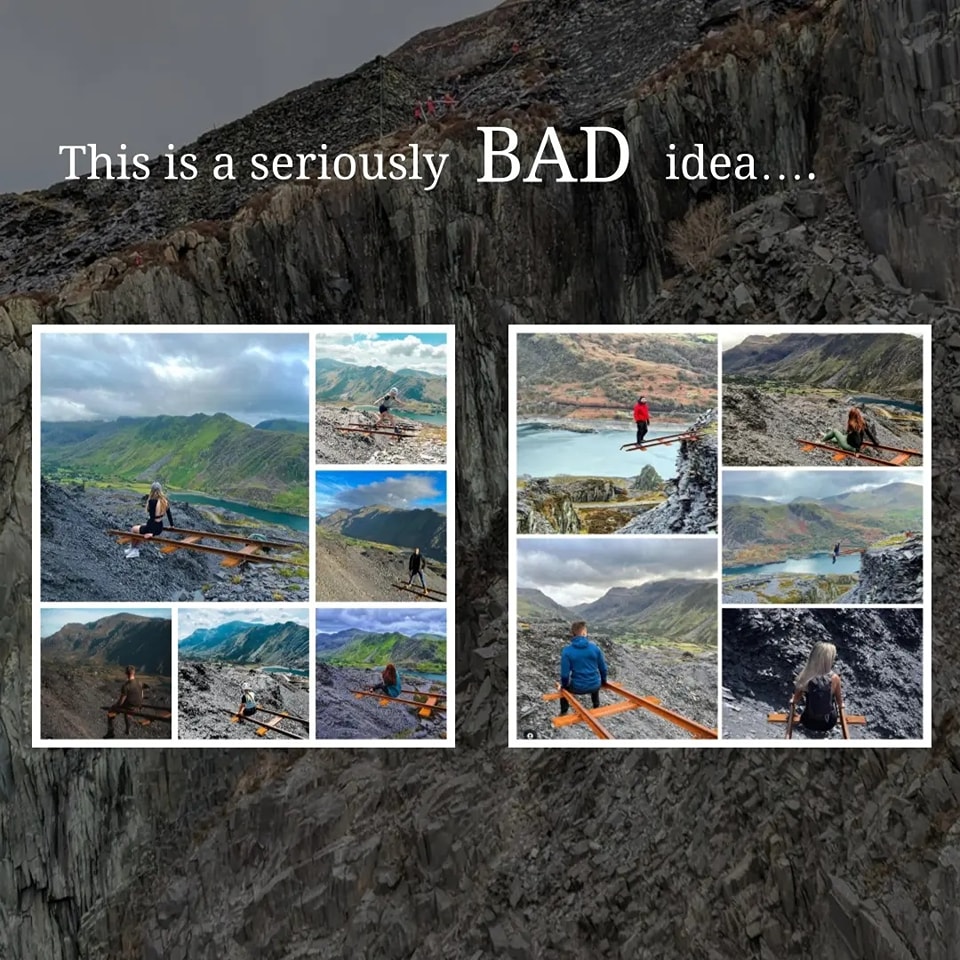
Their words of warning came with a series of photos of people posing on the old railway bridge tracks above Dinorwic Quarry, which jut out into thin air.
The Lllanberis Mountain Rescue Team wrote on Facebook: “When it comes to adventure, we hate to say ‘don’t’, but this is a seriously BAD idea.
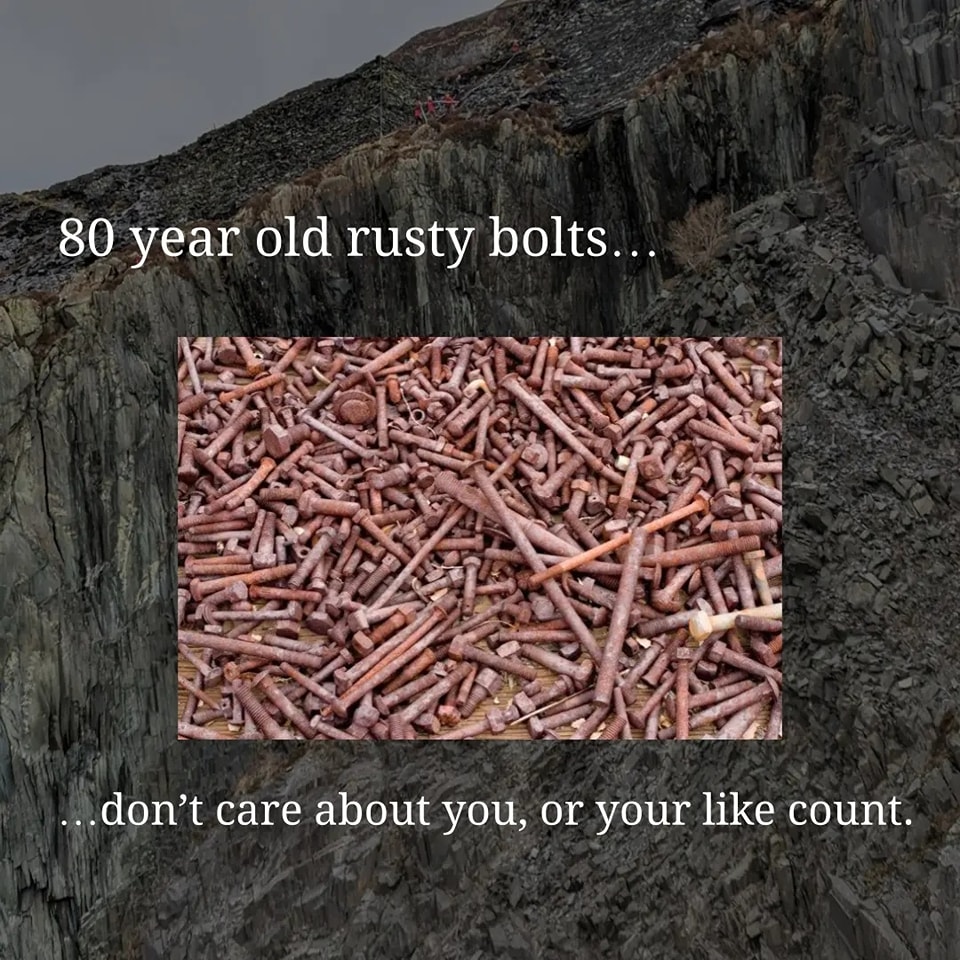
“Rescuing someone from here would be dangerous, horrific, traumatising. 80 year old rusty bolts don’t care about you, or your like count.”
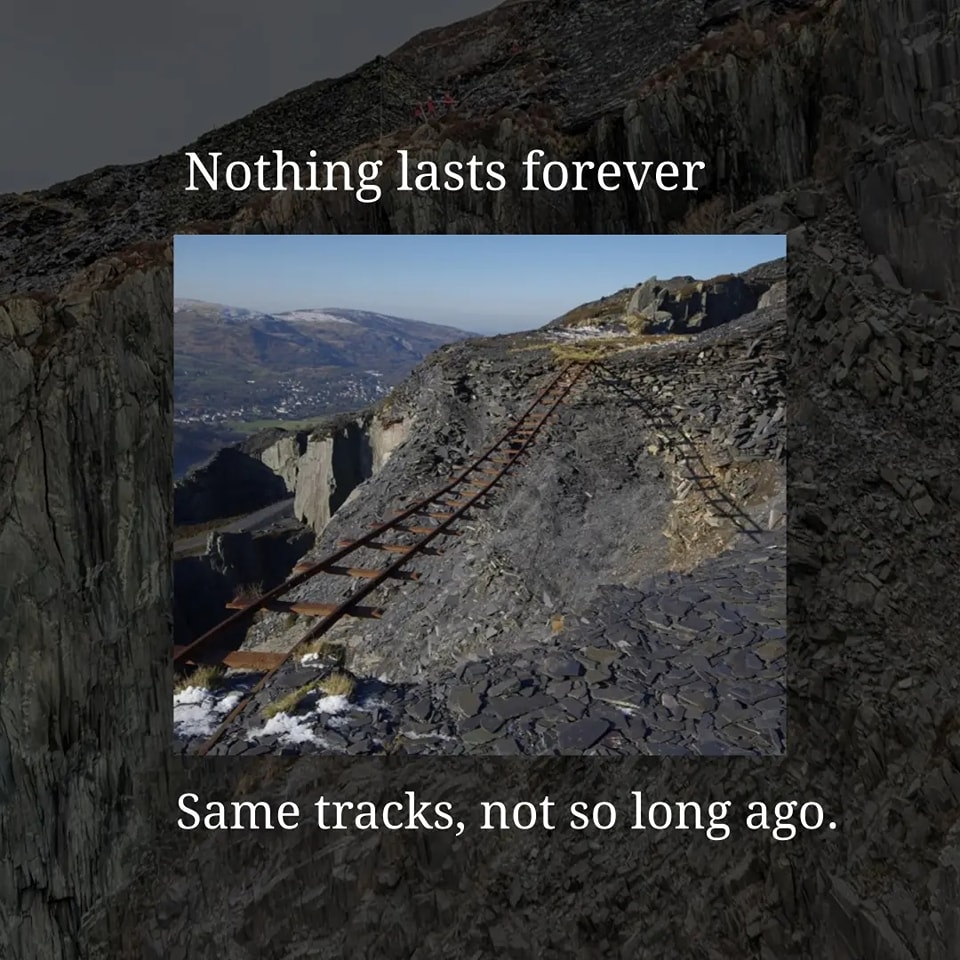
They then posted photos of the same railway line from a few years ago, when it still made a bridge across the quarry.
The hills around Snowdonia are hugely popular with walkers from across the north west, including Mancs who can drive there in just a couple of hours.
LLMRT say they are ‘increasingly concerned’ about the volume and nature of trips being made to such dangerous landscapes.
The advice issued has urged people to book excursions with professional and qualified leaders and instructors and to be wary of ‘social media meet-ups’.
They also said to bear in mind the three Adventure Smart Questions before heading out on any hill walks or hikes, which are: ‘Am I confident I have the KNOWLEDGE & SKILLS for the day?’, ‘Do I know what the WEATHER will be like?’, and ‘Do I have the right GEAR?’.
LLMRT’s full post on Facebook states: “The slate quarries in North Wales have seen an upsurge in visitor numbers in recent years. While we understand the urge to explore such historic manmade landscapes, there are increasing concerns at both the volume and nature of trips being made into these dangerous places.
“As a mountain rescue team, LLMRT train to operate safely in almost any mountain environment, but there are many hidden dangers in the slate quarries that we can’t always account for. Such unseen hazards can pose a considerable risk to rescuers or emergency services personnel called to assist persons in difficulty in these areas.
“With the Easter holiday approaching and increasing number of visitors to the area, we’d like to ask people to consider the following:
“The old buildings and infrastructure of the slate quarries (railways, ladders etc.) are over half a century old and in various states of rust and decay. These old structures and fixtures, which can often be found above precipitous drops, could (and often do) collapse at any time and without warning. No Instagram story is worth the level of risk that some people are unwittingly taking.
“LLMRT are aware of many groups, often “social media meet-ups,”, exploring the quarries with unqualified and inexperienced leaders. LLMRT would always recommend that people joining such groups ascertain the qualifications and experience level of group leaders before participating in such events.
“The quarries and similar sites have recently received considerable media and press coverage, some extolling the adventures to be had here, which has encouraged unprepared and inexperienced people to explore these potentially very dangerous places. These articles can encourage the unwary into dangerous areas. LLMRT would always encourage inexperienced people to gain advice from professional and qualified leaders and instructors.”
Read more
- The Torrs Millennium Walkway – a stunning Peak District walk that hovers above a huge gorge
- The walking trail around Manchester where you can see the beautiful spring blossom in full bloom
- A Lancaster Bomber flyover is happening at a free soapbox derby in Stockport this May
Featured image: Llanberis Mountain Rescue