Parklife is one of the UK’s biggest music events and it all takes place right here in Greater Manchester this weekend – so it’s time to start planning your travel there and back.
70,000 music fans are expected to stream in to Heaton Park on each day of the two-day festival, ready to see headline performances from Aitch, The 1975, Fred Again and The Prodigy.
And with no overnight camping, all 70,000 will need to make their way home again afterwards…
Mercifully, the planned Metrolink strike this weekend has now been called off, so there are now a few different ways to get to Parklife.
If you’re heading up to Heaton Park for Parklife 2023, here’s all the information you need about trams, travel passes, shuttle buses and even walking.
— Manchester Metrolink 🚊 (@MCRMetrolink) June 8, 2023
The Parklife travel pass is a festival essential, giving you a few options of transport to the festival site with one ticket.
The pass costs £5 per day and will give you access to both the Parklife Shuttle Bus – which drops you directly inside the festival site – and the Metrolink tram services to Heaton Park.
ADVERTISEMENT
Tickets are sold through the Parklife website and are electronic, so you just need to show it on your phone when you board the bus.
Metrolink trams to Heaton Park
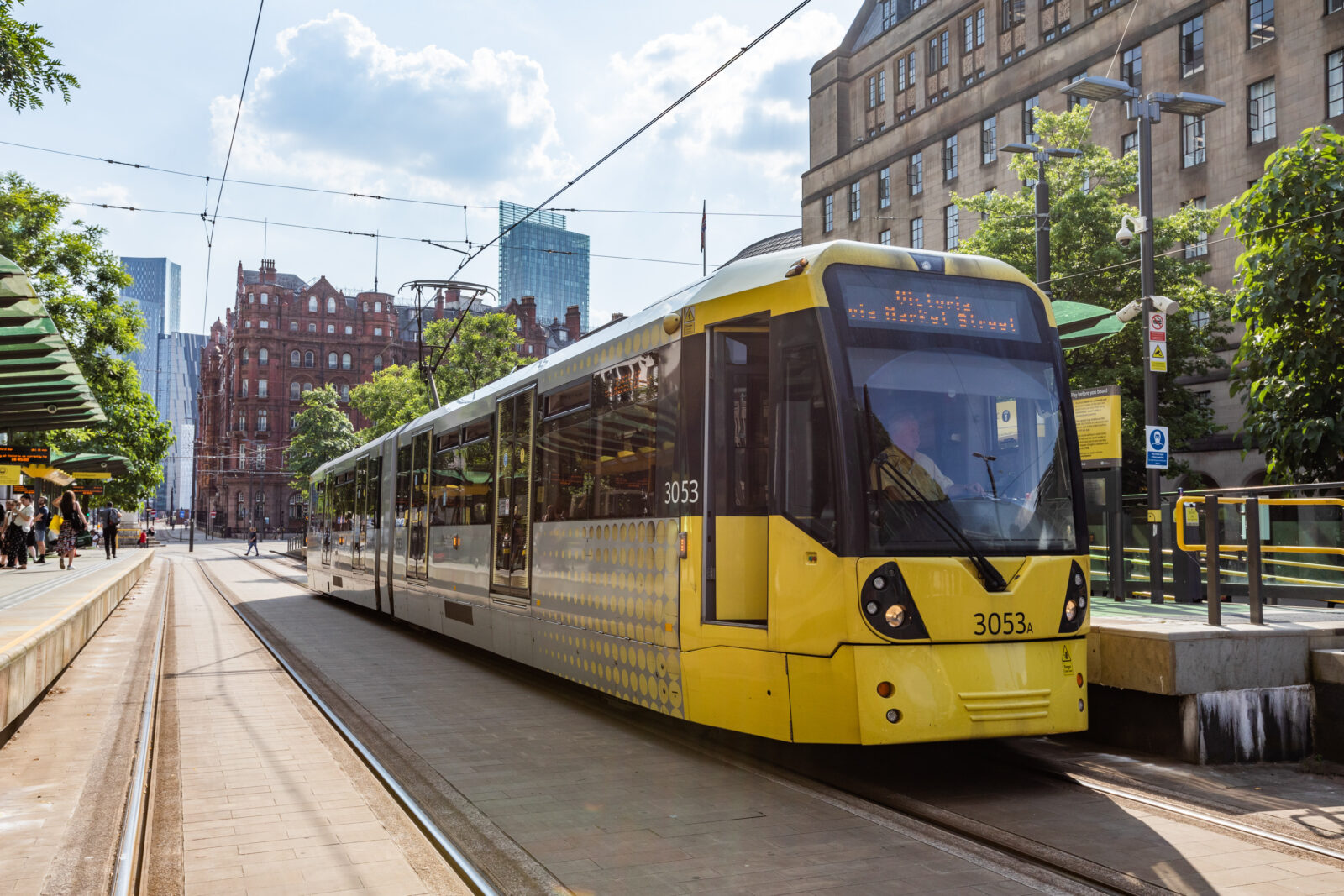
The Metrolink trams are one of the easiest ways to travel to Parklife
Trams will be running to Parklife on a six-minute frequency from town – Heaton Park is your closest tram stop, which will drop you near the West Gate entrance.
After the festival, you’ll need to use Bowker Vale, as Heaton Park tram stop will be closed.
ADVERTISEMENT
Metrolink services will keep running until the site is cleared, but be prepared to queue to board one.
In the city centre, several stops will be closed so that crowds can be managed safely – these are listed below and on the TfGM website.
Saturday 10 June
Market Street and Shudehill – Closed all Saturday
Heaton Park – from 9pm until the end of service
Piccadilly Gardens – between 3pm and approximately 5pm
Exchange Square – between 12pm and approximately 5pm
Sunday 11 June
Heaton Park – From 9pm until end of service
Exchange Square – between 12pm and approximately 5pm
Piccadilly Gardens – between 3pm and approximately 5pm
Market Street – between 3pm and approximately 6pm
Shudehill – between 3pm and approximately 6pm.
Parklife shuttle buses
This is one of the easiest ways to get to and from Parklife, with dedicated shuttle buses whizzing people between the city centre and the festival site.
The Parklife shuttle bus will depart from the corner of Aytoun Street (M1 2DD) and Minshull Street, near Piccadilly train station, with drop-off right inside the festival site.
Buses will depart at least once every ten minutes.
ADVERTISEMENT
The first bus on Saturday will depart at 9.30am, while the last one will leave at 4.30pm. On Sunday, first buses are at 10.30am and the last is at 4.30pm.
On both days, the return bus service from Heaton Park to Manchester city centre starts at 6.30pm and will continue to operate until the venue is cleared. Drop off will be on Church Street.
Taxis
Parklife. Credit: Jordan Curtis Hughes
There’ll be a couple of taxi ranks near the Parklife festival site – a Manchester Hackney Carriage Taxi Rank in Blackley New Road and a Bury Hackney Carriage Taxi Rank outside the Woodthorpe pub on Bury Old Road.
If you want to pre-book your own private hire vehicle, they need to pick you up from the pick-up point at Sainsbury’s near Heaton Park.
As always, watch out for unlicensed taxis, which are unregulated.
ADVERTISEMENT
Pick-up and drop-off
There’ll be a few road closures in place for Parklife and congestion is to be expected when people are leaving the festival.
There’s a designated pick-up point at Sainsburys on Heaton Park Road for anyone who’s getting a lift there or back.
Junction 19 of the M60 will be closed from 7pm on both nights. Access to the pick-up point will be via Victoria Avenue and Middleton Road.
Walking all the way to town from Heaton Park might not be top of your agenda, but it’s actually one of the most straight-forward ways to get back home.
ADVERTISEMENT
There’s usually a crowd of festival-goers trudging back down Bury Old Road, a walk which takes about an hour.
Obviously only attempt the walk if you’re in a group you feel safe with and look out for each other.
What travel bosses say
Sean Dyball, TfGM’s Head of Customer Experience, said: “Parklife is one of the biggest events in Greater Manchester’s calendar, and we hope everyone who attends has a safe and enjoyable weekend.
“With around 70,000 people each day, and thousands more expected to be in the city centre over the weekend for other big events, including Soccer Aid, it will be very busy on public transport and on the roads.
“Extra staff will be on hand and we’ll have as many services as possible running to help people get around, but where possible, people should consider making short journeys by walking or cycling.
ADVERTISEMENT
“We’ll keep our website and social media channels updated throughout the weekend and I’d encourage people to check before and during their journeys to make sure they have the latest information and advice to hand.”
Inside Manchester Town Hall as more scaffolding comes down and reopening date confirmed
Daisy Jackson
The Manchester Town Hall at long last has a path to completion, and as the scaffolding around this landmark building creeps down, the council has shared a glimpse at the work that’s happening inside.
The Grade I-listed building has been hidden behind scaffolding and white sheets for more than five years, with its once-in-a-century regeneration delayed by a number of factors.
But now, at long last, Manchester City Council has confirmed a completion date for the project, with work on the Manchester Town Hall set to complete in spring 2027.
Those of us wandering through town or attending the Manchester Christmas Markets in recent months will have noticed the scaffolding around the beautiful structure slowly unveiling its beautiful facade.
First came the clock tower, then down came the huge temporary roof (which had been keeping the building watertight while roofing works were carried out), and now there’s movement around the sides of the town hall too.
Inside, an army of skilled workers have been carefully restoring and repairing this heritage building, safeguarding it for future generations.
In images shared by the council, we can see the ornate ceilings, intricate stonework, and grand hallways of the Manchester Town Hall for the first time in years.
And addressing the ‘unique challenges’ faced during the restoration, the report has laid out a ‘more certain’ completion date of spring 2027 and a budget increase of an additional £95 million – taking the overall project budget to £524.8 million.
The Manchester Town Hall project has faced challenges since it began in 2020, including the Covid pandemic, a volatile economic climate, and construction industry rising costs.
The council’s report also said that there’s been a shortage of ‘specialist labour capacity in the supply chain, issues with the supply of materials (which under strict heritage rules need to closely match those used in the original construction) and ongoing discovery of further construction challenges, all of which unavoidably cause delays and associated costs’.
Inside the Manchester Town Hall. Credit: Supplied
On top of that, three of the contractors working on the regeneration have gone into administration in the last six months alone.
Despite that, most of the external work is now complete, with work now focussing on the interiors.
When it reopens next year, Manchester Town Hall will have a free public attraction The Town Hall Story, which will bring its fascinating history to life.
Before then, a series of hard hat tours are being planned to welcome Mancs inside the building.
Deputy Council Leader Cllr Garry Bridges said: “This project to safeguard Manchester Town Hall and create unprecedented public access is the biggest heritage project the country has seen for many years. Only the restoration of the Houses of Parliament will surpass it in scale.
“A project of this size is extraordinarily complicated and has had to navigate a stream of challenges – from a global pandemic to high inflation in the construction industry and the hidden issues within the building’s historic fabric.
Scaffolding around the Manchester Town Hall is slowly coming down. Credit: Supplied
“Like everyone, we have been frustrated by the increased time and cost involved. But if we had not acted decisively to invest in the future of this Victorian masterpiece, many parts of which were reaching the end of their natural lifespans, we would have seen it become unusable and obsolete.
“We’re glad that we’re now on a confident path to completion in spring 2027, in time for the 150th anniversary of its original opening. The results of the project will be there for people to appreciate and enjoy for the next 100 years.
“Manchester people are beginning to see the benefits of the expanded Albert Square, at the heart of the city’s best ever Christmas, and there will be many more events to come in a public square to rival the best in Europe.
“When town halls like ours were built in the 19th Century, most Mancunians were excluded from them. But we want to give the building back to the people – inviting them to a new free visitor attraction and to share in a cultural programme around its reopening.
“Now we have a date for completion we can begin to look forward with excitement.”
First Bee Network train unveiled as Greater Manchester prepares to integrate public transport in 2026
Emily Sergeant
The first Bee Network train has been unveiled, as Greater Manchester prepares to integrate all public transport options in 2026.
Greater Manchester Mayor Andy Burnham has this week revealed a step-by-step plan for bringing the region’s rail lines into the Bee Network to create the first truly integrated public transport system outside London.
With just one year to go until the first rail services start joining the Bee Network, industry leaders unveiled a new yellow Bee Network promotional train and set out how passengers will benefit from new services, improved stations, and simpler fares and ticketing in the months ahead.
The first two lines – which will connect Manchester to Glossop and Stalybridge – are set to join the Bee Network from 13 December 2026.
Contactless ‘tap in, tap out’ ticketing will also rolled out across 17 stations on this date.
Greater Manchester is on track to bring rail into the #BeeNetwork from December 2026. 🚆🐝
From new trains to station upgrades, contactless ticketing and step-free access – this is the start of a fully integrated transport system connecting trains, trams, buses and active… pic.twitter.com/FysCgzY72w
Transport for Greater Manchester (TfGM) says these initial two rail lines are ‘just the beginning’, with more lines set to follow in 2027 and 2028, and the further roll out of contactless and capped fares will work to join buses, trams, and trains together as Greater Manchester continues its journey to deliver an ‘affordable, accessible, and joined-up’ transport network.
By March 2026, the Bee Network app and TfGM website start to join together.
They will feature comprehensive rail station information, from car park and cycling spaces through to step-free access – with real-time rail departure and disruption information added by the summer, and journey planning available by autumn.
Also, another huge step in the plan, is that from May 2026, TransPennine Express will run 25/7 night-time trains to Manchester Airport as a way of supporting the region’s ‘thriving’ night-time and visitor economy.
The first-ever Bee Network train has been unveiled ahead of its 2026 launch / Credit: TfGM (Supplied)
Looking forward the future, additional and later-running services on the Airport, Alderley Edge, and Rochdale-stopping lines will be piloted from 2027.
And then, from January 2028, eight rail lines – with 64 stations included – will be fully integrated with Bee Network buses and trams, ‘tap and go’ payments, and daily and weekly fare caps, while the remaining 32 stations will join the system by 2030.
“With one year to go until rail joins the Bee Network, we are on the cusp of delivering a fully integrated, world-class transport system for our global city-region,” commented Mayor Andy Burnham, as the first Bee Network train was unveiled this week.
“These changes will make everyday journeys easier and open up new opportunities for people across Greater Manchester.