Brits could be facing a ban on the use of disposable barbecues this summer in efforts to cut the risk of wildfires.
Although the grills may be a staple of British summertime culture, with over a million estimated to be bought in the UK each year, they have certainly been the subject of much discussion in recent years due to a number of environmental and sustainability concerns.
Disposable barbecues not only typically contain single-use plastic, but also charcoal which is often not sustainably-sourced, and cannot be can’t be recycled or composted.
Because of these concerns, supermarket retailers Waitrose and Aldi last month made the decision to stop selling them in order to protect forests and wildlife, and Brighton and Hove City Council was one of the local authorities which voted overwhelmingly to ban them from the area’s beaches and parks as part of its strategy to tackle climate change.
Also, in a bid to prevent devastating wildfires from occurring in some of the country’s best-loved nature reserves and green spaces, the Co-op last year banned the selling of disposable barbecues in any of its stores within a one-mile radius of a national park.
ADVERTISEMENT
And now, it seems like further action could soon be taken on a national scale.
Brits could be facing a ban on the use of disposable barbecues in efforts to cut the risk of wildfires / Credit: Pixahive
It comes after environment minister Victoria Prentis told a House of Commons debate this week that the government was commissioning research to examine the role that disposable barbecues play in wildfires, as the latest data from the Home Office is said to suggest that around 4% of accidental fires can be linked to barbecue use.
ADVERTISEMENT
This does not, however, differentiate between the use of a barbecue in a home or at a place like a public park or beach.
She crucially said it’s “when they are left unattended or used recklessly that the risk occurs”.
Ms Prentis continued: “It is clear to me that we do not have enough data on the role that disposable barbecues play in wildfire incidents, however, anecdotal evidence – not least in this debate – suggests that they have been responsible for a number of serious incidents.”
Labour MP Holly Lynch – who led the Commons debate – was also sure to highlight the 75 wildfires that West Yorkshire Fire and Rescue Service has already attended this year, and added that “a significant number are caused by careless and reckless use of disposable barbecues on our moorland.”
Disposable barbecues have been the subject of much discussion due environmental and sustainability concerns / Credit: Rawpixel
She said a ban on disposable barbecues “would have an instant and transformative effect in protecting our moorland” and would help to “safeguard” them and our communities in the years ahead.
Mike Amesbury, a local government spokesperson for the Labour party, too called on the Department for Environment during the debate to “step up and become more proactive in tackling this growing problem”, adding: “That should include consideration of whether disposable barbecues should be banned from sale entirely.
ADVERTISEMENT
“The government certainly needs to encourage the small minority using barbecues in appropriate locations to be more responsible.
“And think of the potential consequences for people, the environment and livestock.”
Featured Image – Instant BBQ
Trending
Two North West cities named among the ‘noisiest’ in the UK – including Manchester
Emily Sergeant
A new analysis has revealed a list of the noisiest cities in the UK, and two Greater Manchester locations are in the top five.
From blaring sirens and car horns, to house parties, barking dogs, and loud neighbours, escaping the noise of a city can feel almost impossible – even in your own home.
No matter whether you live in the hustle and bustle, or you’re out in the sleepier suburbs, noise can keep you up at night, disturb your peace, and lead to frustration. But just how loud are Greater Manchester’s cities compared to the rest of the UK? In a bid to get to the bottom of it, Alpine Hearing Protection has done some research to compile a top 10 list.
And both Salford and Manchester have found themselves not just within the top 10, but within the top five… and to make matters worse, Salford has actually claimed the number one spot.
The reason Salford has found itself at the top of the list, according to the research, is because it sits at the intersection of several major transport and urban hubs, with major motorways running through or around the city including the M60, M61, and M62.
Major rail routes also run through the city – including via Salford Crescent – which sees 16 million passengers every year, and also leads to Manchester Airport.
Top 10 noisiest cities in the UK
Salford
Portsmouth
Manchester
Southampton
London
Leeds
Stoke-on-Trent
Wakefield
Newcastle upon Tyne
Bradford
Parts of Salford are also very built-up, making pockets of the city noisy – especially in the concentrated centre where traffic, construction, nightlife and commercial activity get loud.
And of course, like any growing city, construction noises have been noted as ‘particularly bothersome’ for residents where major developments are springing up.
Manchester is third on the list of noisiest cities, due to many of the same reasons as Salford.
But the difference being that Mancunians are noted as one of the many reasons why the city is so loud – with residents making 5,301 noise complaints across Manchester between January 2024 and January 2025, and Hulme identified the loudest area with 304 complaints.
As well all know, Manchester is also home to many universities, which brings an active nightlife scene to the region, especially in the city centre, and in recent FOI data, it was revealed that the University of Manchester saw 2,049 noise complaints in the last five years.
Motorists warned of common winter driving habit that could land them with annoying fines
Emily Sergeant
With the temperatures drastically dropping now as we head into winter, motorists are being warned against a common driving habit.
On a wintry morning when the windscreens are frozen and your hands are equally as frozen too, it’s pretty common for drivers to start the engine, turn the heater right up, and remain stationary for several minutes to warm the car up before setting off on their journey… but did you know that doing this could see you, inadvertently, fall foul of the law?
That’s right – as ridiculous as it sounds, leaving your car engine running ‘unnecessarily’ while parked on a public road is illegal.
And to make matters worse, the rules on ‘engine idling’, as it’s known, apply regardless of whether the driver is using the heating, waiting for someone, or simply sitting in the vehicle.
Known as a stationary idling offence, Rule 123 of the Highway Code states that drivers must not leave a vehicle’s engine running unnecessarily while it is stationary on a public road, and according to the rule, a fixed penalty of up to £80 can be issued, right there and then.
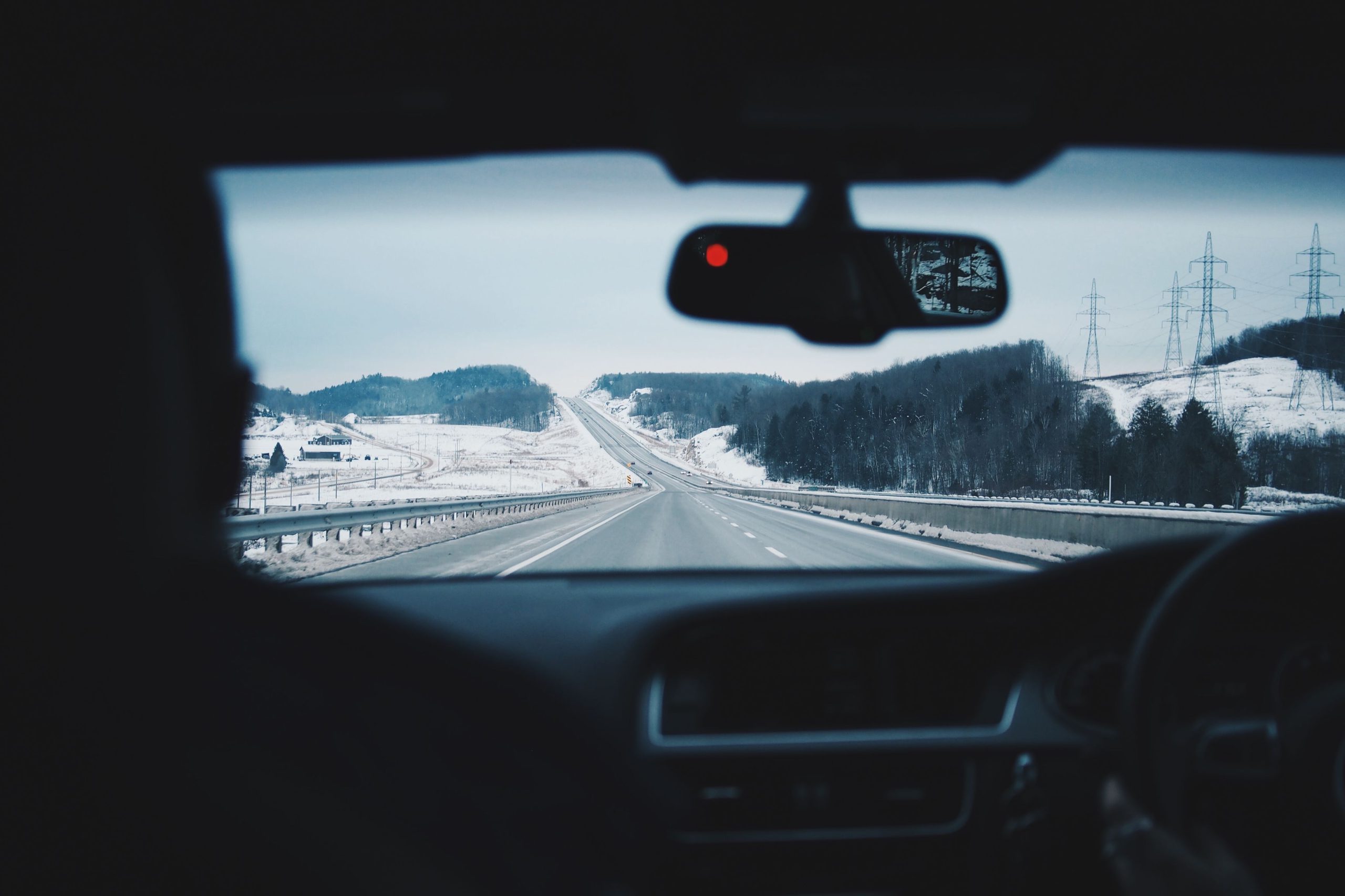
Motorists are being warned of a common winter driving habit that could land them with annoying fines / Credit: PickPik | Wikimedia Commons
Fines will only be handed out if a motorist is stopped by a police officer who asks them to switch the engine off, and they fail to comply.
“However tempting it might be to sit in a vehicle with the engine running and the heater on to warm up, we strongly advice against it,” commented RAC senior policy officer Rod Dennis.
“As well as polluting the air and wasting fuel, drivers who leave their engines idling unnecessarily on a public road also risk an on-the-spot fine of £80. On cold mornings, the best approach is to clear any ice or snow properly and ensure windows are fully de-misted before setting off, then get on your way and let the car warm you up.”
There are some exceptions to the rule, however, as keeping the engine running is permitted in certain circumstances.
This includes when a vehicle is stationary because of traffic conditions, when the engine needs to run so a mechanical fault can be investigated, or if certain work is being carried out on the side of the road.

 Emily Sergeant -
5th April 2022