News
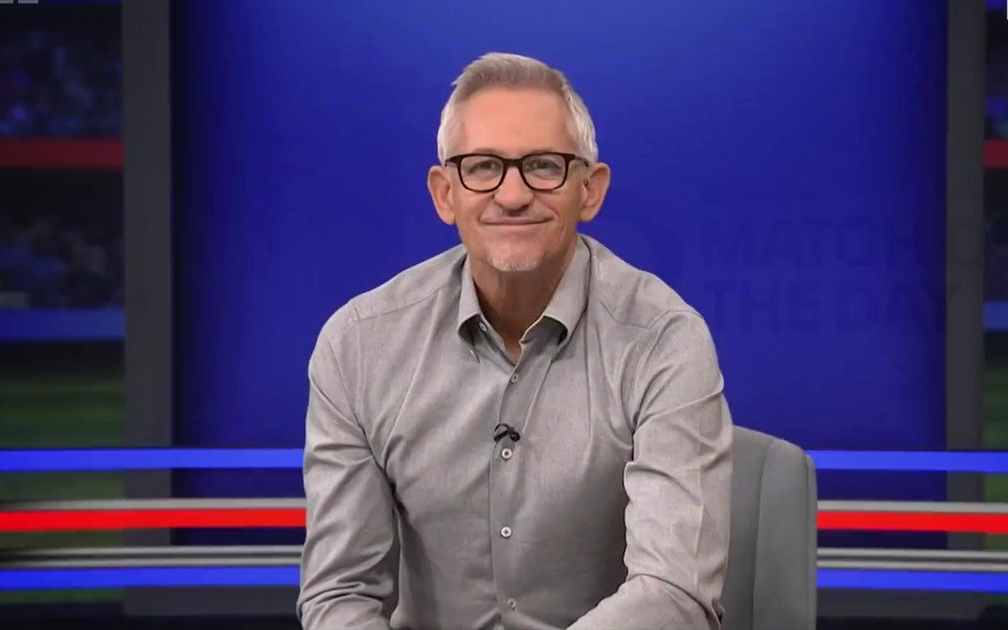
Gary Lineker returning to Match of the Day after ‘surreal few days’ as BBC issue apology
He'll back on the box as usual this Saturday.

After a week of social media and TV turbulence, Gary Lineker will be returning to Match of the Day and presenting sport for the BBC.
Following an official statement by the BBC, Lineker took to social media and informed his followers that he will be back “to working with the best and and fairest broadcaster in the world” this weekend.
In a lengthy thread on Twitter, he reflected on a “surreal few days” and took time to thank his colleagues and the general public for their “incredible support”.
Lineker was asked to ‘step back’ from his duties on the show he has hosted since 1999 last week after he posted a series of tweets that criticised the Conservative government’s controversial asylum policy.
The 62-year-old was said to have violated the BBC‘s “impartiality guidelines” but many went on to argue that the corporation isn’t always perfectly balanced, has many Tory ties and that this ultimately influenced the decision.
Lineker drew his statement to a close by offering a thought-provoking final thought: “However difficult the last few days have been, it simply doesn’t compare to having to flee your home from persecution or war to seek refuge in a land far away.
“It’s heartwarming to have seen the empathy towards their plight from so many of you.”
Well said.
In the interim between Lineker’s lapse and his BBC confirming he would be returning to Match of the Day, right-wing broadcasters GB News held their own ‘alternative’ programme which included no actual football footage, while MotD went ahead without presenters and focused simply on the highlights.
Meanwhile, as part of their response following the decision, the BBC’s Director General Tim Davie said: “Everyone recognises this has been a difficult period for staff, contributors, presenters and, most importantly, our audiences. I apologise for this.
“The potential confusion caused by the grey areas of the BBC’s social media guidance that was introduced in 2020 is recognised. I want to get matters resolved and our sport content back on air.
“Impartiality is important to the BBC. It is also important to the public. The BBC has a commitment to impartiality in its Charter and a commitment to freedom of expression.
“That is a difficult balancing act to get right where people are subject to different contracts and on-air positions, and with different audience and social media profiles.”
Read more:
He went on to insist that “the BBC’s social media guidance is designed to help manage these sometimes difficult challenges and I am aware there is a need to ensure that the guidance is up to this task. It should be clear, proportionate, and appropriate.”
He also confirmed that the corporation will now be conducting an internal review led by an independent expert, assessing “existing social media guidance, with a particular focus on how it applies to freelancers outside news and current affairs, adding that both “he and Gary [are] in favour of such a review.”
Finally, he reiterated that “Gary is a valued part of the BBC and I know how much the BBC means to [him, and I look forward to him presenting our coverage this coming weekend.”
See you on Saturday, Gaz.
For all the latest news, events and goings on in Greater Manchester, subscribe to The Manc newsletter HERE.
Featured Image — BBC Sport
News
Referees admit Manchester City’s derby-winning goal over Manchester United was a VAR ‘error’
Emily Sergeant
Referees have admitted that Manchester City’s winning goal during yesterday’s Manchester derby was a VAR ‘error’.
In case you didn’t tune into the Manchester derby yesterday – which was held at Manchester United’s home ground, Old Trafford – star striker Erling Haaland’s goal handed Manchester City a 1-0 victory – in the end, even after fellow City player Phil Foden was given a straight red card and sent off in the twenty third minute.
Haaland‘s goal was initially deemed offside on the pitch, before VAR overruled the decision.
New City signing Enzo Fernandez was in an offside position as he attempted to play the ball before Haaland scored.
Fernandez appeared to impact the defending of Manchester United‘s Lisandro Martinez by attempting a diving header, despite not touching the ball.
Following the full-time whistle, United’s manager Michael Carrick said it was ‘worrying’ that the goal was allowed to stand, claiming that there was no ‘grey area’ when it came to determining whether Fernandez had interfered with play.
“It’s worrying if that’s how the game is seen by those who are officiating it,” he commented.
Pundit and former Manchester United star, Gary Neville, also expressed confusion at the decision, declaring on Sky Sports after the game: “I’m going to need the offside law explaining to me, because that has lost me, I have to say. I do think when they look back on this, they will recognise they got it wrong.”
Neville said he thinks that referee Michael Oliver will be ‘nervous’ about the goal yesterday, as will the rest of the officials.
And now, less than 24 hours after the match ended, refereeing body Pro Ref has since made what Sky Sports is calling an ‘unusual intervention by confirming that a review of the goal will take place.
A spokesperson for Pro Ref said in a statement: “It was established that Enzo Fernandez did not play the ball and therefore that makes any offside offence subjective, however, on this occasion, the VAR did not recognise the likely impact of his position and should have recommended an on-field review.
“Contact has been made with Manchester United to acknowledge what we deem is an error of judgement.
Read more:
“A review of the incident will take place.”
Featured Image – Jaleel Akbash (via Unsplash)
News
Charli XCX announces massive Manchester arena gig as part of long-awaited UK and European tour
Emily Sergeant
Charli XCX has finally given UK fans the news they’ve been waiting for.
After the genre-bending popstar announced back in June a series of US gigs this autumn to support and celebrate the release of her eighth studio album Music, Fashion, Film – which was met with critical acclaim following its release in late July – fans in her home country were wondering when she would announce UK dates to accompany these.
The 34-year-old been had hinting at a UK and European leg of the Music, Fashion, Film Tour on social media over the past couple of months, but nothing was set in stone as of yet.
Then last night, Charli took to Twitter to announce that she ‘finally’ had some information coming today (11 September), and then followed it up with a teaser video – sending fans into a frenzy.
And now, it has been announced this morning that Charli XCX will be taking to the Co-op Live stage early next year.
Support on the UK and European leg of the Music, Fashion, Film Tour will come from US popstar Audrey Hobert.
Hobert has been having somewhat of a star-making year herself in 2026 following the release of her own critically acclaimed debut album, Who’s The Clown?, last year – with her streams racking up daily and drawing in massive crowds on the festival circuit this summer.
Charli XCX – Music, Fashion, Film Tour UK & EU Dates 2027
- 13 February – 3Arena, Dublin
- 15 February – OVO Hydro, Glasgow
- 17 February – Co-op Live, Manchester
- 19 February – The O2, London
- 22 February – Ziggo Dome, Amsterdam
- 24 February – Accor Arena, Paris
Upon release back in July, Music, Fashion, Film the album received acclaim from music critics, who praised its lyrical honesty and experimental production, as Charli took a sonic journey away from the undeniable mega hit that was her 2024 album BRAT, and into ‘Rock Music’ territory.
Music, Fashion, Film topped the charts in the UK and Australia, as well as in Belgium, Hungary, and New Zealand, while reaching the top 10 in countless other countries – including the US.
Charli XCX will be bringing the Music, Fashion, Film Tour to Manchester‘s Co-op Live on Wednesday 17 February 2027, and tickets will go on sale next week.
Read more:
Presales, including Co-op Member Presale, begin on Wednesday 16 September at 9am, before general sale starts on Friday 18 September, again at 9am.
Get tickets when they go live here.
Featured Image – Henry Redcliffe (Publicity Picture)

 Danny Jones -
13th March 2023
Danny Jones -
13th March 2023