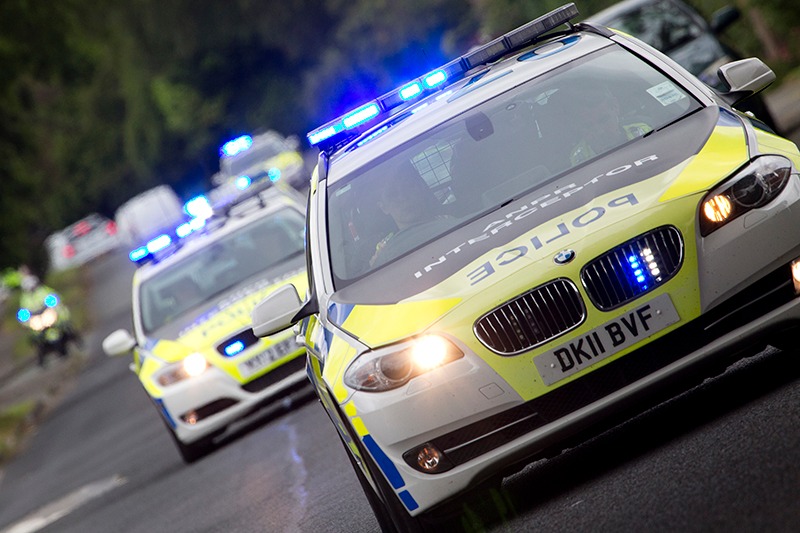
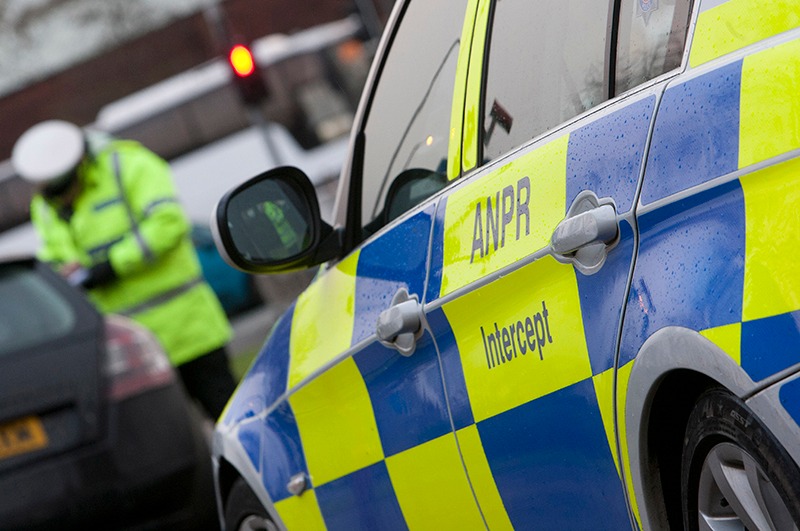
Cameras installed for Greater Manchester’s now-discarded Clean Air Zone (CAZ) scheme are apparently being used for “detecting crime”.
A total of 407 automatic number plate recognition (ANPR) cameras were installed across the region back in February 2022 ready for the start of the controversial £60 million scheme that never happened – but now, councillors in Bolton have revealed that the technology isn’t going to waste, and is actually being for an entirely different reason all together.
After Horwich councillor David Grant “raised concerns” about the cost of running the cameras at recent Bolton Council meeting, leader Martyn Cox revealed that Greater Manchester Police (GMP) has been closely controlling them and using them “to good effect in detecting crime”, according to BBC Manchester.
“Now that the Mayor of Greater Manchester has graciously confirmed that the area of Bolton will most like not be subject to any clean air zone can the leader confirm that he intends to demand that the presumably now defunct cameras be removed?,” Mr Grant asked at the meeting.
He continued: “Secondly, bearing in mind these cameras are live and drawing electricity from our street furniture, will he be requesting a payment for electricity estimated Greater Manchester wide at £375,000 a month?”
ADVERTISEMENT
Greater Manchester’s Clean Air Zone cameras are now being used for “detecting crime” / Credit: GMP
Council leader David Cox then explained to Mr Grant that information from the cameras released in line with data protection legislation has been used to support at least two murder investigations, one high risk missing person case, one county lines drug supply case, two separate fatal road traffic collisions, and an aggravated burglary.
“However, it is acknowledged that there are concerns around the use of number plate recognition cameras and allowing direct access to the cameras to organisations such as Greater Manchester Police when these are no longer required for a charging clean air zone,” Mr Cox continued.
ADVERTISEMENT
“There is a commitment to undertake public consultation on the future use of cameras once we have a decision from central government on the investment led clean air plan.”
The Clean Air Zone was to initially hand motorists daily charges of up to £60 for some of the most polluting vehicles on Greater Manchester‘s roads.
Greater Manchester Police has been closely controlling the cameras and using them “to good effect” / Credit: GMP
The government agreed to delay the deadline for the scheme until 2026, but local leaders wanted to scrap all charges and help to fund vehicle upgrades instead.
Greater Manchester Combined Authority (GMCA) then set out evidence supporting an investment-led, and, crucially for residents and motorists, a non-charging Clean Air Plan back in June 2022 – which it said was “the best solution” to address the roadside nitrogen dioxide (NO2) problem.
Ministers are reportedly still yet to respond to this latest plan.
Featured Image – The Manc Group
News
Man jailed after violent machete attack in Bolton left victim ‘seriously injured’
Emily Sergeant
A man has been jailed after carrying out a ‘violent’ machete attack in Bolton that left another man seriously injured.
Dale Dean appeared at Manchester Crown Court on last Friday (20 February 2026) after pleading guilty to causing grievous bodily harm with intent, possession of a bladed article, and affray, and was subsequently sentenced to six years behind bars.
The 27-year-old from Manchester was found to be carrying a machete ‘without lawful reason’.
Greater Manchester Police (GMP) explained that, back on Saturday 5 April 2025, it received reports of a man holding a machete in a shop on Kentmere Road, in the Breightmet area of Bolton, and when officers attended the scene at around 7:50pm, they were told Dean was seen attacking another man in front of staff and members of the public.
The machete was used to attack the victim in the shop, who suffered several serious injuries – including to his head and shoulder.
Dean also caused ‘extensive damage’ to the shop and fled the scene.
In the aftermath of the attack, the victim was said to have struggled ‘to walk out on the street’ and had difficulty sleeping due to the pain and location of his injuries, but he has since recovered well from the attack overall.
On top of the six years in prison, the court imposed an additional 20‑month extended licence period upon Dean’s release due to the seriousness of the offence and the danger he poses to the public.
“This was a shocking and violent incident that left the victim with serious injuries and caused fear within the community,” commented Detective Constable Jordan Brown, of Bolton’s Criminal Investigation Department, following the sentencing at the end of last week.
“Dean’s actions were deliberate, dangerous, and showed a blatant disregard for the safety of others.
“[He] used or threatened unlawful violence, causing significant fear to those nearby, and was found to be carrying a machete without lawful reason.
“We welcome today’s sentence, which reflects the gravity of the offences. Our officers will continue to take decisive action against those who carry weapons and commit violent offences on our streets.”
Featured Image – GMP
News
Passengers thanked for their ‘patience’ as Manchester Piccadilly reopens after £7.9m upgrade
Emily Sergeant
Manchester Piccadilly has now officially reopened after a nine-day closure.
In case you hadn’t heard, Manchester Piccadilly train station closed on Saturday 14 February while a ‘once-in-a-generation upgrade’ was carried out – with very few train services running in or out of the station in the process, and as you’d expect, widespread disruption caused for those travelling around the region.
But thankfully now, after many journeys were impacted for those travelling to and from major destinations like Manchester Airport, and on the West Coast Mainline, the station is now back up and running.
The public are being thanked for their ‘patience’ while the the journey-improving work was carried out this past week.
Network Rail invested £7.9m into the major upgrade, with the main points of action being to improve tracks, points, and signalling systems on the southern approach to Manchester Piccadilly station.
🎥VIDEO UPDATE🛤️
👷🏼♂️Teams are carrying out final inspections after a 9-day closure for £7.9m track upgrades at Piccadilly 🔧
🏗️Trains will run from 5am tomorrow🚆
‼️Follow up work is needed on Sun 1 and Sun 22 March – please check @nationalrailenq🙏
Teams worked to replace 11 sets of points, renew timber sleepers with modern, concrete equivalents, and also bring lineside equipment ‘bang up to date’ across six lines to improve future journeys for passengers and freight.
Investment in this apparent ‘critical stretch’ of track had been long awaited, as any issues with the ageing infrastructure could’ve disrupted all trains running in and out of Manchester.
The closure also resulted in what was said to be one of the largest rail replacement bus operations the city has seen in recent memory, with a total of 8,922 services running over the course of the nine days to keep passengers on the move.
Manchester Piccadilly has now reopened to the public after its £7.9m upgrade / Credit: Network Rail
“We would like to say a big thank you to passengers for their patience while this once-in-a-generation upgrade has taken place over the last nine days,” commented Brian Paynter, who is the Capital Delivery track director at Network Rail.
“Manchester Piccadilly is one of the country’s busiest stations and it’s a key hub for people travelling to the North West.
“Upgrading the track over six lines in what’s known as the Piccadilly corridor will make journeys more reliable and the points and signalling systems less prone to faults – meaning fewer delays for passengers. It’s all part of our long-term commitment to invest millions of pounds to make the North West’s railway fit for the future.”
Unfortunately thought, the disruption doesn’t quite end there, as this coming Sunday 1 March, and then again on Sunday 22 March, routine follow-up work will take place to secure the new railway foundation stone through a process called tamping.
This will impact trains until passed midday, with passengers advised to check online ahead of time if planning travel on those dates.