Greater Manchester’s plan for the introduction of a non-charging clean air zone has been backed by the Government.
Defra and the Department for Transport (DfT) were said to have “rigorously assessed” an investment-led plan proposed by local Councils, and concluded that it will meet legal obligations to reduce nitrogen dioxide pollution.
After much deliberation, the decision now means that drivers in Greater Manchester will not face additional charges, as the area is instead set to benefit instead from 117 new lower and zero-emission buses in a £86 million scheme to help clean up the region’s air.
🐝 We've set out a compelling plan to show how Greater Manchester can meet clean air targets with a non-charging approach, investing in:
🚍 Zero-emission electric buses on our @BeeNetwork 🚕 A Clean Taxi Fund 🚦 Better traffic management
Need bringing up to speed a bit first? The Clean Air Zone was to initially hand motorists daily charges of up to £60 for some of the most polluting vehicles on Greater Manchester‘s roads.
The Government agreed to delay the deadline for the scheme until 2026, but local leaders wanted to scrap all charges and help to fund vehicle upgrades instead.
ADVERTISEMENT
GMCA then set out evidence supporting an investment-led, and, crucially for residents and motorists, a non-charging Clean Air Plan back in June 2022 – which it said was “the best solution” to address the roadside nitrogen dioxide (NO2) problem.
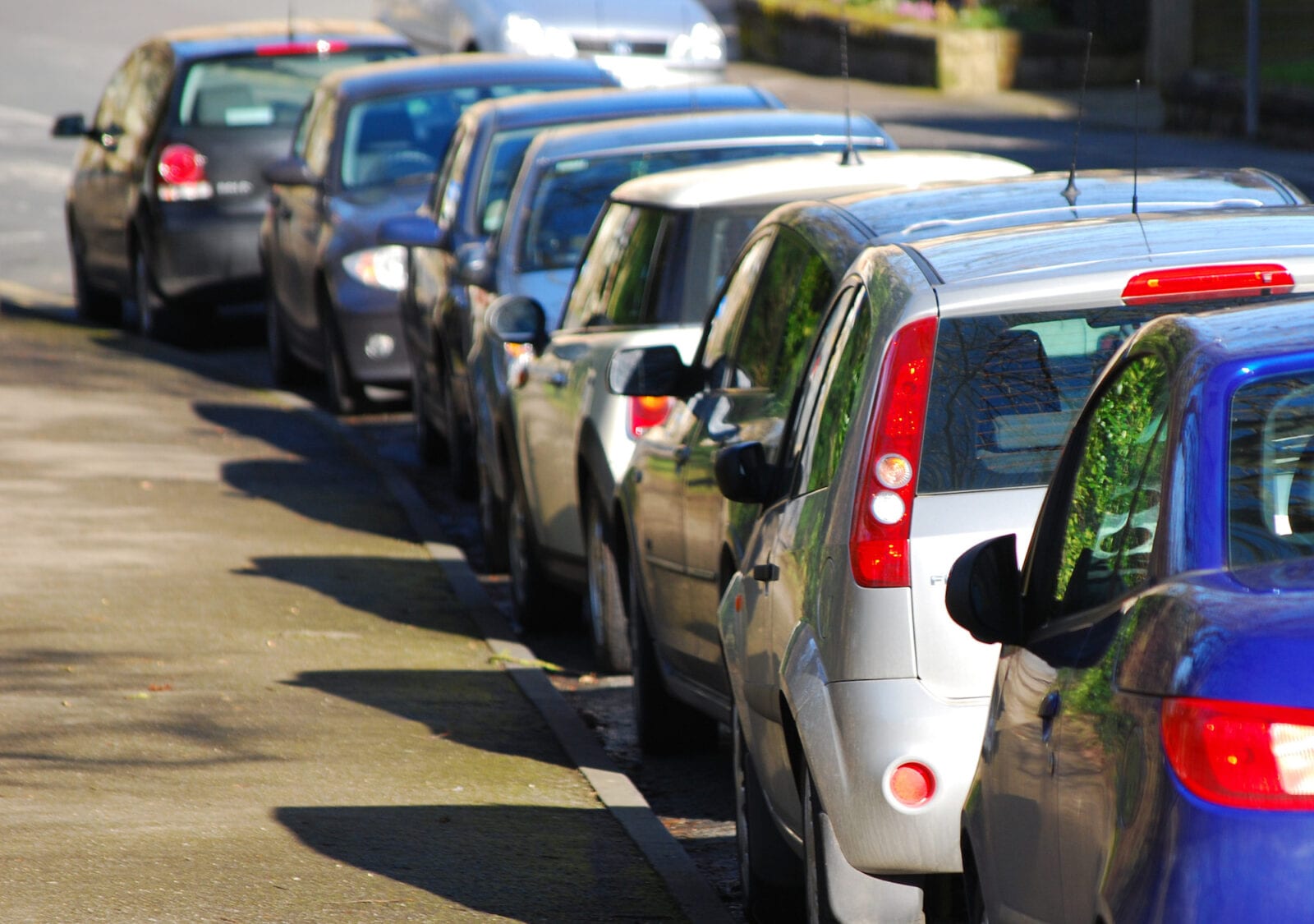
The Government has backed Greater Manchester’s plan for a non-charging clean air zone / Credit: The Manc Group | Flickr
While local authorities in other areas have found that a Clean Air Zone is the best route to cutting nitrogen dioxide pollution, proposals submitted to the Government included evidence that Greater Manchester can achieve compliance with legal limits faster but without charging.
The decision now means that the initial concept of a ‘Clean Air Zone’ will not go ahead in Greater Manchester.
ADVERTISEMENT
Instead, there will be a fleet of new buses and traffic-calming measures to improve air quality in the region, as well as £8 million put towards support moving the region’s taxi fleet to ‘cleaner’ vehicles, and up to £22 million allocated for the administration, delivery, monitoring, and other costs associated with all of this.
Local leaders have also been told they can review and cancel contracts relating to the Clean Air Zone – such as signs and cameras dotted across the region.
We are pleased the Government has accepted GM’s investment-led approach to clean air.
Because of our success in delivering the Bee Network on time and on budget, we will not be required to introduce a charging zone. 👍🏻https://t.co/sXdAZ0s3Xx
“We are grateful to this Government for listening to Greater Manchester and for this vote of confidence in our investment-led approach to cleaning up our air,” commented Greater Manchester Mayor Andy Burnham, as the plans were approved.
“This is the right decision for Greater Manchester and it gives people here the certainty they have long needed.
“Because we have implemented the first phase of the Bee Network on time and on budget, the Government clearly trusts us to deliver and has seen the evidence that our approach is working.
ADVERTISEMENT
“The Bee Network is cleaning up our air and keeping the cost of travel as low as possible.
“Its success is allowing us to remove a big weight of worry off the shoulders of people who need to drive as part of their job.”
Featured Image – Nabeel Syed (via Unsplash)

News
A ‘legacy walk’ in memory of the Joe Thompson is taking place across Greater Manchester
Danny Jones
The ‘Walk With Me for JT’, a.k.a Joe Thompson ‘Legacy Walk’, is back next month, and Greater Mancunians are being encouraged to take part.
Returning this year following his tragic passing last April, the now annual charity walk has already raised thousands for charity and is set for another big turnout.
Joe Thompson, an ex-Rochdale AFC and Bury FC player, sadly died at just 36 following a long battle with lymphoma, having been diagnosed three different times in 12 years.
While the young husband and father of two’s story is a heartbreaking one, it has also become a source of inspiration for so many across the North West and, indeed, across the UK, with people once again gearing up to complete a fundraising walk in his name.
Set to honour him by making the journey from his adopted home of Rochdale all the way to Old Trafford, with Thompson having come through Man United’s youth academy, the 15-mile trek will start at his former club’s Crown Oil Arena and stop at Bury’s Gigg Lane as well as Salford City’s Peninsula Stadium.
First held in 2024 under the ‘Walk With Me for JT’ banner, the initial legacy walk saw the Bath-born footballer and countless others complete 21 miles in an effort to raise money for treatment.
Gone but never forgotten, the charity walk survives not only in the hearts and souls of his family, friends and other people’s lives he touched, but in the community spirit that his struggle and immense bravery in the face of illness helped spur on throughout the region and beyond.
Writing on social media, the Thompson family and the Foundation in his memory said, “Last year, he walked beside us. This year, we walk for him. This isn’t just a walk… It’s a promise. A promise to carry his strength, his belief, his light forward.
For every family facing illness. For everyone experiencing loss or hardship. For anyone who needs hope right now. Every step matters. Every mile has meaning. Whether you’ve walked before or this is your first time. You won’t walk alone.”
Join the annual Joe Thompson legacy walk on Saturday 2nd May 💙
Departing from the Crown Oil Arena, the 15-mile walk will finish at Manchester United's Old Trafford 🏟️
They signed off by adding: “Be part of something bigger. Be part of Joe’s legacy. Be part of the movement. Get a team together, invite your friends, colleagues and family and let’s raise funds to support The Joe Thompson Foundation.”
With the event beginning at 11am on Saturday, 2 May, there have already been numerous sign-ups, and you can expect even more to lace up their shoes and pay tribute to a local hero.
If you want to join in the effort and help do your bit, you can register for the 2026 Joe Thompson Legacy Walk right HERE.
Manchester rent is now ‘41% more expensive than five years ago, according to a recent study
Danny Jones
Yes, that’s right, as per some of the latest data on leased housing in central Manchester, it’s now approximately 41% more expensive to rent here than it was half a decade ago.
If you’ve lived in and around the city centre for long enough, chances are that you’ve already been feeling that difference, especially of late.
The ongoing cost-of-living crisis roughly began in 2021, following the economy and the world essentially opening back up after multiple lockdowns, so it’s little surprise that new research has shown affordability when it comes to renting has been on a slump ever since, too.
As well as the price of seemingly most things in everyday life going up post-pandemic, the average rental rate for even just a one-bedroom flat/apartment has jumped up significantly between 2020 and 2025.
Even some ‘available’ housing in town is being hampered by claddin (Credit: Valienne via WikiCommons)
That’s according to the numbers crunched by credit card experts, Zable, anyway.
Not only did their recent report cite the rent prices going up even before the cost of living crisis – essentially following the outset of the Covid-19 outbreak – but if their figures, the rate of inflation and the unwaveringly high demand for housing are anything to go by, this trajectory is likely to continue in 2026.
As of February this year, around one in three UK households is now a single-person occupancy, which already comes with its challenges (the Manchester City Council tax discount being a thin lifeline for countless), not to mention energy bills and the cost of groceries continuing on an upwards trend.
Put in the simplest and most reductive terms, it’s now almost £300 dearer for most people to live on their own than it was back in 2020, and besides Liverpool clocking in as second on the list of increasingly expensive cities to live (a 42.12% increase), Manchester came in third.
You can see the full table down below:
Rank
City
% increase – 2020-2025
Difference from 2020 to 2025 in £
Average rental cost for a 1 bed 2025
1
Newport
47.39%
£2,611
£8,121
2
Liverpool
42.12%
£2,290
£7,727
3
Manchester
41.00%
£3,364
£11,569
4
Edinburgh
40.28%
£4,620
£16,090
5
Leicester
39.93%
£2,391
£8,379
6
Wolverhampton
39.22%
£2,049
£7,273
7
Nottingham
39.07%
£2,400
£8,543
8
Glasgow
38.02%
£2,679
£9,725
9
Colchester
37.63%
£2,617
£9,572
10
Cardiff
37.06%
£2,828
Average rental cost for a 1-bed 2025
Another fear is that with lots of people finding it hard to manage living in other major cities like London, even those moving to Manchester are also having an impact on how available affordable housing is here.
That’s why schemes such as the new ‘social rent’ development over in Wythenshawe are so important to the current generations of renters, with the possibility of owning your own property in the future becoming increasingly difficult for so many.
It’s also worth noting that Manchester ranked fourth among the British locations where the cost of living is said to have increased the most over the past five years, with the average difference in annual spend growing by an estimated 22.84%.